As Featured in West + Main Home Magazine: Built for Boys

An Interview with Lindsay Browder - W+M Client

A large addition turned a quaint cottage into the perfect home for an active, golf-loving family.

Q: Wow, Lindsey, your home is so amazing... tell us all about it!

This project is an absolute labor of love. For me, this was about new beginnings for myself and my boys (Brady 7/ Theo 4). I saw this 725sq/ft bungalow come up for sale years ago in the middle of the night while I was mindlessly scrolling, and I had this absolute gut reaction that drew me to it. I was out of town at the time, and went under contract sight unseen because it felt so right. Nothing about my desire for it made sense, but I went through with buying it and rented it out as this cute little cottage in Denver's Corey Merrill neighborhood for years. Just over a year ago, I was carving out my path in life as a newly single mom, and after looking at houses to buy and being completely discouraged, I decided what I wanted was to turn this little cottage into my family’s new house, so I started down that road even though it felt daunting. The house sits just 1.5 blocks from the middle and elementary school my kids will attend, so the thought of strolling to school together in a great neighborhood overshadowed the feeling of “how am I possibly going to do this on my own, with a demanding career and two small kids.” I took the leap knowing that this was a long term investment in our future and something I would never be able to afford if I just bought it fully finished in the current market.

Q: What inspired the direction of the project?

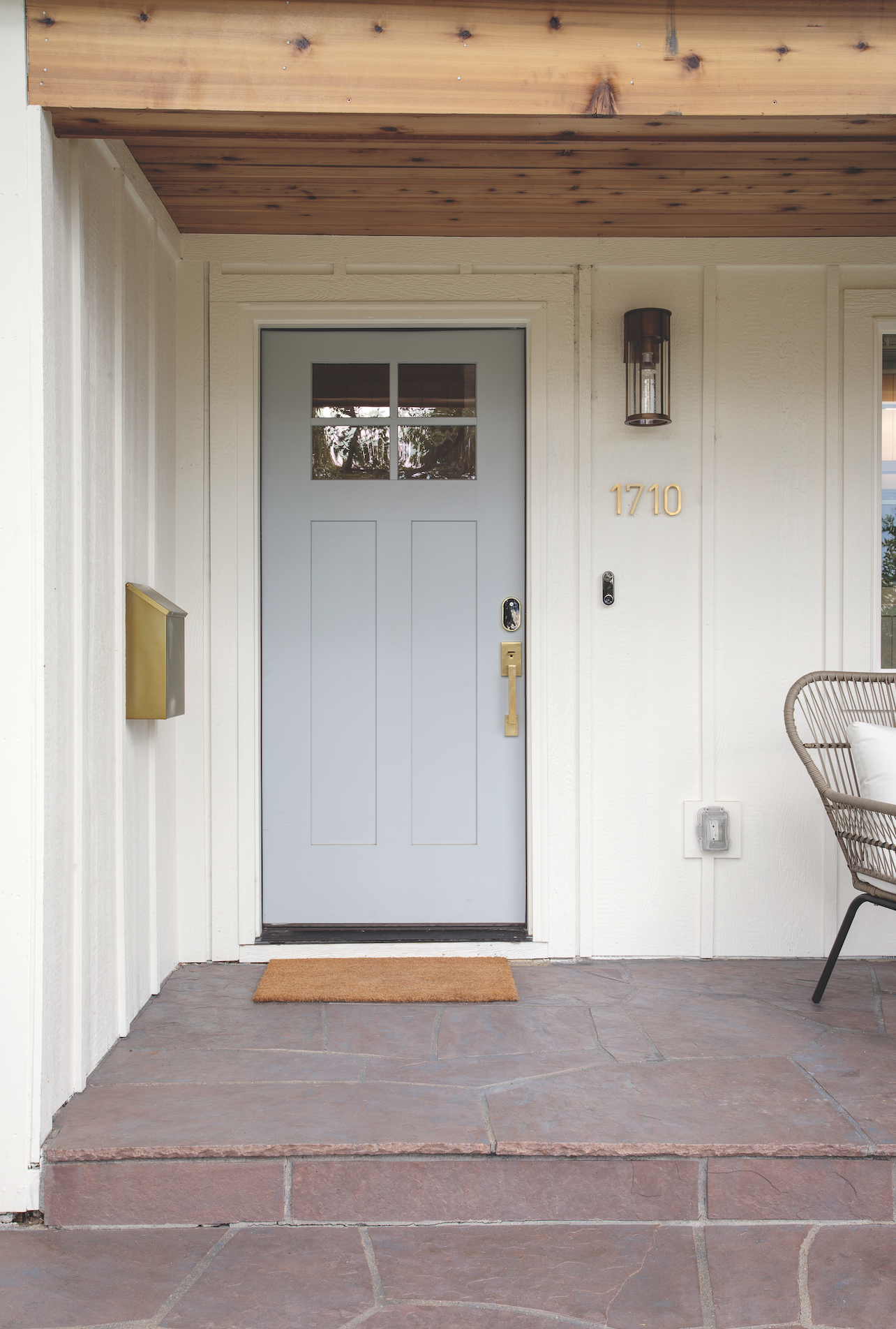
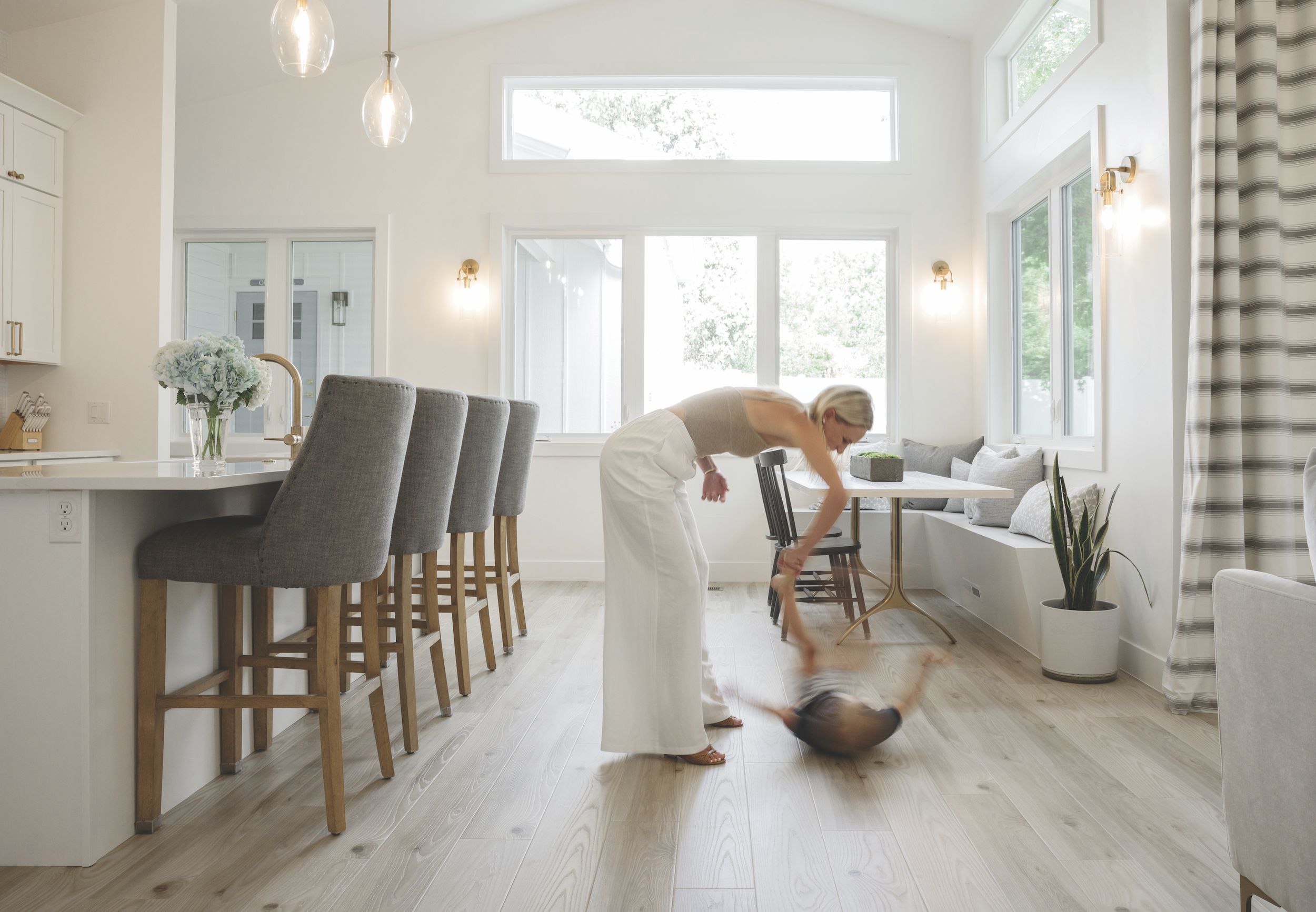
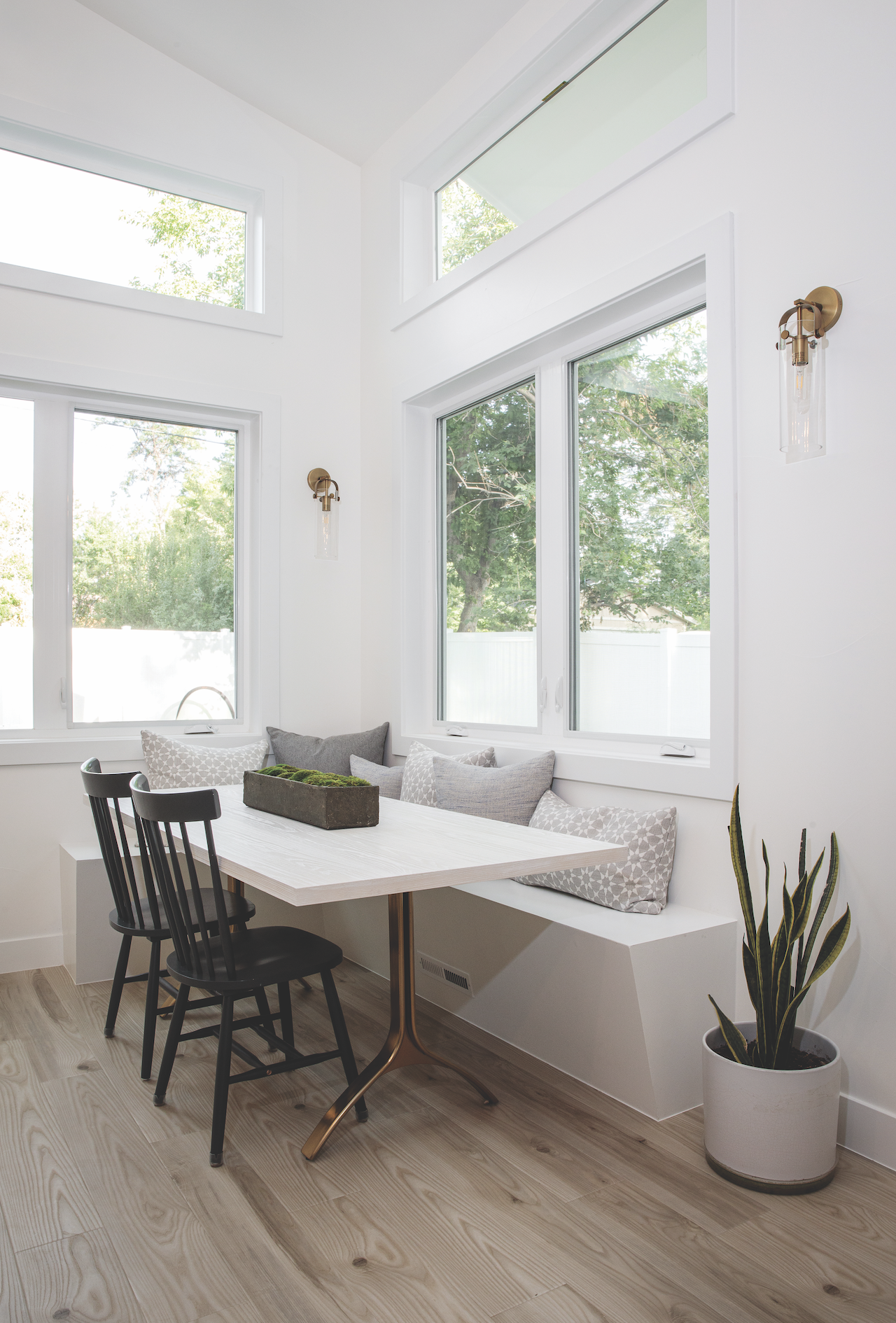
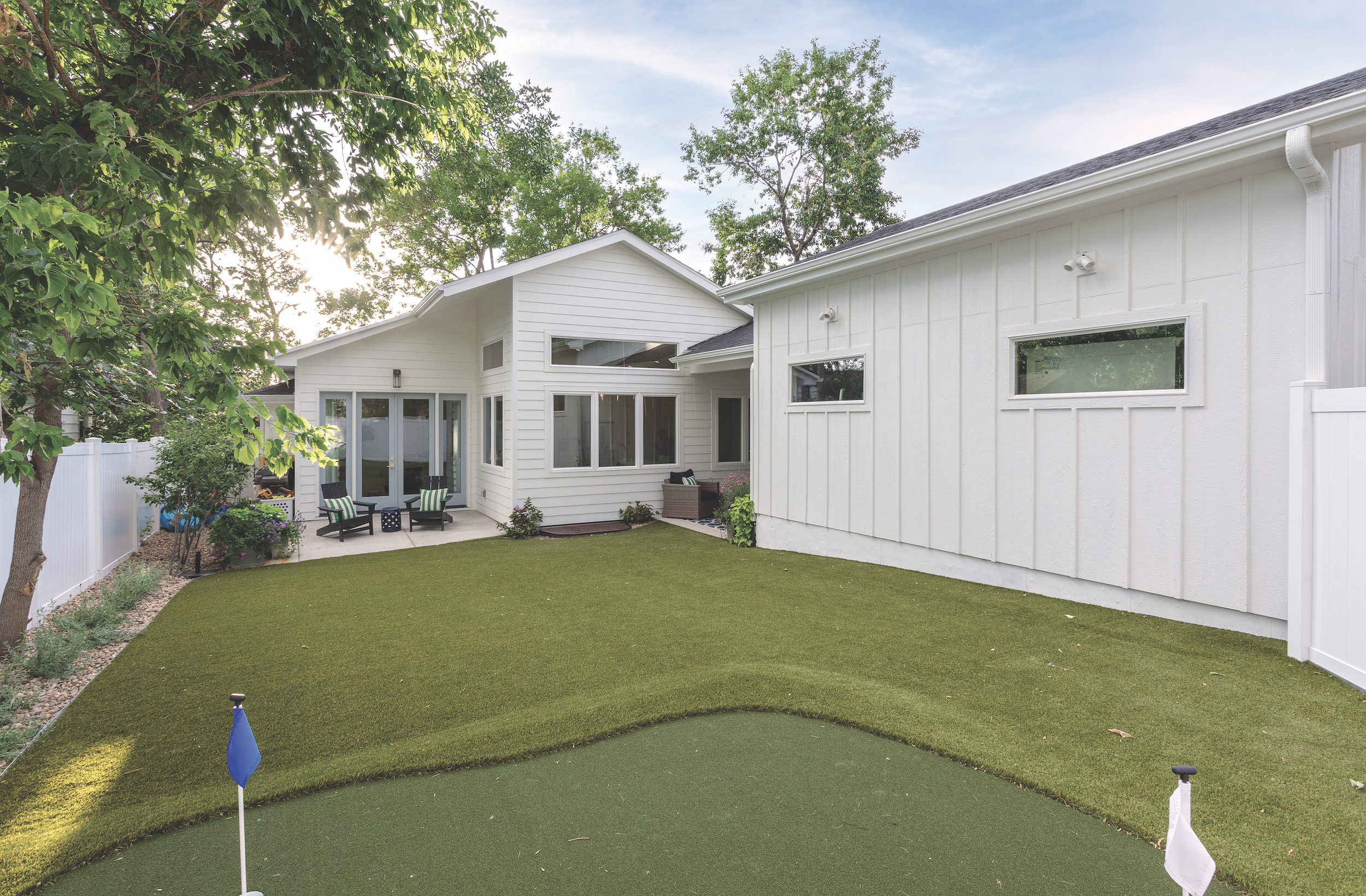
I absolutely loved the ‘cottage’ look of the original home, raised up off the sidewalk, with this huge tree in the front yard. I wanted to maintain that integrity, so I opted to keep that intact and do an addition in the back, with basement below, and a two car garage. Optimizing living space by making the home have a great indoor/outdoor accessibility with two young boys was key, so I focused on a wide open kitchen and living room that leads to a maintenance-free backyard and covered porch to optimize where we can all live and play. We’re a big golf family, so a fully synthetic back yard means family putting and chipping contests at night, and makes the yard fully usable year round since it never turns muddy from snow and rain. I never wanted to build a giant home, I wanted to build a cozy, comfortable home, so much about this project was about using the space wisely throughout to have it function with our busy lives. A mudroom with a barn door that can hide all the mess away, built in bunk beds and a hidden pantry all makes this possible. From a design aesthetic, I grew up in the mountains in Colorado, and I love big windows and being able to feel outdoors even when you are inside. The new addition has 18 foot ceilings with windows that go almost up to them and a cozy built in banquette surrounded by windows so we can constantly be soaking in the light and enjoying the big trees that make our space feel private, even in the middle of the city. I also wanted to make it feel personal, so incor- porating my mom's art, tons of family photos and the kids' art means all of the details are really meaningful.

Q: When it came to the design + finishes, what was your process?

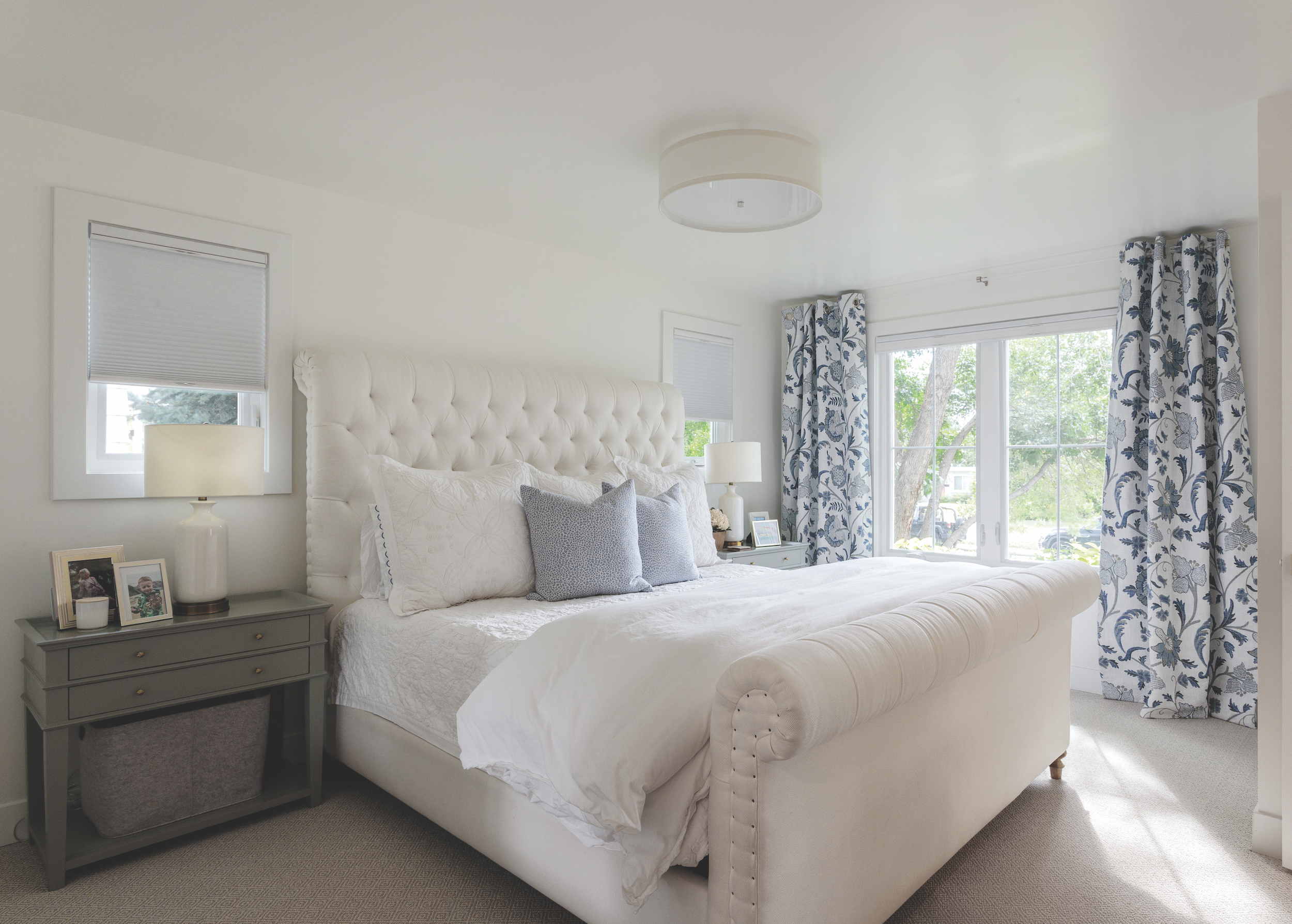
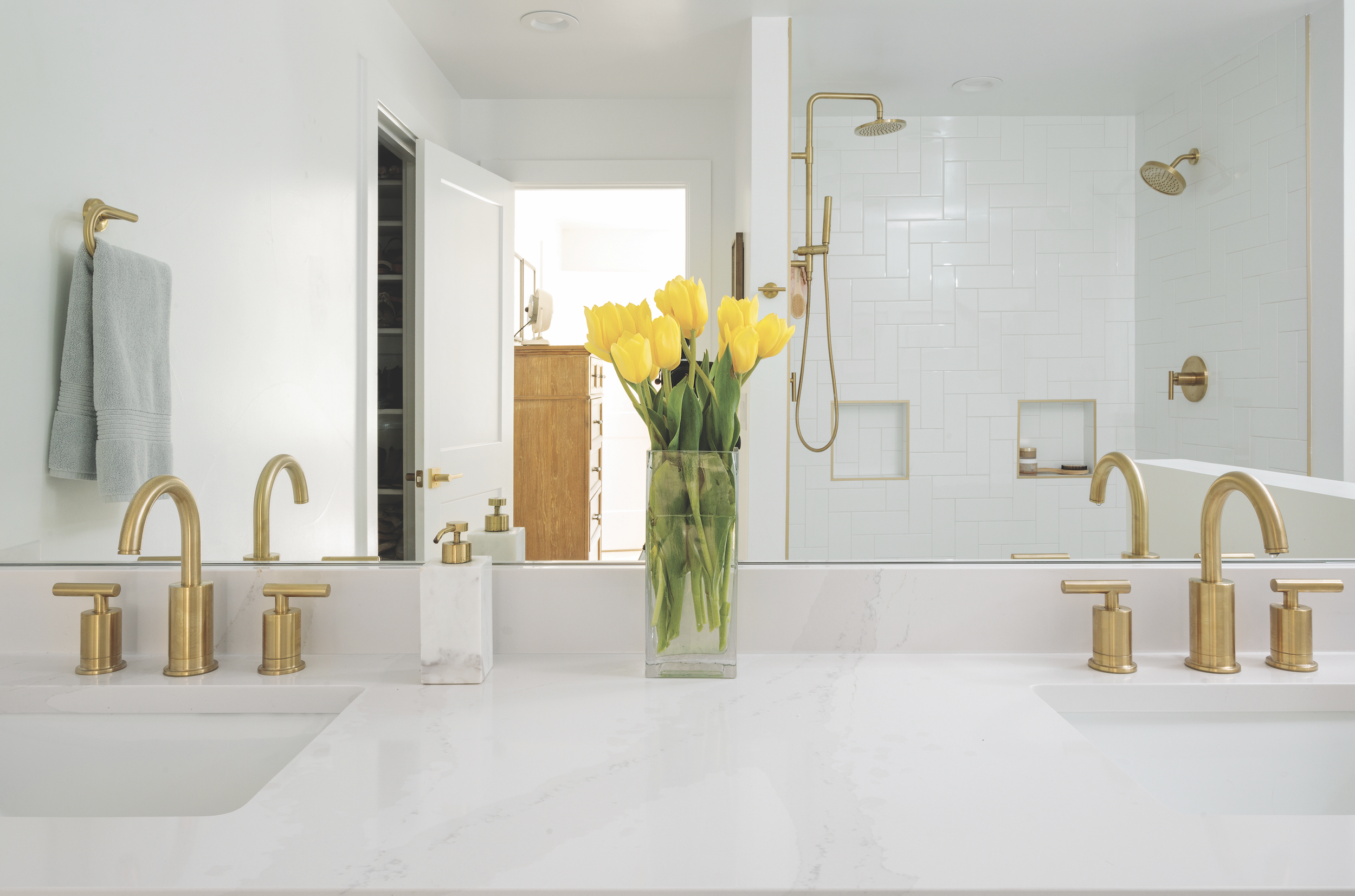
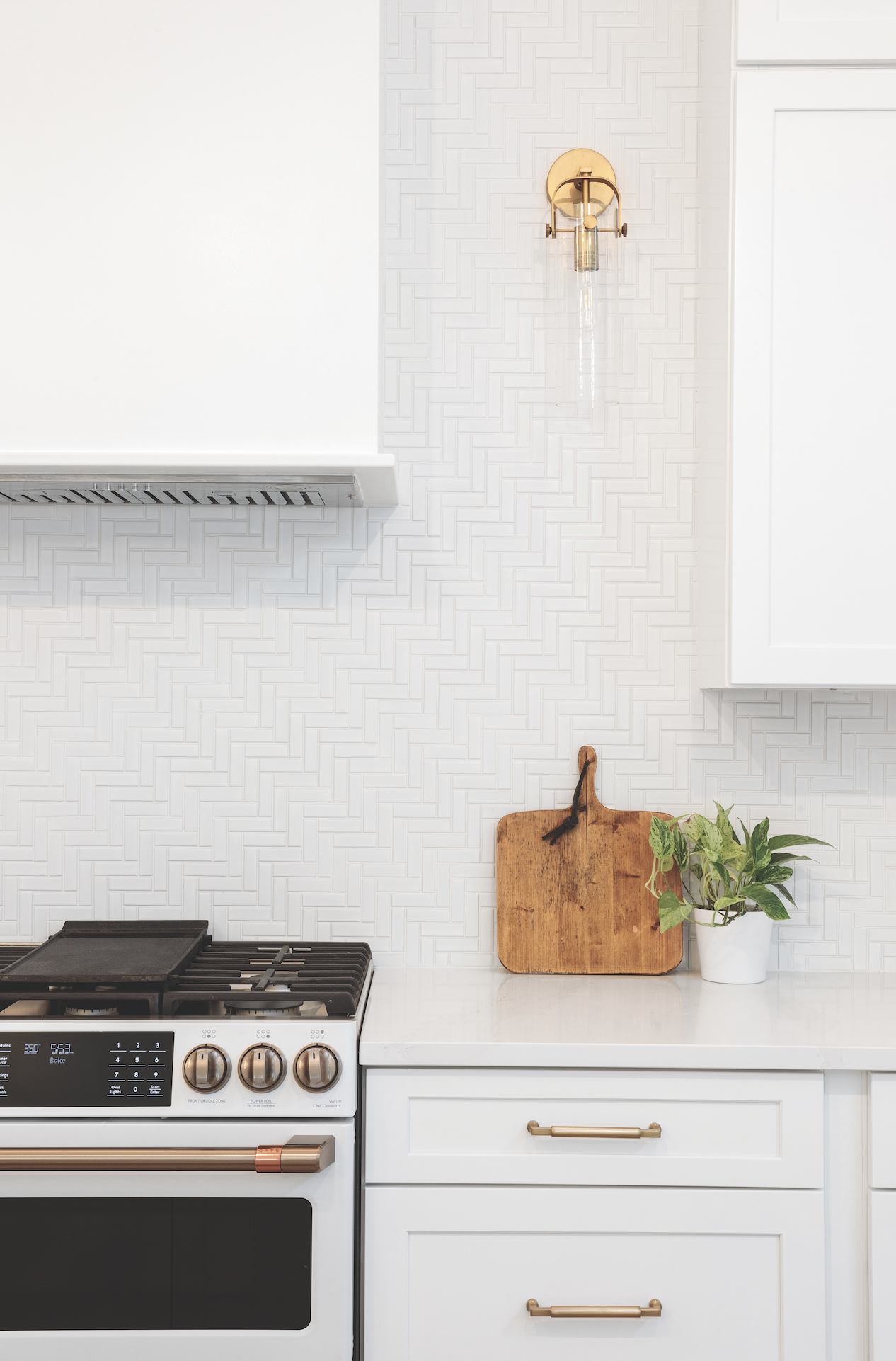
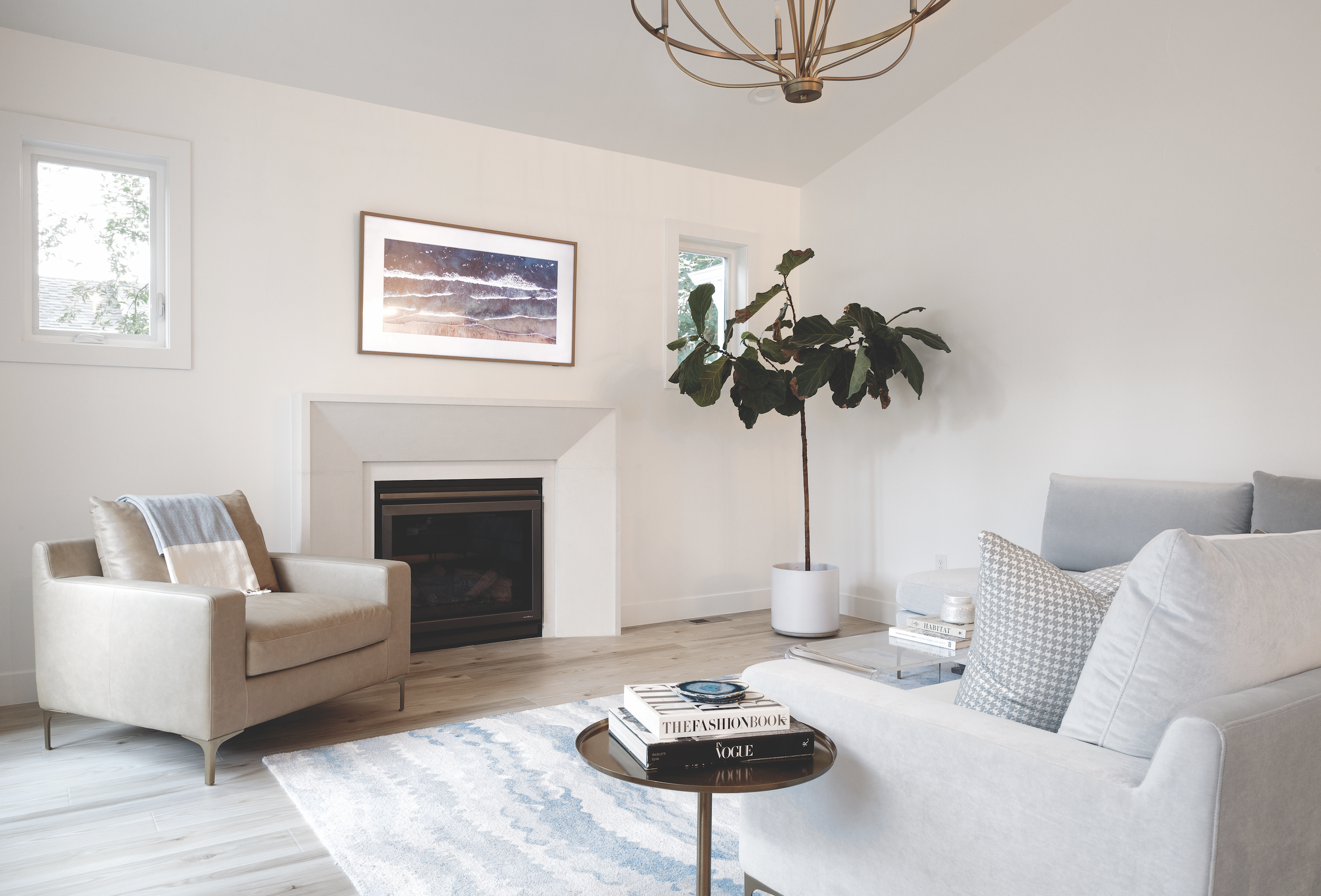
As the Women’s Director of a large apparel brand (TravisMathew), I constantly live in a very visual, design-based space, which I love. I loved transferring the design I do in apparel to an interior design application. My mom is also a classically trained fine artist, so her visual astuteness and built in sounding board for putting everything together was invaluable. For me when it comes to design, texture trumps color. To achieve this I choose rich fabrics like velvets, reclaimed wood walls in key places, mini white her- ringbone backsplash that goes all the way to the ceiling in the kitchen, and touches of wallpaper throughout to bring a bit of pattern and levity. I wanted to walk away from the world at the end of the day, into a space that felt tranquil, light and serene, but also really livable. With all of the masculine energy I'm surrounded by between two boys and a giant male yellow lab, I also wanted it to have just a touch of livable femininity. Certainly though, every decision had to be judged by “will the kids destroy this,” so while things may look nice, making choices like luxury vinyl floors, stain resident fabrics and durable furniture materials means I'm not in a constant state of concern that the house cant live up to ‘boy life.’ The boys also had strong feelings of what they wanted for rooms, which I wanted to honor, but it's a tricky balance since I felt the need to make their rooms feel timeless and not like an overly juvenile theme room they would quickly tire of. In Theo’s room, he wanted a construction theme, so using reclaimed wood for a feature wall, a huge road sign I found at a flea market, printed sheets hidden by more mature bedding and lamps that looked like they were made of bricks brought this theme to life without it ever turning cheesy. For Brady, he wanted a dinosaur room which was much more challenging. We achieved it by choosing a dinosaur inspired green for the walls and applying a geometric decal of a T. rex that is subtle enough to not overpower the room. Then I added more mature elements in touches of black metal and camel leather throughout. As he gets older, things like custom built-in bunk beds with sconces he can turn on and off for reading, a sleek black metal desk for art and homework, and a bookshelf made from an antique library cart all allow his room to grow with him, and prevent me from constantly redecorating!

Q: Contractor cred?

I hired McHugh builders to execute on the project. They are a local family of builders with a long history in Denver, which was appealing to me. I had to be really conscious of not taking on more then I should for my financial comfort. Popping the top and doing a full scrape were obviously all options, but they were significantly more expensive, more risky on what costs I could potentially get into, and ultimately de- stroyed the ‘cottage’ integrity and put me in a house far larger then what I wanted. I'm also the queen of finding deals and really picked my battles on where to spend and where to save. For example, everyone thinks my back patio light is the one from Serena and Lily that retails for $1500+, but it's actually a knock off I paid $240 for!

“We go on trips to Maine to visit family, and so my boys have noticed that people name their beach houses. We started talking about what we would name our house. ‘She’s going to be white, with a little blue’ we would say, and then my son Brady came up with ‘Pearl’ because ‘she used to be gross but now she’s nice and white and a little blue.’ It stuck and now we have a sign on our back patio ‘Our Pearl’ just like the beach houses they’ve seen.”
— Lindsay

Related Links

If there is a home that you would like more information about, if you are considering selling a property, or if you have questions about the housing market in your neighborhood, please reach out. We’re here to help.

Search Homes in Colorado

Search Homes in Oklahoma

Search Homes in Oregon

Mortgage Rates Hit a 4-Month Low


This week, Freddie Mac announced that mortgage rates are continuing to decrease, hitting a 4 month low.

As inflation continues to moderate, mortgage rates declined again this week. Rates are at their lowest level since September of last year, boosting both homebuyer demand and homebuilder sentiment. Declining rates are providing a much-needed boost to the housing market, but the supply of homes remains a persistent concern.

The 30-year fixed-rate mortgage decreased by 0.18 percentage points and is now averaging 6.15%, according to Freddie Mac. It is the second week in a row that the 30-year rate has moved lower. Borrowers looking into a 15-year fixed-rate loan will find rates averaging 5.28%, down by 0.24 percentage points.

“Lower rates have meant phones ringing, busier open houses and we are even seeing multiple offers on many properties,” said Molly Manley, Senior Loan Officer at Streamline Home Loans. “If you’re thinking about selling, start the conversation! That said,  many homes still have room for negotiation, making now a great time to buy.”

To learn more about how mortgage rates are impacting your buying power, reach out to Molly or one of our amazing Streamline Loan Officers!

How are mortgage rates impacting home sales?

Money reported today that the housing market slowdown continued in November as existing home sales decreased for the 10th consecutive month, according to the National Association of Realtors.

Existing homes sold at a seasonally adjusted annualized pace of 4.09 million units, a decrease of 7.7% from October and of 35% compared to a year earlier.

Sales have not been this slow since May 2020 — the height of the COVID pandemic lockdown period, according to Lawrence Yun, chief economist at NAR. Back then existing home sales were at an annualized rate of 4.07 million homes.

"It's quite an amazing situation that today's sales activity in November is essentially almost the same as that lockdown period," Yun said.

Discounting the 2020 number as an aberration and comparing instead to a 'normal' year, sales are down to their lowest level since November 2010, added Yun, when the market was in the midst of the foreclosure crisis.

Want to know more about mortgages + the housing market? Sign up for Streamline’s weekly newsletter - which is full of great info + updates.

Related Links

If there is a home that you would like more information about, if you are considering selling a property, or if you have questions about the housing market in your neighborhood, please reach out. We’re here to help.
Search Homes in Colorado

Search Homes in Oklahoma

Search Homes in Oregon

6 Landscaping Improvement Projects That Offer the Best and Worst Returns on Investment


What your house looks like outside is just as important as what it looks like inside—especially if you plan on selling it one day.

Boosting your curb appeal will not only elevate your enjoyment of—and confidence in—your home, it will also mark an important investment in its long-term value. Curb appeal alone can add 7% or more to the value of your home. Also, the National Association of Realtors® found that 100% of landscaping and tree service costs are recovered when a home sells.

But which landscaping tasks will bring you the best return on investment, or ROI?

Read on for insights from real estate and design pros on the outdoor renovation projects that deliver the best and worst returns.

1. Adding a deck or patio: Good ROI

Spending time outside with friends and family is much more convenient if you have a deck or patio.

“Patios or decks can provide a gathering place for outdoor entertaining and increase the value of your home,” says Martin Boonzaayer, CEO of the Trusted Home Buyer in Phoenix.

Homeowners who decide to make the investment can expect to recoup about 65% of their investment, Boonzaayer says.

How much should you budget? According to Remodeling Magazine’s Cost Vs. Value Report, homeowners can expect to spend about $16,000 on a 16-by-20-foot wood deck with pressure-treated planks. A composite deck is more expensive, but the ROI is comparable.

2. Installing a sprinkler system: Good ROI

A dry, brown lawn is quite an eyesore. Installing a sprinkler system is a great investment that prevents unsightly patches and delivers a killer ROI.

“A sprinkler system can help keep your lawn and plants healthy and looking great,” says Boonzaayer. “It can be especially helpful if you live in a region with drought conditions. A sprinkler system can recoup up to 100% of its value upon resale.”

The cost of a sprinkler system installation, depending on the size of your lawn and ZIP code, can be about $500 on the low end and $3,500 on the high end.

3. Paver walkway: Good ROI

A pretty path from your driveway to your front door can do wonders for your home’s overall aesthetic.

“One project that delivers exceptional ROI, and improves your own quality of life, is putting in a paver walkway,” says Joe Raboine, a former contractor and director of residential hardscapes at Belgard in Atlanta. “Replacing the front walkway is also one of the simplest ways to refresh the exterior of your home.”

You can get creative with a variety of paver styles, from simple cobblestones to more modern, large-format pavers.

Raboine says he has seen such walkways deliver more than 80% ROI.

Costs for a paver walkway range from $1,500 to $4,500-plus.

4. Planting trees: Good ROI

Spending time outside in nature—especially around trees—has been shown to reduce stress and boost happiness. Adding some foliage to your yard can also be a boon to your home’s value.

“Planting trees can help provide you and your home with shade, increase your curb appeal, and help the environment,” says Boonzaayer.

Well-placed trees can boost your home’s value by up to 15%, paying for itself and then some, he adds.

Planting a tree costs anywhere from $100 to $2,000 (including labor) depending on the size of the tree and your location.

5. Planting the wrong kind of plants: Bad ROI

“Thoughtful landscaping in general increases curb appeal,” says Tammy Sons, a horticulturist based in Tennessee.

But in certain cases, plants and trees can undercut the value of your home if you’re planting the wrong kind of greenery in the wrong places.

“Planting large trees near paved drives and sidewalks or patios where the tree’s roots could crack the concrete” is a no-no, Sons says.

Sons also encourages homeowners to focus on native plants.

“Planting non-native, invasive plants can lead to disaster,” Sons says. “Kudzu, for example, can grow up to 18 inches in one day. Plants like this will take over other plants and suck up all of the soil’s nutrients.”

6. Adding a garden: Bad ROI

Having a garden brimming with fresh vegetables, herbs, and flowers will sound like heaven if you have a green thumb. But for potential homebuyers who have a propensity to kill any plant they touch, a garden might be seen as a headache that’ll inevitably turn into an eyesore when weeds take over.

“Gardens can be a rewarding hobby, but the ROI isn’t there,” Boonzaayer says.

You can’t make all of your home renovation choices with the future buyer in mind. But if you’re choosing between planting a garden or putting in a patio, at least now you’ll know what to expect when it comes time to put your home on the market.

Read on.

Related Links

If there is a home that you would like more information about, if you are considering selling a property, or if you have questions about the housing market in your neighborhood, please reach out. We’re here to help.

Search Homes in Colorado

Search Homes in Oklahoma

Search Homes in Oregon

Homebuilders are pushing through inventory backlog


Fewer housing starts in 2022 led to an increase in housing completions.

As the housing market slowed from its frenzied peak in 2022 due to soaring mortgage rates, homebuilders pulled back. An estimated of 1.533 million housing units were started in 2022, down 3.0% compared to 2021, according to a report released Thursday by U.S. Census Bureau and the U.S. Department of Housing and Urban Development.

Homebuilders closed out 2022 with an annual housing start rate of 1.382 million units in December, down 1.4% compared to November and down 21.8% year over year.

These decreases came even as single-family homebuilders started more projects in December. The single-family housing start rate rose 11.3% month over month to 909,000. Year over year, single family starts were still down 25.0%. The multifamily sector slowed on both a monthly and yearly basis, with the building pace falling to 463,000 units.

“Housing starts fell again in December, but there are hopeful signs that builders will see a boost in buyer traffic in the coming months and new housing construction may have bottomed,” Lisa Sturtevant, BrightMLS’ chief economist, said in a statement. “During the second half of 2022, the pace of new single-family housing starts decelerated quickly as mortgage rates escalated. Builders watched inventories rise as buyers canceled contracts and new orders dried up. To facilitate move-ins, builders were more likely to offer incentives rather than drop prices, hoping to wait out the downturn.”

Regionally, housing starts were down month over month in the South (-4.0%), Midwest (-37.4%), and West (-9.5%) but were up 135.6% Northeast. On a yearly basis, homebuilders’ housing starts were down significantly in all regions except the Northeast, which posted an annual gain of 50.4%.

While housing starts were down in 2022, housing completions posted a 3.8% annual gain, rising to an estimated annual rate of 1.392 million housing units. In December, completion were down 8.4% month over month, but up 6.4% compared to a year prior, hitting an annual pace of 1.411 million. On a monthly basis, both the single-family and multifamily sectors were down, but compared to a year ago the multifamily rate of 385,000 is up 25.8%.

“While the number of single-family homes under construction is stabilizing as builders cut production, multi-family construction continues to hit new records,” Odeta Kushi, First American’s deputy chief economist, said in a statement. “Starts are exceeding completions and there are a record 926,000 multi-family units under construction. More multi-family supply may ultimately put some downward pressure on rents over the next year or so.”

Looking ahead, despite homebuilder confidence rising for the first time in a year in January, homebuilders – especially single-family homebuilders – are still pulling back. Building permits were issued at an annual rate of 1.33 million in December, down 1.6% from November and 29.9% from December 2021. On the single-family front, permits were down 34.7% year over year to a rate of 730,000, while on the multifamily front permits were down 21.8% year over year, but up 7.1% month over month.

“Homebuilder sentiment increased for the first time in a year in January due to lower mortgage rates, though general perceptions among builders remain poor. As mortgage rates moderate and with the spring season around the corner, it’s possible that the worst of the impact to sales is behind us,” Kushi said. “Builders still have a large backlog of single-family homes under construction. Builders will likely continue to focus on completing these existing projects, rather than starting new ones, until there is a meaningful and sustained increase in demand.”

Read the full article on Housing Wire.

Related Links

If there is a home that you would like more information about, if you are considering selling a property, or if you have questions about the housing market in your neighborhood, please reach out. We’re here to help.

Search Homes in Colorado

Search Homes in Oklahoma

Search Homes in Oregon

Why You Should Never Ignore a Leaking Roof


A leaky roof can cause serious damage to your home, and it’s important to address the issue as soon as possible.

If you’re dealing with a leaky roof, don’t make the mistake of ignoring it—there are numerous consequences that could result from not taking action. Let’s take a look at some of the reasons why you should never ignore a leaky roof. 

Water Damage & Mold Growth 
The most obvious consequence of ignoring a leaky roof is water damage. If left untreated, a leaking roof can cause significant damage to your home’s structure over time. Not only can water damage weaken the structural integrity of your home, but it can also contribute to mold growth in its most extreme cases. Mold is more than just unsightly—it can be hazardous to your health if left untreated for too long.

Higher Utility Bills & Poor Air Quality 
Another reason why you should never ignore a leaky roof is because it can lead to higher utility bills and poor air quality in your home. When your roof isn’t properly insulated, heat and cool air escape through cracks in the ceiling or walls, resulting in an uncomfortable living environment and higher energy bills. Additionally, poor insulation means that dust particles and other allergens are more likely to enter your home, leading to poor air quality and potential health risks for those living inside. 

Decreased Property Value 
Another issue that arises from ignoring a leaky roof is decreased property value. Even if you aren’t planning on selling your house anytime soon, it’s still important to keep up with repairs so that you don’t have to worry about decreased property values down the road if you do eventually decide to sell. Potential buyers are less likely to purchase homes with noticeable damage from water leaks or other issues related to neglecting necessary updates and repairs. 

Potential Insurance Issues 
Finally, it's important to note that ignoring a leaky roof could also have an effect on your home insurance policy. Most insurance companies specify that any pre-existing damage must be reported before they will pay out on any damages caused by storms or other external factors; if they find out you've been covering up existing damage with patchwork repairs instead of fixing it properly, they may deny future claims altogether!  

As you can see, there are many consequences that arise when homeowners choose not to address their leaky roofs immediately. Not only will this affect the structural integrity of their homes but also their wallets due to higher utility bills and decreased property value over time. Therefore, if you notice any signs of water leakage in your home due to a faulty or aging roof, contact a professional right away so they can help address the issue before bigger problems arise!

Keep reading.

Related Links

If there is a home that you would like more information about, if you are considering selling a property, or if you have questions about the housing market in your neighborhood, please reach out. We’re here to help.

Search Homes in Colorado

Search Homes in Oklahoma

Search Homes in Oregon