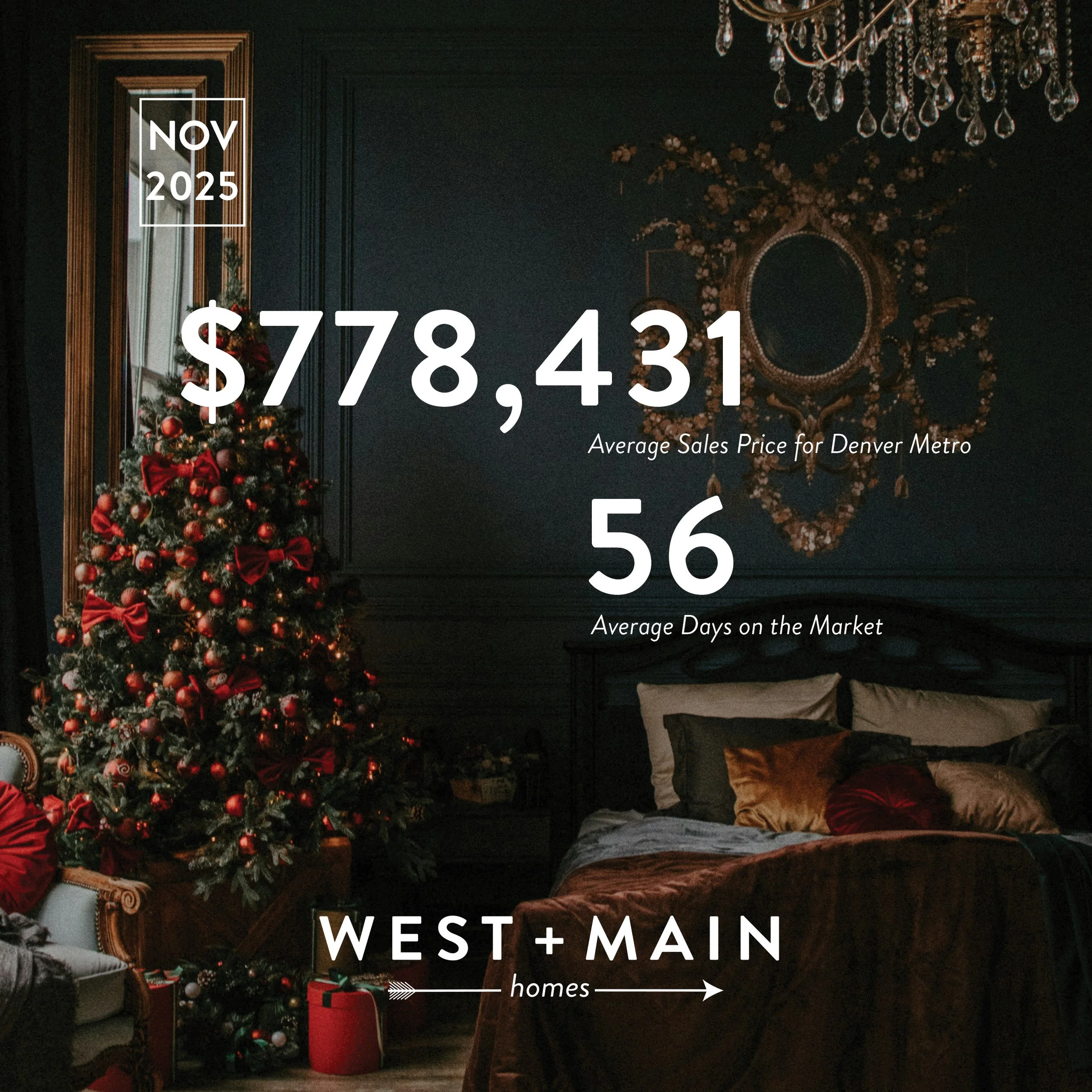
In Denver's 2025 real estate market, the gap between perception and reality remains stubbornly wide, according to DMAR’s Market Stats Committee.
The common narrative suggests our market is "slow" because buyers have stepped back from purchasing. The reality is more complex. While real estate fundamentals like inventory, pricing and demand certainly matter, broader economic forces have been equally influential in shaping market activity over the past three years. Inflation, economic uncertainty and recent events like the government shutdown have created a cautious environment that affects both buyer and seller decision-making. Understanding the distinction between a fundamentally broken housing market and one responding rationally to external pressures is crucial for interpreting what the data actually tells us.
Throughout 2025, active inventory reached levels Denver hasn't seen in over a decade, giving buyers meaningful leverage However, November brought the predictable seasonal shift. New listings declined 41.39 percent from October, nearly identical to the 41.54 percent drop between those same months in 2024. Similarly, month-end active inventory fell 15.92 percent, closely mirroring the 14.89 percent decline in 2024. These patterns reflect typical seller behavior during the holiday season: homes come off the market in November and December, often relisting after the new year. The consistency with prior-year patterns suggests the market is following normal seasonal rhythms rather than fundamental deterioration.
Pricing followed a similar seasonal trajectory. Median sale prices declined month-over-month for both attached homes (1.96 percent) and detached homes (1.47 percent) - typical fourth-quarter movements as demand moderates heading into winter.
The year-to-date picture provides important context: attached homes are down 3.21 percent while detached homes remain essentially flat, up just 0.02 percent. These modest annual changes reflect market stabilization rather than the dramatic shifts often portrayed in headlines. This stabilization has been particularly valuable in addressing the rapid appreciation of recent years. After prices surged 38.5 percent from March 2020 through April 2022, the subsequent three years of slower growth have brought the market into better balance. From March 2020 to November 2025, the cumulative median price increase now stands at 31.5 percent, which is equivalent to an average annual increase of 6.3 percent. What initially appeared as unsustainable growth has, over time, normalized into a pace more consistent with historical appreciation patterns.
As we close out 2025, expect continued seasonal patterns through December and January-reduced inventory, fewer transactions and the typical holiday slowdown. Come spring, we'll likely see the familiar uptick in listings and activity that characterizes every healthy real estate cycle. Perhaps 2025's most significant contribution to Denver's housing market wasn't dramatic, it was necessary. This was the year the market needed to recalibrate expectations and reestablish what a typical real estate market actually looks like. After years of frenzied bidding wars, waived contingencies and double-digit appreciation, 2025 reminded us that functional markets have negotiation, reasonable timelines and modest price movements. Homes that sit for 29 days aren't signs of crisis. They're signs of normalcy. Buyers who can negotiate concessions aren't exploiting weakness; they're participating in standard real estate transactions.
For 2026, the opportunity lies in embracing this balance. Buyers and sellers who understand that "normal" doesn't mean
"broken" will find success. Those waiting for extremes, whether crash or boom, will likely remain on the sidelines, while others transact in a stable, predictable market that serves both parties well.
Learn more about the market from the Denver Metro Association of Realtors.
Thank you to our partners at the Denver Metro Association of Realtors for compiling this information.
Related Links
Sellers in Top Buyer’s Markets Are Sweetening Deals With Discounts
What the Government Shutdown Means for Mortgage Rates as Financial Markets React
Why Now May Be a Key 2025 Moment To Sell Your House
If there is a home that you would like more information about, if you are considering selling a property, or if you have questions about the housing market in your neighborhood, please reach out. We’re here to help.
