Just Listed: Sisters Oregon is well known for being a gorgeous part of Central Oregon


Sisters Oregon is well known for being a gorgeous part of Central Oregon

The location allows easy access to ski resorts, lakes, rivers, dining, boutique shopping and endless adventure. Squaw Creek Canyon offers fantastic rural living that's close to town, has paved roads, community water and is a Firewise designated community! This 2.4 acre parcel offers peek a boo mountain views, an approved home site, an approved Septic Feasibility study for a standard septic system, Avion water and CEC electric at the street. There is no HOA nor associated fees for living in this fantastic subdivision! Call your favorite Realtor to tour the neighborhood and property!

Listed by Michelle Mertins for West + Main Homes. Please contact Michelle for current pricing + availability.


Have questions?
West + Main Homes
(405) 652-6635
hello@westandmain.com

Presented by:
Michelle Mertins
541-373-0400
michelle@westandmainoregon.com


Search homes in Oregon
 

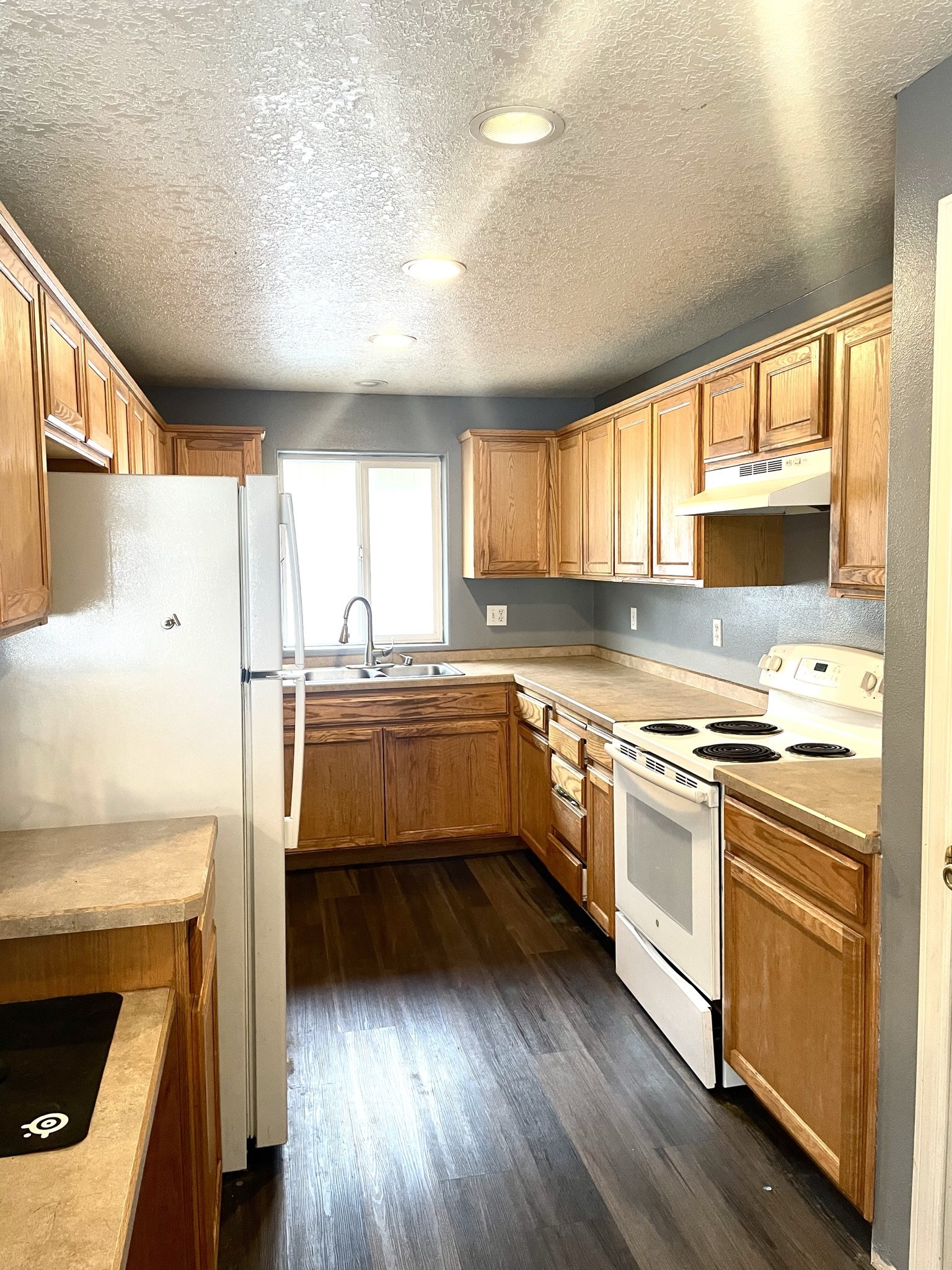
Just Listed: Cute single family craftsman style home


Cute single family craftsman style home!

Conveniently located near downtown Prineville with easy access to parks and all that Central Oregon offers. Plenty of kitchen cabinet space, open living area with wood-laminate flooring in kitchen and main living space. Newer interior paint. Fenced side yard patio. Alley access to double garage. Zoned C2 for potential future commercial use!

Listed by Ashley Bessey for West + Main Homes. Please contact Ashley for current pricing + availability.


Have questions?
West + Main Oregon

(541) 550-1340

hello@westandmainhomes.com

Presented by:
Ashley Bessey

541-279-3691

Ashleyb@westsandmainoregon.com


Search homes in Oregon
 

Buying a House Remodeled Without a Permit? Here’s What You’re on the Hook For


Imagine attending an open house and stepping into a newly remodeled main bathroom complete with brand-new Carrara marble tiling and a luxurious free-standing tub.

Home improvements like this are enough to make potential home buyers fall in love, and it may even motivate you to make an offer on the spot.

But what may seem like a dream perk at an open house can turn into an expensive nightmare if there’s no permit paper trail and the home improvements were done without the proper authorizations. Why? Because, depending on where you are in the buying process, unpermitted work could leave you (yes, you) on the hook for way more than you bargained for.

Want to save yourself from this predicament? Read on for everything you need to know about buying a home with work done without a permit.

How do you know if work was done without a permit?

“All sellers have to give buyers something called a property disclosure,” says Andrew Hillman, a broker at Hillman Real Estate, in Boston. “This will list information about what the current owners have done to the property during ownership, including work done without a permit.”

As an extra precaution, you can also cross-check with your local building department to see if the owners pulled permits. Many municipalities, such as New York City, have the status of permits online. Otherwise, you can call or visit the local buildings department for information. Remember, building codes and permit requirements vary with every city and town.

What is your responsibility as the home buyer?

The last thing you want to do as a home buyer is get your own hands dirty with sourcing permits or paying fees. But your responsibility in the matter all depends on where you are in the closing process. If you haven’t signed the purchase agreement yet, the seller can be held accountable for obtaining and closing out permits. But that’s easier said than done. It could take weeks or even months to close out permits.

Your best bet is to put language in the contract before signing stating that the seller has to take care of pulling a permit and having the local building inspector sign off on a certificate of occupancy before closing.

“Your attorney can draft the amendment to the contract for you,” says Beth Jaworski of Shorewest Realtors, in Wauwatosa, WI.

But once the contract is signed, the buyer assumes all responsibility for work done without permits.

“Buying a home without performing due diligence is as irresponsible as the homeowner who doesn’t pull permits,” says Hillman.

Still, all hope is not lost if your contract is already signed. There may be contingencies that can halt the transaction and give you some leverage.

How your appraiser and home inspector can help

One of the main contingencies all contracts have is the inspection period. A professional home inspection can identify unpermitted construction, work not completed to code, and other potential surprises before you commit to buy the property.

“The inspector can also check with the local permitting department to see what permits have been obtained,” says Brad English, a real estate professional with First Team Real Estate, in San Clemente, CA.

Your appraiser will help. “When I do a walk-through of a dwelling, I ask about the legality of a deck, living space, or an extra bathroom not found on the property record card,” says Ginna Currie, a New York state general appraiser at C.T. Appraisals.

Depending on the language in your contract, you have the right to terminate the transaction if you are not satisfied with the results of your home inspection or appraisal.

What’s the worst that can happen?

The worst-case scenario: Your city can “fine you for having unpermitted work, force you to remove the improvements, and you’ll have to start the process over to have the work done legally,” says Currie.

Keep in mind pulling a permit can cost hundreds of dollars. And having the work brought to code by a contractor will be an additional expense. But if you don’t pull permits during this transaction, the issue can arise again if you choose to sell your home later on.

“If the unpermitted work isn’t allowed at all, the city inspectors can make the homeowner tear down or remove the renovation or addition,” says Hillman. And if the inspectors don’t make the homeowner tear something out, you can at least expect a tax assessment for any improvements.

Keep reading.

Related Links

If there is a home that you would like more information about, if you are considering selling a property, or if you have questions about the housing market in your neighborhood, please reach out. We’re here to help.

Search Homes in Colorado

Search Homes in Oklahoma

Search Homes in Oregon

The 6 Most Futuristic Cities Being Built Around the World


Proposed across continents, these cities show what our world could look like in 50 years

Perhaps nothing is more humanistic than the pursuit of futuristic cities. We write about them in utopian—and dystopian—novels, offer glimpses of what they’d look like in movies and TV shows, and now, it seems, we build them too. Though designing for the future could be understood as the most basic requirement for architects and urban planners, in recent years, this goal has been taken to a new level. It seems every few months, firms unveil plans for wholly reimagined metropolitan areas: from floating cities to those in outer space, the offerings are relentless. In these new cities, sustainable infrastructure and smart technology is often a given, and in some cases, the plans even include things that haven’t even been invented (or brought to market) yet—like flying cars or extremely high-speed autonomous transit. Still, it never hurts to dream big, right? With that in mind, AD rounded up six of the most interesting proposals for futuristic cities, some of which are already under construction. Which one are you moving to?

Smart Forest City, Mexico

Stefano Boeri, an Italian architect, unveiled plans for a smart city near Cancún, named Smart Forest City, in 2019. The proposed metropolis would contain 7.5 million plants and is based on the area’s Mayan heritage and the culture’s relationship with the natural world. “Thanks to the new public parks and private gardens, thanks to the green roofs and to the green facades, the areas actually occupied will be given back by nature through a perfect balance between the amount of green areas and building footprint,” the firm told Dezeen. Collecting data is an important aspect of the proposed project, but Boeri assures this will be of benefit to residents, as it would be used to enhance governance.

Telosa, USA

Conceived by billionaire Marc Lore, Telosa’s goal is to “create a new city in America that sets a global standard for urban living, expands human potential, and becomes a blueprint for future generations.” Though it’s exact location has yet to determined, the city will prioritize pedestrians and bikers with a few “slow-moving autonomous vehicle.” Imagined as sustainable city and designed by Bjarke Ingels Group, renewable resources will power the urban area; green spaces will be protected and prioritized; and water will be stored, cleaned, and reused on site. Aside from environmental initiatives, the city will be built around the idea of equitism, “an economic system in which citizens have a stake in the city’s land.” The project is currently targeting a population of 5 million by 2050.

The Line, Saudi Arabia

Building futuristic cities is no cheap feat. Case in point: To build The Line, Saudi Arabia’s 100-mile long linear city, the country is planning to invest between $100–$200 billion. Clad in a mirrored facade, the city plans to eliminate the need for cars—and carbon emissions—by implementing high-speed autonomous transit. According to Gizmodo, construction has already begun on the city, which is expected to be completed by 2030.

Oceanix Busan, South Korea

Though floating-city proposals are increasingly common these days, Oceanix Busan may be the first one to actually reach completion. Oceanix hired Bjarke Ingels Group and SAMOO to design the city, and Busan soon signed on to help build the first prototype, which was delivered to the UN in April of 2022. Built from biorock, a self-sustaining and self-repairing material, the city will hopefully serve as a model for other coastal communities battling rising sea levels and other climate-change-induced difficulties.

Chengdu Sky Valley, China

Designed by firm MVRDV, Chengdu Sky Valley was conceived as a an entry for the Future Science and Technology City competition, though the project isn’t moving forward at this time. The metropolis is designed to preserve and enhance the site’s traditional Linpan settlements, which are rural communities in the area’s valleys. For this reason, new buildings are clustered on hills and designed to accentuate the valley skyline. By preserving the agricultural landscape of the area, residents are offered “a wider choice of lifestyles, including opportunities for self-building and developing self-sufficient lifestyles in harmony with nature.”

Amaravati, India

Though this masterplan for Amaravati conceived by Foster+Partners is no longer happening, it does offer great insight into what a futuristic city could look like. In the the plan, a government complex would anchor the city, and a large central green space would span the city’s center—inspired by Lutyens’ Delhi and New York’s Central Park. The firm also envisioned an aggressive environmental strategy, in which “at least 60% of the area is occupied by greenery or water.” According to Foster+Partners, the metropolis would’ve been among the most sustainable in the world and would make use of various new and emerging technologies including photovoltaics, electric vehicles, water taxis, and dedicated cycle routes.

Learn more on Architectural Digest.

Related Links

If there is a home that you would like more information about, if you are considering selling a property, or if you have questions about the housing market in your neighborhood, please reach out. We’re here to help.

Search Homes in Colorado

Search Homes in Oklahoma

Search Homes in Oregon

4 Reasons Why Some Boomers Don’t Want to Downsize Anymore


Life has many phases, and folks tend to choose a home based on their current needs.

Couples may get away with having a one-bedroom apartment, but once a child or two come along, a growing family usually means more extensive living arrangements. Of course, not all home purchase decisions depend on the number of family members, but as life goes on, many eventually consider downsizing

As people age, there tends to be less of a need for stuff, and once kids move out of the house, multiple rooms may go unused. Once teeming with life, a large home can start to feel empty, which may be a reason to downsize. Or is it? Many baby boomers are in the phase of life traditionally dedicated to simplifying, moving, and aging. However, with vibrant lives and more than one reason to stay put, here’s why some of today’s baby boomers are refusing to downsize

They’ve found their dream home.

Everyone is different in what they want in a house. Some crave floor-to-ceiling windows, while others desire a fully stocked chef’s kitchen. After finally finding the perfect place, it can be challenging to let it go. After author and speaker Jan Cullinane and her husband retired from their primary careers, they decided to build their dream home. “We knew we needed two separate offices,” says Cullinane. Their design also includes an elevator if they can’t maneuver the steps in the future, which means that they can age in place in a house they love.

They need a space for family gatherings.

Folks are more transient nowadays, which means that when children leave home, they may never live near their parents again. “We have three adult married children living in different cities and five grandchildren, and we wanted a place that would accommodate all of us,” Cullinane adds. “We have never regretted our choices, and having a big house makes for a happier marital relationship and close family ties.” Having a place to get together for family vacations and holidays becomes increasingly important for those in the boomer generation.

They’re concerned about the cost of moving.

Many baby boomers have been in their homes for years, meaning they’ve either paid off most of their mortgage or made the purchase when the market was more stable. Illinois real estate broker Betsy Phillips has seen market fluctuations and understands the boomer generation’s uneasiness. “Baby boomers are not downsizing because it often costs more than staying put,” she advises. For example, homes with main-level bedrooms are hard to come by and may require updating, and land and construction costs are expensive for new builds. “Basically, they stay because there is no place to go,” adds Phillips.

They want a sense of nostalgia.

Part of making a house a home is creating memories, which are difficult to give up. It’s why many decide to linger. “Many baby boomers desire to remain in their homes for as long as possible due to sentimental attachments,” says designer Sage Stone. Older generations also tend to save meaningful items and may need a larger space to store and display their mementos. Additionally, the task of wading through decades of belongings can seem daunting. “Ultimately, they may not want to go through this hassle, especially at an advanced age,” Stone adds. Being surrounded by familiarity in their own home is meaningful and comforting.

Get more on Apartment Therapy.

Related Links

If there is a home that you would like more information about, if you are considering selling a property, or if you have questions about the housing market in your neighborhood, please reach out. We’re here to help.

Search Homes in Colorado

Search Homes in Oklahoma

Search Homes in Oregon