Americans Who Can’t Afford Homes Are Moving to Europe Instead


Prohibitive housing prices, a strong dollar and political rancor have contributed to a wave of Americans relocating to Europe.

More Americans are relocating to Europe, driven across the Atlantic by the rising cost of living, inflated house prices, a surging dollar and political rancor at home.

Italy, Portugal, Spain, Greece and France are among the most popular destinations. Sotheby’s International Realty said requests from Americans looking to move to Greece rose 40% in the April-to-June period compared to a year earlier. In France and Italy, US demand is the highest it’s been in at least three years, according to Knight Frank real estate specialist Jack Harris. And Americans made up 12% of Sotheby’s Italian revenue in the first quarter, compared to just 5% in the same period a year ago. 

Retirees and the wealthy have traditionally been the prime American buyers of real estate in Europe. But relatively cheap housing — particularly in smaller cities and towns — and the rise of remote work have made the continent alluring to a wider range of people, including those who are younger and find themselves priced out of the housing market at home. Growing crime rates in some US cities and political divisions have also led Americans to look across the pond for a quieter lifestyle, buoyed by a euro that just dropped to parity with the US dollar for the first time in more than 20 years.

The average price of a home in Atlanta reached $404,575 as of June 30, up 19% from the previous year, whereas an 800-square foot property in the Palermo region of Sicily cost 86,560 euros on average, according to real estate platforms Zillow and Idealista. 

“The rising cost of living has made it more expensive to live in any major US city than in European cities,” said Michael Witkowski, vice president of US-based expat consultancy ECA international. “Expensive home prices as well as a strong US dollar and political tensions are all contributing factors to the growing allure of Europe.”

Retire at 50

To be sure, it's not always easy to pick up and move to another country. There are visa requirements, and the tax situation can be complicated and costly. The US taxes all its citizens regardless of where they live, and working remotely for an American company while in another country can create tax headaches for you and your employer.

To address some of these issues, Italy will begin offering a remote-worker visa for foreigners later this year, which Synclair is hoping to get.  The government also introduced a program in 2019 to sell one-euro homes in rural areas to foreign buyers who would pay for renovations and boost the local economy. 

Initially lured in by the one-euro homes, Miami-based Cathlyn Kirk, 47, ended up buying a three-bedroom, three-story home in Mussomeli, the same village as Synclair’s, for 37,000 euros last November. Planning to retire in two years, the officer with Homeland Security wanted to move to a country where she would be able to live comfortably on a public pension.

“I'm able to retire at 50 and still live a good life, filled with traveling and eating well,” Kirk said. “Not a lot of people can do that.”

Cost and Safety

The Iberian Peninsula has also become a popular destination. The number of Americans residing in Portugal rose 45% in 2021 from the previous year, according to government data. In Spain, which has the largest American population in Europe, the number of US-born residents rose 13% between 2019 and 2021 and demand has continued to rise this year, according to Alejandra Vanoli, managing director of Spanish real estate agency Viva.

To attract foreign buyers, Portugal and Spain both offer so-called “golden visas,” programs which give residency rights based on an initial investment of 350,000 euros and 500,000 euros, respectively. 

Keep reading on Bloomberg.

Related Links

If there is a home that you would like more information about, if you are considering selling a property, or if you have questions about the housing market in your neighborhood, please reach out. We’re here to help.

Search Homes in Colorado

Search Homes in Oklahoma

Search Homes in Oregon

The Top Up-and-Coming Real Estate Markets Now Have This One Crucial Thing in Common


With the cost of everything from gas at the pump to a box of cereal surging, Americans are desperately looking for a break.

And with rising mortgage interest rates now making it even more expensive to purchase a home, many buyers are looking for real estate deals further off the beaten path.

Many of the up-and-coming housing markets of the summer were smaller cities far from the coasts that boasted more affordable home prices, according to the Wall Street Journal/Realtor.com® Emerging Housing Markets Index. Seven of the top 10 had median list prices that were below the national median of $450,000 in June.

The top emerging housing market was Elkhart, IN, which is no stranger to this list. Prices in the small, Midwestern metropolitan area, about 30 minutes east of the University of Notre Dame and South Bend, IN, and roughly two hours from Chicago, have soared. They rose 17.2%, to a median $279,450 in June, from the same time a year ago, according to the most recent median list prices from Realtor.com.\

“With home prices at record highs and interest rates pushing the mortgage payment of a typical house 60% higher than last year, buyers are attracted to markets which offer more for their money,” says George Ratiu, manager of economic research for Realtor.com.

The index identified the top markets for both buyers and investors out of the 300 largest metropolitan areas. The quarterly index looks at metropolitan areas with strong housing demand and rising prices combined with robust economies, lots of well-paying jobs, a good quality of life, and desirable amenities such as lots of small businesses and reasonable commutes to work. (Metros include the main city and surrounding suburbs, smaller towns, and urban areas.)

“In addition, today’s top emerging markets offer the benefits of a strong local economy,” says Ratiu. “The top 10 metros tend to be home to a good mix of private industries, health care, higher education, along with government agencies and institutions. With low unemployment rates, these locales also offer slightly higher wages.”

Elkhart is a recreational vehicle manufacturing powerhouse with an unemployment rate of just 1.8% in May—about half of the national average. Most of the area’s buyers are from nearby South Bend as well as Chicago. About 44% of the area’s buyers are from outside of Indiana, according to Realtor.com.

The area is particularly appealing because it’s so affordable. Those buying a home in the Elkhart metro area are looking at a roughly $1,275 monthly mortgage payment for a median-priced home, according to Realtor.com data. That’s significantly lower than the national median of $2,100 a month.

“Our market this last year has been extremely strong. Inventory’s been low, and demand’s been extremely high,” says local real estate agent Toni Bontrager, of Berkshire Hathaway HomeServices. However, that’s beginning to wind down. Two local RV manufacturing plants are shutting down this fall, and the national economy has become a bit shakier.

“Everything’s slowing down right now,” says Bontrager. “It’s been a seller’s market. I think we’re slowly transitioning into a buyer’s market.”

Homes priced below $200,000 are still going fast—often with multiple offers, says Bontrager. But most homes priced above that are now taking longer to go under contract as bidding wars are no longer as common for them.

Despite the shift in the local real estate market, Elkhart is likely to remain popular with buyers, particularly those looking for deals.

“People make good money here,” says Bontrager. “Homes here that are $400,000 or $500,000 would be over $1 million in California. … We have lakes and rivers, and it’s an absolutely a beautiful place to call home.”

Top 10 emerging real estate markets of summer 2022

  1. Elkhart, IN, $279,450*

  2. Burlington, NC, $380,150

  3. Johnson City, TN, $350,000

  4. Fort Wayne, IN, $286,400

  5. Billings, MT, $544,000

  6. Raleigh, NC, $499,950

  7. Rapid City, SD, $409,900

  8. North Port, FL, $598,500

  9. Topeka, KS, $225,000

  10. Visalia, CA, $415,995

* Median list prices for the metro area in June from Realtor.com

Keep reading.

Related Links

If there is a home that you would like more information about, if you are considering selling a property, or if you have questions about the housing market in your neighborhood, please reach out. We’re here to help.

Search Homes in Colorado

Search Homes in Oklahoma

Search Homes in Oregon

Buying a Mobile Home: What You Need to Know


Most first-time home buyers only consider traditional single-family homes, but have you considered buying a mobile home or manufactured home?

Mobile and manufactured homes, while not as popular, have one big advantage: They typically offer more space or amenities for the money.

In today’s high-priced housing market, mobile homes have caught the eye of younger millennial homebuyers since they’re a much more affordable alternative to traditional houses. Plus, some reports suggest that their values have been rising faster than single-family residences as well.

Today’s companies manufacture homes at many price points, with options from economy to high-end. You can even purchase a home that  looks as if it had been built on site.

How to buy a mobile home—plus the hidden costs of buying a mobile home

Buying and financing a mobile or manufactured home is very different from traditional home buying and getting a mortgage. If you are thinking about buying a mobile or manufactured home, here is what you need to know, from the hidden costs of buying a mobile home to the ins and outs of buying a trailer home.

Types of mobile homes

Typically, mobile or manufactured homes give you the option of buying either single-wide or double-wide units. Some companies build triple-wide new homes, as well.

Companies manufacture single-wide mobile homes with a narrower frame. Inside, they manufacture rooms that are usually connected to each other rather than separated by hallways.

With a double-wide mobile home, the width is roughly equal to two single-wide units attached to each other, so that the mobile home tends to look more like a stick-built single-family residence.

When you buy a new mobile home, you also must buy or rent real estate where you can place your new home.

According to William Golightly, an associate with Poole Realty Inc. in Live Oak, FL, real estate sales and options to rent or lease vary by area.

In more rural areas, lenders commonly use “a land-home package” deal. This bundles private real estate with the purchase of your mobile home, so you make monthly payments on one mortgage.

In urban areas, many mobile-home owners rent or lease lots in mobile-home parks.

How to finance a mobile home purchase

If you decide to finance the cost of your mobile or manufactured home or your land, the rules are a little different from those for financing standard single-family homes.

For a new single-wide mobile home, Golightly says financing is practically impossible through a larger private lender. However, you may be able to find finance through the mobile home sales company or through a credit union.

For double-wide homes, financing rules depend on the type of loan you choose.

For conventional loans, “Quite a few lenders have a self-imposed 15-year-old rule,” according to Golightly. This means that you may not qualify for a conventional loan if you’re considering buying a used mobile home that is more than 15 years old.

For government-backed loans, the mobile or manufactured home you are considering must be “original set.”

According to Golightly, when you buy a mobile home, it cannot “have been set up somewhere else and then later broken down, moved, and set up again somewhere else.”

The lender will also “require a foundational inspection from an engineer to make sure that [the mobile home] was set up to [Housing and Urban Development] specifications.”

Costs and insurance for buying a trailer home

For would-be homeowners who are tired of paying rent, purchasing mobile homes or manufactured homes can seem like an opportunity for home ownership at a price they can afford.

If they can’t afford their own lot, they can at least own their own home, while they pay lot rent to a park owner. They can generally afford a newer, more energy-efficient model in a mobile or manufactured home than any house they might find at a comparable price.

Since it generally costs less to buy a mobile or manufactured home than to buy or build a traditional single-family home, a mobile or manufactured home loan may also come with a lower down payment.

Many conventional loan programs have a minimum down payment of 5%, according to Golightly. Some government-backed programs may require even less.

For example, Golightly says, if you live in a rural area, with the “USDA Rural Development program, you could end up with 100% mortgage and have very little out-of-pocket expenses.”

However, your interest rate may be higher than other single-family home rates, since many lenders see mobile or manufactured homes as a higher risk.

How to buy a mobile home

If you get a mortgage on your mobile home, your lender is likely to require you to carry mobile-home insurance for as long as you have the loan. Similar to traditional homeowner insurance, this insurance protects you, and the mortgage holder, in case of natural disasters, damage from fire or loss from theft.

When you’re considering the cost of a mobile or manufactured home, don’t forget to factor in depreciation as an expense. Every type of home depreciates over time, but in the past, housing that was priced separately from land did not hold its value well.

Manufacturer standards improved post-1976, however, and new home buyers should expect the future value of their home investment to depend largely on its location, whether renting or with a home on its own lot, just like other real estate investments.

Get more tips like this on Realtor.com

Related Links

If there is a home that you would like more information about, if you are considering selling a property, or if you have questions about the housing market in your neighborhood, please reach out. We’re here to help.

Search Homes in Colorado

Search Homes in Oklahoma

Search Homes in Oregon

Exploring The Upper Deschutes River


The Upper Deschutes offers boaters some stellar scenery, moments of solitude and flatwater floats

For those looking for a different stretch of the Deschutes River to float this summer, instead of the "tube to tube" section through the Old Mill District, there are numerous flatwater options to float your boat. Here are several options to explore reaches of the designated Wild and Scenic Upper Deschutes River, as well as a few reminders.

Slough Camp to the base of Benham Falls

Located off of Forest Road 41, the Slough Camp Day Use Area is an easy place to launch a kayak or canoe for a fun paddle 1.0 river miles upstream toward the impressive Benham Falls and about 1.6 river miles downstream to the top of Dillon Falls. The upstream section winds past ponderosa pines and the massive lava flow from Lava Butte which dammed the river about 7,000 years ago at Benham Falls. Water backed up behind this basalt dam and created Sunriver Lake which eventually overflowed the dam and eroded a passage through the basalt, creating the spectacular Benham Falls.

Paddling against the current will require some effort to reach the tail-end of the Benham Falls rapids. The whitewater area makes a good turn-around point, and all that paddling effort will be rewarded as the current carries you back to Slough Camp.

Those up for a little more paddlin' from Slough Camp can continue downstream, enjoying the lazy curves of the river to the Dillon Falls Day Use area and boat ramp. This stretch passes the Ryan Meadow area where the Forest Service recently re-connected the river and this backwater slough, which formed a great habitat for waterfowl and amphibians. On the river, heed the riverbank warning signs about not continuing downstream past the Dillon Falls boat launch; Dillon Falls will seriously mess you up – that is if you survive the falls. The upstream, return paddle to Slough Camp is pretty easy against the slow-moving current.

Big River to Besson Day Use Area

This section of the Deschutes follows big lazy curves past forest woodlands, lush riparian willows and neighborhoods set back from the river for about 10 river miles. At times, the current does all the work; however, occasionally dipping your paddle blade will speed up the float.

Prior to launching a boat at the Big River Boat Launch on Forest Road 42, arrange a shuttle to the Besson Day Use Area downstream of the busy Harper Bridge off Spring River Road. The Besson take-out is about 2.5 river miles downstream of the bridge on river left.

Though this is a popular float with locals and Sunriver guests, it's still a great way to enjoy a relaxing time on the river. Keep an eye out for ospreys and bald eagles diving after fish or the occasional river otter swimming alongside your boat.

LaPine State Park to Big River

This float begins at the boat launch just downstream of the LaPine State Park Bridge in the park and continues to the Big River Day Use launch. This float is about 9.3 river miles long, winding and twisting past ancient oxbows, big trees and the confluence with the Fall River before reaching the takeout. Again, the current does a lot of the work.

The road shuttle is a bit longer for this float but connecting via Huntington Road makes it a quick trip.

Keep reading on The Source Bend.

Related Links

If there is a home that you would like more information about, if you are considering selling a property, or if you have questions about the housing market in your neighborhood, please reach out. We’re here to help.

Search Homes in Oregon

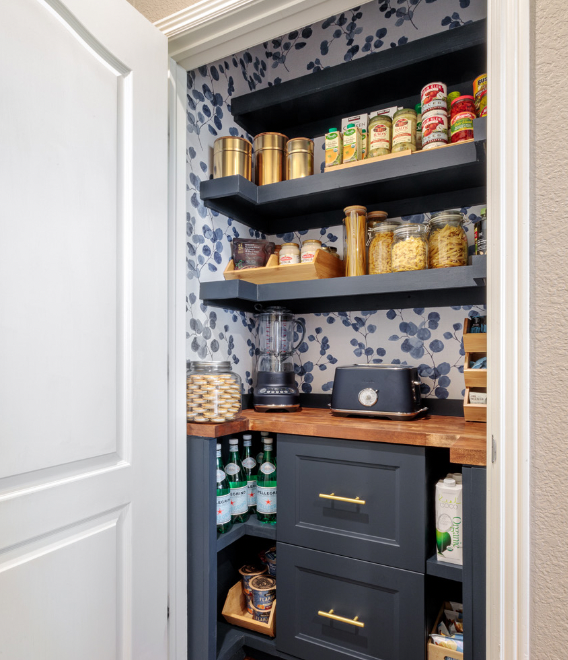
As Featured in West + Main Home Magazine: Pantry Re-Imagined


West + Main agents Steph Christianson and Sam Messmer teamed up and got an organizational wave of inspiration after scouring HGTV, Magnolia, Pinterest, and all-things-interior-design.

When it came time to actually begin on the pantry project, homeowner Steph credits renovation genius Sam for being detail-oriented and able to pick out specific design points to make a space even more eye- catching.

“Sam (gently) forced me to use all the scary tools that I never thought I’d have the courage to use,” Steph said. “She is a real pro and insists on safety every step of the way. We also spent a crazy amount of time (and girl muscles) to get the baseboards off during the demo. I remember Sam saying this is going to be the 'easiest' part of this project. Nope. That was not the case at all. Someone definitely attached those puppies with some crazy adhesive many years ago!”

Below: Before + After of Pantry

And the hard work did indeed pay off. Not only is the pantry practical, but a beautiful part of the home.

"Sometimes I open the pantry door just to gaze at how beautifully it turned out,” Steph said. “I knew I’d be giving up some storage space but the trade-off was totally worth it for me. It’s a work of art in my opinion, and I am in awe that two badass ladies did this!”

Pantry Details


If there is a home that you would like more information about, if you are considering selling a property, or if you have questions about the housing market in your neighborhood, please reach out. We’re here to help.
Search Homes in Colorado

Search Homes in Oklahoma

Search Homes in Oregon