Just Listed: Large private yard in The Willows


Fantastic single level home in a quiet cul-de-sac in NE Bend.

With mature trees and fully fenced with a sectioned off area for raised beds and raspberries, you will love the peace and privacy of the outdoor space. Inside you will find the 3 bedroom and 2 bathroom home cozy and bright with vaulted ceilings and skylights. Close to Pine Nursery, the canal trail, 10 Barrel Brewing, medical facilities, and more. Come take a look!

Listed by DeAnna Davis for West + Main Homes. Please contact DeAnna for current pricing + availability.


Have questions?
West + Main Homes
westandmain.co
hello@westandmainoregon.com

Presented by:
DeAnna Davis
(541) 390-8631
deanna@westandmainoregon.com


Search homes in Oregon
 

Central Oregon Real Estate Market Report from June 2022


Available inventory surged heading into the 4th of July holiday weekend, leading to a record increase of homes for sale across most of the country.

Bend detached homes throttled up to 2 months of supply, after bottoming out at ⅓ of a month this past January, resulting in the largest selection of houses since the pandemic began.

Bend prices cooled just slightly this month, while Redmond saw a slight increase in June.

Mortgage rates spiked in June, but have cooled in recent weeks giving buyers incentive to find something now. Rates this week are at 5.30% on 30-year fixed loans according to Freddie Mac.

“Over the last two weeks, the 30-year fixed-rate mortgage dropped by half a percent, as concerns about a potential recession continue to rise. While the drop provides minor relief to buyers, the housing market will continue to normalize if home price growth materially slows due to the combination of low housing affordability and an expected economic slowdown.”

Price reductions increased again in June, now up to 30.4% of the market nationally, said Mike Simonsen of Altos Research. “Expect 40% with price reductions by September,” he said.

Homes in La Pine are selling quickly this summer after needing several months for homes to sell through much of the winter. Sunriver ended the quarter with million dollar median prices.

Download the Full Report


BEND AREA
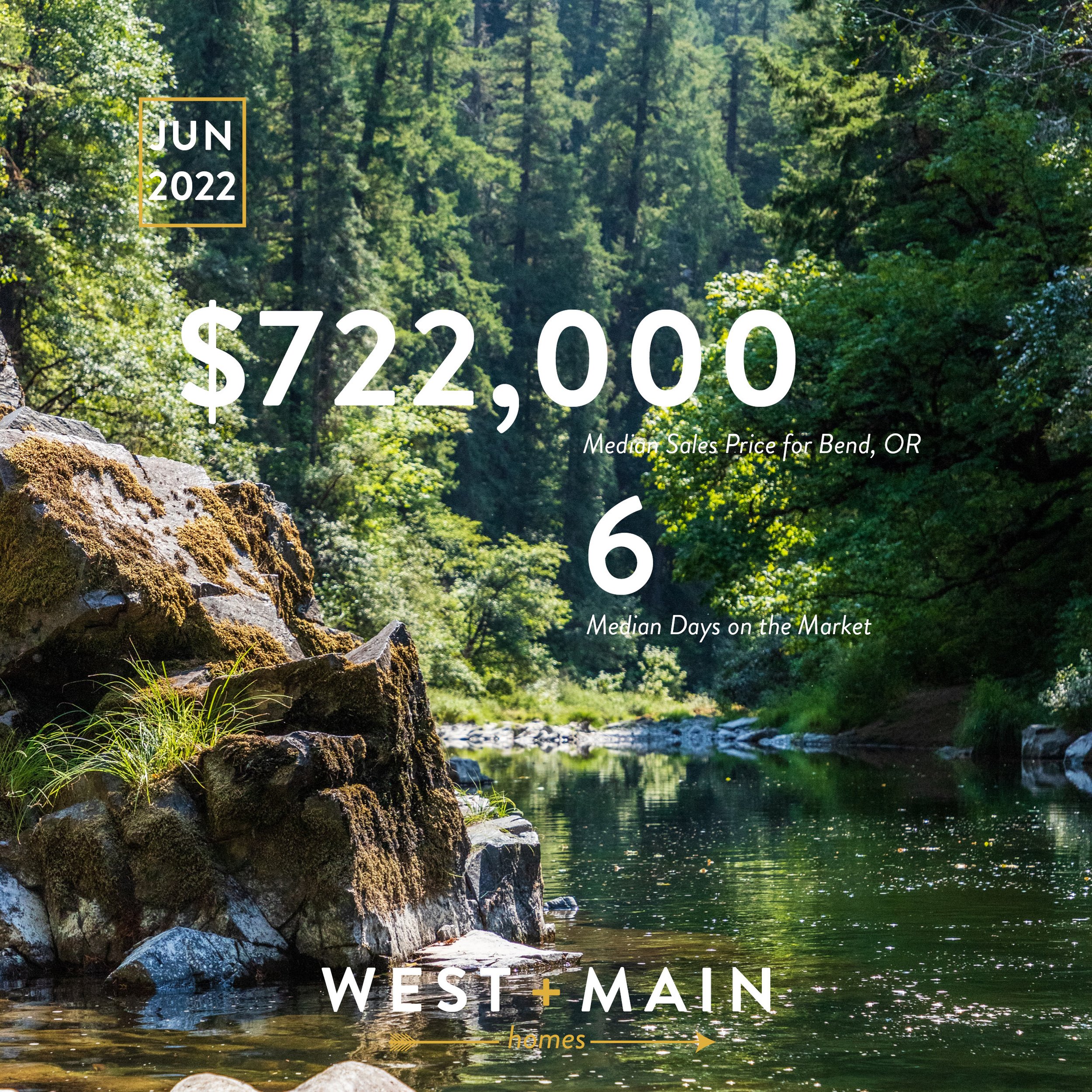
$722,000
Median Price
6 Days on Market

REDMOND AREA
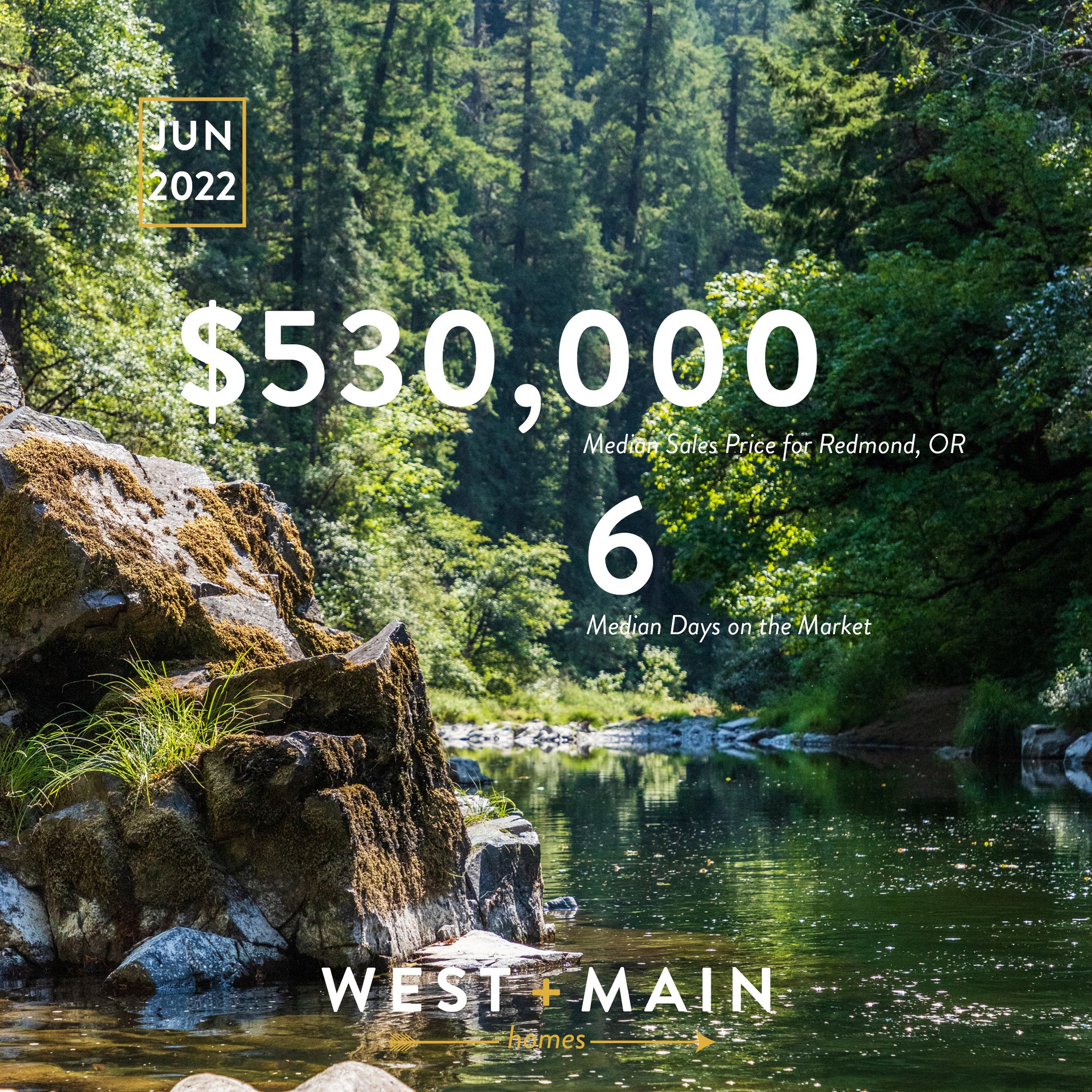
$530,000
Median Price
6 Days on Market

JEFFERSON COUNTY
$403,000
Median Price
6 Days on Market

SUNRIVER
$1,065,000
Median Price
4 Days on Market

LA PINE
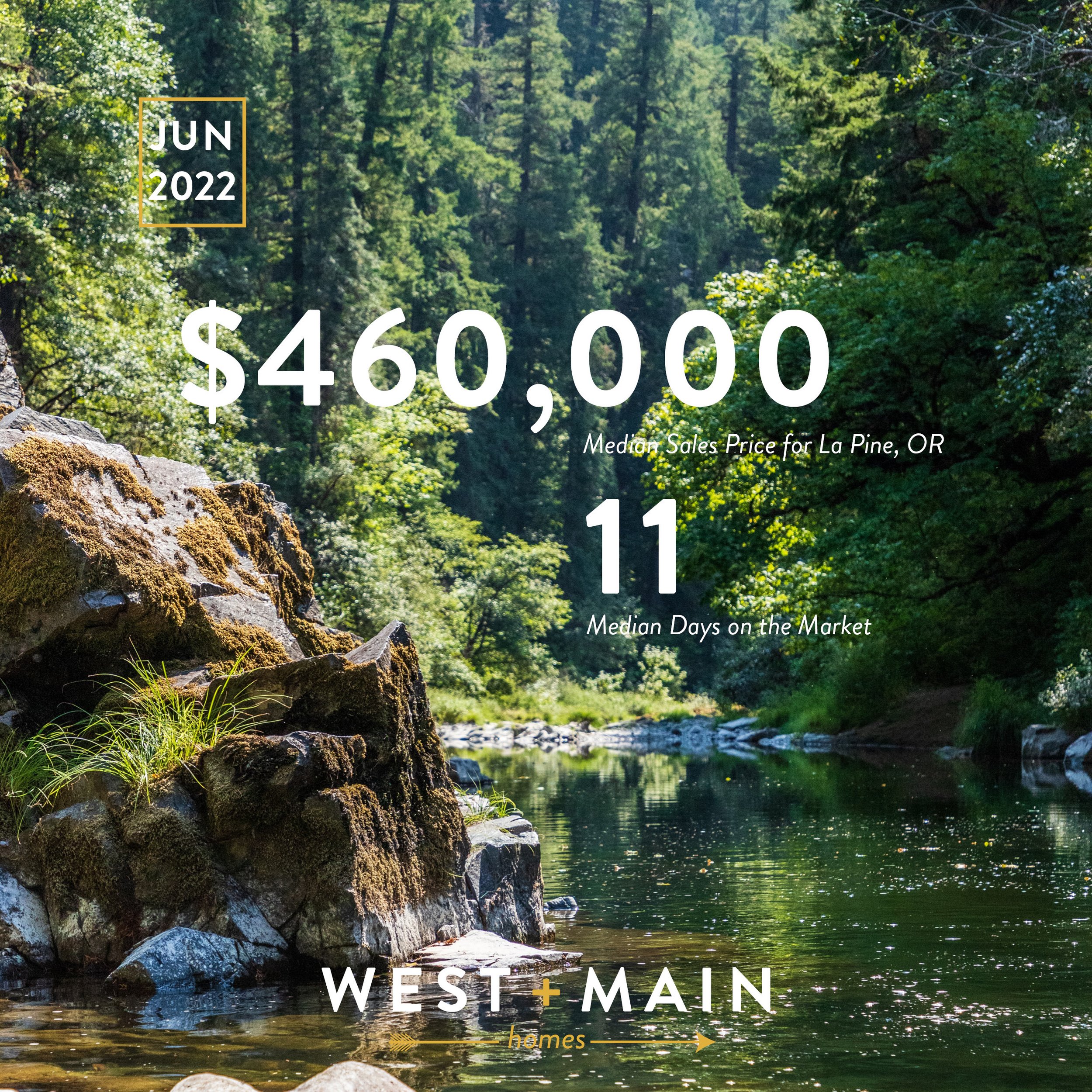
$460,000
Median Price
11 Days on Market

SISTERS
$690,000
Median Price
4 Days on Market

CROOK COUNTY
$400,000
Median Price
11 Days on Market


Thank you to Beacon Appraisal Group for compiling this report. Prepared by Donnie Montagner with information from the MLS of Central Oregon with permission from COAR.

If there is a home that you would like more information about, if you are considering selling a property, or if you have questions about the housing market in your neighborhood, please reach out. We’re here to help.

Search Homes in Oregon

“Climate-risky” vacation homes saw surge in past two years


The purchase of secondary homes with increased climate risk rose over 40% across flood risk, storm risk, and high heat risk in 2020 and 2021, compared to 2018 and 2019, according to a recent ClimateCheck study by Redfin.

While this does echo an overall increase in second home purchases during the pandemic, with a 37% increase in the same time frame, homes that fell under elevated climate-related risks saw even larger purchase rates compared to pre-pandemic levels.

These include a 45% increase in secondary homes at high flood risk, a 40% increase for those at high storm risk, and a 39% for high heat risk.


While rising mortgage rates and inflation has slowed the demand. for housing and slowly begun to decrease home prices across the country, this data shows that many Americans “now own at-risk second homes, which has implications for the future.”

“The threat of climate change isn’t the top concern for a lot of homebuyers, which means they often prioritize factors like warm weather and proximity to the beach over avoiding natural-disaster risk. Second-home owners, in particular, have another place to live if disaster strikes—another reason climate danger may not feel like a pressing issue,” stated Redfin Senior Economist Sheharyar Bokhari, in a release.

“But house hunters should be aware that purchasing in a disaster-prone area not only puts them and their home at risk, but their finances as well. Home values in climate-endangered places may fall in the coming years as consumers learn more about the risks to properties in these areas,” Bokhari said.

The Redfin report also found that, due in part to large migration into states like Florida and Arizona, which face significant heat and/or storm risk, more people have been moving into than out of counties with the largest share of homes at risk for natural disaster.

It says that nearly all (94%) of all second homes purchased in the past two years face high heat risk, with storm risk facing 78% of those homes. Other risks include high flood risk (26%), high fire risk (23%) and high drought risk (21%).

In other recent proptech news, June rate hikes pushed rental demand and multifamily building tech. PLACE also announced new CTO and CMO hires.

Keep reading on Housing Wire Media.

Related Links

If there is a home that you would like more information about, if you are considering selling a property, or if you have questions about the housing market in your neighborhood, please reach out. We’re here to help.

Search Homes in Colorado

Search Homes in Oklahoma

Search Homes in Oregon

How home-price growth has damaged the housing market


The S&P CoreLogic Case-Shiller Home Price Index just recorded 20.4% year-over-year growth nationally and a record 21.2% growth for its top 20 city composite, and now you know why my most significant concern for housing was home prices overheating, not crashing like people have warned about from 2012-2021.

From S&P: The S&P CoreLogic Case-Shiller U.S. National Home Price NSA Index, covering all nine U.S. census divisions, reported a 20.4% annual gain in April, down from 20.6% in the previous month. The 10-City Composite annual increase came in at 19.7%, up from 19.5% in the previous month. The 20-City Composite posted a 21.2% year-over-year gain, up from 21.1% in the previous month… Nine of the 20 cities reported higher price increases in the year ending April 2022 versus the year ending March 2022.

This data line lags the current housing market as it’s a few months old. Since the summer of 2020, I have talked about how to cool down home sales: we need the 10-year yield to break over 1.94%. This happened in March, and thankfully so. Imagine if mortgage rates didn’t rise this year. We are still showing double-digit home-price growth trends in the recent data as it takes time for higher mortgage rates to really increase supply back to normal levels.

However, as you can see below, the damage has been done with home-price growth. I developed a specific home-price growth model for the years 2020-2024 which said that if home-price growth grew at 23% for five years we would be fine, with total housing demand —both new and existing homes together — getting to 6.2 million or higher.

Well, guess what? America did a Hulk Smash on my model in just two years. Whenever you see vertical home-price growth over a period of time, it’s never a good thing. This either means you had a massive supply shortage or you had a credit boom.

Since 2014, we’ve not seen the credit housing boom that we saw from 2002-2005. Even today, the MBA purchase application index is below 2008 levels. The housing market can’t replicate the type of massive credit expansion we saw from 2002-2005, so the price-growth story has more to do with inventory collapsing to all-time lows.

It’s not just home price inflation either; shelter rental inflation has also taken off. When supply is low and demographics equal demand, don’t make it complicated, folks. People always need somewhere to live. If they’re employed, they’re either buying a home or renting.

Still, we can see the damage being done in the past few years as total housing inventory collapsed to all-time lows, and we are working our way back to just the historically low levels of inventory of 1.52 – 1.93 million.

For some time now, I have been focusing on that 1.52-1.93 million total housing inventory data as that is the level of inventory that would change my thesis that this is a savagely unhealthy market. The reality is that inventory collapsed to all-time lows right when our most prominent demographic reached their peak home-buying age. I believe once we get between 1.52-1.93 million, the housing market can be sane again, even though those levels were the historically low levels of inventory going back to 1982. I present my case for how we can break into that range next year on a podcast with Altos Research.

Hopefully, you can understand why we needed higher rates last year and early this year to try to cool the price-growth market. The reality is that home sellers and builders had too much pricing power. Also, certain investors felt no fear post-2020. The percentage of home flipping has grown since 2020, even beyond the housing bubble years, and we see some growth in total investor demand, however, as seen below, Institutional investors are still a small percentage of homebuyers.

Keep reading.

Related Links

If there is a home that you would like more information about, if you are considering selling a property, or if you have questions about the housing market in your neighborhood, please reach out. We’re here to help.

Search Homes in Colorado

Search Homes in Oklahoma

Search Homes in Oregon

Do Decks Add Value? 5 Backyard Features That Are Worth It


It’s easy to get carried away when designing the backyard of your dreams.

A pool? Yes! Sunroom? Of course! A new fence? Why not?? But the truth is that not all of these backyard features will be a selling point once it’s time to sell your home. 

We’ll explore the backyard features that offer the best return on investment, the nuances of a deck vs a patio, and how to stretch your money for the best backyard – on a budget.  

Do Decks Add Value To A Home? 

Short answer – yes. Long answer: decks are a practical way to add livability (i.e. square footage) to your home in a cost-effective way. Research shows that homeowners recoup at least 76% of their investment which is one the highest returns of any home improvement project. On average, the cost of a wooden deck is about $13,000 with a resale value of about $11,000. So it’s a safe bet for increasing your home value! 

Not only does it add monetary value, but if you enjoy the outdoors – it adds enormous value to your quality of life. Outdoor spaces that are conducive to cooking, eating together, hanging out, or watching the stars will create opportunities for family memories that you didn’t have before.  

Are you thinking about selling your home? Sell your home for more with Curbio. Get your free pre-listing renovation estimate today!

Decks vs. Patios 

After you’ve decided to move forward with a deck (great choice BTW) it’s time to get into the details. Do you want to build a deck – and if so, made of which material? Or is a patio a better choice for you? 

Wooden decks are the best choice because they’re affordable to build and desirable to buyers. Composite decking is pricier and doesn’t provide the same resale value – but it does offer higher durability than wood decks.  

Now to patios: typically, patios are built on a concrete slab. They’re commonly set with flagship stone, or a sand and pebble base. They are also built on ground-level, whereas decks are built above-ground. Patios are a great choice if you have a level area off your home and you’re interested in a small space for seating or a patio table. Decks are a better choice if you have a large space you’d like to convert and you don’t have a level backyard. 

Note the amount of direct sun your backyard gets as well. While building, this is a great time to decide on whether or not a covered area is right for your deck or patio. If you have brutal summers or not enough tree coverage, opt for at least partial shade. If you live somewhere temperate or with great foliage, you can probably leave the coverage out. 

Backyard Features That Add Value 

In addition to your deck, there are other profit-driving (and quality-of-life enhancing) outdoor features you can add to your dream backyard. Our 5 favorite backyard features that add value to your home include: 

Privacy Features 

Bushes, fences, and bamboo add depth and detail to the lines of your backyard – but they also serve an important function. Depending on your proximity to other neighbors, you might have total visibility into your backyard which is less than ideal. Instead of sharing your memories with the nosy family next door, consider bush installations that add both beauty and privacy. 

Shade Features 

On the same note, and a great suggestion to consider if your backyard lacks mature trees, is the concept of shade features. Pergolas, fruit trees, vines, and other larger growth is a great way to add vibrancy and life to your backyard, while also granting you some necessary relief. These are inexpensive options that continue to grow in both size and value over time – the larger they are, the more shade they provide. 

To get a sense of which renovations are the best option for you, chat with a home improvement consultant today. Curbio helps projects move faster, cost less, and sell for more. Get your free estimate today! 

A Swimming Pool 

Swimming pools are a polarizing feature. For some, they’re a must-have. For others, they’re high-maintenance and high-overhead. Think through the potential buyer of your home: do many people in the area want/have pools? Then it’s likely a good choice for your area. If you install an expensive pool though, don’t expect a high return. In-ground pools can cost between $30,000 and $100,000 to install, and recouping that investment depends greatly on who is buying. However, if it’s not about resale value, and it’s just about enjoyment – there’s nothing better than floating in your personal pool on a hot summer day. 

A Fire Pit 

Fire pits vary greatly in size, scope, and materials. Some people want them purely for function: a place to warm up and toast marshmallows on cool nights. Others create architectural statements that are luxurious and stylish. These obviously come with heftier installation costs. Think through your use of a fire pit and your objectives for your home value. Heavier investments will yield higher returns, but it’s not worth it if you don’t see the opportunity for consistent use. 

An Outdoor Kitchen 

Outdoor kitchens are a luxury, but they’re quickly becoming a backyard status symbol in certain climates. If outdoor livability is high in your area, an outdoor kitchen will pay for itself in a matter of months. Although they can cost anywhere from $15,000 to upwards of $100,000 – it’s best to keep it simple. NAR reports state that an inset grill, stainless steel drawers, a sink and 60 square feet of counter space is plenty for an adequate and functional cooking space. Plus, it makes sense financially! For a simpler install, homeowners can expect about a 71% return on investment. Who’s ready for dining al fresco? 

Knowing which outdoor features offer the best returns and drive the most value is an important step in designing your dream backyard. Even if a home sale isn’t in your immediate future, it’s best to make updates with your home’s worth in mind. If you’re thinking about selling – but don’t want to undergo the hassle and cost of updating your outdoor space, call Curbio! You don’t pay a dollar until your home sells, and with homeowners pocketing an average of $50,000 more in profit, every dollar counts.

Get more content like this on Curbio.

Related Links

If there is a home that you would like more information about, if you are considering selling a property, or if you have questions about the housing market in your neighborhood, please reach out. We’re here to help.

Search Homes in Colorado

Search Homes in Oklahoma

Search Homes in Oregon