5 predictions for the second half of the 2022 housing market


While housing market trends in the first quarter of 2022 resembled the previous year’s trend — buyer frenzy, homes selling over the asking price and continued home price appreciation — much has changed in the spring, which will impact some of the previously forecasted scenarios. 

Deviations from economic predictions

Most significantly, the Federal Reserve evolved from a gradual removal of monetary accommodations in 2022 to an aggressive forward guidance on how it plans to reel in stubbornly elevated inflation measures. Currently, bets are on two, 50 basis-point hikes in May and June meetings, followed by 25 basis-point increases through the end of the year. 

Similarly, balance sheet runoff is also likely to take a more aggressive timeline than initially anticipated. As a result, markets were quick to respond, driving mortgage spreads and rates much higher than most experts expected by this time of year. At over 5%, mortgage rates are now the highest they have been since 2010.

Looking ahead, the outlook for mortgage rates and the larger economy is uncertain, particularly as we consider the ongoing conflict in Ukraine, its rippling effect on the world economy and the faster removal of monetary accommodation. Mortgage rates should hover around 5%, but there may be more oscillation than we have seen recently. 

The impact on housing markets

As a result of surging mortgage rates and more aggressive tactics from the Fed, buyers flocked to the housing market during the early months of the year, pulling spring home-buying demand forward. However, inventory of for-sale homes for sale continued to lag in prior years, and despite posting some seasonal increase, barely offered relief for frantic home buyers. Homebuyer competition and bidding wars peaked again, and the share of homes that sold over the asking price reached last summer’s high, with 6 in 10 homes selling over the asking price in March. 

Though widely anticipated, the inventory of for-sale homes, unfortunately, does not look promising for 2022, particularly given the surge in mortgage rates and the general sense of being “locked in” by existing homeowners. While we may see some increase in new listings in out-migration markets (such as those in Northeast and northern areas of the Midwest), markets that have experienced strong buyer demand (such as Mountain West and Sand States) are not likely to experience a similar relief. 

While surging interest rates and lack of inventory are expected to have a dampening effect on demand, there are still many buyers who can afford the rising costs of homeownership and hence will compete for limited properties.

Additionally, after a decline at the end of 2021, we continue to see elevated levels of investor activity in 2022. In March, investors made up 28% of single-family home purchases. Motivated by the continued rise in single-family rents, investors were likely snapping up these homes to turn them into rentals. The CoreLogic Single-Family Rent Index increased to yet another high at the beginning of 2022 and registered a 13.1% annual increase in February. 

Market considerations  

Given the competing demand and historically low supplies, home price growth — which gained more steam in 2022 — is likely to remain robust and continue to clock in at a double-digit rate of growth through the remainder of the year. The CoreLogic Home Price Index Forecast is now predicting the annual average rise in the national index to be 17% in 2022, up from 15% in 2021. On the other hand, re-acceleration in home price growth, coupled with higher mortgage rates, will take a bite out of home sales activity. The previous forecast of a 1% rise in home sales for 2022 has been revised to a 3% decline.

Cash-out refinancing

Higher mortgage rates will also continue to impact refinance originations. Again, with much higher mortgage rates than previously expected for the year, refinance origination volume is likely to have a notable decline, possibly by more than 70% compared to 2021.

Refinance incentive has been largely removed with rates above 5%, given that 90% of current outstanding mortgages have a rate that is less than or equal to 5%. Nevertheless, the share of borrowers who are looking to cash out will continue to increase. This is due to homeowners tapping into the record amount of home equity wealth they’ve accumulated during the recent years of double-digit home price growth. 

The cash-out share of total origination dollar volume has already reached the highest level since the late 1990s, with the latest March 2022 reading at 22%. At the 2004 pre-Great Recession peak, the cash-out share of volume originations reached 17.7%. As we’ve noted before, refinance borrowers will likely have slightly lower average credit scores, as borrowers with Federal Housing Administration loans refinance into conventional loans with a loan-to-value ratio of 80% or less to eliminate the mortgage insurance premium.

Additionally, these borrowers will also have a longer average loan term to keep the monthly payment low. The availability of home equity wealth will also likely lead to an increase in home equity line of credit (HELOC) loans, which will allow owners to borrow against the available equity in their home without giving up the low mortgage rate. 

Employment and income

Lastly, strong employment and income growth have helped to keep new delinquencies at a very low level. The 30-day delinquency rate remains at its lowest in a generation, while foreclosure rates has ticked up slightly in January as foreclosure moratoria and the CARES Act forbearance program ended. Nevertheless, at 0.24%, the foreclosure rate remains at half of the average rate seen in a decade prior to the Great Recession. The areas that may see an uptick in distressed activity are along the Gulf Coast and some parts of the Northeast.

The road ahead

Taken together, 2022 will still be a strong year for housing, albeit more challenging than previously anticipated — particularly for potential buyers who aren’t able to afford the increase in monthly mortgage expenditure due to higher mortgage rates and home prices.

Summary of predictions:

  1. Interest rate on 30-year fixed-rate loans is projected to average 5% through the rest of 2022.

  2. Home sales to decline in 2022 from 2021’s 16-year high.

  3. Single-family home price growth to remain robust, averaging 17% for the year.

  4. Less refinance loans, but with a larger cash-out share and more HELOCs.

  5. Loan delinquency remains low, but with some uptick in distressed sales.

Read more like this on Housing Wire.

Related Links

If there is a home that you would like more information about, if you are considering selling a property, or if you have questions about the housing market in your neighborhood, please reach out. We’re here to help.

Search Homes in Colorado

Search Homes in Oklahoma

Search Homes in Oregon

Here’s Why a Rainy Day Is the Best Day to Look at a House


When it’s gloomy and cloudy outside, you might be tempted to text your real estate agent and ask about rescheduling the day’s home tours. (“Something just came up,” you might write, aka, you urgently need to snuggle up on the couch with a blanket, a good book, and a hot cup of tea.)

But according to real estate agents, you really should resist the urge to do this. A rainy day is one of the best days to look at a house, for several important reasons, as Gail Hardy, a real estate agent in Knoxville, points out in this clever TikTok video

“No one really wants to go look at houses when it’s raining, but it’s always smart to do so, and let me show you why,” she says, wearing a raincoat with the hood up.

Hardy then cuts to a clip of water dripping out of a gutter — and pooling in a puddle below, right next to a home’s foundation. She also shows a gutter extender that’s full of small landscaping rocks, which is likely preventing water from draining away from the house as it should.

Other real estate agents agree with Hardy. Craig McCullough, a real estate agent in the Washington, D.C. area, also recommends rainy day tours because they can highlight water-related issues inside the house, too. (Pro tip: McCullough recommends you take a big, deep breath through your nose on the tour — you might get a whiff of moisture and mildew, which have very distinctive smells but aren’t always super visible.)

“Water is one of the most destructive issues for a homeowner, and it also creates issues that can often be missed,” he says. “Leaks in a ceiling, moisture in a basement, and mildew smells are all heightened on a rainy day. If these are new leaks, they may not have developed water stains or dissolved drywall yet.”

If you’re buying a home that’s on or near a body of water, touring on a rainy day can also help you fully understand what you’d be getting yourself into if you buy the property, says Emily Cressey, a real estate agent in Seattle.

“I have been to lakefront homes where the whole grassy backyard was flooded by water on a rainy day, and the dock the sail boat was tied to was underwater as well,” she says. “Property in low-lying areas, wetlands, or poorly-draining soils can be more easily identified during or after heavy rain.” 

In places like Seattle, where there are lots of hills (and also lots of rainy days!), Cressey also recommends that buyers pay close attention to how water is moving along any paved surfaces like driveways. Is it flowing toward the house, or away from it? 

“The house should, ideally, be on high ground with water routed away from it or around it,” she says, adding that installing a French drain or gate can help with this issue. 

Another pro of pulling on your rain boots and grabbing an umbrella? In today’s fast-moving market where every open house seems to have a line snaking around the block, you may just have the place all to yourself — and that could be an advantage when it comes time to make an offer.

“It’s an incredibly competitive market right now, and anything that gives you an edge is a good thing,” says Mayer Dallal, managing director with mortgage lender MBANC. “And you can always change into dry clothes when you get home.” 

Learn more like this on Apartment Therapy.

Related Links

If there is a home that you would like more information about, if you are considering selling a property, or if you have questions about the housing market in your neighborhood, please reach out. We’re here to help.

Search Homes in Colorado

Search Homes in Oklahoma

Search Homes in Oregon

Just Listed: Custom Home with Deschutes National Forest Frontage


Come home to this amazing setting on a paved road that backs up to miles of National Forest Land.

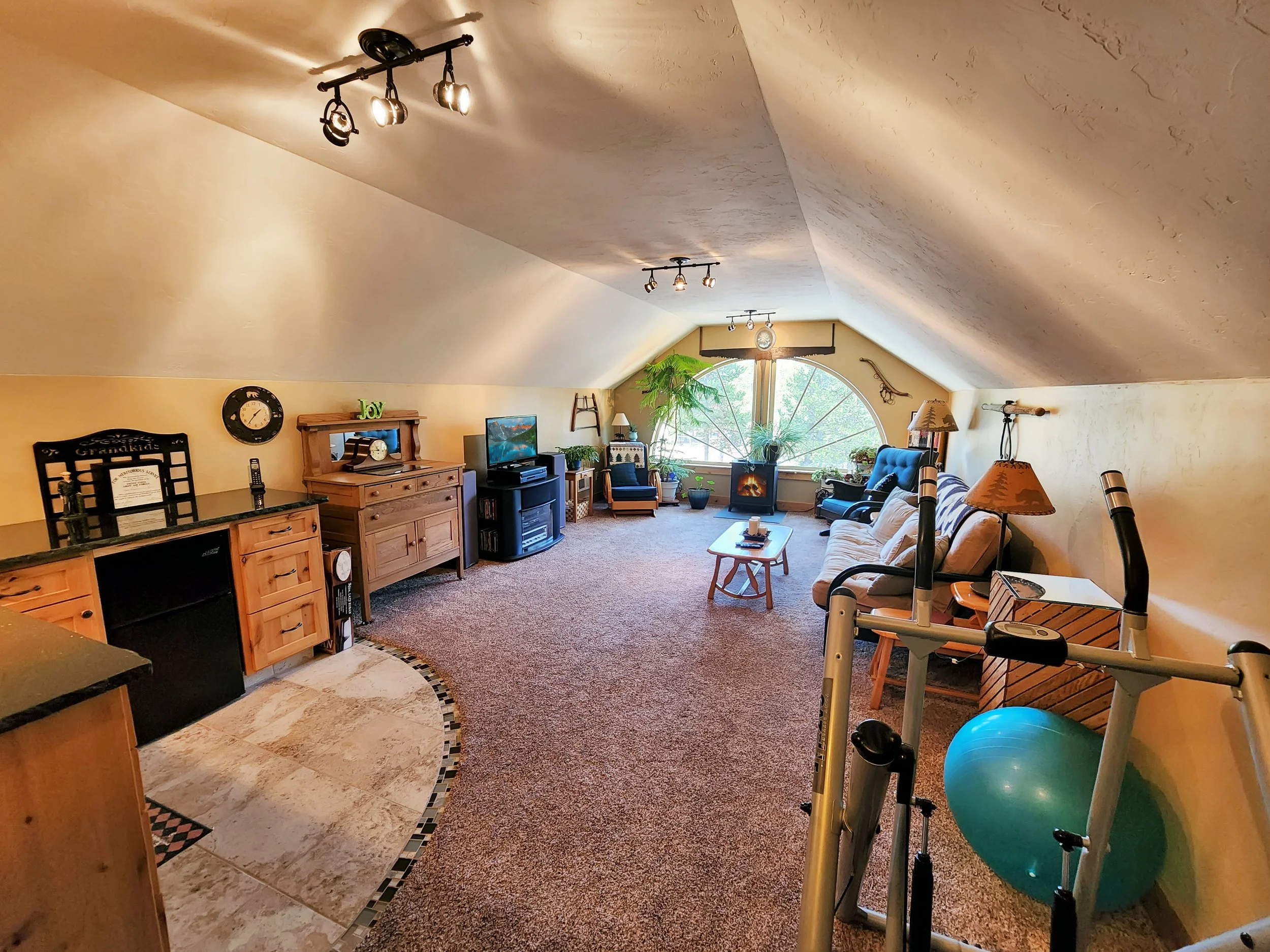
Highly desired Sunrise Blvd home with over 500 feet of Deschutes National Forest frontage. This is more than a builders custom home, this home is a piece of art with timeless finishes hand tooled metal and wood found throughout the home. Primary bedroom suite is downstairs along with home office, laundry, formal dining and living room. Upstairs you find additional living space with a huge family room area with a kitchenette. and 2 additional bedrooms, one which is adjoined to the hall bath. 3 car attached garage with one double 6 foot door and one single 9 foot door. Easy care landscaping and Outdoor living is astounding with patio off the kitchen and eating area that looks out on to the forest where deer and elk are often present. 3 storage buildings resemble a western town, but are completely functional. Huge shop with insulated upstairs for storage.

Listed by Thesa Chambers for West + Main Homes. Please contact Thesa for current pricing + availability.


Have questions?
West + Main Homes
westandmain.co
hello@westandmainoregon.com

Presented by:
Thesa Chambers
(541) 771-7064
thesa@centraloregonbuzz.com


Search homes in Oregon
 

Just Listed: River Front Home on The Big Deshutes


River Front on the Big Deschutes! Short Term Rental Approved by HOA and Property is Eligible!

Ranch Style, Single Level Home, featuring 3 Bedrooms & 2 Bathrooms in River Meadows! Located in the Back Corner of the Community, this Park-Like Setting features Mature Trees & Landscaping, a Large Deck, Propane Fire Pit, Large Storage Shed & a Water Feature on a 0.35 Acre Lot. Great Room with Vaulted Ceiling, Hickory Flooring, Propane/Stone Fireplace with Log Mantel. Kitchen with Slate Floors, Alder Cabinets, Granite Counter Tops, Island & Stainless Steel Appliances. Huge Master Suite with River Views, Oversized/Open Shower, Double Vanity, Jetted Tub, & Radiant Heat Tile Floors. 3-Car Garage with Attic Storage, Laundry Room with Washer & Dryer, Tankless Water Heater, New Roof in 2017, Forced Air Heating & Cooling. The Community has Pool, Docks on River and Access, Tennis Courts, Fitness Center, Clubhouse, and Walking/Biking Trails.

Listed by Andrew Moore for West + Main Homes. Please contact Andrew for current pricing + availability.


Have questions?
West + Main Homes
westandmain.co
hello@westandmainoregon.com

Presented by:
Andrew Moore
(949) 307-1405
andrew@westandmainoregon.com


Search homes in Oregon
 

How Homeownership Can Help Shield You from Inflation

If you’re following along with the news today, you’ve likely heard about rising inflation.

You’re also likely feeling the impact in your day-to-day life as prices go up for gas, groceries, and more. These rising consumer costs can put a pinch on your wallet and make you re-evaluate any big purchases you have planned to ensure they’re still worthwhile.

If you’ve been thinking about purchasing a home this year, you’re probably wondering if you should continue down that path or if it makes more sense to wait. While the answer depends on your situation, here’s how homeownership can help you combat the rising costs that come with inflation.

Homeownership Offers Stability and Security

Investopedia explains that during a period of high inflation, prices rise across the board. That’s true for things like food, entertainment, and other goods and services, even housing. Both rental prices and home prices are on the rise. So, as a buyer, how can you protect yourself from increasing costs? The answer lies in homeownership.

Buying a home allows you to stabilize what’s typically your biggest monthly expense: your housing cost. If you get a fixed-rate mortgage on your home, you lock in your monthly payment for the duration of your loan, often 15 to 30 years. James Royal, Senior Wealth Management Reporter at Bankrate, says:

A fixed-rate mortgage allows you to maintain the biggest portion of housing expenses at the same payment. Sure, property taxes will rise and other expenses may creep up, but your monthly housing payment remains the same.” 

So even if other prices rise, your housing payment will be a reliable amount that can help keep your budget in check. If you rent, you don’t have that same benefit, and you won’t be protected from rising housing costs.

Use Home Price Appreciation to Your Benefit

While it’s true rising mortgage rates and home prices mean buying a house today costs more than it did a year ago, you still have an opportunity to set yourself up for a long-term win. Buying now lets you lock in at today’s rates and prices before both climb higher.

In inflationary times, it’s especially important to invest your money in an asset that traditionally holds or grows in value. The graph below shows how home price appreciation outperformed inflation in most decades going all the way back to the seventies – making homeownership a historically strong hedge against inflation (see graph below):

So, what does that mean for you? Today, experts say home prices will only go up from here thanks to the ongoing imbalance in supply and demand. Once you buy a house, any home price appreciation that does occur will be good for your equity and your net worth. And since homes are typically assets that grow in value (even in inflationary times), you have peace of mind that history shows your investment is a strong one.

Bottom Line

If you’re ready to buy a home, it may make sense to move forward with your plans despite rising inflation. If you want expert advice on your specific situation and how to time your purchase, a trusted real estate advisor can help.

Learn more on Keeping Current Matters.

Related Links

If there is a home that you would like more information about, if you are considering selling a property, or if you have questions about the housing market in your neighborhood, please reach out. We’re here to help.

Search Homes in Colorado

Search Homes in Oklahoma

Search Homes in Oregon