Just Listed: Beautiful Home in 1.87 Acres in Town


Beautiful 3 bedroom 3 bathroom home on 1.87 acres with a 1188SF shop for all your toys .

This home has been almost completely remodeled, new cedar siding, new roof, all new interior paint and newer carpets. Living room has new large wood clad windows and a wood burning fire place. Formal dining room and kitchen with additional dining area. Kitchen has painted cabinets, stainless steel fridge, double ovens and dishwasher were all replaced in the last year. Family room with slider overlooking the backyard. Upstairs is the primary bedroom with a walk in closet and completely remodeled bathroom with a free standing soaking tub and tile shower, slider with a balcony overlooking the backyard. 

Listed by Tori Camacho for West + Main Homes. Please contact Tori for current pricing + availability.


Have questions?
West + Main Homes
westandmain.co
hello@westandmainoregon.com

Presented by:
Tori Camacho
(541) 610-8000
tori@westandmainoregon.com


Search homes in Oregon
 

Just Listed: Classic Craftman Style in Upscale Medallion Meadows


Classic craftsman style in upscale Medallion Meadows. Many period features are felt throughout, including original built-ins, beautiful fir wood floors, and a cozy wood burning fireplace.

Large kitchen with ample counter space and tons of storage. Primary bedroom on main level with walk-thru closet & laundry access. Large secondary bedrooms with built-ins & full bathroom on upper level. New wood floors through 2/3 of main. New outdoor pavilion for year-round covered entertaining. Are you ready?

Listed by Josh Crosby + Stephanie Johnsen for West + Main Homes. Please contact Josh or Stephanie for current pricing + availability.


Have questions?
West + Main Homes
westandmain.co
hello@westandmainoregon.com

Presented by:
Josh Crosby + Stephanie Johnsen
(503-830-9897
josh@westandmainoregon.com


Search homes in Oregon
 

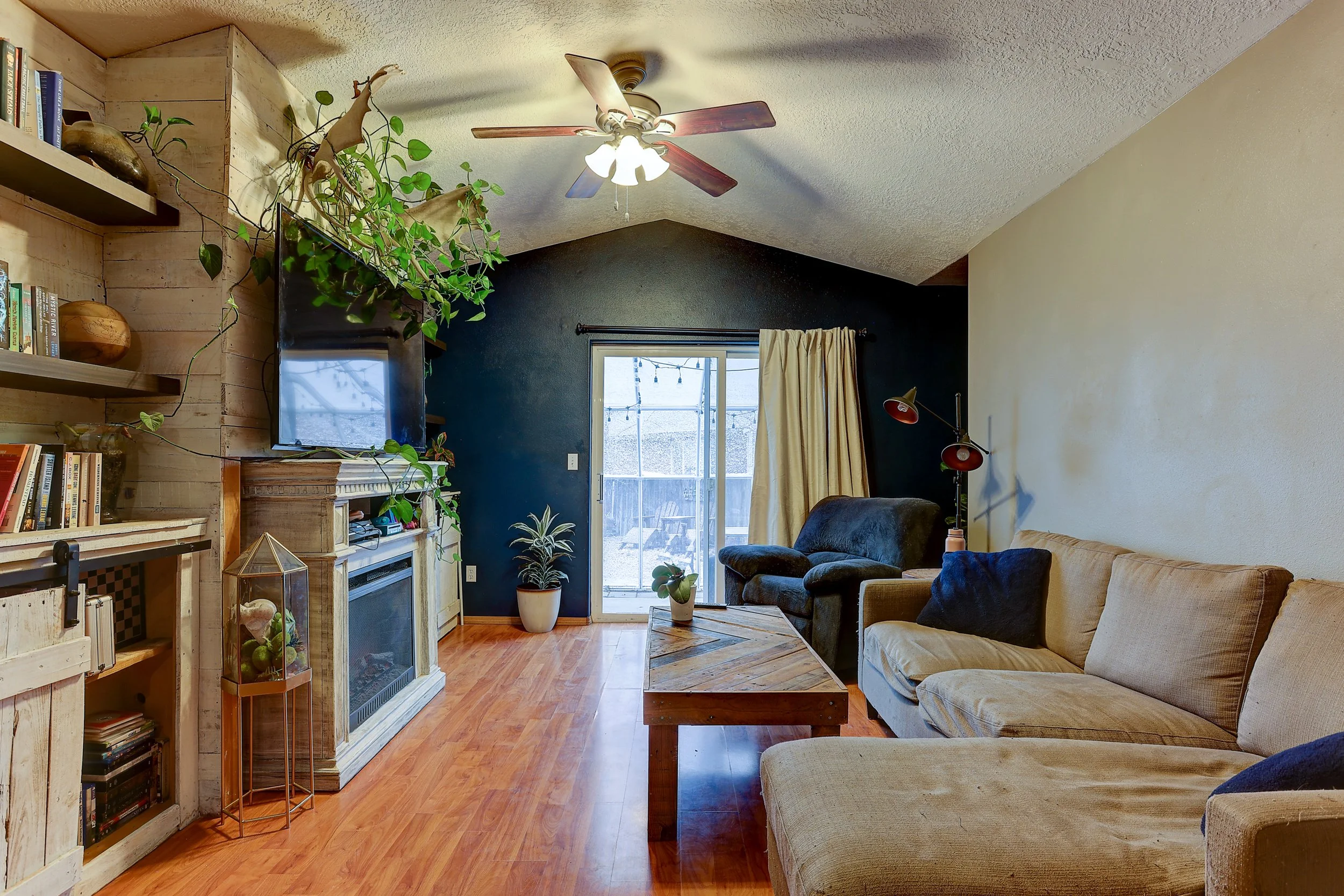
Just Listed: Beautiful Sing Story Townhome in Country Park


Beautiful single story townhome highlighting vaulted ceilings, an open floor plan, fireplace, garage and an updated kitchen (including new smart appliances).

The primary suite has a full bath and walk-in closet. Fall in love with the spacious fenced-in backyard including a greenhouse and hot tub. It is close to highway 97 and there is no HOA.

Listed by Kaitlynn Jeppsen for West + Main Homes. Please contact Kaitlynn for current pricing + availability.


Have questions?
West + Main Homes
westandmain.co
hello@westandmainoregon.com

Presented by:
Kaitlynn Jeppsen
(541) 604-1387
kaitlynn@westandmainoregon.com


Search homes in Oregon
 

Oregon’s population is booming, but not with kids


The past decade brought many things to Oregon: economic recovery from the Great Recession, surging household incomes and some of the nation’s biggest population gains.

What it did not deliver: more children.

Even as Oregon added more than 400,000 adults from 2010 to 2020, resulting in an overall population spike of 10.6%, the number of children remained virtually unchanged.

In fact, Oregon reported only 151 more children age 17 or younger last year than it did a decade earlier, according to an analysis by The Oregonian of 10-year Census data.

“It’s pretty interesting. Probably something that people don’t expect,” said Charles Rynerson, a Portland State University researcher studying population trends. “However, it was entirely predictable.”

Oregon is one of 30 states nationally that recorded no growth, or even declines, in its number of children over the past decade, while other states — including Washington — posted gains in their respective kids counts.

Oregon’s population is aging, a slow-motion phenomenon that could have major ramifications for the economy and society at large. Oregon’s youth population grew by about 20,000 between 2000 and 2010, but the falloff has been pronounced since around the Great Recession, as more women choose to delay childbirth, teen pregnancies fall and some potential parents decide to have fewer or no children at all.

What’s less predictable is whether the trend will hold — and what happens if it does. As has long been known, as the baby boomers age, they will need services provided by young, working-aged people. With fewer children today to grow into adults by the time that happens, there could be an imbalance.

Of 4.2 million Oregonians, 866,604 — or 20.5% — are children. A decade ago, it was 22.6%.

“If these trends hold, Oregon will be an older, grayer state,” said University of Oregon economics professor Tim Duy. “And the economy will reflect that.”

Declining births

While the downward trend in births has been apparent for some time, why it’s happening is not so clear.

“That’s a less straightforward question,” Rynerson said.

It’s among questions that Alison Gemmill of Johns Hopkins Bloomberg School of Public Health has dedicated her career to — trying to figure out why fewer women are having children and whether they’ll have kids later or never at all.

Since 2005, Oregon saw the 7th-largest drop in birth rates of any state, federal data show. And at the current average number of children per woman, there aren’t enough babies to replace the population. Now, women in Oregon are expected to have, on average, 1.4 children. They must have at least 2.1, on average, to replace themselves and the father.

Gemmill listed an assortment of factors potentially contributing to the decline in birth rates nationally and in Oregon over the last 10 years.

One contributor is a dramatic fall in teen pregnancies. Birth rates among Oregon girls and women ages 15 to 19 dropped nearly two-thirds from 2005 to 2019 — the ninth-largest relative drop of any state. Births are down for women 20 to 24, too, accounting for about 17% of all births last year, compared to 22% of all births a decade ago.

Another possible explanation for the fall in births among teens and adults, Gemmill said, is the widespread use of contraceptives in the state. Oregon is first in the nation in contraceptive use among women at risk of pregnancy, with 8 in 10 sexually active women under 50 using some form of contraception, federal data show.

Gemmill said there have also been less easily measured changes in society. There’s more of a sense of despair about the future of the world among young people, she said, along with more financial barriers to raising kids.

“Things are just getting worse,” Gemmill said.

Then, she said, there is less of a stigma around not having children. “It’s now acceptable for people to say they don’t want kids,” Gemmill said.

But the million-dollar question for Gemmill is whether the drop in births is permanent. The fact that women are having fewer kids doesn’t mean they won’t have kids at all. The experience in Europe, which has demographic patterns a few decades ahead of those in the United States, indicates there could be a rebound, Gemmill said.

But it could be decades before it’s clear if that happens. In the meantime, Oregon will continue to rely on people migrating into the state to increase its population and workforce.

Migration

If it weren’t for people moving to the state, Oregon’s economy would be in a tough spot.

“In the long-run, without migration, Oregon’s population will decline,” said Kanhaiya Vaidya, a demographer with the Oregon Office of Economic Analysis who forecasts population trends for the state.

The declining birth rate has outpaced Vaidya’s past forecasts. Five years ago, Vaidya said by 2040 more people would die than are born in Oregon. Before the pandemic, he revised his forecasts to say it would happen by around 2027 or 2028.

Vaidya said he isn’t particularly worried about the declining birth rates in Oregon.

In a worst-case scenario, there could be an imbalance in the economy, with a lot of elderly Oregonians needing services that the workforce simply cannot meet. For that to happen, there would have to be an economic downturn long enough to reverse the trend of working-age people moving to Oregon, Vaidya said.

Duy, the University of Oregon economics professor, said that, indeed, with current trends, there could be greater constraints on economic growth and smaller labor force growth in the future. If it’s hard to find workers, then companies will either increase their productivity per employee or look for alternatives to Oregon, he said.

Interestingly, migration among working adults appears to have put Washington way ahead of Oregon in its child population — and perhaps could serve as a roadmap for growing the kid count.

Washington began 2010 with about 67,500 more children than a decade earlier, and it began 2020 with nearly 100,000 more children than the decade before.

There’s a straightforward explanation, said University of Washington demography professor Sara Curran.

In essence, tech companies — Seattle-based Amazon, in particular — have over the last two decades gone on a hiring frenzy, drawing thousands of people a month, at times.

Usually hiring younger people who are nimble and able to move states, those people are now older and having children.

“That cohort is settling down,” Curran said, “and reproducing.”

Learn more on The Bulletin.

Related Links

If there is a home that you would like more information about, if you are considering selling a property, or if you have questions about the housing market in your neighborhood, please reach out. We’re here to help.

Search for Homes in Oregon

Is $1M still a ‘luxury’ sale in Denver?


Denver may need to redefine the “luxury” residential market.

The Denver Metro Association of Realtors defined the luxury market back in 2013 as any home priced at $1 million and up.

But $1 million doesn’t get what it used to.

There’s something of a mythical quality to a $1 million price tag. But sales of a single residence above that mark are becoming more and more common in the region.

BusinessDen analyzed six years of data on local homes sales, from January 2016 through the end of November 2021. The data, provided by DMAR, was for seven counties: Denver, Arapahoe, Adams, Broomfield, Boulder, Douglas and Jefferson.

The number of homes that sold for at least $1 million quadrupled, jumping 310 percent during that period, the analysis found. There were 1,353 such sales in 2016, and 5,548 in the first 11 months of this year.

The spread of the seven-figure sale 

The number of luxury home sales has increased steadily every year since 2016. But the biggest jump came from 2020 to 2021.

Homes closing at $1 million and up increased from 3,544 in 2020 to 5,548 in the first 11 months of 2021, a 56.5 percent increase. That figure will increase somewhat in the year’s final month, but December is not a peak time for home sales.

The $1 million price tag has crept into new Denver neighborhoods over the past five years.

In 2016, there were no luxury sales in Curtis Park, Whittier, or Sunnyside. In 2021, there were 13 in Curtis Park, 26 in Whittier and 25 in Sunnyside.

Home sales over $1 million in Sloan’s Lake increased from six in 2016 to 69 in 2021 (a jump of 1,050 percent) in part due to new projects such as the Lakehouse Residences condo building.

In LoDo, LoHi and the Highlands combined, there were 11 luxury home sales in 2016, and 139 in 2021.

Surrounding suburbs like Arvada and Golden, and suburb-like Denver neighborhoods like Central Park (formerly Stapleton), have also seen a massive jump in $1 million-plus sales.

There were 15 luxury single-family home sales in 2016 in Central Park and 100 in 2021, according to separate data compiled by Land Title, which excluded condos and townhomes.

Arvada had eight luxury sales in 2016 and 94 in 2021, according to the DMAR data, with a record sale of $3.5 million pending. And Golden hit a record sale of $6.7 million last month for a 17,716-square-foot mansion on 35 acres.

In 2016, there were six $1 million and up sales in Westminster. In 2021, there were 37.

And while new markets are experiencing a sudden boom of $1 million price tags, those neighborhoods that were already luxury are just upping the ante.

In Cherry Creek, there were 87 luxury sales in 2016 and 129 in 2021. Six years ago, there were 43 luxury single-family home sales in Hilltop and 61 in Wash Park. This year, there were 130 in Hilltop and 187 in Wash Park.

Just because a home sells for seven figures doesn’t necessarily mean it will stay standing. Usaj had a listing in Cherry Hills earlier this year that was marketed as a scrape and sold for $2.4 million.

Big jump coincides with the pandemic

The timing of the biggest annual jump, 2020 into 2021, points to the pandemic as a major factor.

With vacations on pause, and many working from home, buyers have shown more interest in larger properties, and an increased willingness to be farther from downtown. That has spread the $1 million home to new parts of the metro area.

Mortgage rates also dropped, which made the $1 million home more affordable.

Currently, buyers can get a mortgage rate of around 3 percent for a $1 million home, according to Redfin, which translates to a monthly payment of $3,952. In 2016, the average mortgage rate was 3.7 percent with a monthly payment of $4,261. The figures assume a 20 percent down payment of $200,000.

Out-of-state buyers from big cities like New York and L.A. also flocked to Denver during the pandemic for more elbow room and lower prices. Chirafisi recently spoke with a buyer moving here from Mill Valley, California, where the luxury market starts at $3.5 million.

Andrew Abrams, chair of DMAR’s market trends committee and chief operating officer of BSW Real Estate, said concerns over construction defect litigation have limited condominium development over the past couple decades.

That has pushed buyers toward single-family homes, which tend to be more expensive.

“Now that migration to Colorado is increasing, the amount of housing per buyer is not enough,” Abrams said. “So, naturally, prices are increasing.”

$1 million is ‘the number we picked’

Denver’s $1 million definition of luxury dates to 2013.

That year, Realtors Gary Bauer, an independent real estate analyst, and Steve Danyliw with Danyliw & Associates, both members of DMAR, put together the association’s first monthly market trend report.

Bauer, who died last year, was an agent in Denver for more than 40 years and was the “go-to” statistical analyst for major brokerages in the area, Danyliw told BusinessDen. Bauer created the report’s initial brackets and set the luxury market definition as $1 million and up.

“There’s no national standard or national definition of what luxury means,” Danyliw said. “This is the number we picked and went with.”

Back in 2011, properties priced at $1 million and up made up 0.9 percent of the marketplace, according to Danyliw. Now, they make up 7.9 percent of the market.

Danyliw said that Redfin defines the luxury market as the top 5 percent of homes in each market.

“If we apply that to Denver, the starting price would be around $1.2 million. So, we’re not that far off,” he said.

Danyliw, a previous chairman of DMAR’s market trends committee, said the association has been having an internal discussion about whether to redefine the luxury market over the last year.

“I just don’t think, as a committee, we’ve crossed that threshold where we need to seriously reconsider yet,” he said. “One of the things that holds us back is the historical reports. We use those same price brackets to compare data year-over-year and month-over-month. So, if we changed that, it’d be like comparing apples to oranges.”

But he said the current thinking could change if the market boom continues.

“If we get 10 to 13 percent growth in average and median price by the end of 2022, we’ll probably have to have that conversation a little sooner rather than later,” Danyliw said.

Keep reading.

Related Links

If there is a home that you would like more information about, if you are considering selling a property, or if you have questions about the housing market in your neighborhood, please reach out. We’re here to help.

Search Homes in Colorado

Search Homes in Oklahoma

Search Homes in Oregon