U.S. Has a Shortfall of 6.5 Million Single-Family Homes Due to a Decade of Under-Building


A decade of under-building has led to a shortfall of 6.5 million single-family homes in the U.S., according to a new report released Wednesday.

Realtor.com looked at household formation, housing starts, and home sales, and found that given how many households were formed between 2012 and 2022, the U.S. is short of 6.5 million single-family homes.

But that gap diminishes somewhat if households opted to live in multi-family construction, which has boomed. Including multi-family homes, the gap in housing units in the U.S. falls to 2.3 million homes.

Yet most of those multi-family units won’t necessarily provide a path to homeownership, said Hannah Jones, an economic analyst at Realtor.com.

‘Cooling buyer demand and builder confidence led to slower single-family construction and a shift in builder focus to multi-family last year.’ - Hannah Jones, an economic analyst at Realtor.com

“Cooling buyer demand and builder confidence led to slower single-family construction and a shift in builder focus to multi-family last year. While that brings greater supply to the market, most of it will be used for rentals and won’t address ongoing affordability challenges in the for-sale space,” Jones said.

Builders moved into building apartments, rather than single-family homes, “as the rental market remained profitable with nationwide rent hitting a new all-time high,” the report explained. “Through the first three quarters of 2022, an average 94.5% of all multi-family units started were intended to be used as rentals.”

Plus, “these homes take an average of 15 months to complete, and so their impact won’t be fully realized for some time,” Jones added, as compared to single-family homes that take on average 7 months to complete.

In 2022, the U.S. saw 2.06 million household formations, the report said. That refers to a group of people living together. Household formation affects the economy, as it drives demand for housing, and further down the line, spending on household appliances and furniture.

Affordability eroded homes become scarce and rates remain high

Between 2012 and 2022, there were 15.6 million households formed, Realtor.com said. Yet in this 10-year period, only 13.3 million housing units were started, and even fewer—11.9 million—completed.

Over that 10-year period, the rate of housing starts began to slow. Completions have climbed, yet they’re still not enough.

In 2022, about 1 million single-family homes were “started,” or rather, construction began on these homes. That’s 10.6% fewer than in 2021.

Multi-family starts were much higher, up 15% compared to 2021, reaching 545,000.

Amid this backdrop of a housing deficit, affordability has dwindled.

Just a tenth of new homes sold in the fourth quarter of 2022 were less than $300,000. That’s down from 41% of homes being below $300,000 in the fourth quarter of 2019.

“As inflation and mortgage rates likely soften later this year, buyers are likely to return to the market [and will be] in search of an affordable home, and the ongoing housing-supply shortage will only continue to put pressure on the market,” Danielle Hale, chief economist at Realtor.com, said.

Realtor.com acknowledges that its headline figure of 6.5 million “overstates the housing shortage,” since it doesn’t consider multi-family units as homes for buyers.

Learn more on Realtor.com

Related Links

If there is a home that you would like more information about, if you are considering selling a property, or if you have questions about the housing market in your neighborhood, please reach out. We’re here to help.

Search Homes in Colorado

Search Homes in Oklahoma

Search Homes in Oregon

Search homes in Minnesota

2 Reasons for Doing Closing Paperwork in Person


Closing on a property used to be a homebuyer rite of passage.

Sitting in a mortgage broker’s office, branded pen in hand, and signing seemingly hundreds of documents while wondering if you can steal yet another piece of candy from a bowl was the ritual everyone had to go through to own a little slice of the American Dream.

But closing remotely became standard as the pandemic progressed three years ago, and even though in-person activities have since returned, there are still buyers and sellers — and agents, too — who prefer virtual closings. 

Is this a good thing, as many remote shifts have been? Perhaps not. I spoke to three real estate professionals who shared why they still think it’s a good idea to do closing paperwork in person. Read on to find out why you might still want to do this milestone face-to-face. 

It’s a Person-to-Person Transaction

Closing on a house is something to be celebrated and commemorated, and there are conversations that could happen in the small talk between signing approximately 500 documents that add even more emotion to the process. 

“When our team is fortunate enough to represent a first-time homebuyer, we highly encourage an in-person closing,” Haley Cutter, with Boston-based Cutter Luxe Living, says. “This is an amazing milestone that our team loves to be a part of.”

“I had a recent closing where the seller was retiring and liquidating his investment properties. My buyers were new investors, and this was their first property. The seller took an hour after closing to talk to us about his successful investment strategy over the last 40 years,” Tarasa Hurley, a Realtor in Pittsburgh, says. She explains that this in-person interaction gave her clients a personal connection with someone they may not have met otherwise — and introduced them to someone who can offer years of wisdom and expertise. 

On another recent closing, adult children were selling their late mother’s home. Hurley describes the closing, “The mother lived a long life, but the children were still grieving. At the closing table, we found out that my clients had moved here to be part of the church that the mother helped found.” This personal moment created a connection that helped the children confirm that their mother would have been okay with the decision to sell the home — and the new residents.

She goes on to say, “My clients decided to keep the mother’s religious statue in the garden as a tribute. We had hugs and tears all around the table. Sometimes closings are not just financial; they create closure for families.”

Changes Can Be Made

“Simply put, signing closing paperwork in person allows margin for error. When the parties of the transaction sign in person with an escrow or closing agent, errors within the documents or a signature in the wrong place can be corrected instantly,” says Phil Greely, a licensed real estate agent in Seattle, pointing out the more practical reason to show up on closing day.

He explains that had a seller client scheduled to sign in-person, and, when the buyer’s agent opted to credit a small amount of money to the buyer, they had to adjust the documents and get the seller’s initials to approve the new terms.

“Because they were signing in person, the unsigned form was signed immediately during the scheduled signing. Had the seller been out of town or mailing documents back and forth, the closing date may have needed to be changed for this last-minute alteration,” says Greely.

Plus, both parties had a professional guiding them as they navigated the mountain of documents. Unless you buy and sell on a regular basis and these technical and legal terms never become second nature, having your agent by your site is a huge bonus. 

Read more on Apartment Therapy.

Related Links

If there is a home that you would like more information about, if you are considering selling a property, or if you have questions about the housing market in your neighborhood, please reach out. We’re here to help.
Search Homes in Colorado

Search Homes in Oklahoma

Search Homes in Oregon

Search homes in Minnesota

Homes are getting smaller — which could improve affordability


Newly built homes continue to lose square footage. But agents see an upside for buyers seeking more affordable options.

In the realm of new construction, builders are finding that affordability is now trumping pandemic space.

According to U.S. Census data and analysis by the National Association of Homebuilders (NAHB), the median square footage of a single-family home dropped to 2,203 in the fourth quarter of 2022, another dip from Q3 and the lowest level since 2011. 

It’s quite a turnaround from the early days of the pandemic, when people wanted more space because they were spending more time at home. 

But space and affordability are competing factors, and in a higher-interest-rate environment, affordability carries more weight, particularly for first-time buyers. “The tighter budget factor is likely to dominate in coming quarters,” said Robert Dietz, chief economist at NAHB.

According to the NAHB/Wells Fargo Housing Opportunity Index, only 38.1% of new and existing homes sold in the fourth quarter were affordable to families earning the U.S. median income of $90,000. That’s the third straight record low for the index, which began tracking the data on a consistent basis in 2012. It’s also a big drop compared to the fourth quarter of 2021, when the index was at 54.2%.

Affordability appears to play a role in home size. Prior to recent months, the trend over the past 25 years has been to build larger single-family homes, with two noticeable dips. 

The first dip was prior to the Great Recession, when home prices were skyrocketing. It happened again between 2016 and 2020 as the economy recovered, and construction companies could once again develop starter homes after years of running into funding challenges.

Finding buyers for smaller homes

Changes in land use policies have enabled the construction of more small homes — sometimes very small homes on a shared lot. In Kirkland, a city on the shores of Lake Washington near Seattle, Windermere broker Max Rombakh said he’s seeing different housing options after the city adopted zoning changes to address the shortage of mid-level housing, sometimes referred to as “missing middle housing.” 

The changes have resulted in more options for buyers and homeowners, including cottages and accessory dwelling units that are smaller but attractive to those looking for a good location, Rombakh said. 

“I would want to own the least expensive real estate in the most expensive neighborhood,” Rombakh said, adding that such homes tend to appreciate faster because of the location. The smaller homes Rombakh has seen also tend to have more upgrades, which is a major selling point.

“Ultimately the majority of consumers that are buying smaller homes are downsizers or starter families,” he said. 

While some new buyers are skeptical, purchasing a larger home that’s farther away can have other drawbacks. Plus, smaller homes mean lower utility bills and property taxes, as well as less maintenance.

One downside for some buyers: Smaller homes tend to only have a one-car garage — or no garage at all. “That’s usually the biggest hurdle we’re getting people over,” Rombakh said, adding that yards also tend to be smaller.

However, affordability is often a deciding factor, especially in a place like Kirkland, where the average home price can be in the $1 million range.

Keep reading.

Related Links

If there is a home that you would like more information about, if you are considering selling a property, or if you have questions about the housing market in your neighborhood, please reach out. We’re here to help.

Search Homes in Colorado

Search Homes in Oklahoma

Search Homes in Oregon

Search homes in Minnesota

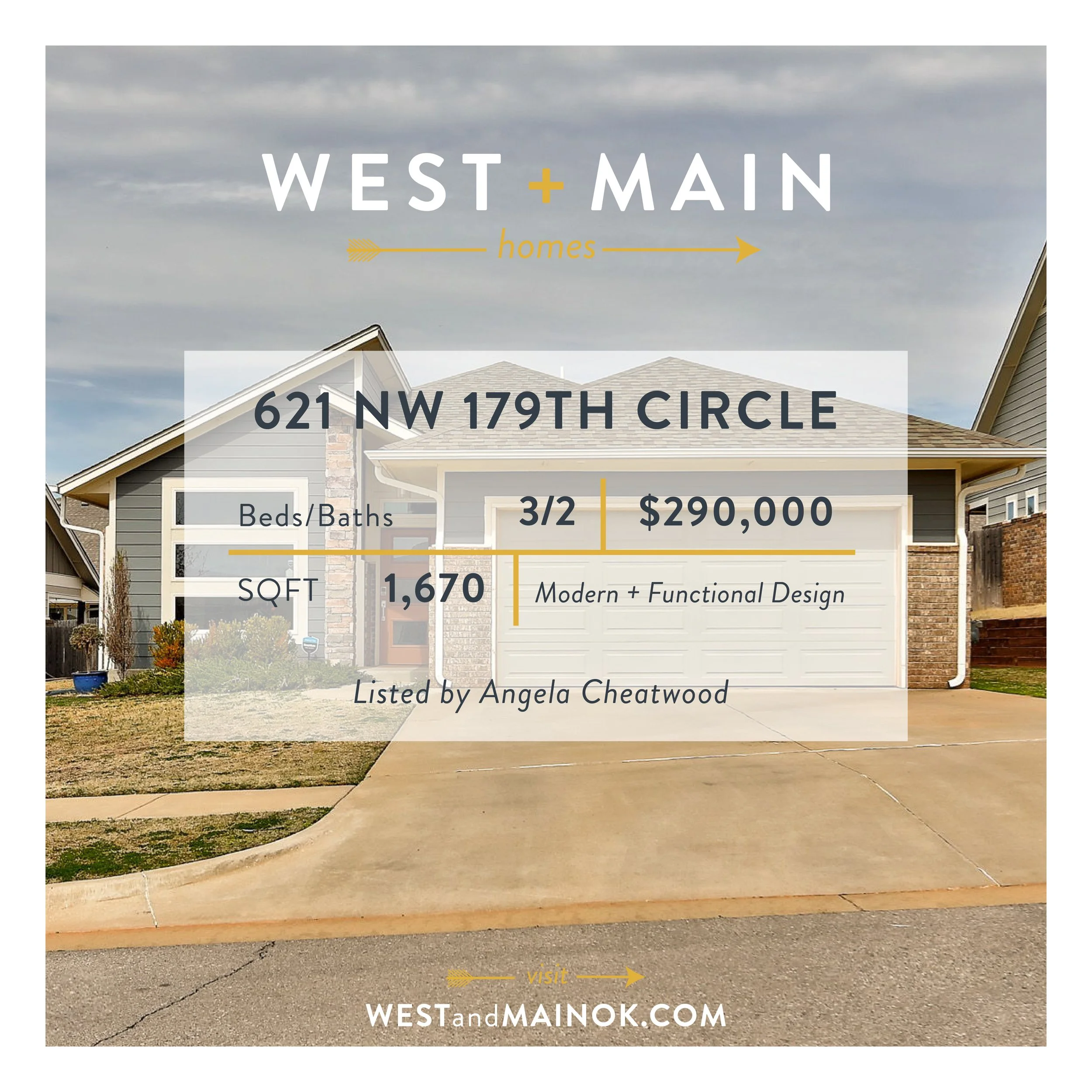
Just Listed: functional design and the bright and airy spaces in the heart of Edmond


Don't miss this gem in the heart of Edmond.

You'll love the functional design and the bright and airy spaces. Step inside to a spacious office or formal dining with large, horizontal windows to your left and continue to the beautiful eat-in kitchen. The island serves as the perfect place to gather with company or prepare your favorite meals. You'll appreciate the quartz countertops, gas range, painted cabinets. The kitchen is open to the dining space and living room. It is a nice area for entertaining or relaxing in front of the low maintenance, wall mounted fireplace. Wood-look tile throughout the main area looks great and makes cleaning a breeze. After a long day, escape to your primary suite. The bathroom has dual vanities, tiled shower, and a large closet. Additional bedrooms, laundry, and a bathroom are located on the other side of the kitchen offering privacy to the primary bedroom. The tankless water heater is another great addition. This sleek, modern home is just minutes away from all Edmond has to offer and is the perfect place to call home.

Listed by Angela Cheatwood for West + Main Homes. Please Contact Angela for current pricing + availability.


Have questions?
West + Main Homes
(405) 652-6635
hello@westandmain.com

Presented by:
Angela Cheatwood

405-406-4832
Angela@westandmainok.com


Just Listed: Charming 4 bed, 3.5 bath in the Edmond


Welcome home to Chestnut Oak Drive!

This breathtaking entry has HGTV-level curb appeal and leads right into your formal dining room. Start the day cozied up next to the fireplace in the spacious living room, or whip up breakfast in your unique + stunning kitchen, which features a copper farmhouse sink, live edge granite, copper prep sink in the island, double ovens, and a large curved breakfast bar. With four bedrooms, and a study there is plenty of room for your dream WFH office, gym, art studio - or all of the above! The primary suite features an oversized closet, patio access, and large windows to let all the light in. Attached, the primary bath has a jetted tub, standing shower and double vanities. Finish the day with a game of pool in the family room or relax in the home theatre, and then head outside to enjoy Oklahoma sunsets on your covered patio with built-in grill and fridge with counter space overlooking a large backyard. Additional features include storm shelter, decked attic, decked attic, oversized bedrooms and tankless hot water tank. You're going to LOVE living here!

Listed by Gracie Storey for West + Main Homes. Please Contact Gracie for current pricing + availability.


Have questions?
West + Main Homes
(405) 652-6635
hello@westandmain.com

Presented by:
Gracie Storey

405-585-1339
gracie@westandmainok.com