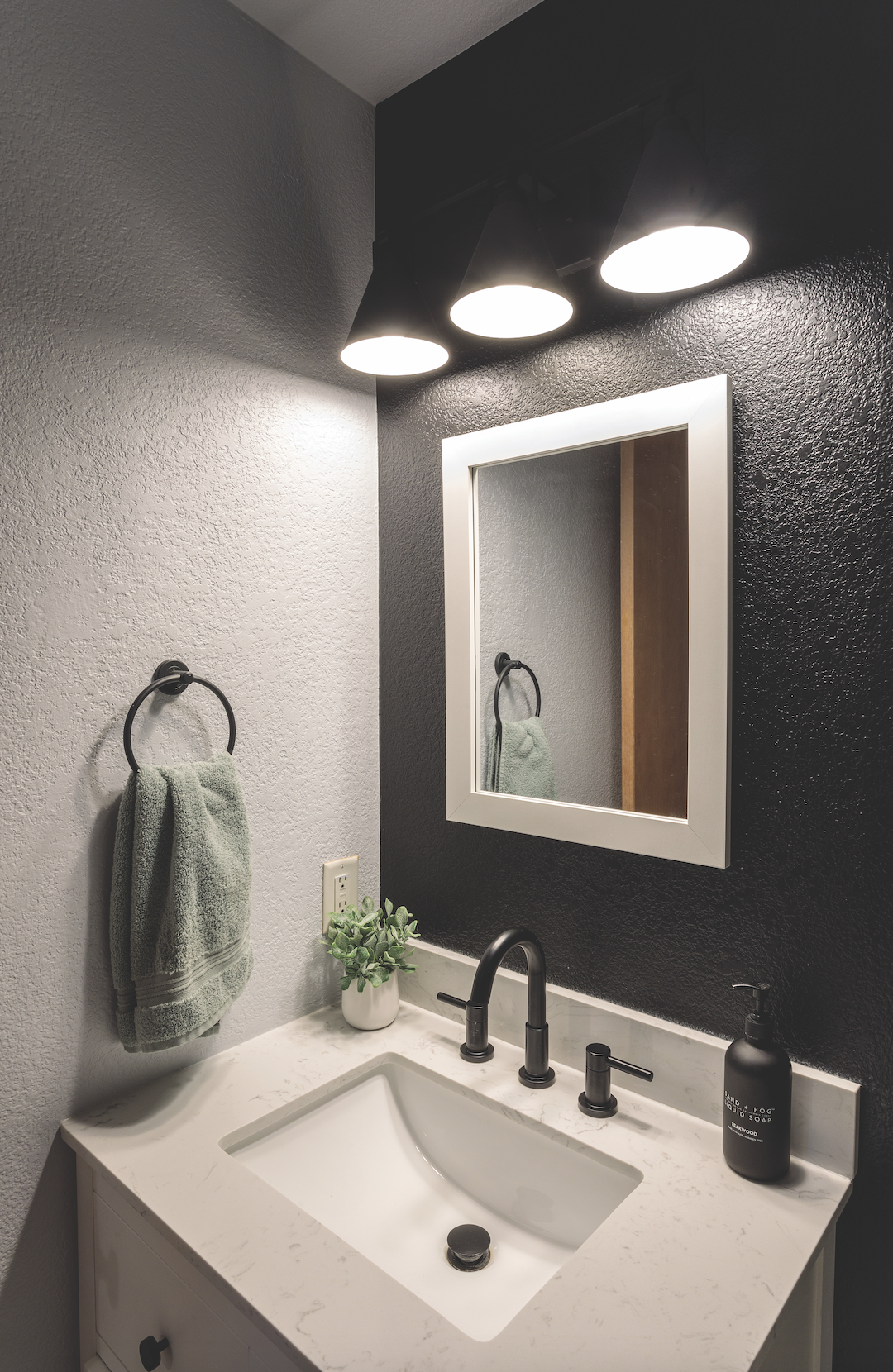
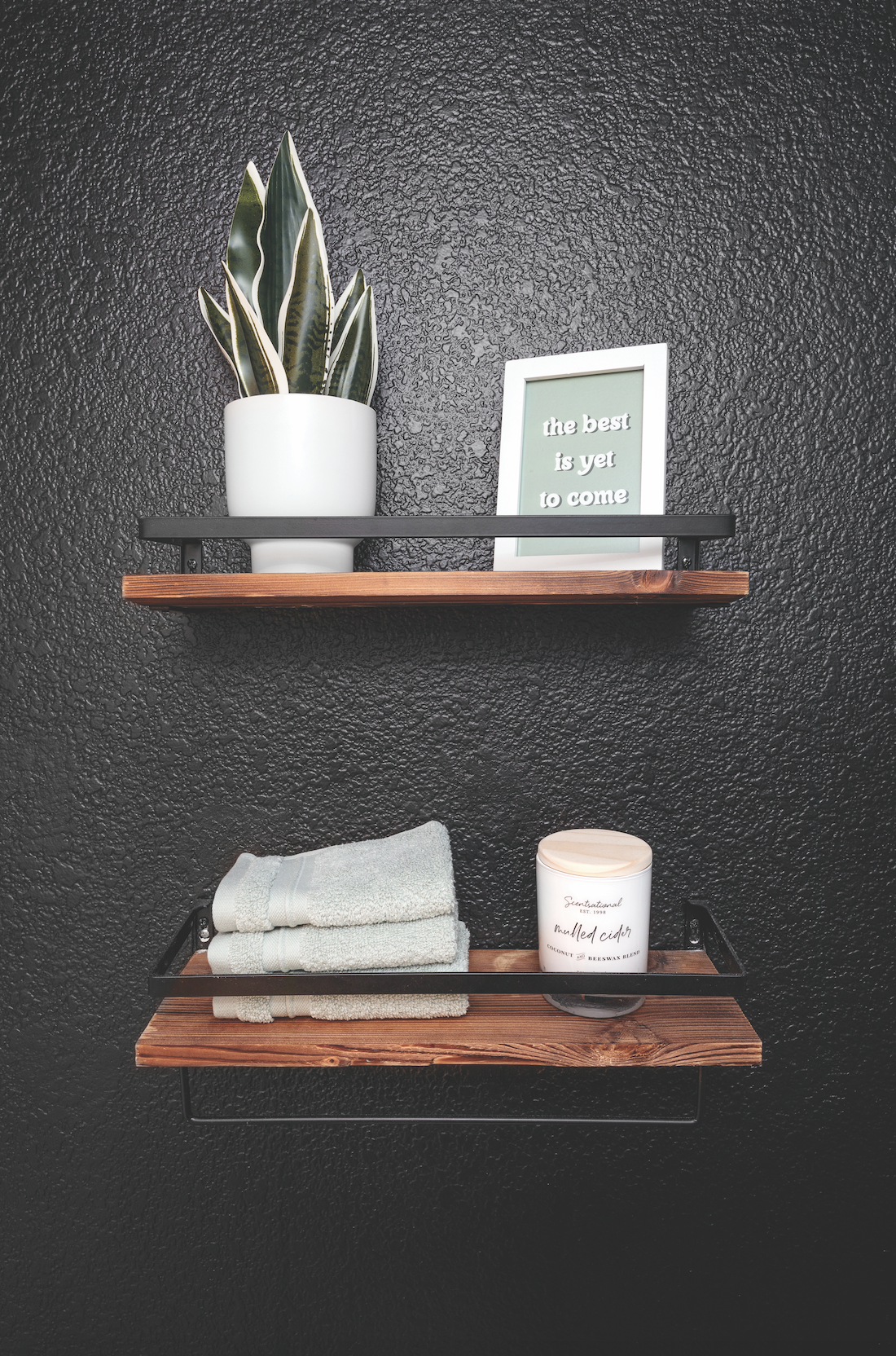
As Featured in West + Main Home Magazine: What's Old is New Again


Rylie Perrault Staub, Director of Operations, Realtor at West and Main

 
“An early 2000’s built home through-and-through, I’ve been slowly chipping away at the beige since I moved in”
— Rylie


Ever since starting her home search in 2021, Rylie Perrault Staub has been creating Pinterest Boards, slideshows, and spreadsheets full of inspiration for every room in her house.
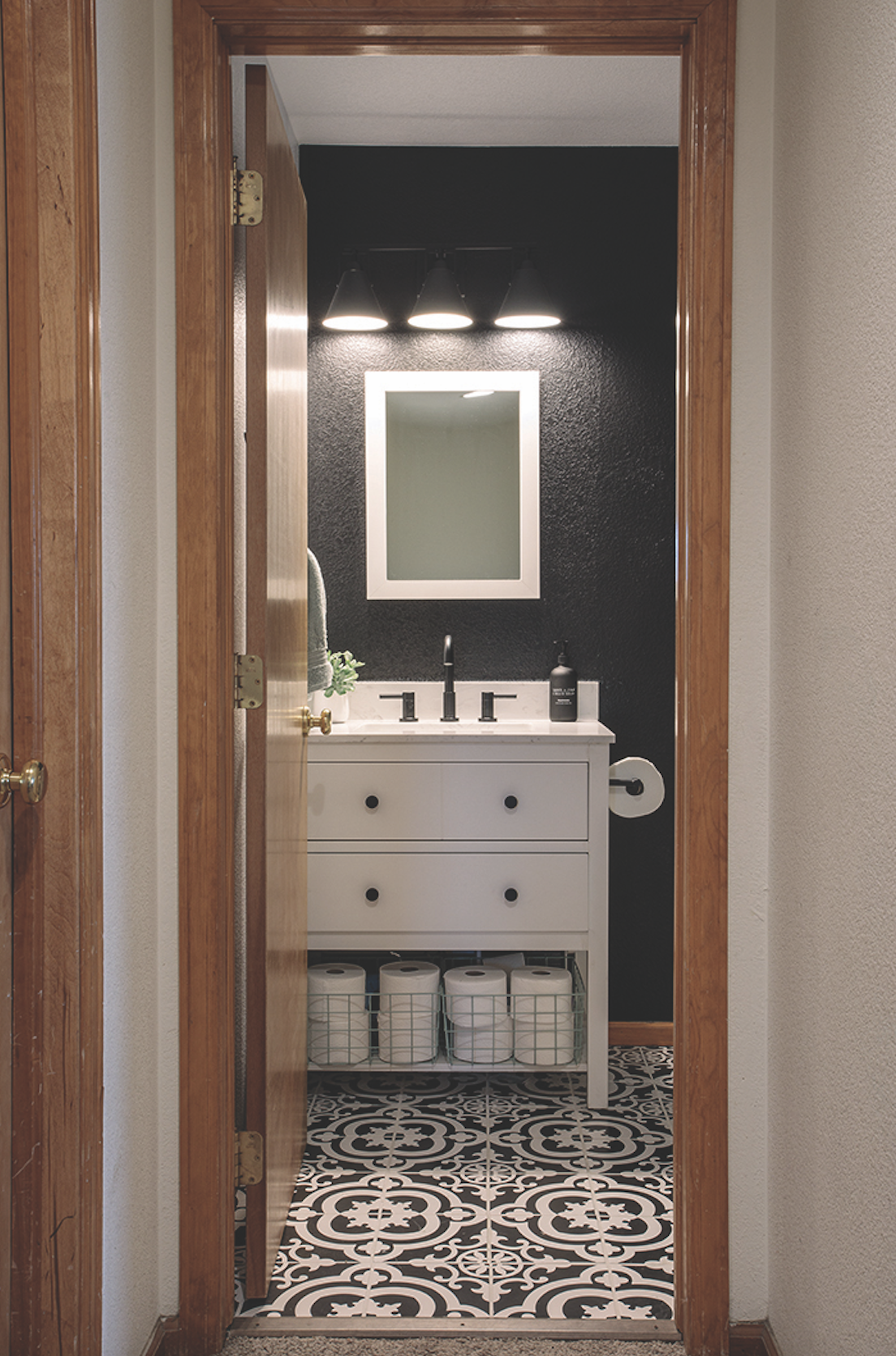


Wanting to keep this project as budget friendly as possible, Rylie browsed Home Depot and Lowe’s for a handful of months, on the lookout for sales and affordable products. “People are always shocked at how inexpensive this tile was; I got it on sale for less than $1.50 per piece,” said Rylie.


A new vanity was also a priority, and completely modernized the space, according to the new homeowner. “I opted for a small pre-built option, which gives more space than the original vanity and really lightens up the room.” With the main pieces of the project - the tile and the vanity - selected, Rylie finished off the space with a fresh coat of paint and new black metal fixtures.


“I considered completely tearing out the tub and shower, as these are a little dated. However, switching out all of the fixtures + freshening up the decor gave the bathroom a whole new feel, and I don’t even mind the shower now.” By saving money on this portion of the project, Rylie says she’ll be able to start her next renovation sooner.

“I just love the way this turned out,” said Rylie. “It brings me joy every time I walk past it.”


Related Links

If there is a home that you would like more information about, if you are considering selling a property, or if you have questions about the housing market in your neighborhood, please reach out. We’re here to help.

Search Homes in Colorado

Search Homes in Oklahoma

Search Homes in Oregon

How To Choose the Right Exterior Paint Colors for Your Home


Choosing the right exterior paint color for your home can be daunting.

After all, the color of your home is the first thing anyone notices, and it significantly impacts your home's overall curb appeal. But don't worry, we've got you covered. In this article, we'll walk you through how to choose the right exterior paint color for your home so you can be confident you've made the right choice.

Consider Your Surroundings
Your home's surrounding environment plays a crucial role when choosing an exterior paint color. Look at the color schemes of the surrounding homes, the lush landscaping, and the natural elements around you. You want to choose a color that complements and blends well with the existing colors to create a cohesive look. For example, if your home is surrounded by trees, you may want to choose earthy tones like olive green or brown that blend with nature.

Look at the Architecture of Your Home
The architecture of your home defines its unique style, and the right exterior paint color can enhance it. For example, if you have a Victorian-style home, you may want to consider soft, pastel colors like light blue, cream, or pink. Similarly, if you have a modern-style home, you may want to consider bold, vibrant colors like orange, yellow, or red.

Think About the Mood You Want To Create
Your home's exterior color sets the tone for anyone who sees it, so you want to choose a color that reflects the mood you want to create. For example, if you want to create a cozy, warm environment, consider neutral colors like beige, grey, or tan. Similarly, if you want to create a welcoming, cheerful vibe, consider bright, cheerful colors like yellow or turquoise.

Consider Maintenance and Durability
It's essential to choose a paint color that looks good, is durable, and is easy to maintain. Look for exterior paint that can withstand harsh weather conditions, resist fading, and is easy to clean. Consult a professional painter for recommendations on the best exterior paint brands and colors that meet your needs.

Test Out Samples
Before you commit to a color, testing out different shades first is crucial. Paint sample colors onto various sections of your home to see how they look in different lighting conditions. Observe how the color looks in the morning versus the evening or on a cloudy day versus a sunny day. This will give you a better idea of how the color will look long-term.

Choosing the right exterior paint color for your home takes careful consideration, but with these tips, you can be confident you're making the right choice. When choosing your home's exterior paint color, consider your surroundings, the architecture of your home, the mood you want to create, maintenance and durability, and test out paint samples. By considering all these factors, you'll be able to choose a paint color that enhances your home's style and personality and adds to its overall curb appeal.

Learn more at rismedia.com

Related Links

If there is a home that you would like more information about, if you are considering selling a property, or if you have questions about the housing market in your neighborhood, please reach out. We’re here to help.

Search Homes in Colorado
Search Homes in Oklahoma
Search Homes in Oregon
Search homes in Minnesota

You Need to Clean This Fire Hazard That’s Hiding in Your Laundry Room


Do you clean your dryer vent at least once a year? No, I don’t mean cleaning out the lint trap after every load.

I mean pulling out the dryer and cleaning the hose that leads outside. If you aren’t, then you should be. 

“While most of us remember to clean the lint filter in between laundry loads, Hippo’s Housepower Report revealed that most homeowners wait two or more years to clean their dryer exhaust vent, if ever,” says Courtney Klosterman, home insights expert at Hippo Home Insurance Group. And that can be a problem because “the leading cause of home fires involving dryers and washing machines are from dust, fiber, or lint buildup in the dryer exhaust vent.”

We asked Klosterman and three other appliance experts for the right way to clean a dryer vent: Callum Couser, R&D operations manager, hygiene, at Lysol; Will Cotter, COO of HappyCleans; and Traci Fournier, VP of operations at One Hour Heating & Air Conditioning.

What You’ll Need

The gloves, mask, and safety glasses are all optional, but it’s better to have them just in case. You don’t want to accidentally get an uninhibited face full of dryer debris.

Step 1: Unplug the dryer.

Also, empty it. If you have any laundry in the dryer, take it out. Then, cut the power. “Unplug your dryer from the power outlet to ensure there’s no chance of accidental startup while you’re elbow-deep in cleaning,” Cotter says. Pull the dryer away from the wall so you have easy access to the vent and the hose.

Step 2: Detach the vent.

Use the screwdriver to disconnect the vent from both the wall and the dryer. Put it down somewhere clean. You may consider brushing off the outside of the hose at this point if it’s dirty — then you can just vacuum up the mess.

Step 3: Vacuum and brush the vent.

Using the hose attachment on your vacuum, carefully do a first pass of the dryer vent and hose to suck up any dirt, debris, or leftover lint. Then take the dryer vent brush and give the vent and hose another once-over to make sure everything gets knocked loose that shouldn’t be there. Vacuum the vent and hose one more time to make sure you got everything. Don’t forget to look just inside the dryer where the hose connects. Vacuum up any debris there as well.

Step 4: Clean the outside portion of the vent.

If you have access to it, go outside and clean the vent exit on your home. You’ll want to use the same vacuum and brush combination to clean out here. You can also take a cloth and wipe away any dirt that doesn’t come off with the vacuum or brush.

Step 5: Inspect the dryer duct.

Because you’ve got everything detached and clean, now’s the time to look for any problems (both inside and outside your home) with the dryer duct, hose, or connections. “Inspect the dryer ducts to see if there are holes or cracks that might be causing your dryer to not work properly,” Fournier says. If you find something that looks out of whack, call your HVAC contractor.

Step 6: Reattach everything.

You did it! Now, reattach the duct hose and vent (don’t forget both the wall and the appliance itself), plug your dryer in, and enjoy safer, better heat for your clothing.

Get more tips like this on Apartment Therapy.

Related Links

If there is a home that you would like more information about, if you are considering selling a property, or if you have questions about the housing market in your neighborhood, please reach out. We’re here to help.

Search Homes in Colorado
Search Homes in Oklahoma
Search Homes in Oregon
Search homes in Minnesota

The Many Non-Financial Benefits of Homeownership


Buying and owning your own home can have a big impact on your life.

While there are financial reasons to become a homeowner, it’s essential to think about the non-financial benefits that make a home more than just a place to live.

Here are some of the top non-financial reasons to buy a home.

According to Fannie Mae, 94% of survey respondents say “Having Control Over What You Do with Your Living Space” is a top reason to own.

Your home is truly your own space. If you own a home, unless there are specific homeowner association requirements, you can decorate and change it the way you like. That means you can make small changes or even do big renovations to make your home perfect for you. Your home is uniquely yours and by buying, you give yourself the freedom to tailor it to your individual style. Investopedia explains:

“One often-cited benefit of homeownership is the knowledge that you own your little corner of the world. You can customize your house, remodel, paint, and decorate without the need to get permission from a landlord.”

When you rent, you might not be able to make your place really feel like it’s yours. And if you do make any modifications, you might have to change them back before you leave. But if you own your home, you can make it just the way you want it. That level of customization can give you a sense of pride in where you live and make you feel more connected to it.

Fannie Mae also finds 90% say “Having a Good Place for Your Family To Raise Your Children” tops their list of why it’s better to buy a home.

Another important factor to think about is what stage of life you’re in. U.S. News breaks it down:

“For those with young children, buying a home and putting down roots is a major driver. . . . You don’t want the upheaval of a massive rent increase or a non-renewed lease to impact your sense of stability.”

No matter which of life’s milestones you’re in, stability and predictability are important. That’s because the one constant in life is that things will change. And, as life changes around you, having a familiar home and not worrying about moving regularly helps you and those who matter most feel more secure and more comfortable.

Lastly, Fannie Mae says 82% list “Feeling Engaged in Your Community” as another key motivator to own.

Owning your home also helps you feel even more connected to your neighborhood. People who own homes usually live in them for an average of nine years, according to the National Association of Realtors (NAR). As that time passes, it’s natural to make friends and build strong ties in the community. As Gary Acosta, CEO and Co-Founder at the National Association of Hispanic Real Estate Professionals (NAHREP), points out:

“Homeowners also tend to be more active in their local communities . . .”

When you care deeply about the people you live near, you’ll do what you can to contribute to your local area.

Bottom Line

Owning your home can make your life better by giving you a sense of accomplishment, pride, stability, and connectedness. If you're thinking about becoming a homeowner and want to learn more, reach out to a local real estate agent today.

Read the whole post at keepingcurrentmatters.com

Related Links

If there is a home that you would like more information about, if you are considering selling a property, or if you have questions about the housing market in your neighborhood, please reach out. We’re here to help.

Search Homes in Colorado
Search Homes in Oklahoma
Search Homes in Oregon
Search homes in Minnesota

Want To Be a Home Flipper? Profits Rebound, Especially in This Part of the U.S.


Home flipping sure sounds glamorous: Buy a run-down home in a desirable neighborhood, fix it up, and sell it for a fat profit.

HGTV has turned a whole crop of photogenic flippers into household names.

After profits took a hit as the housing market slowed and investors exited the market, flipping is once again bringing in a stronger return on investment, according to a recent report from real estate data firm ATTOM.

Investors typically made a gross profit of about $66,500 on a flip in the second quarter of this year, according to ATTOM. That number represents the difference between what they paid for the property and what it sold for—and does not subtract what they spent to remodel the home. Repairs and updates can cost 20% to 33% of the home’s sale price.

For the second quarter in a row, profits rose. They were up 18% from the first quarter of this year but still down 35% from the same time last year. Returns on investments stood at about 27.5%, well shy of the 61% high reached two years ago.

Finished flips sold for a median of $308,500 nationally, according to ATTOM.

Fortunes for investors who flip homes for quick profits are showing more signs of turning around,” ATTOM CEO Rob Barber says in a statement. “It’s still too early to declare the profit downturn over, as much will depend on whether the second-quarter market surge keeps going or whether it retreats again like it did last year.”

About 8% of all single-family home and condominium sales—about 84,350 in all—from April to June were flips, according to ATTOM. That’s roughly 1 in every 13 home sales. That’s down from 9.9% of all sales in the first quarter of the year and 8.9% a year earlier.

To come up with its findings, ATTOM examined sales deed data of single-family homes and condos sold in arm’s-length transactions to find homes that were sold twice within 12 months. That indicates a home might have been flipped.

The recovery is at least partly due to home prices rising instead of falling. The risk for investors is that they’ll purchase a property to flip, they’ll spend a lot of money on renovations, and then the market will turn and prices will fall before they can get the home back on the market.

“The latest investment returns may not be substantial enough to cover the holding costs on typical deals,” Barber says.

Which metros have the highest (and lowest) home-flipping rates?

The highest flipping rates were in the South, where homes tend to be more affordable.

The Macon, GA, metropolitan area had the highest flipping rate, at 16.8% of all home sales. It was followed by Columbus, GA, at 15.3%; Spartanburg, SC, at 13.5%; Atlanta, at 13.5%; and Akron, OH, at 12.5%. (Only metros with at least 200,000 residents and at least 50 flips within the second quarter of the year were measured.)

Flippers made the highest profits in the Midwest and Mid-Atlantic regions. Akron had the highest returns on investment, at 116.7%, followed by Pittsburgh, at 112.9%; Scranton, PA, at 93.7%; Hagerstown, MD, at 86.6%; and Trenton, NJ, at 85%.

Flips were the least common in some of the nation’s priciest housing markets.

The Seattle metro had the lowest flipping rate, at just 3.7% of sales. There were also fewer flips in Santa Rosa, CA, at 4%; Silicon Valley’s San Jose, CA, at 4.2%; San Francisco, at 4.3%; and Hilo, HI, at 4.3%.

Learn more like this on Realtor.com

Related Links

If there is a home that you would like more information about, if you are considering selling a property, or if you have questions about the housing market in your neighborhood, please reach out. We’re here to help.

Search Homes in Colorado
Search Homes in Oklahoma
Search Homes in Oregon
Search homes in Minnesota