Find a Dog a Home: Meet Wonderbite


Meet Wonderbite!

She is less than one year old, very sweet, but shy and wants to please. She's potty trained and does great with other dogs and cats. She's a good girl and is looking for her forever home.

You can find her at the Carteret County Humane Society. 853 Hibbs Road, Newport, NC.


Looking for the perfect dog for your home? Reach out to Gray,, she would be happy to make a rescue connection!


A boom(er) market on the horizon


There may be signs of hope for increased inventory if Boomers follow the pattern of past generations, but will they?

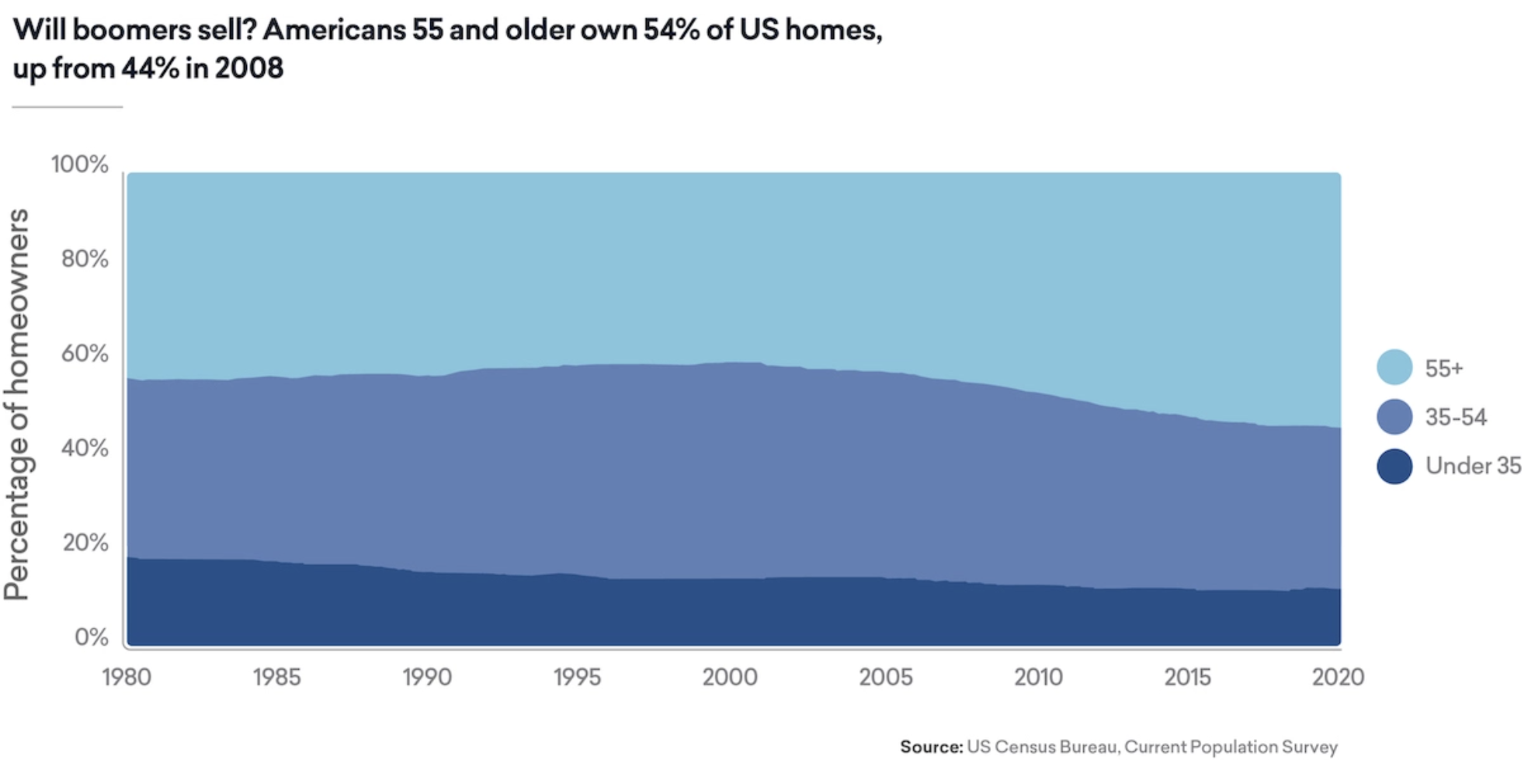
Just the term ‘baby boomer’ is sure to elicit a reaction, particularly from those in younger generations. Jealousy? Maybe because those born from 1946 to 1964 hold over half of all wealth in the U.S., and they own a comparable share of residential real estate. Contrast those trends with millennials, who hold less than 5% of the wealth in the U.S. There is also the inescapable fact that all Boomers will soon be over 60 and either retired or close to it.


Boomer behaivor

This, by itself, offers hope for easing the real estate inventory crunch that continues to dampen velocity in the market, along with high interest rates. If baby boomers follow the pattern of past generations, retirement means downsizing to condos or small homes, or moving to some type of retirement community. This could put a significant number of homes, particularly single-family properties, on the market over the next decade.

The multi-billion-dollar question, however, is: will they sell? Some data indicates that boomers will age in place longer than past generations because they have the health and wealth to do so. Census Bureau analysis, in fact, shows that the proportion of homeowners staying put after 65 and into their 70s and 80s has been increasing steadily over the past few decades. This trend is expected to continue as the last of the baby boomer generation moves into those age ranges.


On the other hand, 2016 research by NAR showed that baby boomers comprised the largest proportion of homebuyers amongst all generations. Since this survey included purchases of all types of primary residences, this likely demonstrates that a significant number of boomers are moving out of their family residences and downsizing. A 2018 article published by FannieMae pointed out that while the proportion of boomer homeowners choosing to move out may be less than previous generations, the sheer scale of baby boomer homeownership will mean a huge increase in the number of properties that will be sold. The Census Bureau estimates that homeownership by those 65 and older in 2026 will drop by 12 million, with a further drop of 15 million in the subsequent decade. This could mean an additional 27 million properties available to the market over that period.

Read the full article on Housing Wire.

Related Links

If there is a home that you would like more information about, if you are considering selling a property, or if you have questions about the housing market in your neighborhood, please reach out. We’re here to help.

Search Homes in Colorado
Search Homes in Oklahoma
Search Homes in Oregon
Search homes in Minnesota

5 Fancy Home Features That Are Super Cool, but Make a Home Harder to Sell


The rich and famous are just like the rest of us when it comes to selling a home. Sure, they might have bigger houses — fine, mansions — nestled on huge, resort-like estates.

But they still have to list their home with a real estate agent when it’s time to sell. And while these palatial properties are arguably move-in ready by those with humbler standards, buyers with big pockets aren’t so quick to settle.

In fact, some of the very jaw-dropping features of those posh properties are merely meh for some discriminating buyers. Here are five in particular that could slow down a sale.

Too Much Smart Technology

If you get annoyed when trying to communicate with the digital assistant on your phone or tablet, imagine living in an entire sprawling house connected to smart technology. Automation is great for home systems, but even the smartest security systems can come at the expense of privacy for homeowners. 

“Smart homes can turn buyers off if they don’t care for being connected all the time and may prefer more privacy options, especially with cameras [installed on the property],” says Jessica Peters, a top agent with Douglas Elliman and founder of the Jessica Peters Team in New York City.

You might like the security of a Ring doorbell in your own home, but a security system for larger properties means that there are more “eyes” on you by design. Some buyers might crave the added level of safety, while others might be averse to devices that are listening and watching, says Peters.

Aquatic Features

Some buy tickets to the aquarium. Others add one to their home. While exotic fish tanks and elaborate koi ponds contribute to the wow factor, it won’t go swimmingly for a quick sale, says Peters. 

Considering the fact that some home buyers are averse to backyard pool maintenance, it is likely that there are other homebuyers who do not want the responsibility of nurturing a healthy ecosystem for any aquatic pets that might be included in the sale of the home. Sea creatures aside, over-the-top pool features and fountains can also deter buyers, says Peters. 

Overly Customized Finishes

“While it’s important for a home to have character and personality, too much customization can make it difficult for potential buyers to envision themselves living in the space,” says Adie Kriegstein, licensed real estate agent and founder of the NYC Experience Team at Compass in New York City. Kriegstein cites high-end finishes like Venetian plaster walls and ceilings or bamboo walls as design choices that won’t appeal to everyone and will likely cost a small fortune to remove. 

Unique Built-in Features

Some people adore built-ins, from shelves that line a library to an outdoor kitchen fit for a Michelin-star chef. But built-ins dictate the way a space must be used, which might be an issue for some even with square footage to spare. Wine cellars, for example, might be an oenophile’s dream, but what’s a teetotaler to do? 

Home theaters are another sticking point, even in the age of streaming. These specialty rooms can actually hinder a sale, says Maureen McDermut, a luxury real estate expert with Sotheby’s International in Montecito, CA.

“The issue is that theater rooms tend to have built-in fixtures like the seating, and this can be an expensive room to convert,” says McDermut. It’s also the issue of space in general. “Because theater rooms tend to be larger, they use up significant square footage that a potential buyer may want to use for another purpose,” she explains.

Peters adds that built-ins added during the initial construction of a home can be even harder — and more expensive — to remove. 

Can Luxury Afford to Linger?

While the rich and famous might have the option of vacating their current home to move into another property in their portfolio — or at least rent a hotel suite for the long term — no one wants a property to linger for too long on the market. Even in that exclusive segment of the real estate market where money seems to be no object, a faster sale is still optimal — especially when price drops can be in the hundreds of thousands of dollars, if not millions.

“Ultimately, when it comes to selling a home, it’s important to strike a balance between impressive features and practicality,” says Kriegstein. “While it’s important to have a home that stands out from the crowd, it’s also important to appeal to a wide range of potential buyers.”

Learn more on Apartment Therapy.

Related Links

If there is a home that you would like more information about, if you are considering selling a property, or if you have questions about the housing market in your neighborhood, please reach out. We’re here to help.

Search Homes in Colorado
Search Homes in Oklahoma
Search Homes in Oregon
Search homes in Minnesota

How to Hide Your AC Unit In Plain Sight


It’s no secret that air conditioning units are an essential part of our homes, especially during sweltering weather.

However, some homeowners are hesitant to install or purchase AC units that might spoil the look and feel of their houses. They are essential to keeping your home comfortable to live in, however, they can also be an eyesore for your home’s décor. Nobody wants an ugly window air conditioning unit or bulky outdoor HVAC unit that spoils the ambiance of their well-decorated interior. Fortunately, there are many ways to hide an AC unit while still keeping it accessible.

In this blog post, we’ll share some great ideas and easy-to-follow techniques on how to conceal your AC unit and blend it into your home decor without going through a major renovation. Whether your AC unit is outdoors or indoors, we’ve got you covered!

Landscaping Around Your AC Unit
One of the easiest and most effective ways to hide your AC unit is to blend it into your surrounding landscape. You can hide it naturally amidst shrubs, and flowers, or even create a garden around it. You can plant trees like alder, maple, or fir that can grow tall enough to mask the AC unit. For shrubs, you can use boxwoods, holly, or euonymus. However, it's essential to make sure you leave enough clearance space between the plants and the unit for proper airflow. Add rocks or stones around the AC unit and you’ll have a visually appealing and functional feature.

Fencing
Depending on where the unit is situated, another great way to hide your AC unit is by installing a fence around it. You could use a lattice, wood, or wrought-iron fence, depending on the style of your house. To create a more stylish look, you can paint or stain the fence to match the exterior of your home. You can also plant ivy or vines around the fence to make it look like a natural part of your landscape.

Build a Screen or Enclosure
If you want complete coverage, consider building a custom screen or enclosure for your air conditioning unit. You can use wood panels or cinder blocks to construct a wall around the unit that can double as a seating area. You could even have a contractor build an attractive seating area or enclosure that perfectly hides the AC unit.

Make it Blend
If your AC unit is on the inside, there are some great and creative ways to make it blend into the overall look of your home. You can use wallpapers and decals to decorate the walls around the unit or get creative with furniture pieces. Using accessories like wooden boxes, decorative baskets, or ornamental shelves helps camouflage your air conditioning system in plain sight!

Cover When Not In Use
Another great option is to build a custom cabinet that surrounds the unit or even hang an art piece in front of it. This way, you’ll still have access to your AC, but nobody will notice it’s there. Alternatively, you can use removable panels or curtains to cover up the unit when not in use. If space allows, you might even install a sliding door so that you can open and shut it whenever needed.

The beauty of hiding your AC unit is that there are so many unique ways to do it. These ideas range from the exotic and artistic to the traditional and natural. No matter which idea meets your needs best, concealing your AC unit and blending it into your home décor not only makes for great aesthetics but also provides functional protection. Also, it’s important to remember that despite its attractiveness, the system should always have plenty of clearance for proper airflow and easy maintenance. You might want some extra help when it comes to air conditioner installation as professionals will be able to provide guidance and assistance with selecting the best AC unit for your home and ensure that it is securely installed and functioning optimally. This way, you can enjoy all the benefits of air conditioning without compromising on style or décor!

Read on.

Related Links

If there is a home that you would like more information about, if you are considering selling a property, or if you have questions about the housing market in your neighborhood, please reach out. We’re here to help.

Search Homes in Colorado
Search Homes in Oklahoma
Search Homes in Oregon
Search homes in Minnesota
Owning Your Home Helps You Build Wealth


You may have heard some people say it’s better to rent than buy a home right now.

But, even today, there are lots of good reasons to become a homeowner. One of them is that owning a home is typically viewed as a good long-term investment that helps your net worth grow over time.

Homeownership Builds Wealth Regardless of Income Level

You may be surprised to learn homeowners across various income levels have a much higher net worth than renters who make the same amount. Data from First American helps illustrate this point (see graph below):


What makes wealth so much higher for homeowners? A recent article from Realtor.com says:

“Homeownership has long been tied to building wealth—and for good reason. Instead of throwing rent money out the window each month, owning a home allows you to build home equity. And over time, equity can turn your mortgage debt into a sizeable asset.”

Basically, the wealth you accumulate when you own a home has a lot to do with equity. As a homeowner, equity is built up as you pay down your loan and as home prices appreciate over time. Mark Fleming, Chief Economist at First American, explains how this same benefit isn’t true for renters in a recent podcast:

“Renters as non-homeowners gain no wealth benefit as home prices rise. That wealth actually accrues to the landlord.”

Before you decide to sign another rental agreement, now is a good time to think about whether it would be better for you to buy a home instead. The best way to figure out what makes sense for you is to have a conversation with a real estate expert you trust. That professional can talk you through the benefits that come with owning to determine if that’s the right next step for you. 

Bottom Line

If you're not sure whether to keep renting or to buy a home, know that owning a home, no matter how much money you make, can help build your wealth. Connect with a local real estate agent to get started on the path to homeownership.

Related Links

If there is a home that you would like more information about, if you are considering selling a property, or if you have questions about the housing market in your neighborhood, please reach out. We’re here to help.

Search Homes in Colorado
Search Homes in Oklahoma
Search Homes in Oregon
Search homes in Minnesota