The 8 Mortgage Mistakes You Can’t Afford to Make


Picking out the perfect home can be a challenging task. But that’s only the first step. You still need to be an attractive loan candidate, navigate the mortgage process and plan well for the future.

Since all that can get a little tricky, many home buyers made mortgage mistakes that cost them dearly.

In order to avoid some of the biggest missteps, you should first know what they are.

1. Picking any old mortgage

You don’t want to be saddled for even a short period of time with the wrong mortgage.

Investigate all of your options, and then you need to lay your choices side-by-side and do the math—making sure you have an emergency savings for worst-case scenarios.

Loan shop with several different lenders and use a mortgage calculator to fine-tune your estimates.

2. Confusing pre-approval or pre-qualification with commitment

When you’re pre-qualified, the lender is simply giving you an estimate about how much you can borrow based on information you’ve provided.

When you’re pre-approved, the lender has verified everything you’ve provided and is offering to lend you up to a given amount at current interest rates—under certain conditions.

It’s much better to be pre-approved when shopping for a home, but it’s still not a guarantee: the lender’s final clearance and a loan commitment are subject to an appraisal satisfactory to the lender, good title, a last-minute credit check and other verifications.

3. Having too much debt

Even if you pay your bills on time, lenders tend to focus just as much on how much credit you have available to you—that is, your debt-to-income ratio—as they do on timeliness.

Being up to your ears in debt is a sure way to be turned down for a mortgage. Postpone any big-ticket purchases until after you buy your house.

4. Forgetting about your credit

Before you apply for a loan, you should know your credit score and credit report inside and out.

Thoroughly check your credit report for any possible mistakes. You can order a free credit report from each of the big three credit report agencies—Equifax, TransUnion and Experian—once a year.

If you see a mistake, dispute it. If your credit is bad, that’s okay: just work on repairing it before you apply for a mortgage.

5. Lying on your loan application

Exaggerating your income on a mortgage application or putting down other untruths can be a federal offense.

If a lender finds out, they can make your loan due and payable. And while bad loan officers may stretch the truth to get a client approved, it’s the borrowers who end up paying the price.

6. Hiding from payments

The worst thing you can do is ignore phone calls and letters from your lender when you are behind on your payments.

Lenders have many options at their disposal to help keep borrowers from losing their homes to foreclosure, but they can’t do anything for you unless they can talk to you about your difficulties.

7. Skipping a home inspection

Failing to make your purchase contingent on a satisfactory home inspection could be a costly mistake.

Good home inspectors examine houses from stem to stern. They’ll be able to tell you whether the roof or basement leaks, whether the mechanical systems are in good shape and how long the appliances should last.

Don’t get caught off guard by needed repairs, or it will mean more money for your mortgage payments.

If you’re unsure of where to find a good home inspector, ask your agent for a referral. 

8. Making big life changes

Lenders like stability.

It’s a good idea to have kept your job for at least a year or two before applying for a mortgage, and it’s even more important to keep your job throughout the mortgage process.

If you’re looking to switch jobs, wait until after you’ve closed the deal.

Get more like this on Realtor.com

Related Links

If there is a home that you would like more information about, if you are considering selling a property, or if you have questions about the housing market in your neighborhood, please reach out. We’re here to help.

Search Homes in Colorado
Search Homes in Oklahoma
Search Homes in Oregon
Search homes in Minnesota

U.S. Housing Starts Fall 8% in June, Biggest Drop in a Year


The numbers: Construction on new homes fell 8% in June, as U.S. homebuilders sharply slowed down starting on new single-family homes and focusing on finishing existing projects.

Housing starts fell to a 1.43 million annual pace last month from 1.56 million in May, the government said Wednesday. The data measures how many houses would be built over an entire year if construction took place at the same rate in every month as it did in June.

The pace of construction in June slowed from a jump of nearly 16% the previous month. The jump in housing starts in May this year was only eclipsed by a surge in construction in March 2021.

Economists on Wall Street were expecting a sharper drop of 9.2%. All numbers are seasonally adjusted. The last time housing starts fell by this much was in July 2022.

Both single and multi-family construction fell in June, as home builders pulled back on new construction to focus on finishing and selling existing inventory.

But keen interest from would-be home buyers is creating strong demand for new homes. These buyers continue to face a lack of options in the resale market for existing homes.

The drop in construction this summer was led by the Midwest, which saw housing starts drop by 33%.

Building permits, a sign of future construction, fell 3.7% to a 1.44 million rate.

Key details: The construction pace of single-family homes fell by 7% in June, and apartment building fell by 11.6%.

Home builders pulled back the most in the Midwest, where housing starts fell by 33%. That comes after a surge in building in May of 67%.

The only part of the U.S. where housing starts rose in June was in the West, where housing starts rose by 4.6% for single-family homes.

Permits for single-family homes rose by 2.2% in June, while permits for buildings with at least five units or more dropped by 13.5%.

Big picture: At the end of spring, builders revved up construction on single-family homes as the weather warmed up. Housing starts jumped nearly 16% in June, according to the government’s data.

But this summer, they’re not pulling back due to weak demand. They appear to be focusing on finishing those projects. 1.68 million homes were under construction as of June, which is the highest level since February.

Demand for new homes continues to be strong, and builders continue to pull back on sales incentives such as price cuts, the National Association of Home Builders reported on Tuesday.

What are they saying? Single-family housing starts have been strong in May and June, Stephen Stanley, chief U.S. economist at Santander U.S. Capital Markets, wrote in a note.

Given that single-family home-building is still elevated this spring and summer, “this adds to the evidence that housing activity is, at a minimum, bottoming out after a rough second half of 2022,” he added.

“Overall, the cooling in building and permit issuance is a good sign for the Fed that is looking to limit housing market activity in an effort to contain inflation,” Katherine Judge at CIBC Economics, wrote in a note.

Keep reading.

Related Links

If there is a home that you would like more information about, if you are considering selling a property, or if you have questions about the housing market in your neighborhood, please reach out. We’re here to help.

Search Homes in Colorado
Search Homes in Oklahoma
Search Homes in Oregon
Search homes in Minnesota

8 Things Sneakily Making Your Home Feel Hot in the Summer


With summer temperatures really ramping up, it can feel like you’re getting hit with a double-whammy.

Not only does it feel like you can’t get cool, but it can also feel like you’re emptying your wallet while trying to do so. So what gives? Why are you spending a fortune on your electric bill and still not feeling comfortable and chilled in your own home?

There might be some hidden culprits at play here that are keeping your house from cooling off, say pros. Life’s too short to not enjoy your home in the summertime, or any season throughout the year — so read on for HVAC professionals’ takes on the most common causes of a hot house (and how you can fix it).

Poor Insulation

Bundling up your home isn’t just important in winter. “The number of windows and doors, the thickness of your exterior walls, and the measure of your insulation’s ability to resist heat in your walls all drive how hard your AC will need to work,” says Kirk Newton, service manager at Reliable Heating & Air.

Your home will struggle to maintain a cool temperature as the cold air your AC produces escapes through leaky walls, windows, doors, and even the roof, adds Josh Mitchell, an HVAC technician and founder of Air Conditioner Lab.

“​​This situation increases your energy costs and can potentially shorten the lifespan of your AC unit,” Mitchell says. There is hope, however. Mitchell suggests considering upgrading your home’s insulation, focusing on the attic, external walls, doors, and windows. “Weatherstripping and sealing windows and doors can also prevent cool air from escaping,” he says. 

Dirty or Clogged Air Filters

This is one of those things that many first-time homeowners don’t think about — out of sight, out of mind. But having clogged air filters definitely affects how efficient your AC will work in your home. “Over time, your AC’s filters can become clogged with dust and debris, causing your unit to work harder, reducing efficiency and potentially wearing out system components prematurely,” Mitchell says. “This can be addressed by cleaning or replacing your filters regularly, typically every one to three months, depending on usage and the local environment.”

Inadequate AC Unit Size

In this case, size really does matter. If your AC unit isn’t properly sized for the size of your home, then it won’t be able to cool it efficiently, says Mitchell. “If it’s too small, it may run continuously, and if it’s too large, it might cool too quickly without effectively dehumidifying,” he says. “To rectify this, consult with an HVAC professional who can perform a load calculation to determine the appropriate size unit for your home.”

Blocked Vents or Ductwork

If your air vents are located on the floor, it’s easy to accidentally block them with furniture. Check to make sure there’s nothing obstructing airflow for these vents, as it will “greatly hamper the AC’s ability to cool your home effectively,” Mitchell says.

Another thing to consider: If your ductwork is heavily soiled or blocked — say, by critter nests — that could also affect airflow. “Consider hiring a professional to clean it. Regular maintenance can help prevent such blockages,” Mitchell says.

A Thermostat That’s Set Too Low

While this reason might not make sense at first glance, it really can be preventing your home from cooling off. Setting your thermostat too low really impacts the way your unit works for your living space, Mitchells says. The too-low temp makes your unit work harder and uses way more energy — hence the high electricity bill at the end of the month. So how do you make the temperature comfortable and just “low enough?”

“The U.S. Department of Energy recommends a setting of 78 degrees Fahrenheit (25.5 degrees Celsius) when you’re at home during the summer months,” Mitchell says. If you’re not home and don’t have pets, consider setting it even higher than that — there’s little need to cool an empty space. 

Bare Windows

Direct sunlight is remarkably effective at raising the indoor temperature of your home, especially if your windows face south. Simply hanging thermal curtains that block out the sun during the day can make a big difference.

Up for a slightly bigger project? The U.S. Department of Energy says that installing awnings can decrease heat gain caused by the sun by 65 percent for south-facing windows and 77 percent for west-facing ones. 

An Outdated or Malfunctioning Unit

Much like anything in a home, the longer an air conditioner has been used, the less optimal the output. Your AC unit loses efficiency over time, which means it will have to work even harder to cool your space, resulting in higher energy costs and less comfort, says Mitchell. “Regular maintenance can help prolong your unit’s life, but eventually you’ll likely need to replace it with a newer, more efficient model,” he says. Your unit should be updated after 10 and 15 years of use.

Lack of Regular Maintenance

“Just like a car, AC units need regular tune-ups to operate efficiently,” Mitchell says. And Greg Donahue, product manager at Reliance Home Comfort, recommends having your AC unit serviced at least once a year. In fact, Donahue says, that step is actually required by most manufacturers in order to maintain their product warranty.

Simple maintenance tasks that should be performed more frequently include checking your air filters and your outdoor unit, says Mitchell. “Depending on the type of filter your AC unit uses and the air quality in your home, you may need to clean or replace your filters every one-to-three months,” he says. He adds that this helps maintain optimal airflow and efficiency and improves indoor air quality, too.

You should also regularly check your outdoor unit to ensure it’s free of debris like leaves or grass that could interfere with your system’s airflow. In the end, even if you have the best air conditioning unit money can buy, it will struggle to keep your home cool if you’re not giving it a little help along the way.

Keep reading on Apartment Therapy.

Related Links

If there is a home that you would like more information about, if you are considering selling a property, or if you have questions about the housing market in your neighborhood, please reach out. We’re here to help.

Search Homes in Colorado

Search Homes in Oklahoma

Search Homes in Oregon

Search homes in Minnesota
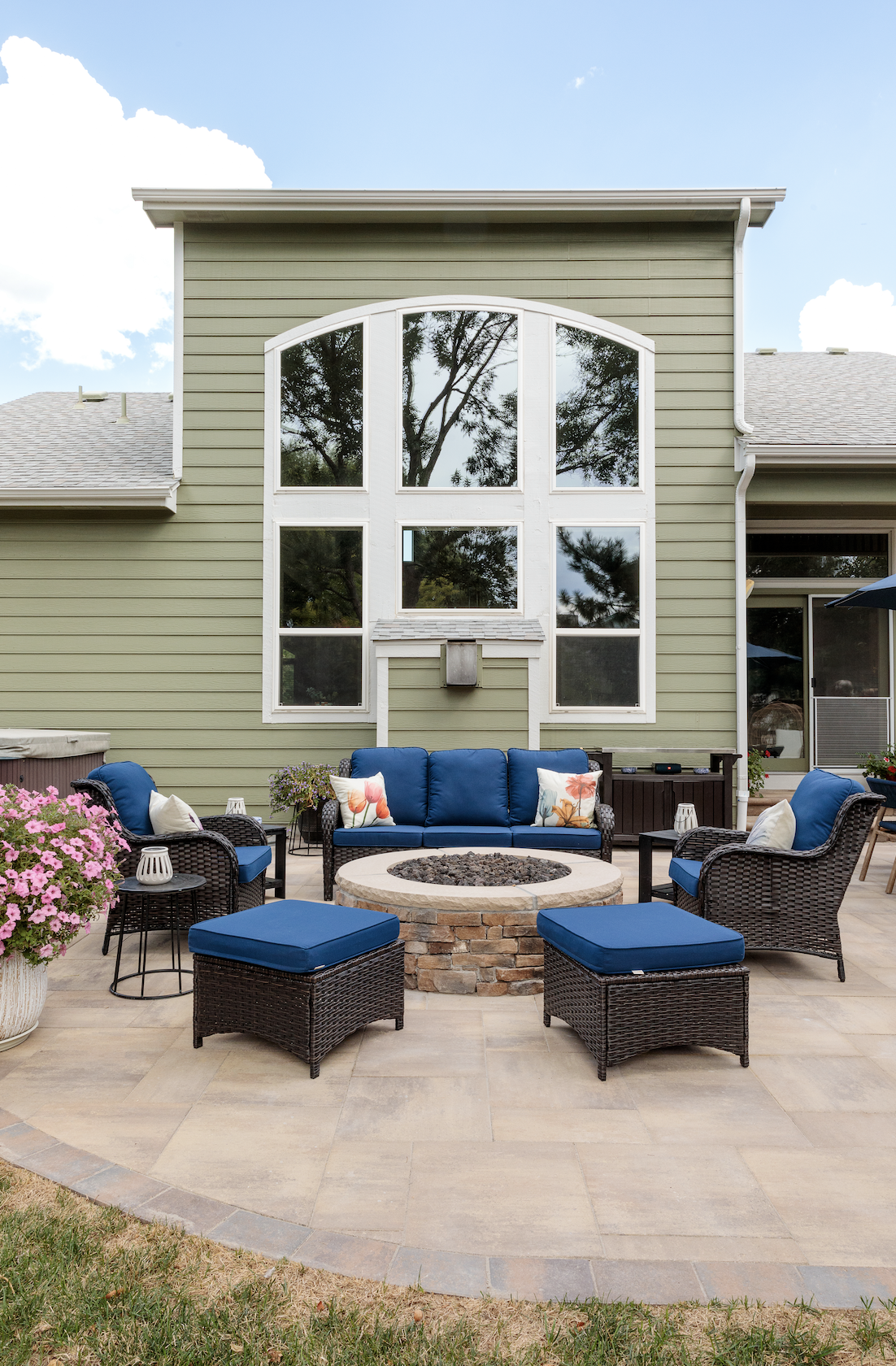
As Featured in West + Main Home Magazine: Paving the way for Outdoor Bliss


An interview with Sue Perrault + Mark Pledger - W+M Agents

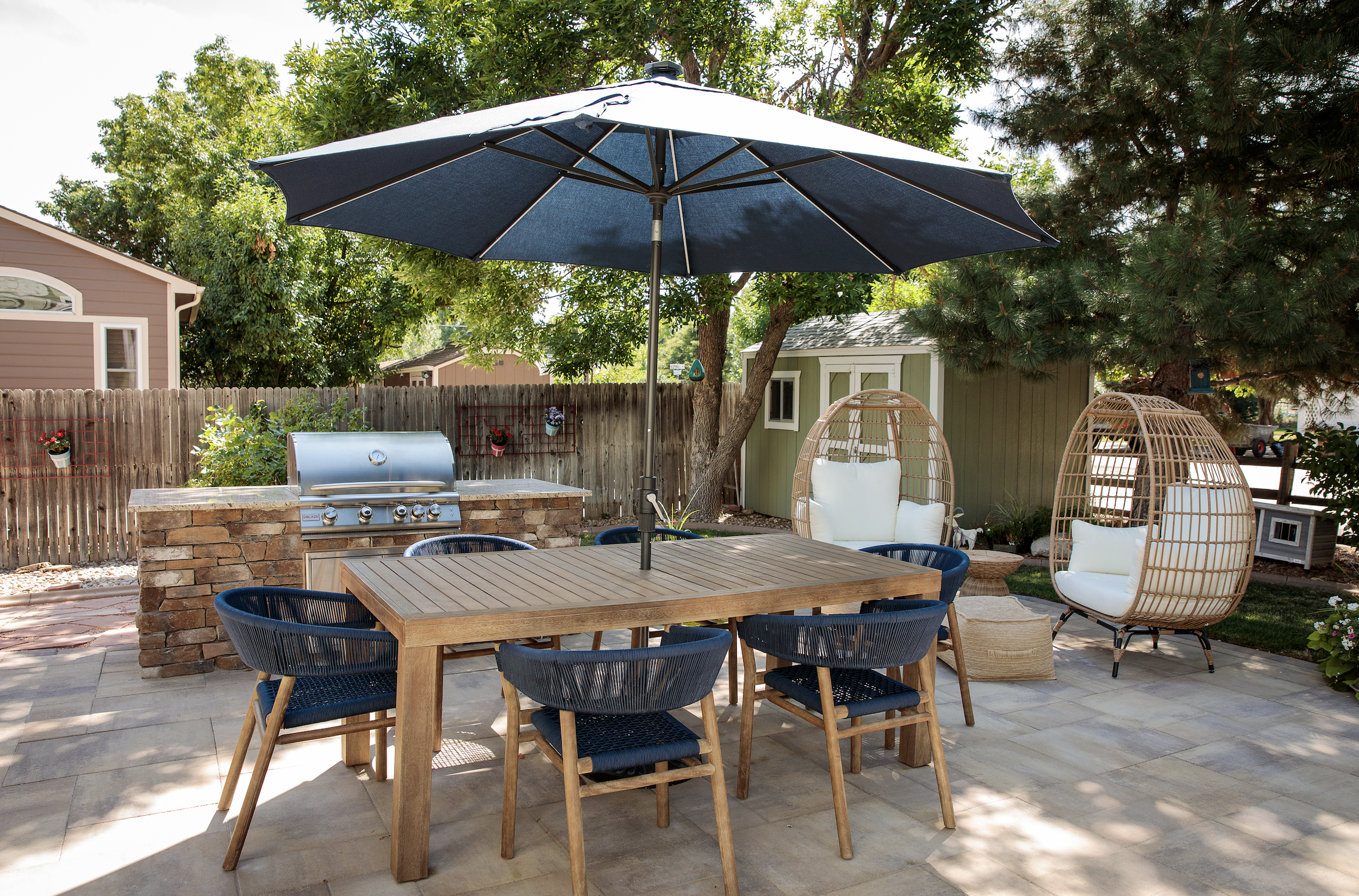
West + Main agents Sue + Mark have a great Colorado backyard that is a truly peaceful setting, backing to a pretty farmhouse and a pasture with cows.


It felt super rural and private and just so pretty, and was one of the reasons we bought the house," said Sue. "Our backyard patio, not so much. We had a large area that had been a water feature but was now just a pile of rocks, with a small 10-foot concrete slab out the back door. So, no place really to sit or entertain. We love the outdoors and wanted to utilize the space and make a lovely outdoor entertaining area.”


“The project was difficult and needed professionals to make it happen," said Mark. "This was not a beginner-level, lay down some pavers sort of situation. We interviewed several companies and researched a ton to decide on materials, etc. At first we considered stamped concrete, but after researching we found that it would require too much maintenance and was prone to cracking. We decided on the Belgard pavers in the Aspen color, which we absolutely fell in love with. For the border, we chose a dark brown shade."


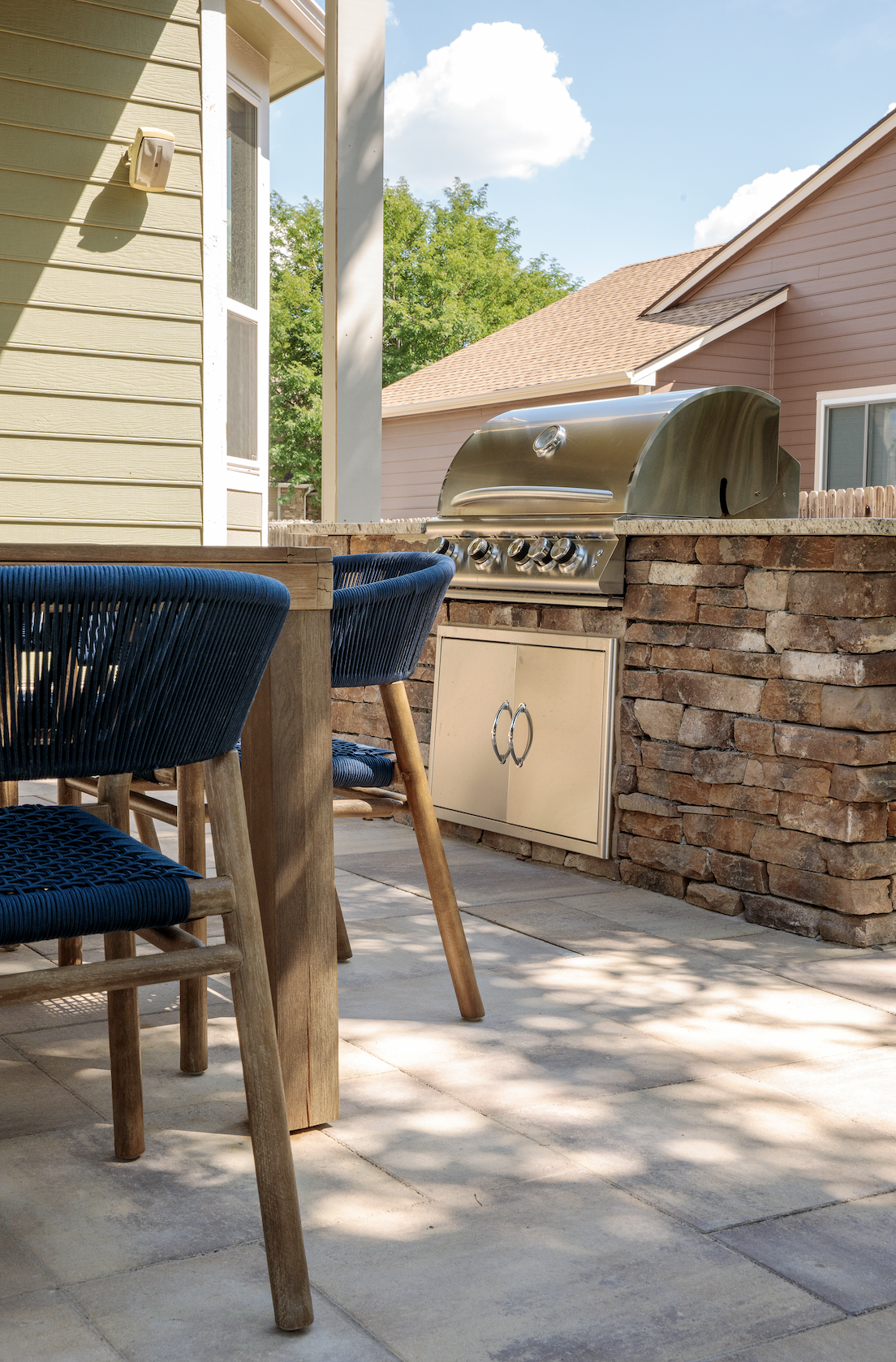
We absolutely love the finished project. We had them run a gas line to the firepit and the outdoor kitchen area and are so happy to just flip a switch and not have to worry about propane running out.
— Sue


The couple ended up choosing Twisted Vine Landscaping and Design to complete the project. They decided to keep the patio in a curved shape that matches the existing landscaping.

"It really turned out to be exactly as we had envisioned and is truly an extension of our home and the perfect outdoor living space," said Sue. "Our best advice would be to do your research on materials, interview a lot of companies to find the right fit, and then be present when work is being done."


"The patio turned out larger than we had originally planned and we are glad that it did," said Mark. "It feels spacious and gives us room for a couple of sitting areas as well as a nice dining space. We also used stacked rock for the firepit and the outdoor kitchen, and extended the patio to include the hot tub. We practically live out there now!"


Related Links

If there is a home that you would like more information about, if you are considering selling a property, or if you have questions about the housing market in your neighborhood, please reach out. We’re here to help.

Search Homes in Colorado

Search Homes in Oklahoma

Search Homes in Oregon

Home Prices Are Rebounding


If you’re following the news today, you may feel a bit unsure about what’s happening with home prices and fear whether or not the worst is yet to come.

That’s because today’s headlines are painting an unnecessarily negative picture. If we take a year-over-year view, home prices did drop some, but that’s because we’re comparing to a ‘unicorn’ year when prices peaked well beyond the norm.

To avoid an unfair comparison to that previous peak, we need to look at monthly data. And that tells a very different and much more positive story. While local home price trends still vary by market, here’s what the national data tells us.

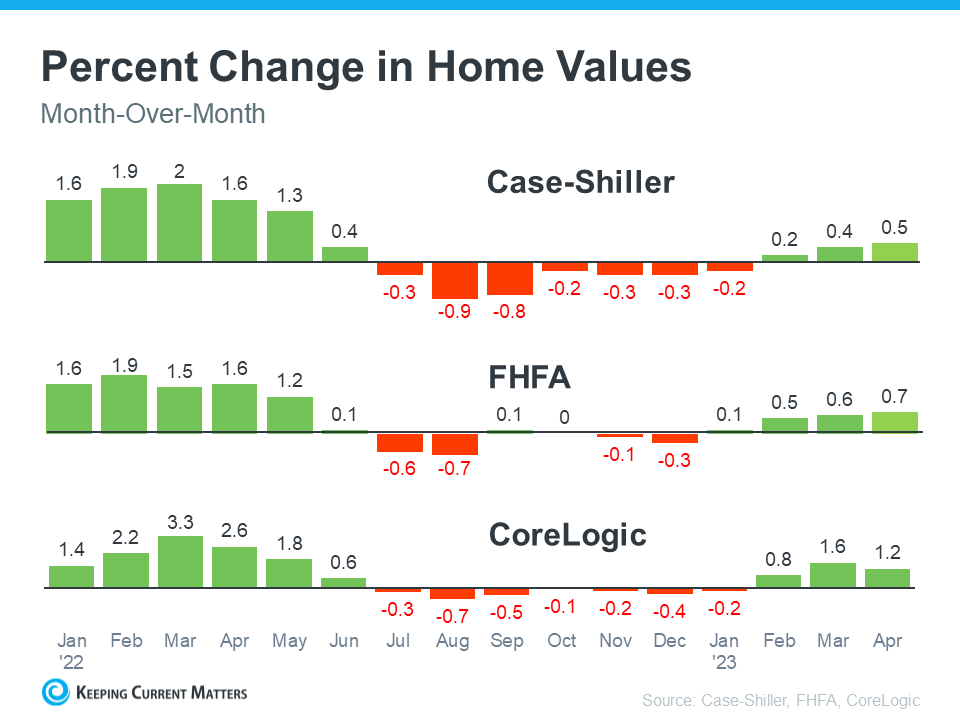
The graphs below use recent monthly reports from three sources to show the worst home price declines are already behind us, and prices are appreciating nationally.

Looking at this monthly view, we can see the past year in the housing market can be divided into two parts. In the first half of 2022, home prices were going up, and fast. However, starting in July, prices began to go down (shown in red in the graphs above). By around August or September, the trend started to stabilize. But, looking at the most recent data for early 2023, these graphs also show that prices are going up again.

The fact that all three reports show prices have been going up for three or more straight months is an encouraging sign for the housing market. The month-over-month data indicates a national shift is happening – home prices are rising again.

Craig J. Lazzara, Managing Director at S&P Dow Jones Indices, says this about home price trends:

“If I were trying to make a case that the decline in home prices that began in June 2022 had definitively ended in January 2023, April’s data would bolster my argument.” 

Experts believe one of the reasons prices didn’t crash like some expected is because there aren’t enough available homes for the number of people who want to buy them. Even with today’s mortgage rates, there are more people looking to buy than there are homes available for sale.

Mark Fleming, Chief Economist at First American, explains how more demand than supply keeps upward pressure on prices:

“History has shown that higher rates may take the steam out of rising prices, but it doesn’t cause them to collapse entirely. This is especially true in today’s housing market, where the demand for homes continues to outpace supply, keeping the pressure on house prices.”

Doug Duncan, Senior VP and Chief Economist at Fannie Mae, states home price growth is exceeding expectations thanks to that high demand:

“. . . housing prices continue to show stronger growth than what was previously expected . . . Housing’s performance is a testimony to the strength of demographic-related demand . . .”

Here’s How This Affects You

  • Buyers: If you’ve been holding off on buying because you were worried the value of your home would go down, knowing home prices have bounced back should bring you some relief. It also gives you the opportunity to own something that usually becomes more valuable as time goes on.

  • Sellers: If you’ve been waiting to sell your house because you were concerned about how changing home prices would affect its value, it might be a good idea to team up with a real estate agent to list your house. You don’t have to wait any longer because the latest data suggests things are turning in your favor.

Bottom Line

If you delayed your moving plans because you were concerned about home prices dropping, the latest data reveals the worst is already over, and prices are appreciating nationally. Partner with a local real estate agent so you know what's happening with home prices in your area.

Read more like this on Keeping Current Matters.

Related Links

If there is a home that you would like more information about, if you are considering selling a property, or if you have questions about the housing market in your neighborhood, please reach out. We’re here to help.

Search Homes in Colorado

Search Homes in Oklahoma

Search Homes in Oregon

Search homes in Minnesota