Home Prices Are Finally Falling: How Low Will They Go?


For the past year, real estate experts, pundits, and that guy you sat next to at the bar/bus/movies have been saying that home prices are poised to drop after several years of previously unthinkable gains.

But now that home prices are finally coming down, just how low will they go? That’s the million-dollar question for frustrated homebuyers, worried sellers, and homeowners who would prefer that their home values continue rising.

On Memorial Day, billionaire Twitter owner Elon Musk tweeted, “Commercial real estate is melting down fast. Home values next.”

However, housing professionals don’t expect any steep drops that will provide house hunters with much relief. Despite higher mortgage interest rates, there are still legions of would-be buyers in the real estate market competing for an extremely limited number of homes for sale.

Even as mortgage rates hovering around 7% push home prices down a little from last summer’s peaks, prices are expected to remain strong as a result of the housing shortage.

“Most likely we’ll see a little bit of decline followed by some months of subpar growth,” says Realtor.com® Chief Economist Danielle Hale. “I don’t anticipate double-digit price declines. I expect prices to mostly move sideways over the next year or so.”

In February, sale prices for existing homes, which exclude new construction, began slipping year over year, according to National Association of Realtors® data. Prices slipped 0.2% annually in February, 0.9% in March, and 1.7% in April. Prices for newly constructed home sales began dropping in April, falling 8.2% year over year, according to federal data.

Economists prefer year-over-year comparisons to account for normal, seasonal fluctuations in the housing market. For example, home prices are typically highest in the spring and summer. They traditionally fall as the weather cools down.

List prices are expected to go negative this month as sellers accept the fact that they’re not getting the prices they initially wanted. They fell 0.9% for the week ending June 10, according to the most recent Realtor.com data. Lower sale prices signal that sellers are pricing their properties aspirationally, but are coming down a little to make the sale.

“What that really shows is that sellers are catching up to where buyers are,” says Hale. “Sellers are willing to accept somewhat lower prices. In the next few weeks, they’re going to be starting with a lower asking price.”

Even though prices might be falling nationally, they’re not going down in every market or for every home. In some parts of the country, prices are shooting up. And the most desirable homes continue to receive multiple offers.

“Even if someone is in a market where they see the local home prices are going down, that doesn’t mean that every home in every neighborhood is seeing prices drop,” says Ali Wolf, chief economist of the housing market consultancy Zonda. “If it’s in a good school district, has curb appeal, and is a turnkey home, even in the market [seeing] prices going down, those home prices may keep going up.”

How low will home prices go?

Housing economists don’t expect any big price drops, certainly nothing like what happened during the Great Recession when the housing bubble popped. Most anticipate single-digit declines.

Realtor.com predicts a small decline, similar to the 2% year-over-year drop expected by NAR. But while Realtor.com expects prices will mostly flatten out next year, NAR foresees them rising by about 3% in 2023.

“We don’t expect price declines to remain long,” says NAR Senior Economist Nadia Evangelou.

Housing consultancy Zonda expects home prices will be about 3% lower nationally this year than they were in 2022.

“If we’re wrong, we’ll probably be too positive. It could be down more than what we’re calling for,” says Zonda’s Wolf. “The key things that will determine where home prices go will be [the housing] inventory, the unemployment rate, and mortgage rates.”

But Mark Zandi, chief economist of Moody’s Analytics, anticipates a larger, more prolonged drop in prices. He predicts home prices will fall 8.5% over a three-year stretch, from the peak last July through early 2025. Buyers shouldn’t expect big price cuts at the lower end of the market, where the competition is greatest for a very limited number of more affordably priced homes.

The declines won’t erase the years of previously unthinkable price gains during the COVID-19 pandemic.

“Most experts don’t expect prices to revert back to 2019 or early 2020 levels,” adds Wolf. “It’s important to keep a home price correction in context. We experienced a historic run-up in prices. A 3% or 5% drop is not catastrophic.

“It does not mean there’s a housing bust and millions of people are going to lose their homes,” she says.

Lower home prices won’t benefit buyers all that much

Homebuyers shouldn’t be popping the Champagne just yet. Lower prices likely won’t make much of a dent in their bottom lines.

With mortgage rates hovering around 7% for 3o-year fixed-rate loans, monthly mortgage payments will likely remain challenging. Today’s buyers will shell out about 21% more each month on their mortgage than they would have a year ago. Their payments are more than double what they would have paid three years ago.

(The analysis compares national median list prices in May 2023, May 2022, and May 2020 using Realtor.com data as well as average 30-year fixed mortgage rates for the last week of May from Freddie Mac. It also assumes buyers put down 20% and does not include property taxes, insurance, and other costs.)

“In most places, people are not seeing their mortgage payments drop,” says Hale. “Homebuying costs are not really going to go down.”

Home prices have fallen in some markets, are rising in others

Real estate, of course, is all about location. Some parts of the country, such as the more expensive Western region, have already experienced steep price drops. These areas might have already bottomed out, and some are already seeing prices rebound.

Prices might also be weaker in the Southeast. While the region has attracted scores of new residents, it has also increased its supply of new housing. Builders have more land available and fewer building restrictions to contend with in the area.

“There’s only a certain amount of people who can continue to purchase homes at the prices that they’re at,” says Zonda’s Wolf. “We may see prices come down to match incomes.”

Meanwhile, prices are still rising in some cheaper Midwestern and Northeastern markets. For example, in the Cincinnati metropolitan area, median list prices were up 19.9% year over year in May, according to Realtor.com data. They rose 19.2% in Rochester, NY, and 17.2% in Hartford, CT.

“It’s going to depend on where you live,” says Wolf. “Most markets will probably see prices come down a little bit year over year.”

Should homeowners who bought at the peak be worried?

Those who purchased homes at the peak shouldn’t worry too much, especially if they don’t plan on selling anytime soon.

Homeowners lost about 0.7% in equity in the first quarter of this year, according to real estate data firm CoreLogic. That’s roughly $5,400 per homeowner with a mortgage.

The rule of thumb is for folks to stay in their properties for at least five years so they don’t end up in the red. This accounts for minor market fluctuations as well as the closing costs that sellers inevitably wind up paying in a sale. Those who waited out down markets have historically recouped their lost home values and then some.

“There can be short-term changes” in home values, says Keith Gumbinger, a vice president at HSH.com, a mortgage information website. But “home prices generally recover over time.”

What could lead home prices to rise

Despite the smartest minds in the business expecting home prices to fall, there’s no guarantee it will happen.

If mortgage rates were to fall below 5%, that’s considered to be the tipping point. More sellers would likely put their homes up for sale, and there would be an increase in buyers in the market.

That extra demand, and the ensuing bidding wars and offers over asking price, would be likely to push prices back up again.

“There are so many factors that could influence what happens with home prices,” says Wolf.

Read more on Realtor.com

Related Links

If there is a home that you would like more information about, if you are considering selling a property, or if you have questions about the housing market in your neighborhood, please reach out. We’re here to help.

Search Homes in Colorado

Search Homes in Oklahoma

Search Homes in Oregon

Search homes in Minnesota

Real Estate Is Still Considered the Best Long-Term Investment


With all the headlines circulating about home prices and rising mortgage rates, you may wonder if it still makes sense to invest in homeownership right now.

A recent poll from Gallup shows the answer is yes. In fact, real estate was voted the best long-term investment for the 11th consecutive year, consistently beating other investment types like gold, stocks, and bonds (see graph below):


If you’re thinking about purchasing a home, let this poll reassure you. Even with everything happening today, Americans recognize owning a home is a powerful financial decision.

Why Do Americans Still Feel So Positive About the Value of Investing in a Home?

Purchasing real estate has typically been a solid long-term strategy for building wealth in America. As Lawrence Yun, Chief Economist at the National Association of Realtors (NAR), notes:

“. . . homeownership is a catalyst for building wealth for people from all walks of life. A monthly mortgage payment is often considered a forced savings account that helps homeowners build a net worth about 40 times higher than that of a renter.”

That’s because owning a home grows your net worth over time as your home appreciates in value and as you pay down your mortgage. And, since building that wealth takes time, it may make sense to start as soon as you can. If you wait to buy and keep renting, you’ll miss out on those monthly housing payments going toward your home equity.

Bottom Line

Buying a home is a powerful decision. So, it’s no wonder so many people view real estate as the best long-term investment. If you’re ready to start on your own journey toward homeownership, connect with a local real estate advisor today.

Keep reading.

Related Links

If there is a home that you would like more information about, if you are considering selling a property, or if you have questions about the housing market in your neighborhood, please reach out. We’re here to help.
Search Homes in Colorado

Search Homes in Oklahoma

Search Homes in Oregon

Search homes in Minnesota

Carteret County Real Estate Market Report from May 2023


Spring felt like a failure to launch, which has led to a summer kick-off where the natural rhythm of the Carteret County real estate market simply feels off.

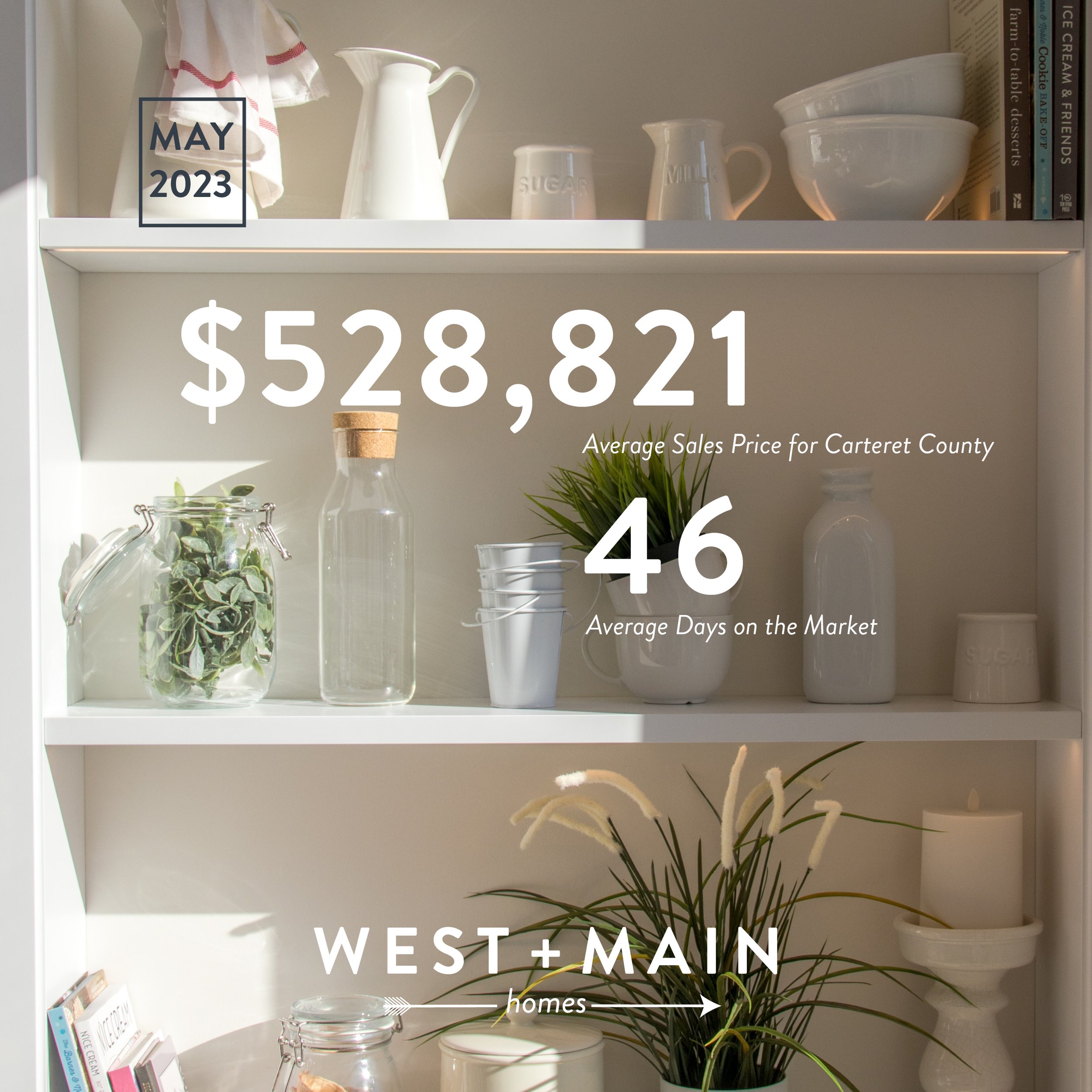
We thrive on predictability, and this current market feels uncertain. While new listings dropped to 87 single family homes. Month-over-month closed sales were up 15.8 percent, the average sales price dropped to $528,821 from $621,447 and days in MLS went to 46 average days as opposed to 31 days this same time last year.

Due to the lack of inventory, buyers are experiencing a bit of fatigue as they wait for either the perfect home or to uncover a good deal. When finding the right house, buyers are moving a bit more slowly. Active
listings at month-end dropped 9.3 percent month-over-month and year-over-year to 8 percent. Buyers aren't rushing to see homes as quickly and aren't submitting offers within hours. Conversely, sellers
are more realistic and strategize more with price reductions. If they are fortunate to find themselves in a multiple-offer scenario, they are more willing to address inspection items to move to the closing table. Real estate continues to be very neighborhood specific, especially for single-family homes. Two similar homes in different areas of town can perform widely differently, where one will receive multiple offers selling to the highest bidder and the other may linger on the market with multiple price reductions.

The real question is, what is the cost of waiting? If that perfect home comes on the market and a buyer loses it, how much is it going to cost in terms of rate, purchase price and time to wait before finding a similar house with this inventory? If a seller receives a low offer, how much will it cost over time with days in MLS and price reductions?

As an industry, we have been following the rise and fall of interest rates with bated breath for the last year. The fact is, many people are making real estate and mortgage decisions right now if they need to. The dramatic shift this year has been that people are no longer making real estate decisions because they'd like to. While many lenders still predict that interest rates will go down at the end of the year, we can only hope that we have an extended spring/summer season come fall.


If there is a home that you would like more information about, if you are considering selling a property, or if you have questions about the housing market in your neighborhood, please reach out. We’re here to help.

Home Prices Didn’t Crash After All


During the fourth quarter of last year, many housing experts predicted home prices were going to crash this year.

Here are a few of those forecasts:

Jeremy Siegel, Russell E. Palmer Professor Emeritus of Finance at the Wharton School of Business:

“I expect housing prices fall 10% to 15%, and the housing prices are accelerating on the downside.”

Mark Zandi, Chief Economist at Moody’s Analytics:

“Buckle in. Assuming rates remain near their current 6.5% and the economy skirts recession, then national house prices will fall almost 10% peak-to-trough. Most of those declines will happen sooner rather than later. And house prices will fall 20% if there is a typical recession.” 

Goldman Sachs

“Housing is already cooling in the U.S., according to July data that was reported last week. As interest rates climb steadily higher, Goldman Sachs Research’s G-10 home price model suggests home prices will decline by around 5% to 10% from the peak in the U.S. . . . Economists at Goldman Sachs Research say there are risks that housing markets could decline more than their model suggests.”

The Bad News: It Rattled Consumer Confidence

These forecasts put doubt in the minds of many consumers about the strength of the residential real estate market. Evidence of this can be seen in the December Consumer Confidence Survey from Fannie Mae. It showed a larger percentage of Americans believed home prices would fall over the next 12 months than in any other December in the history of the survey (see graph below). That caused people to hesitate about their homebuying or selling plans as we entered the new year.


The Good News: Home Prices Never Crashed

However, home prices didn’t come crashing down and seem to be already rebounding from the minimal depreciation experienced over the last several months. 

In a report just released, Goldman Sachs explained:

“The global housing market seems to be stabilizing faster than expected despite months of rising mortgage rates, according to Goldman Sachs Research. House prices are defying expectations and are rising in major economies such as the U.S.,. . . ”

Those claims from Goldman Sachs were verified by the release last week of two indexes on home prices: Case-Shiller and the FHFA. Here are the numbers each reported:


Home values seem to have turned the corner and are headed back up.

Bottom Line

The housing market is much stronger than many think. To get a true evaluation of your local market, reach out to a trusted real estate professional.

Related Links

If there is a home that you would like more information about, if you are considering selling a property, or if you have questions about the housing market in your neighborhood, please reach out. We’re here to help.

Search Homes in Colorado

Search Homes in Oklahoma

Search Homes in Oregon

Search homes in Minnesota

5 Tips for Creating a Cute, Cozy, Kid-Friendly Play Area


If you have little ones in your house, you know that — while they’re adorable — they’re not always the neatest.

Between crayon marks on walls and toys all over the carpet, it’s tough to hit the right balance between wanting your kids to have fun and wanting your house to look its best. But it’s possible!

Creating a dedicated play area in your living room can be a great way to corral the fun without compromising your design style. That’s what Samantha recently did in the Los Angeles home she shares with her husband and two children. She used online-only, reasonably priced, on-trend furniture and home decor from The Home Depot to carve out a child-friendly zone in a room that also hosts friends, fosters family time, and so much more. Here’s how she did it.

1. Take Advantage of Natural Light

Samantha set up the play area by a large window so that the kids could play in the sun, even inside. She also used decorative tricks like strategically placed wall mirrors to amp up the brightness. “They love seeing themselves in all the mirrors!” she says.

2. Upgrade Your Organizational Game

In a space where everything is in full view, aesthetically pleasing storage makes a huge difference. Samantha used an assortment of woven baskets for toys as well as living room essentials like throw blankets. They’re open, so little hands can reach inside easily, and the poms-poms add a playful touch!

3. Embrace Stealth Storage

Buffets are one of our favorite pieces of furniture: They’re usually associated with dining rooms but versatile enough for any space, and when it comes to storage, they mean business. Samantha chose a farmhouse-style console (it’s actually a TV stand!) to keep books, puzzles, and other toys organized and out of sight, but still within reach.

4. Make Your Area Rug Extra Cozy

Since so much playing happens directly on the floor, make sure yours is as soft as possible. Samantha laid down this fluffy sheepskin rug for maximum comfort during playtime. Keep cushy throw pillows nearby, too.

5. Add a Rocking Chair for Yourself

Yes to more comfortable quality time! Samantha completed the play area with a modern twist on a rocking chair that looks sophisticated and helps her get in on the family fun. Snuggle in for rainy day story time or rock the baby while your older kids play — you’ll be glad you have a seat close to the action. Now, Samantha says, “The kids love the whole space! The play nook is super cozy and fun.”

Keep reading on Apartment Therapy.

Related Links

If there is a home that you would like more information about, if you are considering selling a property, or if you have questions about the housing market in your neighborhood, please reach out. We’re here to help.

Search Homes in Colorado

Search Homes in Oklahoma

Search Homes in Oregon

Search homes in Minnesota