5 Remodeling Trends to Watch as More Owners Upgrade


Home improvement remains a hot trend as people update their spaces to be more functional for the long-term.

Facing lean housing inventory, more would-be move-up home buyers may be feeling stuck in place. As they wait out the market, many continue to tackle remodeling projects on their current home. In fact, remodeling activity surged to a record high last year, according to the 2023 U.S. Houzz & Home Study(link is external), a survey that reflects responses from about 46,000 homeowners. The trend is likely to continue, as more than half of homeowners surveyed say they intend to renovate this year, too, consistent with 2022 levels.

“Faced with shortages of housing stock and high interest rates, we’re seeing homeowners update their current home to make the space more functional for the long term,” says Liza Hausman, vice president of industry marketing at Houzz, a home remodeling resource. “We’re also seeing an uptick in additions, with the vast majority of homeowners hiring professionals to achieve their goals.”

Many renovating homeowners may not have intentions of reselling immediately, but they’re eyeing how much their home could be worth as the housing market pendulum swings. Sixty-two percent of owners say their main motivation for tackling a renovation is to increase their home’s value, according to a separate survey(link is external) from Cinch Home Services, a home warranty company.

Homeowners expressed concerns about selling their home in its current state, expressing fears that their home was in need of too many repairs (65%); has an outdated interior (60%); lacks trendy fixtures (38%); or lacks curb appeal (33%), according to the Cinch Home Services survey.

To combat home dissatisfaction, Houzz uncovered some recent home improvement trends that emerged from the 2022 boom.

1. Expanded living spaces. The number of renovating homeowners who are adding square footage is on the rise. The rooms most popular for expansions are kitchens, bathrooms and living rooms, the Houzz survey shows.

2. Remodeling budgets are rising. The median expense for home renovations in 2022 was $22,000—up 22% from 2021. Ten percent of owners were willing to spend six figures: $140,000 or more. Expenditures are likely rising because materials and products are getting pricier. Kitchen and bathroom renovations were the most expensive projects homeowners took on; in 2022, the median spend on a kitchen remodel reached $20,000, and $13,500 for primary bathrooms, up 33% and 50% year over year, respectively, according to Houzz.

3. Aging homes are getting upgraded. The median age of a home in the U.S. continues to rise as homeowners try to keep their properties current. Nearly 30% of homeowners upgraded plumbing, followed by electrical and home automation, the Houzz survey shows. Among home system updates, cooling and heating systems were the two largest expenditures at $5,500 and $5,000, respectively. Check out the most popular home updates based on a home’s age.

4. Contractors remain in demand. The long wait for contractors may linger in some markets because of overheated demand. Homeowners hired specialty service providers and construction professionals, such as general contractors and bathroom or kitchen remodelers, more often in 2022, the Houzz survey finds. Homeowners continue to cite “finding the right service providers” as their biggest challenge for home renovations, followed by finding the right projects and staying on budget.

5. Owners turn to loans for pricier projects. Eighty-two percent of homeowners paid for their projects using cash from their savings while 28% who used credit cards. But one trend to watch is that in 2022, the percentage of homeowners financing their renovation projects with secured home loans rose to 16% from 14% in 2021. Homeowners tackling pricier projects—from $50,000 to $200,000—are more likely to take out a loan than those with lower price tags, the study finds.

Get more like this from NAR.

Related Links

If there is a home that you would like more information about, if you are considering selling a property, or if you have questions about the housing market in your neighborhood, please reach out. We’re here to help.

Search Homes in Colorado

Search Homes in Oklahoma

Search Homes in Oregon

Search homes in Minnesota

Atlantic Beach nears application for state grant to help pay for boardwalk redevelopment


Atlantic Beach inched closer Monday night to applying for a $500,000 N.C. Parks and Recreation Trust Fund grant to pay roughly half the cost of the first phase of the redevelopment of the historic boardwalk area along the oceanfront in the Circle Development District.

The council met in the town hall off West Fort Macon Road and online via Zoom and reviewed but took no action on a formal resolution necessary to apply for the grant.

Mayor Trace Cooper said the plan is for the board to adopt the resolution at its next regular meeting on Monday, April 24 at 6 p.m. in the town hall. No council member objected to the staff-prepared language of the resolution Monday night.

The resolution states that if the town receives the grant, it agrees to provide $574,618 in matching funds, reflecting a 53.5% cost share.

It adds that since the 1920s, the Circle Development District boardwalk and surrounding area “have been the social and entertainment center of Atlantic Beach, allowing public access and recreational use. Over the next few years, the town desires to upgrade the existing aging wooden boardwalk, bathhouse, parking and gathering spaces with a more resilient raised boardwalk, multi-use pavilion, handicap-accessible beach accesses, public art, shade structures and restrooms.”

The project is to be done in three phases to significantly improve the existing circle public beach access. Phase one includes construction of the new upper and lower boardwalks, shade structures, plantings, seating, and lighting and connecting walkways to Atlantic Boulevard.

The N.C. General Assembly established the Parks and Recreation Trust Fund (PARTF) in July 1994 to fund improvements in the state’s park system through grants for local governments. The assembly funds PARTF each year at different levels.

Phase II will likely consist of a new bathhouse and adjacent improvements, and Phase III would consist of improvements to the park area at the center of the boardwalk, which will likely include a pavilion structure, plaza areas and seating.

Mayor Cooper said he believes the town has a good chance of getting the grant, as coastal towns such as Emerald Isle and Kure Beach have received PARTF funds for major recreation projects. Emerald Isle used PARTF funds to help pay for the land along Archers Creek that became the McLean-Spell Park, a natural area behind the recreation center.

In addition, Cedar Point got PARTF money to help buy the land for its waterfront Boathouse Creek Park at the end of Masonic Avenue.

“I think it’s really complete,” Mayor Cooper said of the resolution prepared by the staff. “I think we can do a really good project and hopefully we will get a grant.”

The town council voted unanimously in June to award a $174,000 contract for the design of the new boardwalk to KUTONOTUK of Charlottesville, Va.

KUTONOTUK presented a boardwalk design incorporating features of the existing boardwalk, such as the existing seawall and the boardwalk’s concrete foundation.

Learn more on Carolina Coast Online.

Related Links

If there is a home that you would like more information about, if you are considering selling a property, or if you have questions about the housing market in your neighborhood, please reach out. We’re here to help.
Carteret County Real Estate Market Report from March 2023


The spring market is here!

Interest rates began their steep upward climb last May, with the real estate market feeling the slowdown acutely by fall. Heading into the New Year, expectations were conservative with the prediction that the spring selling season would be calmer than in years past with slower appreciation and longer days on market.

Sellers who jumped into the market are reaping the rewards with the return of multiple offers and more seller-friendly terms. New listings were down, lowering the number of available options for buyers to view and place offers. For perspective, inventory year-to-date is lower with 78 closed sales in March 2023 compared to 94 in 2022. Interestingly enough, new listings in single family homes rose from 83 listings in February to 98 in March showcasing more inventory is hitting the market. Pending homes were also down year-over-year; however, they rose 24 percent month-over-month. Sellers are advised to continue to price their properties thoughtfully to elicit strong offers as properties are still falling out of contract due to inspection items or issues arising from buyer financing.

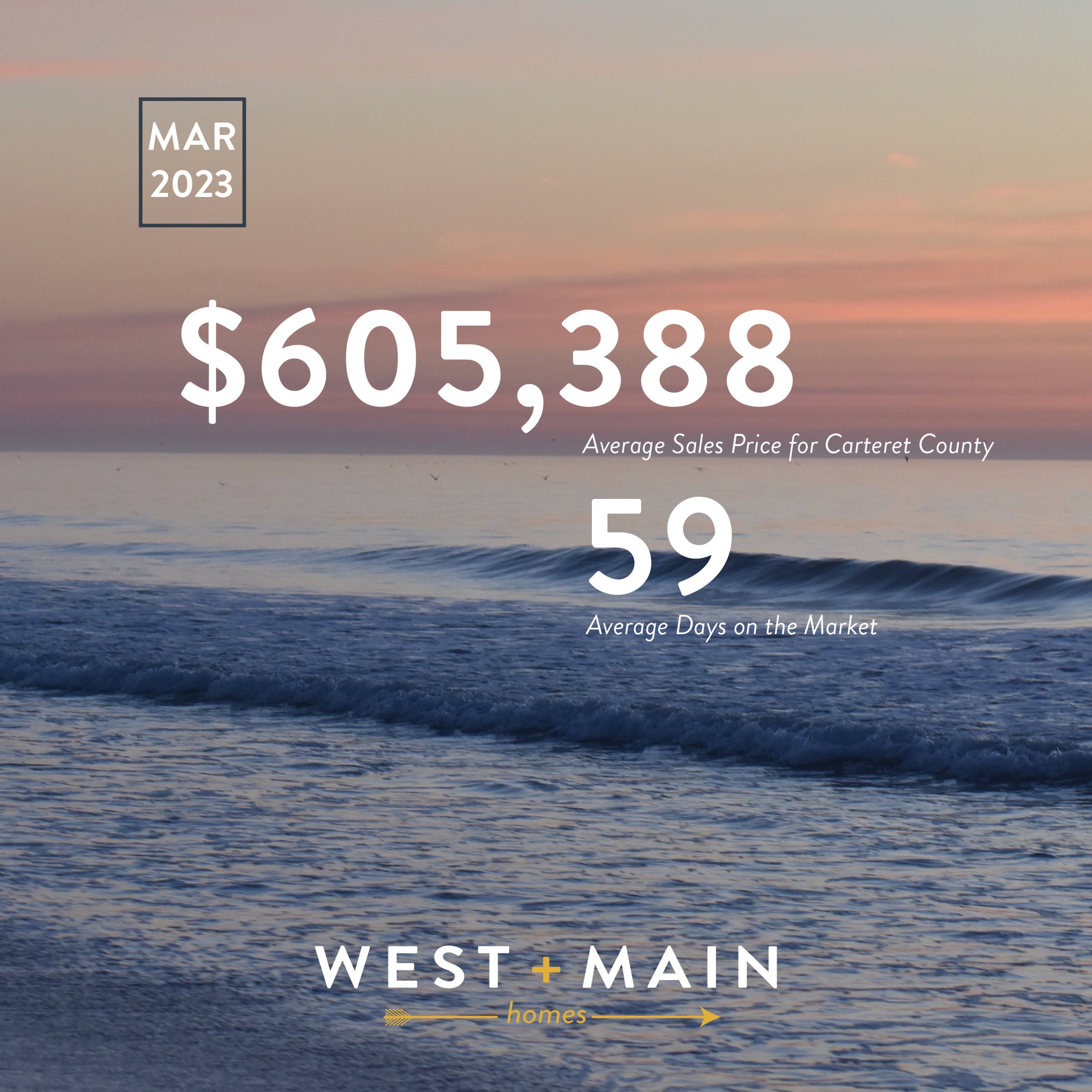
Buyers are not down and out in this market. They know the game and are coming prepared. The average sales price was up 15 percent from $518,524 last year to $605,388, and average days in MLS increased from 45 last year to 59 days for single family homes. Even though bidding wars have subsided from last spring, they are on the rise again for turnkey homes that are new to the market. Buyers may not have as many homes to view, but they do have the option of balancing the pros and cons of jumping into a competitive situation. Or, they can take a different approach by targeting properties that are either overpriced, have been sitting on the market or have fallen out of contract by negotiating more buyer-friendly terms. Either way, buyers understand that appreciation is down and days in MLS are up. They are doing their research and crafting thoughtful offers. They are also keenly aware of Carteret County’s seasonality with the knowledge that more homes will hit the market month-over-month as we head into summer.

Time will tell how the rest of the year shapes up, but based on the current activity, April's numbers are forecasted to be strong.


If there is a home that you would like more information about, if you are considering selling a property, or if you have questions about the housing market in your neighborhood, please reach out. We’re here to help.

Fannie Mae and Freddie Mac Expand Plans for Equitable Housing


Both GSEs released updates to plans for increasing accessibility to affordable housing for underserved communities.

Fannie Mae and Freddie Mac announced on Wednesday new updates to their equitable housing finance plans, which outline the expansion of accessible and affordable housing available to underserved communities.

Fannie Mae is expanding a series of pilot programs, launching new initiatives and applying new research to its understanding of its consumer housing journey roadmap. Freddie Mac is expanding special purpose credit programs (SPCPs), increasing the availability of accessory dwelling units (ADUs) and manufactured homes, and launching a correspondent lending program to assist smaller financial institutions with access to Freddie Mac’s multifamily financing.

Also, Freddie Mac’s DPA One, a down payment assistance digital platform, will be made available broadly this year and complements Freddie Mac’s SPCP efforts.

“Since the launch of our plan in 2022, we have made considerable progress in identifying meaningful ways to address historical challenges faced by underserved communities, particularly for Black and Latino people,” said Katrina Jones, vice president of racial equity strategy and impact at Fannie Mae. “When you add the present-day challenges of inadequate affordable housing supply and high housing costs, overcoming barriers to housing can seem harder than ever. But we are committed to making a fundamentally fairer and more equitable future for housing.”

Freddie Mac said progress has already been made with its plan and outlined additional changes it will implement.

“The actions laid out in this year’s Equitable Housing Finance Plan build upon the work we started last year to give families in underserved communities a more equitable chance to have a quality, affordable place to call home,” said Michael DeVito, CEO of Freddie Mac. “We have made meaningful progress over the last year, and we know there is much more to do. The update released today illustrates our commitment to help more families in the years to come.”

The specific actions that Fannie Mae will make were outlined in a blog post, which anticipates SPCPs will be used as a tool for “helping people in majority Black and Latino communities to buy their first home.” The GSE has also “created and implemented innovative ways to help people qualify for a mortgage, even if they have insufficient credit history.”

Accessibility to housing counseling is critical for Fannie Mae to achieve its goals, according to Jones.

“After completing over 11,000 counseling sessions in 2022 specifically addressing homeownership needs, we are expanding our efforts this year to help those facing financial hardship and improving access to information for long-term housing safety and stability,” Jones said. “We are also working alongside industry partners like HUD to bring comprehensive counseling opportunities to those in need and to test new counseling services in various parts of the country.”

SPCPs are a central fixture of Freddie Mac’s plan, and the organization plans to continue purchasing loans originated through lender SPCPs and its own program, “BorrowSmart Access,” which provides down payment assistance and borrower education to eligible families.

Freddie Mac also noted that it will assist renters on the path to homeownership in two ways: by establishing and improving credit scores of renters seeking to transition into homeownership, and “considering a history of on-time rent payments in loan purchase decisions.”

Freddie Mac’s renter credit-building initiative, which was launched in late 2021 and expanded earlier this year, has served 184,000 renters to date. It has also resulted in 27,000 renters establishing credit for the first time.

“We were able to make measurable headway on our Equitable Housing goals in year one by working closely with FHFA and other industry participants,” said Michael Hutchins, president of Freddie Mac. “Our 2023 Plan incorporates new thinking and lessons learned to ensure we are as effective and impactful as possible.”

The National Association of Real Estate Brokers (NAREB) recently urged mortgage lenders to accelerate special purpose credit programs (SPCPs) to boost Black homeownership rates and help close the wealth gap between Black and white Americans.

Read more on Housing Wire.

Related Links

If there is a home that you would like more information about, if you are considering selling a property, or if you have questions about the housing market in your neighborhood, please reach out. We’re here to help.
Search Homes in Colorado

Search Homes in Oklahoma

Search Homes in Oregon

Search homes in Minnesota

Why Aren’t Home Prices Crashing?


There have been a lot of shifts in the housing market recently.

Mortgage rates rose dramatically last year, impacting many people’s ability to buy a home. And after several years of rapid price appreciation, home prices finally peaked last summer. These changes led to a rise in headlines saying prices would end up crashing.

Even though we’re no longer seeing the buyer frenzy that drove home values up during the pandemic, prices have been relatively flat at the national level. Lawrence Yun, Chief Economist at the National Association of Realtors (NAR), doesn’t expect that to change:

“Home prices will be steady in most parts of the country with a minor change in the national median home price.”

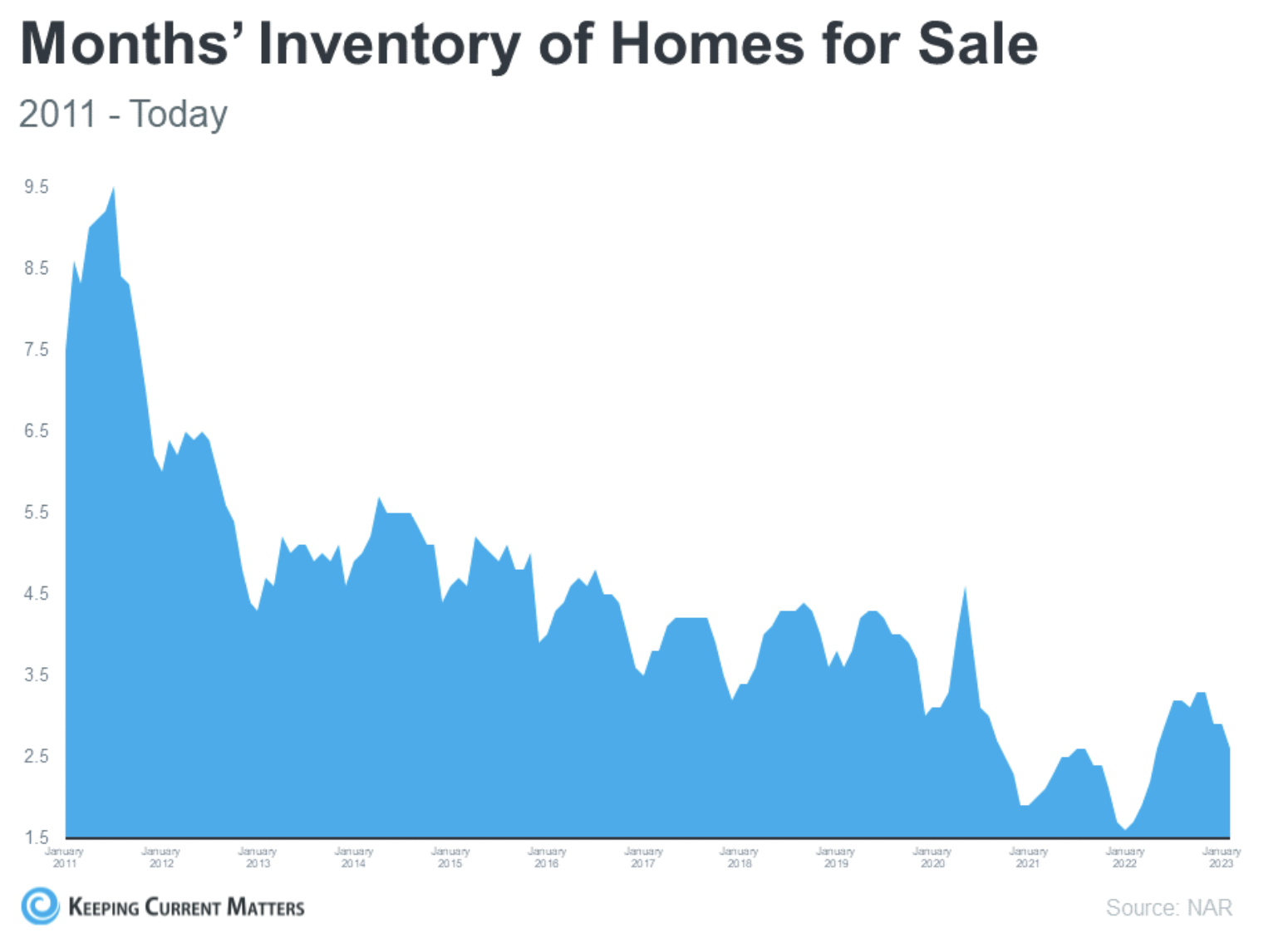
You might think sellers would have to lower prices to attract buyers in today’s market, and that’s part of why some may have been waiting for prices to come crashing down. But there’s another factor at play – low inventory. And according to Yun, that’s limiting just how low prices will go:

“We simply don’t have enough inventory. Will some markets see a price decline? Yes. [But] with the supply not being there, the repeat of a 30 percent price decline is highly, highly unlikely.”

As you can see in the graph below, we’ve been at or near record-low inventory levels for a few years now.


That lack of available homes on the market is putting upward pressure on prices. Bankrate puts it like this:

“This ongoing lack of inventory explains why many buyers still have little choice but to bid up prices. And it also indicates that the supply-and-demand equation simply won’t allow a price crash in the near future.”

If more homes don’t come to the market, a lack of supply will keep prices from crashing, and, according to industry expert Rick Sharga, inventory isn’t likely to rise significantly this year:

“I believe that we’re likely to see low inventory continue to vex the housing market throughout 2023.”

Sellers are under no pressure to move since they have plenty of equity right now. That equity acts as a cushion for homeowners, lowering the chances of distressed sales like foreclosures and short sales. And with many homeowners locked into low mortgage rates, that equity cushion isn’t going anywhere soon.

With so few homes available for sale today, it’s important to work with a trusted real estate agent who understands your local area and can navigate the current market volatility.

Bottom Line

A lot of people expected prices would crash this year thanks to low buyer demand, but that isn’t happening. Why? There aren’t enough homes for sale. If you’re thinking about moving this spring, partner with a trusted real estate agent.

Keep reading.

Related Links

If there is a home that you would like more information about, if you are considering selling a property, or if you have questions about the housing market in your neighborhood, please reach out. We’re here to help.

Search Homes in Colorado

Search Homes in Oklahoma

Search Homes in Oregon

Search homes in Minnesota