Buying a House Remodeled Without a Permit? Here’s What You’re on the Hook For


Imagine attending an open house and stepping into a newly remodeled main bathroom complete with brand-new Carrara marble tiling and a luxurious free-standing tub.

Home improvements like this are enough to make potential home buyers fall in love, and it may even motivate you to make an offer on the spot.

But what may seem like a dream perk at an open house can turn into an expensive nightmare if there’s no permit paper trail and the home improvements were done without the proper authorizations. Why? Because, depending on where you are in the buying process, unpermitted work could leave you (yes, you) on the hook for way more than you bargained for.

Want to save yourself from this predicament? Read on for everything you need to know about buying a home with work done without a permit.

How do you know if work was done without a permit?

“All sellers have to give buyers something called a property disclosure,” says Andrew Hillman, a broker at Hillman Real Estate, in Boston. “This will list information about what the current owners have done to the property during ownership, including work done without a permit.”

As an extra precaution, you can also cross-check with your local building department to see if the owners pulled permits. Many municipalities, such as New York City, have the status of permits online. Otherwise, you can call or visit the local buildings department for information. Remember, building codes and permit requirements vary with every city and town.

What is your responsibility as the home buyer?

The last thing you want to do as a home buyer is get your own hands dirty with sourcing permits or paying fees. But your responsibility in the matter all depends on where you are in the closing process. If you haven’t signed the purchase agreement yet, the seller can be held accountable for obtaining and closing out permits. But that’s easier said than done. It could take weeks or even months to close out permits.

Your best bet is to put language in the contract before signing stating that the seller has to take care of pulling a permit and having the local building inspector sign off on a certificate of occupancy before closing.

“Your attorney can draft the amendment to the contract for you,” says Beth Jaworski of Shorewest Realtors, in Wauwatosa, WI.

But once the contract is signed, the buyer assumes all responsibility for work done without permits.

“Buying a home without performing due diligence is as irresponsible as the homeowner who doesn’t pull permits,” says Hillman.

Still, all hope is not lost if your contract is already signed. There may be contingencies that can halt the transaction and give you some leverage.

How your appraiser and home inspector can help

One of the main contingencies all contracts have is the inspection period. A professional home inspection can identify unpermitted construction, work not completed to code, and other potential surprises before you commit to buy the property.

“The inspector can also check with the local permitting department to see what permits have been obtained,” says Brad English, a real estate professional with First Team Real Estate, in San Clemente, CA.

Your appraiser will help. “When I do a walk-through of a dwelling, I ask about the legality of a deck, living space, or an extra bathroom not found on the property record card,” says Ginna Currie, a New York state general appraiser at C.T. Appraisals.

Depending on the language in your contract, you have the right to terminate the transaction if you are not satisfied with the results of your home inspection or appraisal.

What’s the worst that can happen?

The worst-case scenario: Your city can “fine you for having unpermitted work, force you to remove the improvements, and you’ll have to start the process over to have the work done legally,” says Currie.

Keep in mind pulling a permit can cost hundreds of dollars. And having the work brought to code by a contractor will be an additional expense. But if you don’t pull permits during this transaction, the issue can arise again if you choose to sell your home later on.

“If the unpermitted work isn’t allowed at all, the city inspectors can make the homeowner tear down or remove the renovation or addition,” says Hillman. And if the inspectors don’t make the homeowner tear something out, you can at least expect a tax assessment for any improvements.

Keep reading.

Related Links

If there is a home that you would like more information about, if you are considering selling a property, or if you have questions about the housing market in your neighborhood, please reach out. We’re here to help.

Search Homes in Colorado

Search Homes in Oklahoma

Search Homes in Oregon

The 6 Most Futuristic Cities Being Built Around the World


Proposed across continents, these cities show what our world could look like in 50 years

Perhaps nothing is more humanistic than the pursuit of futuristic cities. We write about them in utopian—and dystopian—novels, offer glimpses of what they’d look like in movies and TV shows, and now, it seems, we build them too. Though designing for the future could be understood as the most basic requirement for architects and urban planners, in recent years, this goal has been taken to a new level. It seems every few months, firms unveil plans for wholly reimagined metropolitan areas: from floating cities to those in outer space, the offerings are relentless. In these new cities, sustainable infrastructure and smart technology is often a given, and in some cases, the plans even include things that haven’t even been invented (or brought to market) yet—like flying cars or extremely high-speed autonomous transit. Still, it never hurts to dream big, right? With that in mind, AD rounded up six of the most interesting proposals for futuristic cities, some of which are already under construction. Which one are you moving to?

Smart Forest City, Mexico

Stefano Boeri, an Italian architect, unveiled plans for a smart city near Cancún, named Smart Forest City, in 2019. The proposed metropolis would contain 7.5 million plants and is based on the area’s Mayan heritage and the culture’s relationship with the natural world. “Thanks to the new public parks and private gardens, thanks to the green roofs and to the green facades, the areas actually occupied will be given back by nature through a perfect balance between the amount of green areas and building footprint,” the firm told Dezeen. Collecting data is an important aspect of the proposed project, but Boeri assures this will be of benefit to residents, as it would be used to enhance governance.

Telosa, USA

Conceived by billionaire Marc Lore, Telosa’s goal is to “create a new city in America that sets a global standard for urban living, expands human potential, and becomes a blueprint for future generations.” Though it’s exact location has yet to determined, the city will prioritize pedestrians and bikers with a few “slow-moving autonomous vehicle.” Imagined as sustainable city and designed by Bjarke Ingels Group, renewable resources will power the urban area; green spaces will be protected and prioritized; and water will be stored, cleaned, and reused on site. Aside from environmental initiatives, the city will be built around the idea of equitism, “an economic system in which citizens have a stake in the city’s land.” The project is currently targeting a population of 5 million by 2050.

The Line, Saudi Arabia

Building futuristic cities is no cheap feat. Case in point: To build The Line, Saudi Arabia’s 100-mile long linear city, the country is planning to invest between $100–$200 billion. Clad in a mirrored facade, the city plans to eliminate the need for cars—and carbon emissions—by implementing high-speed autonomous transit. According to Gizmodo, construction has already begun on the city, which is expected to be completed by 2030.

Oceanix Busan, South Korea

Though floating-city proposals are increasingly common these days, Oceanix Busan may be the first one to actually reach completion. Oceanix hired Bjarke Ingels Group and SAMOO to design the city, and Busan soon signed on to help build the first prototype, which was delivered to the UN in April of 2022. Built from biorock, a self-sustaining and self-repairing material, the city will hopefully serve as a model for other coastal communities battling rising sea levels and other climate-change-induced difficulties.

Chengdu Sky Valley, China

Designed by firm MVRDV, Chengdu Sky Valley was conceived as a an entry for the Future Science and Technology City competition, though the project isn’t moving forward at this time. The metropolis is designed to preserve and enhance the site’s traditional Linpan settlements, which are rural communities in the area’s valleys. For this reason, new buildings are clustered on hills and designed to accentuate the valley skyline. By preserving the agricultural landscape of the area, residents are offered “a wider choice of lifestyles, including opportunities for self-building and developing self-sufficient lifestyles in harmony with nature.”

Amaravati, India

Though this masterplan for Amaravati conceived by Foster+Partners is no longer happening, it does offer great insight into what a futuristic city could look like. In the the plan, a government complex would anchor the city, and a large central green space would span the city’s center—inspired by Lutyens’ Delhi and New York’s Central Park. The firm also envisioned an aggressive environmental strategy, in which “at least 60% of the area is occupied by greenery or water.” According to Foster+Partners, the metropolis would’ve been among the most sustainable in the world and would make use of various new and emerging technologies including photovoltaics, electric vehicles, water taxis, and dedicated cycle routes.

Learn more on Architectural Digest.

Related Links

If there is a home that you would like more information about, if you are considering selling a property, or if you have questions about the housing market in your neighborhood, please reach out. We’re here to help.

Search Homes in Colorado

Search Homes in Oklahoma

Search Homes in Oregon

4 Reasons Why Some Boomers Don’t Want to Downsize Anymore


Life has many phases, and folks tend to choose a home based on their current needs.

Couples may get away with having a one-bedroom apartment, but once a child or two come along, a growing family usually means more extensive living arrangements. Of course, not all home purchase decisions depend on the number of family members, but as life goes on, many eventually consider downsizing

As people age, there tends to be less of a need for stuff, and once kids move out of the house, multiple rooms may go unused. Once teeming with life, a large home can start to feel empty, which may be a reason to downsize. Or is it? Many baby boomers are in the phase of life traditionally dedicated to simplifying, moving, and aging. However, with vibrant lives and more than one reason to stay put, here’s why some of today’s baby boomers are refusing to downsize

They’ve found their dream home.

Everyone is different in what they want in a house. Some crave floor-to-ceiling windows, while others desire a fully stocked chef’s kitchen. After finally finding the perfect place, it can be challenging to let it go. After author and speaker Jan Cullinane and her husband retired from their primary careers, they decided to build their dream home. “We knew we needed two separate offices,” says Cullinane. Their design also includes an elevator if they can’t maneuver the steps in the future, which means that they can age in place in a house they love.

They need a space for family gatherings.

Folks are more transient nowadays, which means that when children leave home, they may never live near their parents again. “We have three adult married children living in different cities and five grandchildren, and we wanted a place that would accommodate all of us,” Cullinane adds. “We have never regretted our choices, and having a big house makes for a happier marital relationship and close family ties.” Having a place to get together for family vacations and holidays becomes increasingly important for those in the boomer generation.

They’re concerned about the cost of moving.

Many baby boomers have been in their homes for years, meaning they’ve either paid off most of their mortgage or made the purchase when the market was more stable. Illinois real estate broker Betsy Phillips has seen market fluctuations and understands the boomer generation’s uneasiness. “Baby boomers are not downsizing because it often costs more than staying put,” she advises. For example, homes with main-level bedrooms are hard to come by and may require updating, and land and construction costs are expensive for new builds. “Basically, they stay because there is no place to go,” adds Phillips.

They want a sense of nostalgia.

Part of making a house a home is creating memories, which are difficult to give up. It’s why many decide to linger. “Many baby boomers desire to remain in their homes for as long as possible due to sentimental attachments,” says designer Sage Stone. Older generations also tend to save meaningful items and may need a larger space to store and display their mementos. Additionally, the task of wading through decades of belongings can seem daunting. “Ultimately, they may not want to go through this hassle, especially at an advanced age,” Stone adds. Being surrounded by familiarity in their own home is meaningful and comforting.

Get more on Apartment Therapy.

Related Links

If there is a home that you would like more information about, if you are considering selling a property, or if you have questions about the housing market in your neighborhood, please reach out. We’re here to help.
Search Homes in Colorado

Search Homes in Oklahoma

Search Homes in Oregon

How to Spot Foundation Issues in an Old Home


It's no secret that older homes often come with a variety of issues, from outdated plumbing and electrical problems to structural issues.

One of the most common issues faced by homeowners of older homes is foundation problems. But how can you tell if your home has foundation issues? In this blog post, we'll take a look at some of the warning signs that may indicate a problem with your home's foundation.

Signs of Foundation Problems
One of the most obvious signs of foundation problems is visible cracks in the walls, floors, or ceilings. If you notice any large or unusual cracks, it's important to have them professionally inspected as soon as possible. You should also be on the lookout for any signs of sagging floors or sloping walls, which could indicate an issue with the underlying structure. Other warning signs include doors and windows that are difficult to open or close and floors that feel uneven when walked on.

Pay Attention to Changes
It's also important to pay attention to any changes in your home's exterior appearance. If you notice any areas where the ground has shifted or sunken, this could be an indication that there is an issue with your home’s foundation. Additionally, if there are any water stains on your walls or flooring, this could be a sign that moisture is getting into your home and causing damage to the structure.

How to Repair Your Home's Foundation
If you suspect that there may be an issue with your home's foundation, it's best to have it checked out right away by a professional who specializes in foundation repair and structural repairs. A qualified technician will be able to assess the situation and determine what repair work needs to be done in order to ensure your home remains safe and secure for years to come.

Foundation problems can quickly become serious if left unchecked, so it’s important for homeowners of older homes to keep an eye out for potential issues before they become too costly and time-consuming to fix. Keep an eye out for visible cracks in walls, floors, and ceilings. 

Look for sagging floors, sloping walls, difficult-to-open doors and windows, unevenly felt floors, shifted ground outside, water stains inside, and other changes in appearance inside and outside the house—all of these could potentially signal an issue with your home’s foundation that requires immediate attention from a professional contractor. 

By being proactive about monitoring these warning signs you can save yourself time and money down the road.

Learn more in RISMedia.

Related Links

If there is a home that you would like more information about, if you are considering selling a property, or if you have questions about the housing market in your neighborhood, please reach out. We’re here to help.

Search Homes in Colorado

Search Homes in Oklahoma

Search Homes in Oregon

Home Design Ideas That Will Change the Way We Decorate in 2023


A forecast led by interior designers with a pulse on trends that will be shaping the upcoming year, and beyond.

With the pandemic somewhat in the rearview mirror, mainstream designers and TikTok creators alike are predicting that home decor will take on an optimistic turn filled with vibrant colors and sustainable DIY projects, all the while maintaining a love for nature-inspired textures and accessories. 

While the soft green palettes are still trending, especially when it comes to kitchen cabinetspinks are coming in strong. Repurposed furniture is also having a moment with tutorials on transforming a dining table into a chic coffee table or building a plant enclave out of an apothecary cabinet. Perhaps one of the most exciting things about 2023 home design ideas is the mix of new and old design elements, a twist on the ever popular grandmillenial trend with a decidedly contemporary refresh. “2023 is taking us to a new level of design,” says Cleveland-based Ashleigh Clark, principal of Ashleigh Clark Interior Design Group. “We saw a neutral approach to design throughout the pandemic, creating homes that look like a Pinterest ad. People are now craving character and warmth. Personality driven decor is sweeping across the nation. Art that is personal, color that evokes a positive mood mixed with natural elements, are creating homes that feel cozy while adding plenty of character.” 

If you fear that the only way to embrace all of 2023’s home design ideas means parting with your current decor and starting from scratch—all the while draining your bank account—fear not. Many of next year’s best looks are easy to DIY, meaning you can exercise your creativity and save cash while making your space covetable and conversation-worthy. The following 31 home design ideas are just too good to ignore. 

1. Infuse decor with warm wood tones 

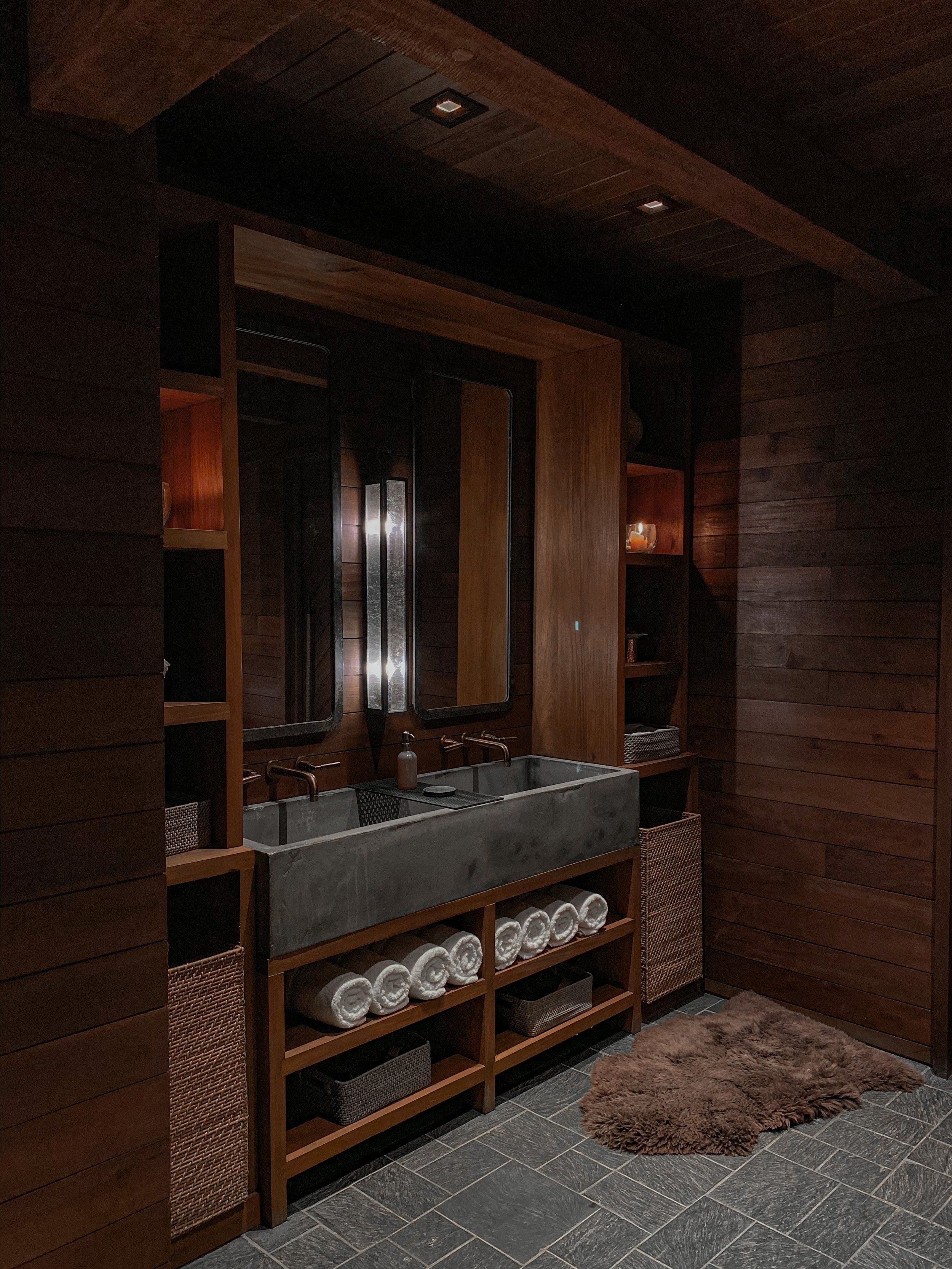
Warm wood is making a comeback, notes designer Lindye Galloway of Lindye Galloway Design Studio and Shop, based in Costa Mesa, California. “Wood can bring warmth, depth, and an intimate feel that creates a serene scene,” she says. Galloway particularly enjoys incorporating it into the ceiling and vanity pieces in the bathroom. “This can especially help with an all-white bathroom where you want to keep it light and bright but have that warm feeling,” she adds. On a smaller scale, consider DIY’ing a warm wood frame for an existing mirror that could use an upgrade, or swapping builder-grade metal drawer pulls with stylish wooden options

2. Add a fashionable influence to bedrooms

When formulating a vision for this bedroom, which was featured in the 2022 Brooklyn Heights Designer Showhouse, New York designer Tara McCauley was inspired by fashion designer Elsa Schiaparelli, who lived in Paris at the peak of the Art Deco and Surrealist movements. “The draped canopy above the bed certainly doesn’t echo the streamlined, machine-inspired forms of the Art Deco period, but I wanted to juxtapose the rectilinear headboard and bedside lamps with something soft,” McCauley explains. “The canopy feels a bit more Hollywood Regency than Art Deco, but it takes just one look at film sets from Hollywood’s Golden Age to see how those two styles are closely entwined.” DIY a canopy of your own—no matter your preferred aesthetic—with these designer tips. 

3. Pantries continue to reign

Pantries that prioritize function and maximize storage are something we’ve grown to appreciate even more in recent years. “If being under quarantine at home revealed anything during the pandemic, it’s how to become more organized,” explains Houston-based Sherrell Neal of Sherrell Design Studio. “The pantry is not just a junky storage room of dry goods, it’s how we plan meals, sort food groups, and make shopping lists. It’s really become an extension of the kitchen space.” Neal anticipates that we will continue to see an emphasis on pantry organization and design into the new year. 

4. Mix and match old with new

Styling antique finds alongside contemporary furnishings will never go out of style, says designer Joshua Smith of studio Joshua Smith in New York. “The thrill of combining these items is incorporating modern pieces into more traditional spaces, or vice versa,” says Smith who suggests by tossing in a French Louis chair into a modern space. Just don’t go overboard by adding too many periods into one room. “It brings confusion to the energy of the space,” he continues. “Think about common threads between the objects, like color, texture, shape.” 

5. Say yes to plaster

Take the walls and ceilings to the next level with the addition of a plaster finish. “Plaster is making a comeback along with all other natural surfaces because of the character it adds to a space and the character that it adds over time as it lives in a space,” explains interior designer Katie Paulsen of Maestri Studio in Dallas. “Even in its most polished state, it adds a comfort that can’t be achieved with faux looks.” Not ready for a major revamp? Incorporate plaster fireplace surrounds, chandeliers, and side tables into your home, Paulsen suggests. “Its versatility allows us to use it in so many different ways,” she adds. “We’re predicting that it will be making an appearance just about everywhere.” 

6. Go bold in the kitchen

The phasing out of the all-white kitchen continues. And the penchant for color is visible in coating cabinets in bold, unexpected hues. Grab that paint brush and get to it. “Rich cool tones, such as peacock or royal blue as well as emerald green, are colors that create a stunning contrast when combined with the quartzite and marble options,” notes Jerad Gardemal of JF Gardemal Designs in Baton Rouge. “You have two beautiful elements that are distinct alone, but when combined make a grand statement.” High gloss and lacquer finishes further emphasize the jewel-like kitchen spaces.

7. Get artsy with statement light fixtures 

Say goodbye to the standard-looking light fixtures and opt for something that makes a statement instead. “Although popular in the last decade, traditional lanterns and pairs of lanterns have become mundane,” Gardemal says. “Improvements in both the design and technology of multi-point lighting make them much easier to work with,” he adds. “You now have the ability to experiment with globe styles, heights, and finishes to create a truly custom statement.”

8. Rethink bathroom walls and floors 

If your bathroom floors or walls need a facelift, plan to go retro with hexagons, rhomboids, and circles, Gardemal advises. “These tile shapes have made appearances for hundreds of years and though the shapes aren’t new, the variety of tile sizes available has given them a refresh,” he explains. Opt for tiles with combos of white, gray, and black to nail that classic vintage aesthetic. Alternatively, try larger tiles paired with patterned accent tiles boasting touches of metallics and iridescent glazes

9. Consider Trompe-L’oeil

Make like designer Nick Olsen and add major wow-factor to your home by incorporating patterns and furnishings that deceive the eye. Take a peek inside his Dutchess County, New York, home to get inspired by clever takes on wall coverings, textiles, and floor designs that go way beyond the basic. 

10. Stencil floors 

While stenciling tile is nothing new, creators are steering away from the overdone encaustic tile patterns in grey, black, white and blue and experimenting with contemporary motifs. “Choose starkly contrasting colors for a crisp and fresh look,” suggests Annie Sloan, paint and color expert based in Oxford, England, and creator of Chalk Paint, who has utilized household objects including cereal bowls and magazines to create one of a kind stencils. “These simple shapes look fabulous in block bright colors. Pastel square shapes reference ’50s diners, perfect for grandmillennial interiors, while curved designs reference Vernor Patton and ’60s cool.” 

See the full list on Architectural Digest.

Related Links

If there is a home that you would like more information about, if you are considering selling a property, or if you have questions about the housing market in your neighborhood, please reach out. We’re here to help.

Search Homes in Colorado

Search Homes in Oklahoma

Search Homes in Oregon