As Featured in West + Main Home Magazine: ADU Turned Home Workout Studio


Andy Fekade West + Main Agent


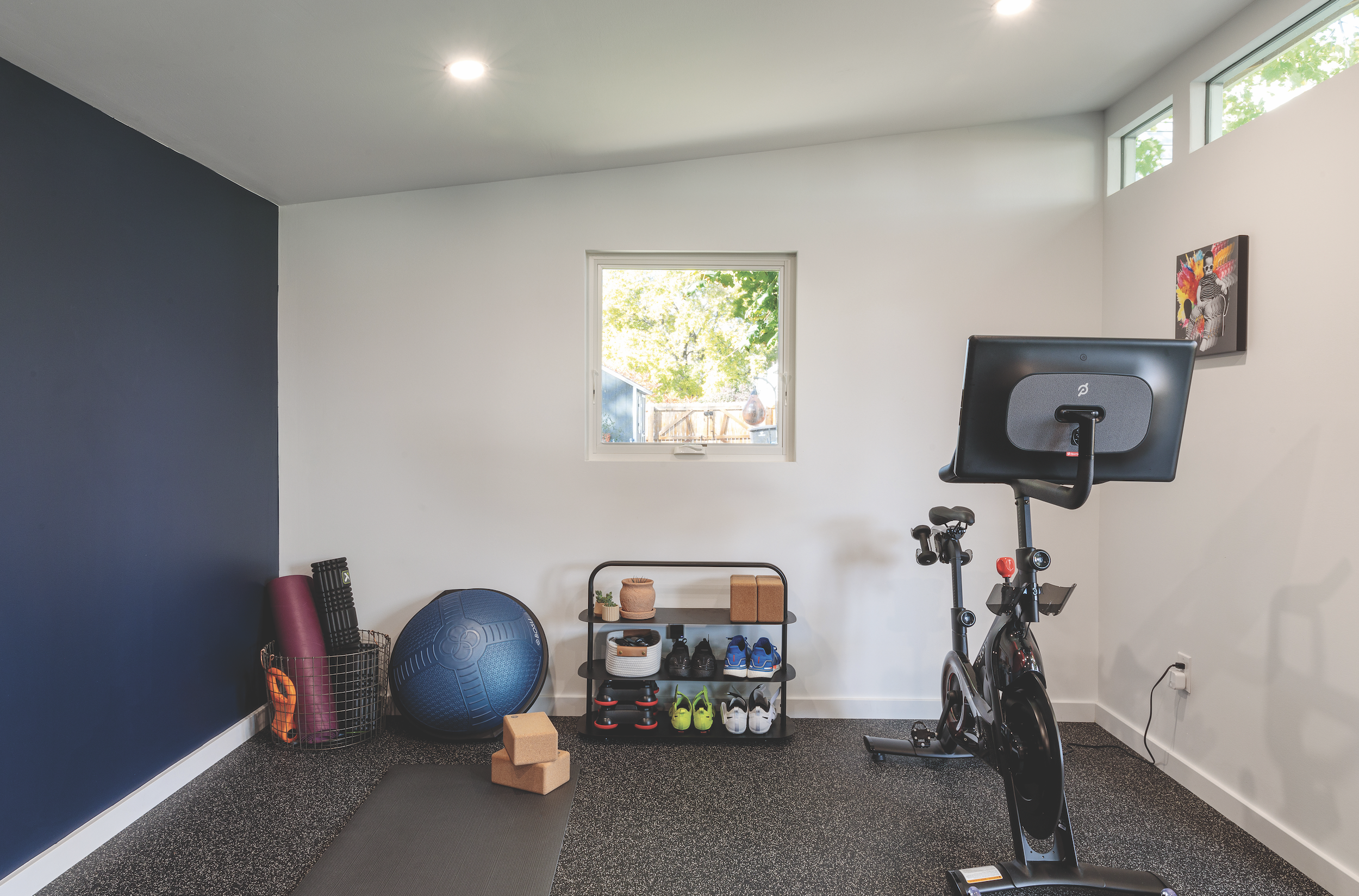
Busy schedules and covid gym closures were the motivation of West + Main agent Andy Fekade's home workout studio ADU build. Finding time to make it to the gym between work, meetings, and family time became difficult. After the gyms had closed during covid, Andy’s family accumulated a lot of workout equipment. It just made sense to build an at-home gym in their beloved backyard. “If you can separate where you work or workout from your main living area, I highly recommend it.” 


Andy’s family has seen a drastic change with the ability to get an early morning workout in, or a late-night yoga session, just steps away from their home. Being able to also enjoy the naturally shaded patio in the summer has been great for them. They used to be looking at their yard from the deck, whereas now, they are actually in the yard. Andy’s family is able to utilize the space in all sorts of ways - working out at the gym, to then enjoying a drink and sitting by the fire.


When it came to the project, Andy and the teams he worked with took their time. Andy took a lot of advice and opinions on how they could build their structure and interior in the best possible way. They used Studio-Shed - a company that delivers the entire shed structure in sections to DIY. Don’t worry though, Studio-Shed provides a wonderful online design studio and tutorial to walk you through the entire process. It’s really quite a unique and fun process! A good tip from Andy: “If you know what you will use your space for, try to accumulate furnishings or equipment over time so you can spread out spending, especially if something goes on sale!” Their completed project wasn’t exactly their initial vision, but they wouldn’t change a thing about the process or final outcome!  


Corey's favorite moment was watching Rick and Craig transform her backyard into a sandbox playground, gleefully playing with the Bobcats like children. After a much anticipated journey to completion, Corey + Rick have a fully functioning and beautiful koi water garden pond.  

All About ADU’s (Accessory Dwelling Units)

Accessory Dwelling Units are usually smaller separate homes located on the same lot as a single-family home. ADUs are often also backyard homes or multi-gen housing and have become very popular recently for a handful of reasons: housing aging parents or adult children, renting it out to generate cash flow, or creating a gym, office space, or studio!


Related Links

If there is a home that you would like more information about, if you are considering selling a property, or if you have questions about the housing market in your neighborhood, please reach out. We’re here to help.

Search Homes in Colorado

Search Homes in Oklahoma

Search Homes in Oregon

The Most Common “Shortcut” You’ll Find in New-Build Homes


Nothing says “move-in ready” like a brand-new home, right?

Well, not exactly. Although you’ll have bragging rights as the first to reside there, not everything is as perfect or pristine as the model home might have led you to believe.

“There’s no such thing as a maintenance-free home or a 100 percent new build,” says Lisa Culp Taylor, a Realtor and leader of the LCT Team in Franklin, Tennessee.

Home building is an expensive, time-consuming process, and builders can (and will) take shortcuts. Some are downright shady choices that can affect internal systems like your HVAC and electrical wiring — which is why it’s a bad idea to waive a home inspection, even on a new build. But even if you’re working with a reputable home builder, unless you’ve got an unlimited budget to customize every square foot of that home, there will be some design and finish choices made for the sake of the builder’s schedule and budget. 

Don’t be alarmed — just be smart. If you’re making the open-house rounds of brand-new homes in your area, here’s what to look for to avoid spending a ton for a cheaply-made home.

Don’t Be Fooled by the Finishes

Be on the lookout for low-cost finishes — often called “builder grade” in the biz — that might look great simply because they’re brand new, but are not as high-end as you might think. Here are some spots to consider:

Flooring
“Not all flooring is equal, so you really have to look carefully to make sure it is a quality product,” says Kristen Carbine, a third-generation home building professional at Carbine & Associates and a Realtor with PARKS Realty – Downtown Franklin. “Beware of cheaper laminate or vinyl flooring.” 

There are higher-quality laminate and vinyl flooring options on the market that look great and are made to last. But even if the flooring materials are indeed high quality, Carbine says, “Check to see if the carpet has been properly stretched with no wrinkles, and make sure the hardwoods are smooth with tight seams [and] no visible gaps or warping.”

Windows and Doors
New homes are often touted for their security and energy efficiency, which is why you should be on the lookout for subpar windows and doors.

With windows, Carbine says to look out for cheap, single-hung options that are less energy-efficient because they don’t offer enough insulation. If you live in a region that sees extreme cold or heat (or maybe both) you’ll just be wasting money on utility costs each month.

If you’re able to choose doors, whether they are exterior or interior doors, steer clear of hollow core models. They might come in a style that you like, says Carbine, but they’re cheaply made.

Walls and Paint
Check to see if the walls are smooth and even — a sign that they’ve been prepared and finished properly, says Carbine. All paint and trim should be “flawless with a clean, crisp edge,” she says. 

Kitchen Cabinets and Countertops
Homeowners are known to pour tons of money into kitchen renovations, but unless you’re purchasing a high-end luxury home, your builder has likely chosen more economical finishes.

“Cars are not created equally and it’s the same for countertops,” Taylor says. There are different levels of quartz, for example, and a “granite” countertop in a laundry room could turn out to be Formica, she explains. 

As for cabinets, Carbine says don’t assume your new ones are made from solid wood — they could be constructed from medium-density fiberboard (MDF) or even particle board that won’t hold up over time. Also, make sure each door and drawer opens and closes smoothly. The hardware should be strong and sturdy, too, she says.

Carbine cautions not to be dazzled by those smooth stone countertops without first checking where the seams of those slabs connect. The industry standard for seam width is 1/16th of an inch or less, but aside from tight joinery — which ensures proper installation — you’re also looking for placement. Countertop seams should connect in a less visible spot.

Don’t Ignore These 2 Things in a New Build

If you’re considering going to the next open house with a magnifying glass in one hand and a list of building material prices in the other, know that there are a couple of bigger-picture aspects to consider as well.

When looking for a quality-built home, you can start with the job site,” says Carbine — most notably, how clean the builder and crew are keeping it. “This can be a big indicator of how materials are being handled as well,” she says. Sawdust will be on the floor, of course, but you don’t want those brand-new appliances covered in it.

You’ll also want to ensure that you’re not confusing your home with what you’ve seen in the model home, says Taylor. “You have to look at the nitty gritty of what you’re buying,” she says. “Reading the specification sheet, no matter how boring it may seem, is critically important.” Doing so will help you avoid “surprises” at the final walk-through.

Get more advice like this on Apartment Therapy.

Related Links

If there is a home that you would like more information about, if you are considering selling a property, or if you have questions about the housing market in your neighborhood, please reach out. We’re here to help.

Search Homes in Colorado
Search Homes in Oklahoma
Search Homes in Oregon
Search homes in Minnesota

Mortgage Pre-Approval vs. Prequalification: What’s the Difference?


Mortgage pre-approval and pre-qualification are two different processes that help you secure a mortgage for buying a house. Prequalification estimates how much you can borrow without a credit check.

On the other hand, pre-approval involves a more detailed review of your financial and credit situation. It requires a credit check and additional documentation like W2 forms and tax statements.

Pre-approval gives you a better understanding of your creditworthiness and allows you to negotiate with sellers confidently. In my experience as a Realtor for the past three decades, a mortgage pre-approval is far more valuable than a pre-qual.

It is essential to understand that a pre-approval does have an expiration. Depending on the lender, a mortgage preapproval typically lasts 60-90 days. Let's take a closer look at comparing these two mortgage terms.

What's a Mortgage Prequalification?
A mortgage pre-qualification is an initial assessment that helps determine how much you can borrow for a home loan. It provides a general idea of your purchasing power based on the information you provide to a lender.

Understanding Mortgage Prequalification
Mortgage prequalification involves submitting your financial details, such as income, assets, and debts, to a lender. The lender evaluates this information to estimate the loan amount you could potentially qualify for.

How Prequalification Can Help You
Prequalification can be beneficial when starting the home-buying process and wanting to understand your budget. Knowing your potential loan amount can help narrow your search and give you an idea of what properties you can afford.

Factors Considered in Mortgage Prequalification

  • Your income and employment history

  • Your credit score

  • Your current debts and monthly expenses

  • The amount of money available for a down payment

Benefits of Getting Prequalified
Getting prequalified can provide several benefits:

  • It allows you to understand your budget and set realistic expectations

  • It helps you focus your home search on properties within your price range

  • It gives you a head start when you're ready to move forward with the mortgage process

  • Shows sellers that you are serious about purchasing a home

What is Mortgage Pre-Approval?
When obtaining a mortgage, understanding the concept of pre-approval is crucial. It is a more in-depth assessment of your financial situation and creditworthiness, clearly showing how much you can borrow and the interest rates you can expect.

The Importance of Mortgage Pre-Approval
Mortgage pre-approval is an essential step in the home-buying process. It gives you a realistic understanding of your financial capabilities and helps you set appropriate expectations. With a pre-approval, you gain confidence and credibility when making property offers. You should ask the mortgage lender you choose to ensure your pre-approved.

The Process of Mortgage Pre-Approval
Securing a mortgage pre-approval involves several steps. First, you must provide detailed information about your income, employment history, assets, and debts. Your lender will then verify and evaluate this information to determine your creditworthiness. This typically includes a thorough review of your credit report and scores.

Documentation Required for Pre-Approval
Here is a summary of what is needed for mortgage pre-approval.

  • Proof of income, such as W2 forms, pay stubs, and tax returns

  • Identification documents, such as a valid driver's license or passport

  • Bank statements and investment account statements

  • Proof of assets, such as property valuations or car titles

  • Information about your debts and financial obligations

The Benefits of Mortgage Pre-Approval
Obtaining a mortgage pre-approval offers several advantages. Firstly, it helps you determine a realistic budget for your home search, ensuring you only consider properties within your financial reach.

Additionally, it demonstrates to sellers that you are a serious buyer, increasing the likelihood of your offer being accepted. Finally, pre-approval provides a clear understanding of the interest rates and loan terms you can expect, allowing you to make informed decisions.

Understanding the Difference: Prequalification vs. Pre-Approval
When obtaining a mortgage, it's essential to understand the difference between prequalification and pre-approval. While both processes can give you an idea of your borrowing capacity, they have distinct characteristics and advantages.

Differentiating Prequalification and Pre-Approval
Prequalification is the initial step in the mortgage application process. It involves providing basic financial information to a lender, such as your income, assets, and debts.

Based on this information, the lender can estimate the mortgage amount you could qualify for. Remember that prequalification is preliminary and does not require a thorough credit check or documentation verification.

On the other hand, pre-approval is a more detailed and rigorous assessment. It requires submitting financial documents such as W2 forms, pay stubs, and tax statements for verification. The lender will also conduct a credit check to assess your creditworthiness.

With pre-approval, you receive a conditional commitment from the lender stating the specific loan amount you qualify for, the interest rate, and other terms.

Pros and Cons of Prequalification
Prequalification offers several benefits for prospective homebuyers. It gives you a general idea of your affordability and helps you determine a price range when searching for properties. Prequalification is a quick and straightforward process that doesn't impact your credit score.

However, it's important to note that prequalification does not guarantee loan approval. Since it doesn't involve thoroughly reviewing your financial documents or credit history, the estimated loan amount may not accurately reflect what you can borrow. Sellers may also view prequalification as less credible than pre-approval, potentially affecting negotiations.

Pros and Cons of Pre-Approval
Obtaining pre-approval for a mortgage brings several advantages. With a pre-approval letter, sellers see you as a severe and well-qualified buyer, increasing your chances of accepting your offer. Pre-approval provides a more accurate estimate of your borrowing capacity, allowing you to search for homes within your price range confidently.

However, the pre-approval process requires more time and effort compared to prequalification. The lender will thoroughly examine your financial documents and credit history, which can take several days or weeks.

Additionally, the credit check during pre-approval can temporarily impact your credit score. It's crucial to weigh these factors when deciding whether to pursue pre-approval.

Which Option Is Right for You?
The choice between prequalification and pre-approval depends on your circumstances and preferences. Prequalification can be a good starting point if you are in the early stages of considering buying a home and want to get a rough idea of what you can afford. It provides a preliminary understanding without undergoing a detailed credit and documentation review.

On the other hand, if you are ready to actively search for a home and want a more accurate estimate of your borrowing capacity, pre-approval is the better option. It positions you as a serious buyer in the eyes of sellers and gives you confidence during negotiations.

Ultimately, working with a trusted lender who can guide you through the prequalification or pre-approval process is essential. They can evaluate your circumstances and help you make an informed decision based on your financial goals and timeline.

How Much Home Can You Afford?
When purchasing a home, understanding how much you can afford is crucial. Assessing your budget allows you to determine a realistic price range and avoid financial strain.

Read more about affordability on RISMedia.

Related Links

If there is a home that you would like more information about, if you are considering selling a property, or if you have questions about the housing market in your neighborhood, please reach out. We’re here to help.

Search Homes in Colorado
Search Homes in Oklahoma
Search Homes in Oregon
Search homes in Minnesota

Gen Z: The Next Generation Is Making Moves in the Housing Market


Generation Z (Gen Z) is eager to put down their own roots and achieve financial independence.

As a result, they’re turning to homeownership. According to the latest Home Buyers and Sellers Generational Trends Report from the National Association of Realtors (NAR), 30% of Gen Z buyers transitioned straight from living under their parents’ roofs to owning their own homes.

If you’re a member of this generation, and you’re interested in pursuing your own dream of homeownership, here’s some information you may find helpful on why and where your peers are buying.

The Reasons Gen Z Want To Become Homeowners

A recent survey by Rocket Mortgage identifies some of the top motivators driving Gen Z buyers to purchase a home:

“Of those surveyed, 34% said that starting or growing their family was their main motivation to buy a home. . . . Along with growing a family comes establishing a home base.”

Another key reason the survey says Gen Z wants to buy is because homeownership can give them more stability (20.8%). That’s because buying a home allows you to stabilize what’s typically your biggest monthly expense: your housing cost.

When you have a fixed-rate mortgage on your home, you can lock in your monthly payment for the duration of your loan, often 15 to 30 years. If you keep renting, you don’t have that same benefit, and you won’t be protected from rising housing costs.

So, if you’re ready to start a new chapter in your life or if you’re craving more stability, know that your peers feel the same way, and those motivators are why they’re turning to homeownership.

Gen Z’s Next Stop: Where Are They Making Their Moves?

If those reasons have you feeling ready to buy, here’s some information on where your peers are finding their homes that could help you with your search. According to a recent Lending Tree survey, Gen Z buyers are focusing on more affordable areas to help boost their buying power and offset the challenges that come with today’s mortgage rates.

Many Gen Z buyers still want the convenience and excitement of city life, but also value the affordability, open air, and space more suburban areas offer. Jacob Channel, Senior Economist at LendingTree, explains:

“. . . they want to live in a city, but they also want to be close to nature.”

Locating a home that offers both of those things requires expertise. Working with a trusted real estate professional can help you find a home in your budget and desired area. Your agent will know the most affordable neighborhoods to search in. They can also highlight the amenities and features that location offers and how those are aligned with your goals. They’ll also be able to walk you through how things like remote work can help you cast a broader net for your search

Bottom Line

If you’re a member of Gen Z and are just getting started on your homebuying journey, or if you want to learn more about the process, it’s important to connect with a trusted real estate agent. Their expertise will guide you to a home that fits both your lifestyle and your budget.

Learn more on Keeping Current Matters.

Related Links

If there is a home that you would like more information about, if you are considering selling a property, or if you have questions about the housing market in your neighborhood, please reach out. We’re here to help.

Search Homes in Colorado
Search Homes in Oklahoma
Search Homes in Oregon
Search homes in Minnesota
Signed Contracts for U.S. Homes Rise for the Second Month in a Row


The numbers: U.S. home sales inched up for the second month in a row, as the housing market continues to be hampered by high rates and a lack of home listings.

Pending home sales rose by 0.9% in July from the previous month, according to the monthly index released Thursday by the National Association of Realtors.

The figure exceeded expectations on Wall Street. Economists were expecting pending home sales to fall 0.5% in July.

Transactions were still down 14% from last year.

Pending home sales reflect transactions where the contract has been signed for the sale of an existing home, but the sale has not yet closed. Economists view it as an indicator for the direction of existing-home sales in subsequent months.

Big picture: High rates and home prices have sent many potential buyers to the sidelines, but those who are purchasing a home out of necessity, or who have the ability to make a cash offer, are still pushing through.

Sales activity was a lot less brisk in July due to the ongoing inventory issue and with the 30-year loan rate at or near the 7% range. And with rates hitting a multidecade high in August, expect the data to continue to show a housing market that’s dragging along.

What the realtors said: “The small gain in contract signings shows the potential for further increases in light of the fact that many people have lost out on multiple home buying offers,” said Lawrence Yun, chief economist at the NAR.

“Jobs are being added and thereby enlarging the pool of prospective home buyers,” he added. “However, rising mortgage rates and limited inventory have temporarily hindered the possibility of buying for many.”

Market reaction: Stocks were up in early trading on Wednesday. The yield on the 10-year Treasury note was around 4.1%.

Keep reading on Realtor.com.

Related Links

If there is a home that you would like more information about, if you are considering selling a property, or if you have questions about the housing market in your neighborhood, please reach out. We’re here to help.

Search Homes in Colorado
Search Homes in Oklahoma
Search Homes in Oregon
Search homes in Minnesota