10 of the Most Common Beds for Creating Your Dream Sleep Space


With so many types of beds on the market, it can be challenging to know which style is best for you.

That’s why we went straight to the source for decorating advice: pro designers. Taking a variety of room sizes, sleep preferences, and aesthetics into account, a panel of design pros rounded up 10 common types of beds that are worth exploring as you furnish your space and search for a functional — and beautiful — focal point in your sleep space.

Keep reading to learn more about the positives and negatives of each style so you can hone in on your dream bed.

1. Bunk Bed

Bunk beds typically refer to two twin beds stacked on top of one another vertically, although it’s possible to find double bed bunks out there, too. This compact bed setup is particularly ideal for those looking to maximize their square footage or accommodate many guests in a home that’s short on space. Sets of bunk beds can even be placed side by side to sleep four or even six individuals in one room. 

Bunks aren’t solely for kids’ spaces anymore either, explains designer Allison Garrison of Allito Spaces. “Now, tricked-out adult bunk rooms are becoming popular in vacation homes, and I’m not mad about it,” she says. Of course, anyone with mobility issues will want to avoid bunk beds — or at least the top bunk — as crawling into bed involves climbing up a ladder, which requires a degree of agility and balance. 

2. Platform Bed

If your bedroom has low ceilings or you’re looking for a more streamlined sleeping setup, a platform bed, which sits low to the ground, is an excellent choice. Many platform beds are mid-century modern and/or minimalist in style, which makes them shine in a more contemporary setting. Low-slung furniture has its practical benefits, too. “Using a platform bed gives you the illusion that the room is taller,” notes Jade Joyner, principal designer and co-founder of Metal + Petal

Platform beds do not require a box spring, which may be a dealbreaker for some, and is a welcome change for others who’d like to forgo that extra expense in the first place. “If you have a traditional mattress and desire the extra airflow and motion transfer reduction that a boxspring offers, a platform bed is not the best choice,” Garrison explains, adding that this silhouette’s low height may make it difficult for some adults to get in and out of bed. 

3. Trundle Bed

If you like the idea of being able to accommodate guests on a whim but aren’t inclined to purchase a bunk bed, a trundle bed may be the right pick for you. Trundle beds feature two twin mattresses — one of which is tucked away in a drawer and can be pulled out as needed. Trundle beds are commonly used in guest rooms, kids’ rooms, and nurseries. They’re ideal for sleepovers, Garrison says. Adults, however, might not find sleeping on a trundle as comfortable, she adds, noting that these mattresses are generally thinner and offer less support than traditional beds.


4. Sofa Bed

Sofa beds refer to sofas that feature hidden mattresses inside that can be converted into beds. Sofa beds are excellent for small-space dwellers, who might not have space for a dedicated guest room but wish to be able to host visitors outside of their main sleeping quarters. 

Sofa beds can be placed in the living room, home office, or basement — really anywhere that can accommodate these pieces’ dimensions. “Sofa beds have come so far, and there are incredibly comfortable options on the market,” Garrison says. She encourages those considering a sofa bed to be mindful of how much room it will take up when fully assembled, noting, “You want to make sure there is space to walk around all sides.” 

5. Divan Bed

Divan beds are winners for people with tiny bedrooms, Garrison says. These fabric-covered beds are designed to be the same size as their accompanying mattress. “They sometimes even include storage beneath, which is a nice added benefit in a small space, Garrison notes. However, she adds, keep in mind that divan beds typically do not feature substantial legs, which can sometimes make a room look cut off in size or slightly cramped.


6. Frame-Only Bed

A frame-only bed does not feature a headboard or footboard and is a visually simple, more affordable option for sleeping. Keep in mind that these beds often look best with a skirt or bedding that obscures their utilitarian legs. “This isn’t a bad thing, but in a small space, it can feel blocky,” says designer Elizabeth Drake.

7. Sleigh Bed

Sleigh beds refer to designs that are — you guessed it! — shaped a bit like a sleigh, with headboards and footboards that curve upward and outward. These beds certainly have character and flair, and Drake finds that they automatically make a room feel cozier. If you want to go in this more traditional direction with your bed frame, just be sure your bedroom has the floor space for one. “It’s a bulky piece, so it’s a bit more cumbersome and heavy for a space,” Joyner shares. 

8. Adjustable Bed

Adjustable beds can be positioned upward and lowered when needed, similar to a pool lounge chair. Not sure how to style an adjustable bed during the day? “Select bedding and decorative pillows to look like a chaise, keeping the back tilted up in ‘reading position,’” Drake says. If you’re the type of person who likes to read in bed, this style might be for you.

9. Loft Bed

Often used in small studio apartments and kids’ rooms, loft beds refer to instances where a mattress is positioned on a tall wooden structure that is open on the bottom — imagine a bunk bed without the bottom bunk. Most commonly, the area beneath a loft bed instead houses a desk, dresser, or floor pillows, depending on whether its owner craves a study space, additional storage, or a place to lounge. 

10. Poster/Canopy Bed

Four-poster beds feature posts on each corner that add height and a sense of grandeur to a sleep space. Canopy beds are similar; specifically, they feature fabric draped across the top of the posts, which softens the look and can introduce an additional pop of color and pattern. 

While these bed styles will certainly add a touch of glamor to any space, they are best avoided in smaller bedrooms, Drake cautions, as the size of the bed can be too overpowering in tighter quarters. “If you must, opt for a four-poster, but keep it in the middle of a wall — not wedged in a corner,” she advises. 

Keep reading.

Related Links

If there is a home that you would like more information about, if you are considering selling a property, or if you have questions about the housing market in your neighborhood, please reach out. We’re here to help.

Search Homes in Colorado
Search Homes in Oklahoma
Search Homes in Oregon
Search homes in Minnesota

How Inflation Affects Mortgage Rates


When you read about the housing market in the news, you might see something about a recent decision made by the Federal Reserve (the Fed).

But how does this decision affect you and your plans to buy a home? Here’s what you need to know.

The Fed is trying hard to reduce inflation. And even though there’s been 12 straight months where inflation has cooled (see graph below), the most recent data shows it’s still higher than the Fed’s target of 2%: 

While you may have been hoping the Fed would stop their hikes since they’re making progress on their goal of bringing down inflation, they don’t want to stop too soon, and risk inflation climbing back up as a result. Because of this, the Fed decided to increase the Federal Funds Rate again last week. As Jerome Powell, Chairman of the Fed, says:

“We remain committed to bringing inflation back to our 2 percent goal and to keeping longer-term inflation expectations well anchored.”

Greg McBride, Senior VP, and Chief Financial Analyst at Bankrate, explains how high inflation and a strong economy play into the Fed’s recent decision:

“Inflation remains stubbornly high. The economy has been remarkably resilient, the labor market is still robust, but that may be contributing to the stubbornly high inflation. So, Fed has to pump the brakes a bit more.”

Even though a Federal Fund Rate hike by the Fed doesn’t directly dictate what happens with mortgage rates, it does have an impact. As a recent article from Fortune says:

“The federal funds rate is an interest rate that banks charge other banks when they lend one another money . . . When inflation is running high, the Fed will increase rates to increase the cost of borrowing and slow down the economy. When it’s too low, they’ll lower rates to stimulate the economy and get things moving again.”

How All of This Affects You 

In the simplest sense, when inflation is high, mortgage rates are also high. But, if the Fed succeeds in bringing down inflation, it could ultimately lead to lower mortgage rates, making it more affordable for you to buy a home.

This graph helps illustrate that point by showing that when inflation decreases, mortgage rates typically go down, too (see graph below): 

As the data above shows, inflation (shown in the blue trend line) is slowly coming down and, based on historical trends, mortgage rates (shown in the green trend line) are likely to follow. McBride says this about the future of mortgage rates:

“With the backdrop of easing inflation pressures, we should see more consistent declines in mortgage rates as the year progresses, particularly if the economy and labor market slow noticeably.”

Bottom Line

What happens to mortgage rates depends on inflation. If inflation cools down, mortgage rates should go down too. Count on a real estate professional you can trust for expert advice on housing market changes and what they mean for you.

Read more on Keeping Current Matters.

Related Links

If there is a home that you would like more information about, if you are considering selling a property, or if you have questions about the housing market in your neighborhood, please reach out. We’re here to help.

Search Homes in Colorado
Search Homes in Oklahoma
Search Homes in Oregon
Search homes in Minnesota

The Complete Guide To Designing and Renovating Your Kitchen


Designing and renovating your kitchen can be a daunting task, especially if it's your first time.

A kitchen is the heart of a home, and its design speaks volumes about your personality and lifestyle. A well-designed kitchen can significantly boost the value of your home. It can also make cooking and entertaining an enjoyable experience for you and your guests. However, before you embark on your kitchen renovation project, there are some important factors you need to keep in mind. In this blog post, we'll give you a complete guide to designing and renovating your kitchen with tips for homeowners.

Plan Your Kitchen Renovation Project
The first step in designing and renovating your kitchen is to plan your project. This includes setting your budget, deciding on the design style you want, the appliances that will fit your lifestyle, and the materials you will need. It's important to prioritize your renovation needs so you can allocate your budget accordingly. A contractor or kitchen designer can help you plan your project and offer valuable advice.

Determine the Kitchen Layout
The layout and flow of your kitchen are crucial factors to consider when designing and renovating. You want to optimize your kitchen space to create a functional and efficient workflow. The three most popular kitchen layouts are U-shaped, L-shaped, and galley. Your choice will depend on your space availability and your preferred style.

Choose Your Kitchen Cabinetry
Cabinets play a significant role in the design and functionality of your kitchen. Consider the materials, style, and color you want for your cabinets. You can choose custom-made cabinets or semi-custom ones. Custom-made cabinetry allows you to have full control over the design, size, and materials. Semi-custom options offer more design options at a lower cost.

Select Kitchen Appliances
Kitchen appliances also play a significant role in the functionality of your kitchen. You want to choose appliances that fit your lifestyle and cooking preferences. Popular appliance brands include GE, LG, Bosch, Samsung, and KitchenAid. You can go for energy-efficient appliances to save on your energy bills.

Work With a Reputable Contractor
A contractor plays a vital role in designing and renovating your kitchen. You want to work with a reputable one who has years of experience and a good track record. Consider asking for references and viewing their portfolio before hiring them. A good contractor will help you stay within budget, ensure quality workmanship, and handle any unexpected issues that may arise.

In conclusion, designing and renovating your kitchen is a significant investment that requires careful planning and consideration. By following the tips outlined in this guide, you can ensure that your kitchen renovation project is a success. Remember to focus on functionality, design, and efficiency when making decisions about the layout, cabinets, and appliances. Additionally, work with a reputable contractor to ensure you get quality workmanship within your budget. Good luck with your kitchen renovation project!

Get more tips on RISMedia.

Related Links

If there is a home that you would like more information about, if you are considering selling a property, or if you have questions about the housing market in your neighborhood, please reach out. We’re here to help.

Search Homes in Colorado
Search Homes in Oklahoma
Search Homes in Oregon
Search homes in Minnesota

Is the Housing Market Heading Toward a Soft Landing? Here’s What the Latest Statistics Say


Talk of a soft landing seems to be everywhere of late, as pundits ponder whether the Fed’s rate hikes can strike that tricky balance between cooling inflation without plunging the economy into a recession.

While it’s still too soon to say what will happen, many may also wonder: Does this hoped-for soft landing apply to America’s housing market, too?

So far at least, the U.S. housing market has been having a crummy summer that feels anything but soft for both homebuyers and sellers.

In July, homeowners mostly opted to sit tight and ride out the tough market conditions rather than list their properties for sale. That meant house hunters had slimmer pickings to choose from—40,000 fewer homes across the U.S., according to the latest monthly data from Realtor.com®.

“Sellers are still on the sidelines, locked in to lower interest rates with low expectations of rates improving significantly over the next year,” Realtor.com Chief Economist Danielle Hale notes in her report.

It all adds up to a housing market stuck in limbo, with would-be buyers and sellers watching and waiting, hoping things change in their favor.

Inside the housing market’s summer slump

For now, homeowners seem resigned to waiting for market conditions to change.

In July, according to the report, the number of newly listed homes entering the market was a whopping 20.8% lower than last year. For buyers, that meant that the total number of homes for sale (both new listings and old) was 6.4% lower than last year.

Among the 50 biggest metro areas in the U.S., the inventory of homes for sale is now just half what it was in the years before the COVID-19 pandemic.

Meanwhile, it’s safe to say that no one is happy with home prices. Listing prices, or what sellers hope to get, are ticking lower—down 0.9% in July compared with last year—to $440,000. And the median sale price, or what’s agreed to in contracts, was also down, by 1.6% compared with last year.

For buyers, “Any relief is welcome, but let’s put it in context. This is a small bit of relief, not a huge discount,” says Hale.

Plus, she warns, “We don’t know how long it will last.”

Buyers are also contending with mortgage rates that have stayed higher for longer than most people expected or wanted. This has ratcheted up the cost of financing 80% of the typical home by 15.9% compared with July of last year, which amounts to an extra $317 per month.

Why the pace of home sales is slowing

Fewer homes at higher costs have understandably slowed the market. The typical home spent 45 days on the market this July, which is 12 days longer than the same time last year.

For homebuyers accustomed to seeing homes fly off the market in a matter of hours, this longer pace means they have time to let properties sit a while before deciding to pull the trigger.

However, from a big-picture perspective, homes are still spending 12 fewer days on the market than they did in the pre-pandemic era, suggesting everyone is having to move relatively quickly compared with in the past.

So as summer wanes, buyers might face a more existential question: Should I keep trying?

“This is not the time to hurry up and buy,” says Hale, but she definitely does not think buyers should give up entirely.

“Can you find what you need from the housing market and can you afford it? If you can, then it makes sense to keep looking,” she says. “Don’t try to time macro factors. If you’re always waiting for the right moment, you could end up waiting forever.”

Get more on Realtor.com

Related Links

If there is a home that you would like more information about, if you are considering selling a property, or if you have questions about the housing market in your neighborhood, please reach out. We’re here to help.

Search Homes in Colorado
Search Homes in Oklahoma
Search Homes in Oregon
Search homes in Minnesota

As Featured in West + Main Home Magazine: From Dream to Reality


Client of Lora Martinez - W+M Agent

The owner of Brickle Bakery bought their place in 2021 with the help of West + Main agent Lora Martinez because they loved the Highlands Denver location, the large window presence, 14-foot ceilings, and the option for mixed-use space for a bakery.


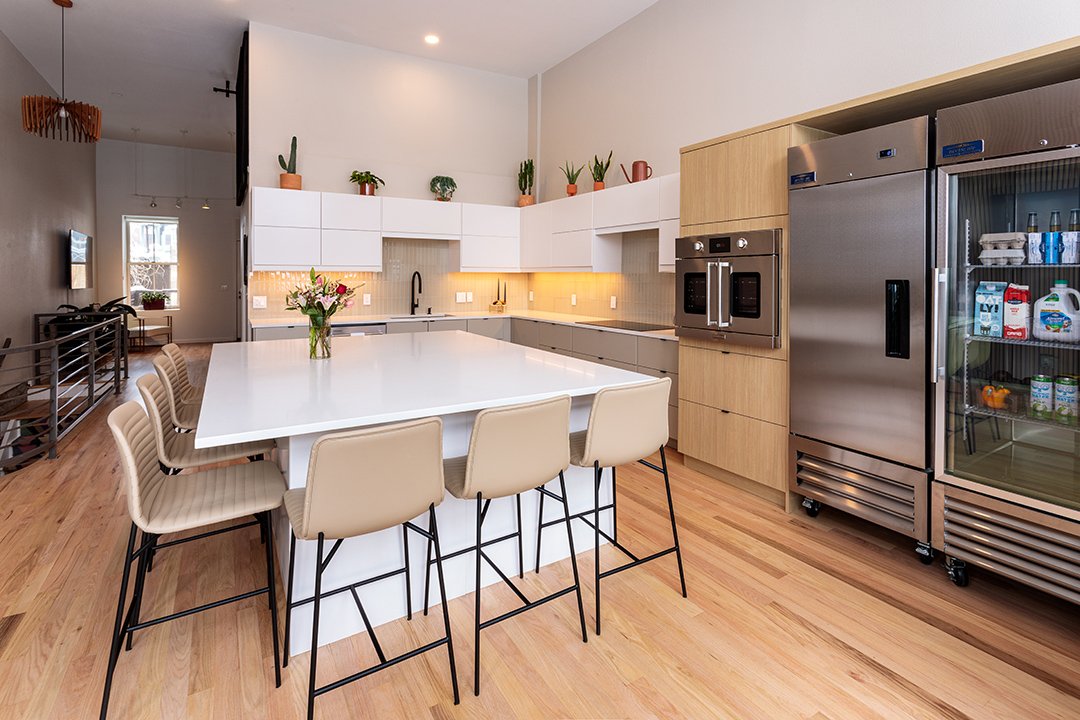
In thinking about the remodel, they wanted the clean, minimal, earthy, and textured "Japandi" design that they love so much. They also wanted to add a huge solid island that could seat 10 people, ensuring enough space for rolling out dough and holding bakery classes. They also love hosting friends and family in their dreamy kitchen!


"We selected quartz countertops for durability and also wanted the kitchen to be very functional with huge rolling flour bins and a sheet pan rack that fits underneath the island," they explained. "By selecting a commercial grade fridge and freezer as well as a two door oven and induction stovetop that would fit a full size sheet pan, but not be overly deep in size so it can still fit in a residential area, it all makes sense and looks beautiful."


Once their kitchen was complete, they added plants above the cabinets. This simple touch brought a natural and welcoming vibe to the space.


A Slice of History

2951 Wyandot St. in the Highlands area of Denver was built in 1889 by Tallmadge and Boyer. Originally a horse and carriage turnaround point, it has served as a second hand dry goods store, carpenter shop, furniture shop, bakery, and more. It sat vacant from 1970 to 2001 and has since been used as a half residential, half commercial space, currently housing the bakery and living quarters. The original brick, stone, and stained glass windows still remain, making it one of Denver's oldest buildings and a hub for entrepreneurs since the 1800s!


MATERIALS AND SOURCES:

Cabinets: White and beige cabinets are from Ikea and the wood cabinets are from Kabi Custom Cabinets (to fit the wide oven).

Backsplash: TileBar Loft Sand Beach 2x8 Polished Glass Subway Tile

Front Wall Tile: TileBar Chips Macro Bianco White 8x8 Terrazzo Look Matte Porcelain Tile

Wall Slats: The Wood Veneer Hub

Paint: Taupe of the Morning and Natural White

Contractor: PDC Painting, LLC (pdc.paintingllc@gmail.com)

Interior Designer: Moe Elio of Moe Jo Designs

Electrical: Tegra Electric

Floors: Lee's Floor Service, LLC

Appliances: Ferguson

Stools: Room and Board

To see more photos visit:
westandmain.co/magazine


Related Links

If there is a home that you would like more information about, if you are considering selling a property, or if you have questions about the housing market in your neighborhood, please reach out. We’re here to help.

Search Homes in Colorado

Search Homes in Oklahoma

Search Homes in Oregon