
Fannie Mae and Freddie Mac Expand Plans for Equitable Housing


Both GSEs released updates to plans for increasing accessibility to affordable housing for underserved communities.

Fannie Mae and Freddie Mac announced on Wednesday new updates to their equitable housing finance plans, which outline the expansion of accessible and affordable housing available to underserved communities.

Fannie Mae is expanding a series of pilot programs, launching new initiatives and applying new research to its understanding of its consumer housing journey roadmap. Freddie Mac is expanding special purpose credit programs (SPCPs), increasing the availability of accessory dwelling units (ADUs) and manufactured homes, and launching a correspondent lending program to assist smaller financial institutions with access to Freddie Mac’s multifamily financing.

Also, Freddie Mac’s DPA One, a down payment assistance digital platform, will be made available broadly this year and complements Freddie Mac’s SPCP efforts.

“Since the launch of our plan in 2022, we have made considerable progress in identifying meaningful ways to address historical challenges faced by underserved communities, particularly for Black and Latino people,” said Katrina Jones, vice president of racial equity strategy and impact at Fannie Mae. “When you add the present-day challenges of inadequate affordable housing supply and high housing costs, overcoming barriers to housing can seem harder than ever. But we are committed to making a fundamentally fairer and more equitable future for housing.”

Freddie Mac said progress has already been made with its plan and outlined additional changes it will implement.

“The actions laid out in this year’s Equitable Housing Finance Plan build upon the work we started last year to give families in underserved communities a more equitable chance to have a quality, affordable place to call home,” said Michael DeVito, CEO of Freddie Mac. “We have made meaningful progress over the last year, and we know there is much more to do. The update released today illustrates our commitment to help more families in the years to come.”

The specific actions that Fannie Mae will make were outlined in a blog post, which anticipates SPCPs will be used as a tool for “helping people in majority Black and Latino communities to buy their first home.” The GSE has also “created and implemented innovative ways to help people qualify for a mortgage, even if they have insufficient credit history.”

Accessibility to housing counseling is critical for Fannie Mae to achieve its goals, according to Jones.

“After completing over 11,000 counseling sessions in 2022 specifically addressing homeownership needs, we are expanding our efforts this year to help those facing financial hardship and improving access to information for long-term housing safety and stability,” Jones said. “We are also working alongside industry partners like HUD to bring comprehensive counseling opportunities to those in need and to test new counseling services in various parts of the country.”

SPCPs are a central fixture of Freddie Mac’s plan, and the organization plans to continue purchasing loans originated through lender SPCPs and its own program, “BorrowSmart Access,” which provides down payment assistance and borrower education to eligible families.

Freddie Mac also noted that it will assist renters on the path to homeownership in two ways: by establishing and improving credit scores of renters seeking to transition into homeownership, and “considering a history of on-time rent payments in loan purchase decisions.”

Freddie Mac’s renter credit-building initiative, which was launched in late 2021 and expanded earlier this year, has served 184,000 renters to date. It has also resulted in 27,000 renters establishing credit for the first time.

“We were able to make measurable headway on our Equitable Housing goals in year one by working closely with FHFA and other industry participants,” said Michael Hutchins, president of Freddie Mac. “Our 2023 Plan incorporates new thinking and lessons learned to ensure we are as effective and impactful as possible.”

The National Association of Real Estate Brokers (NAREB) recently urged mortgage lenders to accelerate special purpose credit programs (SPCPs) to boost Black homeownership rates and help close the wealth gap between Black and white Americans.

Read more on Housing Wire.

Related Links

If there is a home that you would like more information about, if you are considering selling a property, or if you have questions about the housing market in your neighborhood, please reach out. We’re here to help.

Search Homes in Colorado

Search Homes in Oklahoma

Search Homes in Oregon

Search homes in Minnesota

Why Aren’t Home Prices Crashing?


There have been a lot of shifts in the housing market recently.

Mortgage rates rose dramatically last year, impacting many people’s ability to buy a home. And after several years of rapid price appreciation, home prices finally peaked last summer. These changes led to a rise in headlines saying prices would end up crashing.

Even though we’re no longer seeing the buyer frenzy that drove home values up during the pandemic, prices have been relatively flat at the national level. Lawrence Yun, Chief Economist at the National Association of Realtors (NAR), doesn’t expect that to change:

“Home prices will be steady in most parts of the country with a minor change in the national median home price.”

You might think sellers would have to lower prices to attract buyers in today’s market, and that’s part of why some may have been waiting for prices to come crashing down. But there’s another factor at play – low inventory. And according to Yun, that’s limiting just how low prices will go:

“We simply don’t have enough inventory. Will some markets see a price decline? Yes. [But] with the supply not being there, the repeat of a 30 percent price decline is highly, highly unlikely.”

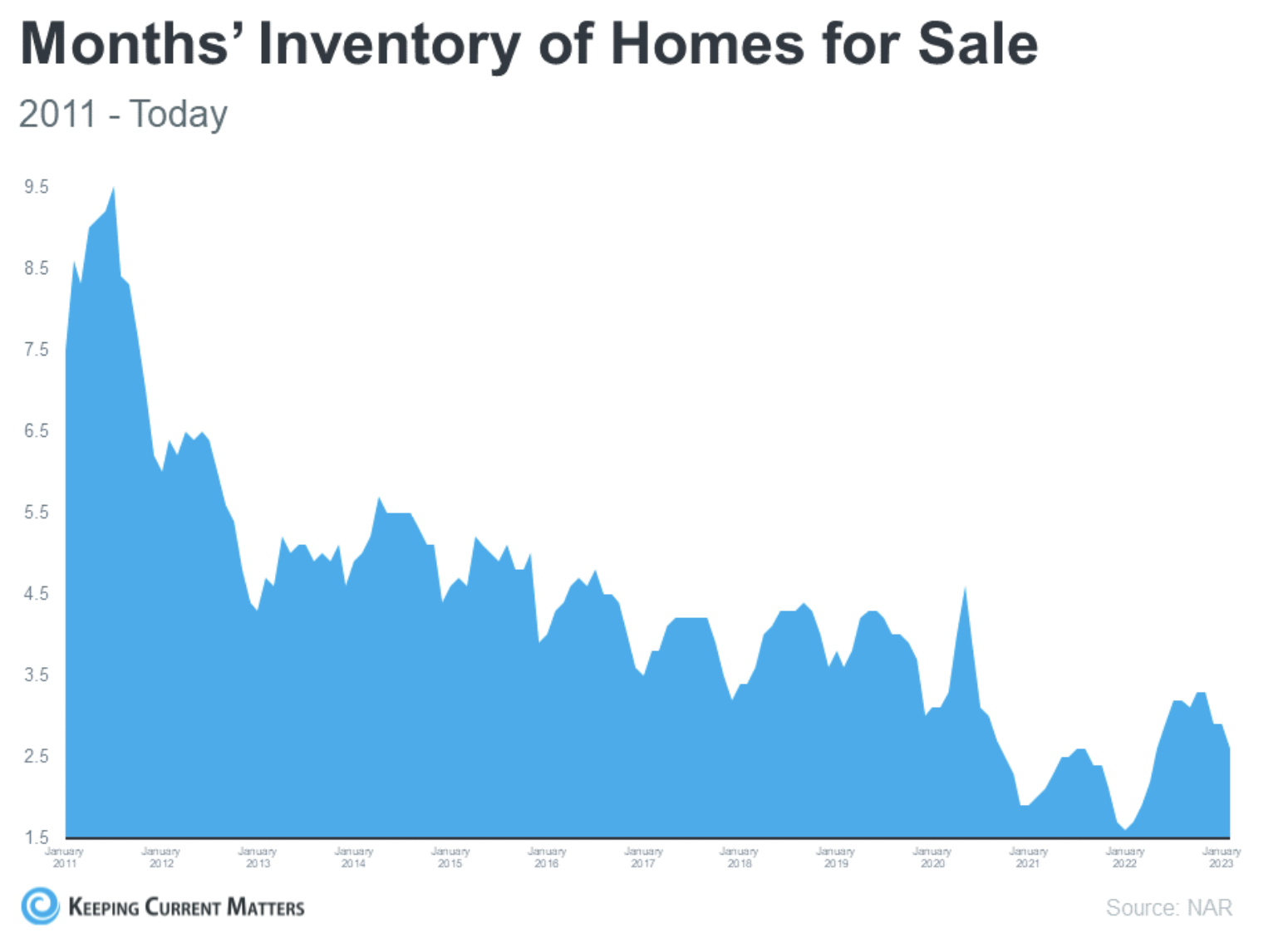
As you can see in the graph below, we’ve been at or near record-low inventory levels for a few years now.


That lack of available homes on the market is putting upward pressure on prices. Bankrate puts it like this:

“This ongoing lack of inventory explains why many buyers still have little choice but to bid up prices. And it also indicates that the supply-and-demand equation simply won’t allow a price crash in the near future.”

If more homes don’t come to the market, a lack of supply will keep prices from crashing, and, according to industry expert Rick Sharga, inventory isn’t likely to rise significantly this year:

“I believe that we’re likely to see low inventory continue to vex the housing market throughout 2023.”

Sellers are under no pressure to move since they have plenty of equity right now. That equity acts as a cushion for homeowners, lowering the chances of distressed sales like foreclosures and short sales. And with many homeowners locked into low mortgage rates, that equity cushion isn’t going anywhere soon.

With so few homes available for sale today, it’s important to work with a trusted real estate agent who understands your local area and can navigate the current market volatility.

Bottom Line

A lot of people expected prices would crash this year thanks to low buyer demand, but that isn’t happening. Why? There aren’t enough homes for sale. If you’re thinking about moving this spring, partner with a trusted real estate agent.

Keep reading.

Related Links

If there is a home that you would like more information about, if you are considering selling a property, or if you have questions about the housing market in your neighborhood, please reach out. We’re here to help.

Search Homes in Colorado

Search Homes in Oklahoma

Search Homes in Oregon

Search homes in Minnesota

Refresh Your Interior Decor With These Unique Style Trends


If you’re looking for a home design refresh, it can be hard to know where to start.

Whether you’ve recently moved or are just in the mood for a change, there are lots of unique style trends that can help update your home interior. From patterned wallpapers to modern concrete pieces, we have five ideas to get your creative juices flowing and help you create a space that you love.

Mix and Match Patterns
Bold patterns like florals, geometric shapes, and animal prints can be used in surprising ways to make an impactful style statement. Consider using them on walls or furniture pieces or combining multiple designs together in the same room. This look is bold but not overwhelming, allowing you to express yourself without being too loud.

One of the most fun ways to incorporate patterns and colors into a room is to choose a few primary pieces and then find complementary accents. For instance, you can pick a bold floral wallpaper for the living room and then add in throw pillows or rugs with geometric designs. Or, if you’re looking for something more subtle, consider mixing and matching different hues of the same color family. This can help create a unified look without being too overwhelming. By playing around with colors, textures, and patterns you can easily create a unique space that reflects your personality.

Modern Concrete Pieces
Concrete is no longer just for sidewalks and driveways; it’s now being incorporated into modern furniture styles such as tables, shelves, and countertops. Incorporating these sleek pieces into your home adds an industrial edge while also creating a timeless look that won’t go out of style any time soon. 

To make these pieces more inviting, consider adding warm accents like throw pillows and rugs. You can also incorporate natural elements like wood or wicker furniture to create a cozy atmosphere. Additionally, think about using interesting lighting fixtures that incorporate modern and rustic styles together. For example, you could hang a metal light fixture over an industrial concrete dining table to create a unique look. By combining different materials, you can create an inviting space that still maintains the modern concrete aesthetic.

Natural Woods
You don’t have to go all-wooden with your décor, but incorporating natural wood elements into your design can really bring warmth and texture into a space. Whether it’s wooden flooring, wooden interior shutter installation, or simple accent pieces like wooden chairs and side tables, this trend will never go out of style and can bring an organic feel into any room of your house. 

When choosing a wood color for a room, it’s important to consider your overall design aesthetic. Try to find one that will complement the other colors and materials in the space. If you have light walls, then a dark-toned wood might be more suitable, whereas if your walls are darker you could go for something lighter. Alternatively, you could choose a wood color that’s in the same tonal range as other elements in the room for a more cohesive look. Overall, when it comes to wood colors, there are lots of options available and you can really get creative with how you use them in your space.

Geometric Lighting Fixtures
If you want something more unique than traditional lighting fixtures then geometric lighting is the way to go! These modern light fixtures come in all shapes and sizes so there’s something for every taste. Plus they add visual interest as well as functional lighting that will light up any room in the house.

If you're looking for unique, geometric light fixtures to brighten up your space, then look no further. Online retailers have a great selection of geometric lighting fixtures, ranging from modern and sleek designs to more whimsical pieces. Additionally, specialty stores offer one-of-a-kind lighting fixtures that are sure to make a statement in any room. With so many options available, you're sure to find the perfect fixture for your home.

Patterned Wallpaper
Wallpaper has been around for centuries but recently there has been a resurgence of patterned wallpaper designs that are perfect for adding a touch of personality to any room in your home! Choose from bold floral prints or more subtle geometric patterns depending on the vibe you want in the space.

The best way to incorporate patterned wallpaper into a room is to choose the right print and color. Depending on your desired style, you can create an eye-catching look with bold prints or a more subtle design with muted colors. When it comes to installation, make sure to measure out the space before hanging the paper so that you don’t end up with a design that is too big or too small. Additionally, pay close attention to the type of adhesive you use; some wallpapers may require specific types for best results.

The worst thing you can do when incorporating patterned wallpaper into a room is to hang it without any consideration for the other elements in the room. Make sure that the wallpaper you choose compliments your other furniture and décor. Additionally, avoid over-patterning a room by mixing too many patterns together; this can make the space look cluttered and busy. Lastly, keep in mind that some wallpapers may not be suitable for certain rooms due to their material or design.

If you’re looking for an easy way to update the look of your home without breaking the bank then consider one (or more) of these unique trends. From mix-and-match patterns to modern concrete pieces, there are lots of stylish options available that will take your interior design up a notch without having to do a full renovation project! With these tips in mind you should be able to find the perfect trend for updating your home interior quickly and easily!

Get more like this.

Related Links

If there is a home that you would like more information about, if you are considering selling a property, or if you have questions about the housing market in your neighborhood, please reach out. We’re here to help.

Search Homes in Colorado

Search Homes in Oklahoma

Search Homes in Oregon

Search homes in Minnesota

Found a Dream Home Without a Garage? Here’s What To Know About Building One


Finally! You found a home that checks all the boxes—except one.

That gorgeous two-bed, two-bath Craftsman with perfect afternoon light has it all, just no garage. Oof!

Maybe you need a garage because you can’t bear the thought of scraping ice off of your car windows in the winter or enduring a smoldering vehicle in the summer. Or maybe you want a garage for storage space.

Either way, don’t buy a home with lots of empty acreage around it, thinking you can add a garage later.

Instead, it’s critical to first determine if you’re even allowed to build a garage on the property. Here are the essential questions you should ask before making an offer on that house without a garage.

Am I permitted to build a garage?

Building a garage is not simply a matter of having the room but also of whether your local zoning board allows for one.

“You can ask the seller if a garage can be built on the property,” says Rachel J. LeFlore, a real estate agent at The Bob & Ronna Group. “The seller should have a property’s legal description, including measurements, block, lot number, and other details from their homeowner’s deed.”

And no matter what the seller says, always check with your local municipality to see what the local zoning laws are. If building a garage is legally okay, you still need to do some more homework before getting approval.

“For instance, you’ll need a land survey to establish property lines,” says Latoya Perkins, an agent at Joyner Fine Properties in Chesterfield, VA.

Property lines will reveal whether you have the room to add a building. Unfortunately, boundaries aren’t always obvious when touring a house, especially if there isn’t a privacy fenceretaining wall, row of trees, or other natural markers. So it might look like the house has tons of buildable space when it doesn’t.

What about garage size?

Maybe you want a modest one-car garage to park your car or charge your electric vehicle. Or perhaps you envision a generously sized garage for two (or more) cars, plus additional living space to create a gym or office down the road.

Either way, there are typically size, height, and foundation requirements. But one of the most significant considerations for how large your garage can be is where you plan to build it. And you can determine that once you’ve established property lines, which will, in turn, reveal property setbacks.

Property setbacks are the distance your garage must be from the property line or other designated boundaries.

“And a proposed new garage will require a determination of whether the property setbacks are within the zoning regulations,” says Vincent Colangelo, an architect in Stamford, CT, and a strategic construction advisor at Real Estate Bees.

Your proposed garage can’t conflict with any septic systems, wells, or easements.

Learn more on Realtor.com

Related Links

If there is a home that you would like more information about, if you are considering selling a property, or if you have questions about the housing market in your neighborhood, please reach out. We’re here to help.

Search Homes in Colorado

Search Homes in Oklahoma

Search Homes in Oregon

Search homes in Minnesota

Best Cities to Buy a Home If You Want It To Grow In Value


In most places, the value of U.S. homes has grown steadily over the last few decades. However, some cities have fared far better than others — especially Austin, Texas.

Out of the 400 cities ranked by average home price growth since 1998, Austin takes the top spot, according to a recent SmartAsset study. Across all metro areas, home values increased an average of 154% from the first quarter of 1998 through the fourth quarter of 2022.

In Austin, however, home values have soared 354% over the past 25 years. It is one of only eight cities where home values increased by 300% or more in that time.

The rest of the top 15 markets ranked by price growth are mostly large coastal cities in California and Florida.


A thriving tech hub, Austin was a migration hotspot during the height of pandemic, but home values in the city had already been steadily climbing for over a decade.

It’s followed by Bend, Oregon, a small mountain city known for its access to outdoor activities like skiing and hiking. The city’s growing population has exacerbated a preexisting shortage of homes, which has pushed home prices higher.

Boise, Idaho, was another popular migration destination during the height of the pandemic, but like Austin, prices were already rising for years — well before it became known as a “Zoomtown.” While home prices in this market recently dipped, they are still up 306% over 25 years.

Overall, California dominated the rankings, with eight out of the top 15 cities for home-price growth. Considering that the state has the largest shortage of homes in the country, it’s not surprising that unmet demand has driven up prices for existing properties, especially in Los Angeles and the San Francisco Bay Area.

Home prices in Florida have also grown steadily over the years, with Miami and Naples making the top 15 rankings for price growth.

Not all homes have been cash cows, however, especially in Rust Belt states like Michigan, Illinois, Indiana and Ohio. In some cities, home values only increased by an average 80% or less since 1998.

Montgomery, Alabama, ranked last on the list, with home values growing by an average of about 60%. 

Get more like this on CNBC.

Related Links

If there is a home that you would like more information about, if you are considering selling a property, or if you have questions about the housing market in your neighborhood, please reach out. We’re here to help.

Search Homes in Colorado

Search Homes in Oklahoma

Search Homes in Oregon

Search homes in Minnesota