Here Are the Bathroom Upgrades Homeowners Made the Most This Year


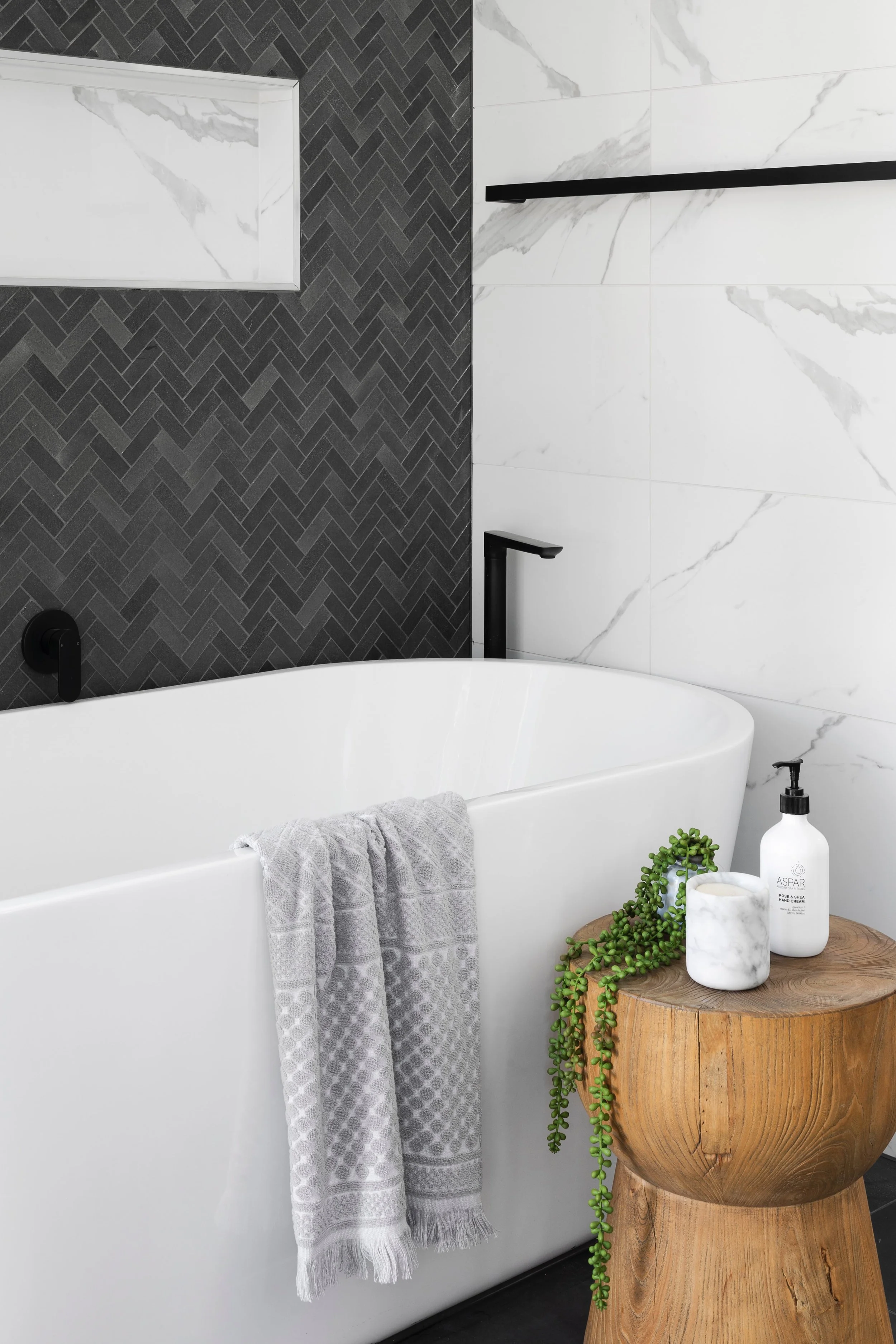
Who doesn’t dream of an updated bathroom? From lack of storage to a bathtub you’re hesitant to step into without sandals, renovations that bring bathrooms into the 21st century are high on the list of homeowner wants.

If you’re curious what the most popular bathroom renovations were in the last year, the 2022 Houzz Bathroom Trends Study was just released, and it’s an interesting look at both the trends and the rising price points that took over American bathrooms in 2022.

Sure, everything old is new again. But when it comes to bathrooms, homeowners are looking to ditch features that are outdated. In a survey of more than 2,500 respondents, Houzz determined that outdated style was the top trigger for bathroom renovations in 2022, with 48 percent of those surveyed saying it was their main motivation. More than three-quarters of homeowners (76 percent) upgraded their vanity cabinets during primary bathroom renovations. While 30 percent favored wood for their vanity, 14 percent went with a pop of gray, 7 percent chose blue, and 5 percent went with black.

Shower updates were also consistently popular, up two percentage points over the previous year with 84 percent. The survey determined that when removing a bathtub, nearly four in five homeowners enlarge the shower. And of course, the toilet is often a big focus. One interesting (but not so surprising) fact? High-tech toilets proved to be quite the draw for homeowners. Nearly two in five homeowners add high-tech features to their toilets, choosing bidets, self-cleaning elements, heated seats and built-in night lights.
“Bathrooms have always been a top room to renovate and we’re seeing that homeowners driven both by aesthetic desires and functional necessities, are doubling down on their investment in these private sanctuaries,” said Marine Sargsyan, Houzz staff economist. “While the cost of products and materials has increased due to inflation and supply chain disruptions, renovation activity remains strong, propped up by high home equity and homeowners’ desire to stay put given limited housing supply.”

As you’ve likely discovered while plotting out your home improvements, bathroom renovations are pricey. From buying the materials to finding the necessary labor to complete the work, it can be quite the expensive pursuit. The survey determined that the national median spend for primary bathroom projects increased nearly 13 percent to $9,000. For higher-budget projects, the average spend saw a 19 percent jump to $35,000. People doing “major” bathroom renovations (think full-on shower upgrades) spent a whopping three times more on their renovations than those undergoing minor renovations.

Another interesting point is the rising popularity of adding greenery to bathrooms. 88 percent of respondents said adding greenery “adds to the aesthetics of the room,” while 64 percent said it creates a more calming environment. 34 percent attributed the increase to plants’ air purification powers, while 7 percent like their odor-fighting ability. Another 7 percent went with antibacterial attributes.

Keep reading on Apartment Therapy.

Related Links

If there is a home that you would like more information about, if you are considering selling a property, or if you have questions about the housing market in your neighborhood, please reach out. We’re here to help.

Search Homes in Colorado

Search Homes in Oklahoma

Search Homes in Oregon

What would potential home buyers give up to reduce costs? You might be surprised


Some renters would give up a bedroom in their current place and rent a smaller unit if it meant they could save more quickly for a down payment on their first home.

Whether to settle for a three-bedroom house instead of four is a choice buyers have to make, and that will continue in the months ahead especially if housing costs and mortgage rates remain stubbornly high.

In the new-home sector, many builders are making that choice for them: not just in the number of bedrooms, but also the number of bathrooms, the size of the garage or lot, and anything else where builders can pare costs to make their plans less expensive to build. 

Going forward, says Anja Seng, a senior research analyst at John Burns Real Estate Consulting, builders will be facing the same challenges as their customers. Some will charge ahead as planned; some will mothball projects and wait for a better market. 

But Seng says “the most creative” among them will seize the day by making bold design choices. Some builders, like the three spotlighted in a recent Burns newsletter, already have. One gave up primary baths, one eliminated private yards and the third took garages off the table. If their success is any measure, other builders may soon follow. 

And if other builders need more convincing, they should consider a recent survey by RentCafe, a rental search engine, which found that 1 in 3 renters would gladly give up a bedroom if it helped them save for a house a little more quickly. (Full disclosure: RentCafe is owned by Yardi, which also owns Multi-Housing News, a publication for which I write a monthly column.) 

RentCafe asked 3,659 visitors to its website if they would be willing to downsize to better save for a down payment, and 36% said they would. The study found that tenants who are willing to compromise on space could save an average of $3,735 per year. With that kind of savings, the typical renter would have enough for a 10% down payment on a starter home in their particular markets in six years and seven months. That’s still a long time, to be sure, but that’s without putting up any other funds — and it’s just the national average. 

Building a down payment can occur much quicker in some spots. In Dayton, Ohio, for example, a renter would save enough by renting a smaller place — $3,168 annually — to set aside 10% down on a $57,652 starter house in just 21 months. And a renter in Philadelphia would put away enough — $7,416 a year — to build up a 10% down payment for a $142,288 house in 22 months. 

That renters are willing to make such a sacrifice to fulfill their dreams should embolden builders to do the same. The question every builder has to answer is: What are first-time buyers willing to give up to go from tenants to owners? 

One potential giveaway is a big, lush, expensive primary bathroom with shower and tub, compartmented water closet and dual sinks. That’s what one builder did at the Eagle Ridge development south of Seattle, where two of the five floor plans offered have no primary bath. Instead, the primary and secondary bedrooms shared a bathroom, according to the Burns report. 

The target market: renters who were already accustomed to sharing a single bath. The result: The shared bathroom plans sold just as well as the builder’s more conventional layouts.

At the Kissing Tree community south of Austin, Texas, meanwhile, private yards were swapped for a prime location in which the clustered houses overlook a golf course. The houses sold so well, the consulting firm reports, that the builder is opening two new phases. 

And at Chatham Park Cottages in suburban Raleigh, North Carolina, 23 of the 30 houses have assigned parking spots instead of garages. 

Although the builder expected some pushback, Seng reports, the idea was well-received and the company plans to replicate the idea elsewhere. And why not? How many apartments offer tenants assigned spaces, let alone garages? Whether other rookie buyers would give up a luxurious bath, a lawn of their own or a garage is hard to say. 

But those are not the top priorities of the recent and wannabe buyers who are polled every year by the National Association of Home Builders. Almost invariably, the most unwanted features are of little consequence because most builders targeting first-time buyers don’t offer them — elevators, for example, or cork flooring. More importantly, the 10 most unwanted features are selected from a list of 200. 

When asked specifically about their desired number of bedrooms, most respondents said that three would do just fine. Bedrooms aren’t all that expensive to build, save the extra cost to put a roof over them. But full bathrooms are costly: roughly $25,000 each. And with that in mind, most poll respondents said two baths were enough. 

Garages aren’t cheap, either: about $27,000 to park one car and $45,000 for two. Knowing the cost, most buyers still said they’d opt for a two-car garage, though 18% said a one-car would suffice. 

Finally, there’s also a notable shift to completely or partially open floor plans that feature kitchens that open to the living room, dining room or family room. That means fewer walls, which translates into somewhat less cost, at least for the builder. 

All of this indicates to me that today’s buyers are more flexible than ever. They realize that something has to give to bring prices down to a level they can afford, and they are willing to make compromises. 

Keep reading on Miami Herald.

Related Links

If there is a home that you would like more information about, if you are considering selling a property, or if you have questions about the housing market in your neighborhood, please reach out. We’re here to help.

Search Homes in Colorado

Search Homes in Oklahoma

Search Homes in Oregon
The 10 best U.S. cities for new grads to start a career—and none are New York or LA


For new college graduates, the best cities in the U.S. to begin a career aren't coastal — they're in the Midwest, according to a recent ranking that has St. Louis at the top of the list.

Since college grads tend to earn less earlier in their careers, an analysis by insurance provider Insurify ranked cities in the U.S. by employment opportunity and affordability, as well as transit costs and livability. 

The rankings were narrowed down to the best city in each state, and based on an "overall appeal" score out of 100, with 100 being the most appealing.

Here's a look at the 10 best cities for new grads to start their careers:

  1. St. Louis: 100

  2. Minneapolis, Minnesota: 98.3

  3. Rapid City, South Dakota: 88.8

  4. Pittsburgh: 85.5

  5. Lincoln, Nebraska: 84.9

  6. Portland, Oregon: 78.9

  7. Fargo, North Dakota: 75.8

  8. Fort Wayne, Indiana: 73.7

  9. Denver: 73.3

  10. Tampa, Florida: 73.0

Six out of the top 10 cities are located in the Midwest, including the top three. These cities have relatively low costs of living while offering comparable transit and entertainment options to larger coastal cities.

Big cities like New York City, Los Angeles and Seattle ranked between No. 12 and No. 20 on the overall list, with New York placing the highest of the three at No. 12. These cities have higher costs of living, but did well overall because of access to alternative transit options and entertainment choices.

A city received a higher overall appeal score if it has a lower unemployment rate, a lower cost of living, lower one-bedroom rental costs, a high alternative transit score and a higher number of arts and entertainment venues per capita.

The cost of living is based on the average U.S. household budget, using U.S. Bureau of Labor data from 2021. Because the cost of living also includes housing, Insurify lowered its weighting of rental costs by half. To account for higher savings associated with not owning a car, alternative transit scores were weighted with a 1.5 multiplier.

Estimates are based on data compiled from the U.S. Bureau of Labor Statistics and the U.S. Bureau of Economic Analysis. Other data comes from rental site Apartment List, gas price tracking site Gas Buddy and private health-care foundation The Commonwealth Fund.

Get more on Apple News.

Related Links

If there is a home that you would like more information about, if you are considering selling a property, or if you have questions about the housing market in your neighborhood, please reach out. We’re here to help.

Search Homes in Colorado

Search Homes in Oklahoma

Search Homes in Oregon

5 Most Profitable Home Improvements to Make Before Selling Your Home


Getting ready to sell your house? You may want to consider these five home improvements to ensure a bigger price tag at closing time.

Unless you’re Joanna Gaines, the prospect of updating and prepping your home for sale can seem daunting. All those little repairs you were happy to postpone for another day (or year) may seem like glaring problems to a buyer once your home is on the market. So, what to do? Option one is to hope you luck into a buyer who will see your home not as it is now, but for what it could be. Option two is to put some money and time into a few repairs that will help get your home market-ready. Although the latter option may seem like a lot of hassle, it can translate to serious money — nearly a quarter of sellers who do home improvements sell their home above list price. 

Thankfully, you don’t have to spend months (or many thousands of dollars) with a contractor to get your home ready — many small DIY home improvements can yield big returns on closing day. Here’s a look at five of the best.

1.) PAINTING

Painting is the lowest cost improvement with the highest rate of return, so it’s not surprising that 36% of home sellers choose to do it, according to Skylar Olsen, Zillow’s Director of Economic Research. When trying to sell, a nice coat of neutral paint can give the entire house a facelift, and buyers really love to see a fresh blank canvas. “Consider getting color recommendations from a trained professional since paint colors can be tricky depending on lighting and other features in the house such as cabinets and flooring,” says Jennie Norris, chairwoman for the International Association of Home Staging Professionals. If you’re looking for a “safe” color, gray has been trending in recent years, Norris says.

Initial Cost of Investment: Professional painting of the interior of an entire 2,500 square foot house can be anywhere from $2,000-$4,000 depending on the market, according to Norris. If there are vaulted ceilings or a lot of detail work, it could be more.

If That’s Too Expensive, Consider: DIY, if you’re handy with a paintbrush. Buy a 5 gallon bucket of a neutral paint color (much cheaper than buying per gallon) and get to work. “At the very least, if you can’t do the painting yourself, wash your walls and declutter to create a nice open space,” suggests Lori Matke of homestagingexpert.com.

2.) LANDSCAPING YOUR YARD

The outside of your house is a buyer’s first impression when they pull up. A patchy or overgrown yard can be a major turn-off. Anything that’s dead should be removed, and anything that’s overgrown should be cut back. You can make sure the lawn is refreshed and green by re-sodding or planting grass seed, and you may want to do edging to help define spaces. Also, fresh mulch or straw in any beds is a must.  “A few newly planted shrubs and perennials tucked in for good measure will make your house feel much more finished and inviting,” Matke suggests.

Initial Cost of Investment: Professional landscaping can cost anywhere between $500 – $3,000 (and higher if you add in tree removal) according to Matke.

If That’s Too Expensive, Consider: If you’re up for a little sweat equity, roll up your sleeves and remove anything dead yourself. You also don’t need a pro to purchase grass seed. Just follow the directions for planting, and keep it watered and mowed. “A good, sturdy garden rake can tidy up the borders, and instead of renting a lawn edger, a sharp, heavy-duty putty knife works just as well,” Matke says. For color, you can purchase a few bright annual flowers at your local garden shop and either plant them directly into the landscape around the house, or add them to pots near the front door.

 3.) FLOORING

Replacing carpet or repairing flooring is an improvement that 26% of homeowners make, according to Zillow. If you’ve got lots of rooms with many types of flooring, you might want to bite the bullet and invest in new flooring for all, to create a seamless feel throughout the house. Wood floors, or even faux-wood floors, are preferable to carpeting even though those options can be more costly, Matke says.  If, however, you can’t afford to upgrade to wood, new carpeting is still a major selling point. And just like with painting walls, a good neutral color is best.

Initial Cost of Investment: For professional flooring installation, expect to pay between $10 – $12 per square foot for faux wood, and up to $30 for real wood. An average quality carpeting will cost about $8- $12 per square foot, installed, says Matke.

If That’s Too Expensive, Consider: Some outlet centers have flooring stores, where you can sometimes find great deals on older styles that have been discontinued, Matke says. If an upgrade absolutely isn’t in the budget, then look to have your carpeting and hardwoods professionally cleaned. If you have a few worn/discolored areas on the hardwoods, touch them up yourself with a little water-based stain to make them less noticeable. And don’t forget about the charm of a nice throw rug when needed.

4.) BATHROOM UPDATE

A mid-range bathroom update (think natural stone for countertops, not high-end quartz) offers a great return on investment, according to data from Zillow. And a bathroom that looks old can really date a house, Norris says. A few lucrative bathroom updates could include: new counter tops, new tiling, frameless glass doors (get rid of the brass or metal), new cabinets, and new fixtures for the sinks and tub. When replacing cabinets, remember that minimalism is best — neutral colors, and no designs or raised panels.

Initial Cost of Investment: The cost of a mid-range bathroom remodel averages between $3,000-$12,000 according to Zillow.

If That’s Too Expensive, Consider: Dated tile always looks better with clean grout lines, so consider cleaning or freshening the grout, which you can DIY or hire someone to do. Also, instead of replacing cabinets, you can simply paint them — white, gray, or black can offer a clean look, according to Norris. And reglazing the tub will always be cheaper than installing a brand new one.

5.) UPDATE LIGHTING FIXTURES

Replacing lighting throughout a house can be a simple update for a small investment — but it can make a bit impact where appearance is concerned, Norris says. As you look at options for chandeliers, pendant lighting, and ceiling fixtures, remember to keep colors consistent with your home’s hardware. For example, you can mix metals such as copper and oiled bronze, or brushed nickel with chrome, but you wouldn’t want to mix gold and silver tones. Keep in mind that older brass fixtures can look dated, since they were often used in properties built in the 80’s and 90’s. In other words, if you’re going to the trouble to put in something new, make sure it offers a true update.

Initial Cost of Investment: Light fixtures for dining areas or pendant lights can be a few hundred to thousands of dollars, depending on source and style, Norris says. But there are often good deals to be found at places like Ikea, Home Depot, Lowes, and other stores that cater to the DIY crowd, where some fixtures can cost under $100.

If That’s Too Expensive, Consider: Less is more. With lighting, sometimes it’s more about what you don’t see than what you do… So if that giant 1980’s chandelier is eclipsing the living room, don’t feel like you have to replace it with something fancy — just take it out. The buyer can easily imagine for themselves what they’d like in the space, and you don’t have to spend a dime. You can also install fixtures yourself, but where wires are concerned, make sure you have a professional electrician to help.

SO, HOW MUCH CAN I REALLY MAKE?

There’s no one-size-fits-all answer here — every home is different, and every neighborhood and part of the country will yield varied results. But a common formula used by home stagers is that every  $1 put into a house should yield an additional $1.50 increase at closing, at least. With some projects, the rate can be much higher — bathroom remodels boost sales prices by $1.71 for every $1 spent, according to Zillow. This means that a $5,000 bathroom renovation would yield a bump in home price of $8,550, perhaps more.

LASTLY, SMALL REPAIRS ARE GREAT, BUT DON’T LOSE SIGHT OF THE BIGGER PICTURE  

Before you get carried away making these smaller cosmetic adjustments, spend some time looking at your home’s basic needs — are all the big things in working order? Buyers have certain expectations, and that includes getting a house that has been well maintained and is safe and livable. “In other words, if you’re contemplating a kitchen remodel but your roof is leaking like a sieve, you need to address the roof issues first before indulging in any updates,” says Matke.

Also, while you’re trucking on your “repair and improve” bandwagon, avoid taking on costly projects that have a purely personal appeal — like that water feature and koi pond out back you’ve always dreamed of. “You simply will not get your money back on those types of additions, and buyers might be more apt to reconsider if it’s not something they’ve always dreamed of, too,” Matke explains.

Keep reading on Her Money.

Related Links

If there is a home that you would like more information about, if you are considering selling a property, or if you have questions about the housing market in your neighborhood, please reach out. We’re here to help.

Search Homes in Colorado

Search Homes in Oklahoma

Search Homes in Oregon

Repairs You’ll Need to Take Care of After Moving Into an Old Home


The first thing you'll need to do when moving into an old home is to check for any repairs that need to be made.

This includes both major and minor repairs. Significant repairs could include fixing a leaky roof or repairing a broken foundation. Minor repairs could involve fixing a loose doorknob or painting over a cracked wall. No matter what kind of repair you're dealing with, it's important to take care of it as soon as possible. Otherwise, the problem will only get worse over time. Here are a few repairs you'll need to take care of after moving into an old home.

Dated Appliances
They are a common sight in many old homes. While they may be charming, these appliances can also be a source of frustration for homeowners. The good news is that a few simple repairs can help keep them up to date. First, take a look at the door gaskets. These seals keep the door closed and prevent cold air from escaping. Over time, these gaskets can become brittle and cracked. Replacing them is a relatively easy and inexpensive repair that can make a big difference in your fridge or freezer performance. Another common issue with older appliances is rust. Rust can not only cause cosmetic damage, but it can also interfere with the appliances’ ability to function properly. If you have big concerns with your appliances, talk to a plumber to see if they can help. 

Drafty Windows
One of the most important repairs to do is addressing drafty windows. While weather-stripping and caulking can help, it's necessary to replace the windows in many cases. Not only will this improve your home's energy efficiency, but it will also help to reduce noise pollution and make your home more comfortable overall. Of course, replacing windows can be a significant expense. But if you plan and budget for it, you can make this important home improvement without breaking the bank.

Squeaky Floors
The movement of the floorboards causes them as they settle into the house's frame. Over time, this can cause the nails that hold the boards in place to loosen and come out. As a result, you'll need to re-nail the boards regularly to keep them from becoming loose again. In addition, you may also need to add some additional support to the floor to keep it from sagging over time.

Peeling Paint
Paint is one of the essential things in a house. Not only does it add color and life to a room, but it also protects the surface of walls from damage. However, paint can also be a source of repair issues, especially in older homes. One problem that often arises is peeling paint. This can happen for several reasons, including poor quality paint, inadequate preparation of surfaces before painting, and excessive moisture. Peeling paint can be unsightly and may create additional repair issues if not addressed promptly.

If you're moving into an old home, be prepared for some necessary repairs. Knowing what to look out for and being proactive about taking care of any problems that arise, you can help keep your new home in good condition and minimize the amount of money and time you'll need to spend on repairs down the road.

Read the full article on RISMedia.

Related Links

If there is a home that you would like more information about, if you are considering selling a property, or if you have questions about the housing market in your neighborhood, please reach out. We’re here to help.

Search Homes in Colorado

Search Homes in Oklahoma

Search Homes in Oregon