Millennial Demand Is Driving Prices Up in Neighborhoods With Kids


With a record number of millennials set to reach key age milestones for homebuyers over the next two years, experts say this could push already accelerated price gains even further. 

This, according to a new report from Zillow that found home values are growing fastest in areas with the highest share of kids, reflects the impact millennial house hunters are making on family-friendly neighborhoods already experiencing a shortage of homes for sale.

According to the report, the top 10% of ZIP codes with the largest share of kids in each county analyzed saw an average of 21.3% growth from October 2020 to October 2021, compared to 17.6% in ZIP codes with the smallest share of kids. This trend started in 2013, which, not coincidentally, was the year the oldest millennials turned 32, the age when many new parents buy their first homes. That’s the median age of first-time home buyers and one year older than the median age of fathers with newborns, Zillow’s report stated.

“As millennials go, so goes the housing market, and we are seeing now, as millennials age, that they are looking for homes that fit the needs of growing families,” said Zillow economist Nicole Bachaud. “Millennial demand has helped push up home prices in areas with the most children. Competition for homes in these family-friendly areas should intensify in the coming years as more millennials reach the key age of 32, adding to the affordability squeeze.”

Zillow’s report analyzed 421 U.S. counties, representing 71% of the country’s population. ZIP codes with more residents under 18 years old are associated with higher home value growth in nearly two-thirds of the counties studied. Many of the counties where this relationship does not hold true are vacation destinations, where part-time residents have unconventional housing demands. Home value growth in these family-friendly areas began to outpace nearby ZIP codes in 2013, and the correlation between kids and home value growth has been nearly perfect for each year since 2017, according to the report.

That first wave of early-30s millennials had the benefit of discounted home prices because of the Great Recession; home values in these family-friendly ZIP codes were hit particularly hard between 2008 and 2011, during the nationwide housing crash. Today’s first-time home buyers are encountering a much different market, especially as home price growth has reached record highs during the pandemic.

Kristi Ramirez-Knowles, a REALTOR® and team leader for Your Home Sold Guaranteed Realty working in West Los Angeles, told RISMedia late last year that millennials are often forced to look at areas near or abutting these traditional family-friendly zip codes, because the most attractive markets have no homes within their budget.

“It’s pushed further,” she says. “Other places where it wasn’t very family friendly, now it’s starting to get very family friendly because they’re building brand new construction with everything built in—with the pool and the rec room, and that’s drawing to those areas. That’s attracting families even though the school district may not be that great. It’s the appeal of brand-new and something they can afford.”

That also seems to be the case on the other side of the country, as Virginia-based agent Kathryn Kramer with Howard Hanna, suggests that the Norfolk housing market has seen similar behavior.

“I think that this effect is compounded by two factors,” Kramer says. “Empty-nesters are more hesitant to move because of the pandemic, and we have fewer of those homes on the market. Also, more millennials are working from home which has allowed markets like ours to flourish because people who can now work remotely are moving to areas that have better schools and amenities and a lower cost of living.”

Kramer went on to say that some of the neighborhoods that are not traditionally thought of as first choices for families are going to start improving as people start getting priced out of other neighborhoods.

The snowball of millennials reaching peak age for first-time home buyers has grown during the past nine years and is about to turn into an avalanche, Zillow reported. Nearly 200,000 more Americans will turn 32 this year than did so in 2021―the biggest jump since the transition from Generation X to millennials in 2013—and even more will do so in 2023. This demographic reality should fuel even faster price growth in family-friendly ZIP codes over the next two years, making saving for a down payment even more challenging for first-time buyers.

This effect, the report states, is strongest in counties that encompass the cities of Norfolk, Virginia; Washington, D.C.; Portland, Oregon; Austin, Texas; and Seattle. Counties where this trend does not hold true include those encompassing Galveston, Texas; Santa Barbara, California; and Ocean City, New Jersey.

Read more on RISMedia.

Related Links

If there is a home that you would like more information about, if you are considering selling a property, or if you have questions about the housing market in your neighborhood, please reach out. We’re here to help.

Search Homes in Colorado

Search Homes in Oklahoma

Search Homes in Oregon

Spring cleaning in 2022: 3 methods designed to declutter your home and mind


With spring fast approaching, it’s understandable that many of us want to get our homes and minds as clear as possible – and these decluttering techniques are designed to help.

It might not feel like it now, but we’re rapidly speeding towards spring – which is, famously, considered to be a time of renewal.

It’s around this time that many of us will be hit by the sudden urge to declutter our homes, but it can be difficult to know where to begin, especially when you suddenly realise just how much stuff you truly own.

How, then, should we go about getting rid of things we no longer need? Why, by striving to make our home environment an extension of who we are and opting for a meditative decluttering method, of course. 

Oosouji

In Japan, there is a practice called oosouji, which literally means “big cleaning.”

According to Ayin, this is usually conducted at the end of each year or school term, and it asks people to not just sweep away dust but to clean away the negative energy of the past. 

In doing so, the hope is that they will declutter their homes, hearts and minds ready for the new year ahead.

How to cultivate oosouji in your home:

  • As per Ayin, we must always start the oosouji ritual by the entrance of each room and “work our way clockwise to end where we started, with a fresh state-of-mind.”

  • Work from the top of the house and downwards (begin by dusting off the ceilings, and so on).

  • Focus on removing all stains from furniture and homeware (they are said to “remind you of the past in a negative way”).

  • Place boxes in all rooms for items that are no longer needed. When you’re done, drop these boxes of at a charity shop.

  • Set one box aside for rubbish, too, and be sure to remove it immediately whenever you finish with a room.

FlyLady

The FlyLady technique – so named due to founder Marla Cilley’s love of fly fishing – works by breaking all household tasks into small, manageable increments.

However, it also works as a self-love exercise – which is why it has been retroactive rechristened the “Finally Loving Yourself (FLY)” technique. 

How to cultivate the FlyLady technique in your home:

  • As previously reported by Stylist, the technique starts with “babysteps”, some 31 small things that can be done around the house every week in order to build up your decluttering habit. Breaking it up into smaller duties makes it more manageable, says FlyLady, providing you with a sense of peace.

  • Separate your home into five different zones. The first week of the month is dedicated to zone one. Set aside 15 minutes a day to eliminate any clutter that has accumulated throughout your home. Repeat with zone two the following week, and so on until the month is complete.

  • Ensure you are only cleaning for 15 minutes at a time, and be sure to use a timer to keep track. This should not be a rushed and stressful process.

The KonMari method

The KonMari Method is Marie Kondo’s minimalist-inspired approach to tackling your stuff category-by-category rather than room-by-room.

The aim? To be left with a home filled with items that “spark joy.” 

How to cultivate the KonMari method in your home:

  • As per Marie Kondo’s website, we must begin the process by committing ourselves to tidying up.

  • Imagine your ideal lifestyle and keep that in mind throughout; anything that won’t help you on this journey isn’t deserving of your space or you.

  • Remember, it’s only after you’ve discarded can you turn your full energy and attention to that which brings you joy. Go through and get rid of items you no longer need or cherish, and remember to do so with gratitude.

  • Tidy by category – clothes, books, papers, komono (miscellaneous items) and then sentimental items – not location. And always, always follow this order.

  • Create an environment that makes you happy by going through all items and asking if they spark joy. Of course, joy looks different to everyone; however, Kondo herself describes it on her website as “a little thrill, as if the cells in your body are slowly rising.

For even more cleaning methods, visit Stylist UK.

Related Links

If there is a home that you would like more information about, if you are considering selling a property, or if you have questions about the housing market in your neighborhood, please reach out. We’re here to help.
Search Homes in Colorado

Search Homes in Oklahoma

Search Homes in Oregon

As Featured in West + Main Home Magazine: Home Offices With Style


THREE WORK FROM HOME SPACES FULL OF CHARACTER

Just as we thought home offices + gyms were going out of style, the pandemic inspired a big-time return. We saw builders adding them back into floor-plans, buyers requesting them when shopping for their next place, and retailers bringing them back into focus with furniture + accessories designed to support those long hours studying, working out + zooming at home!

We're so inspired by these stylish spaces created by West + Main agents across the country!

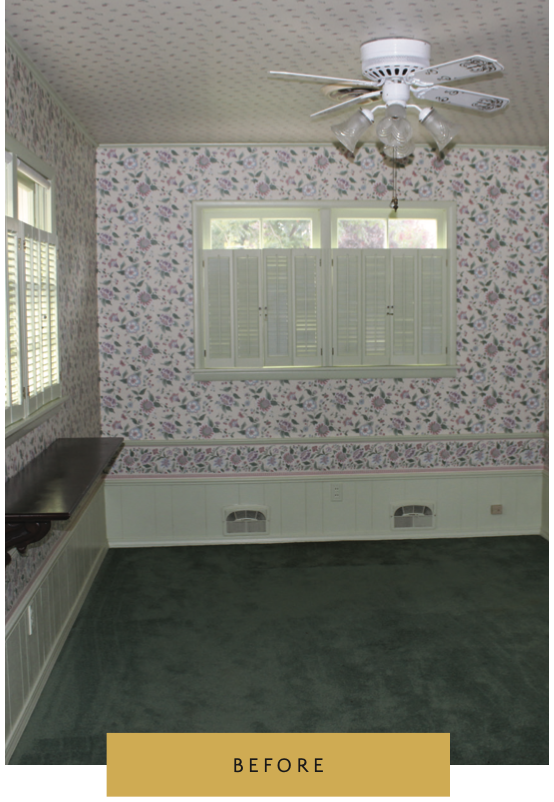
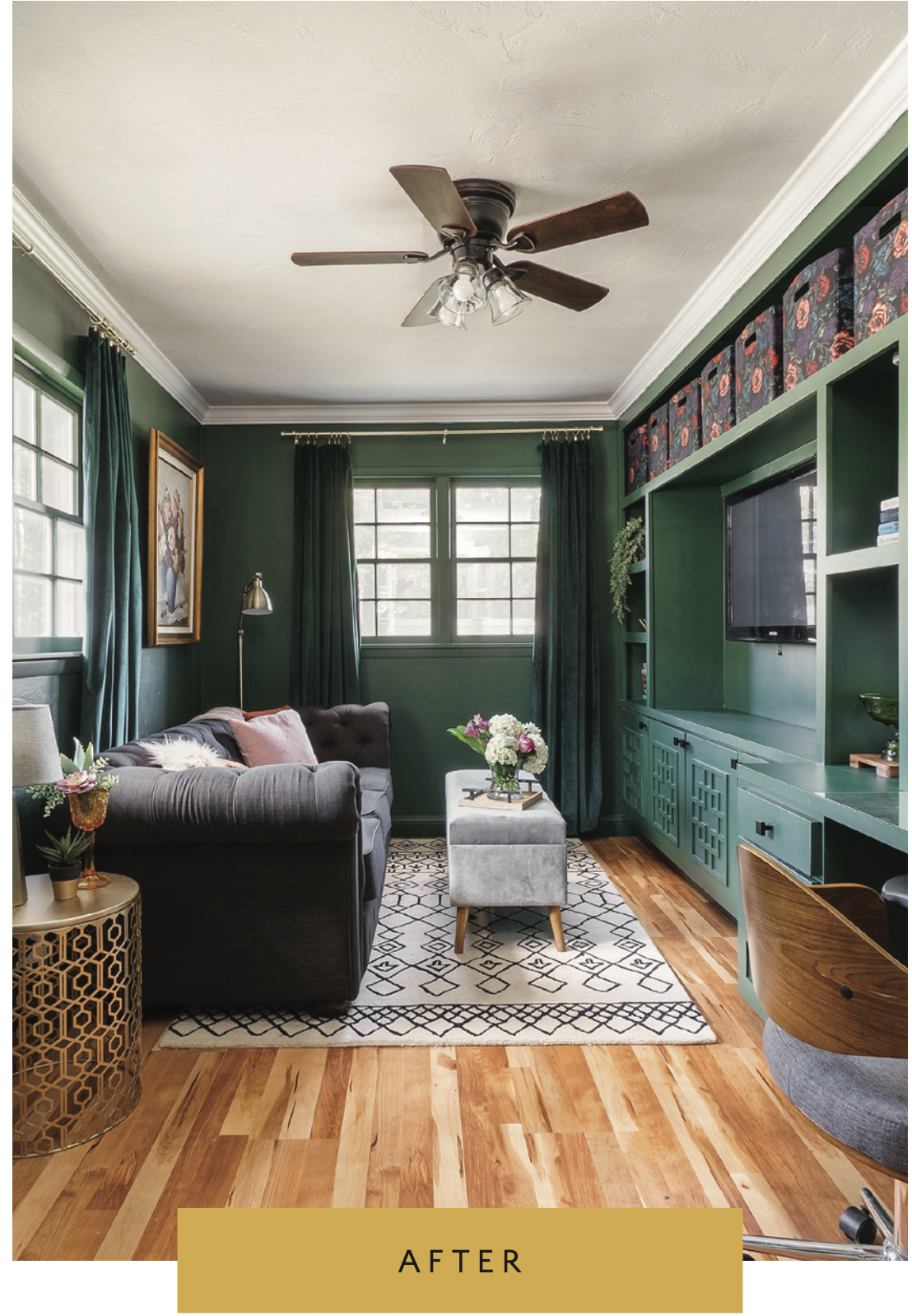
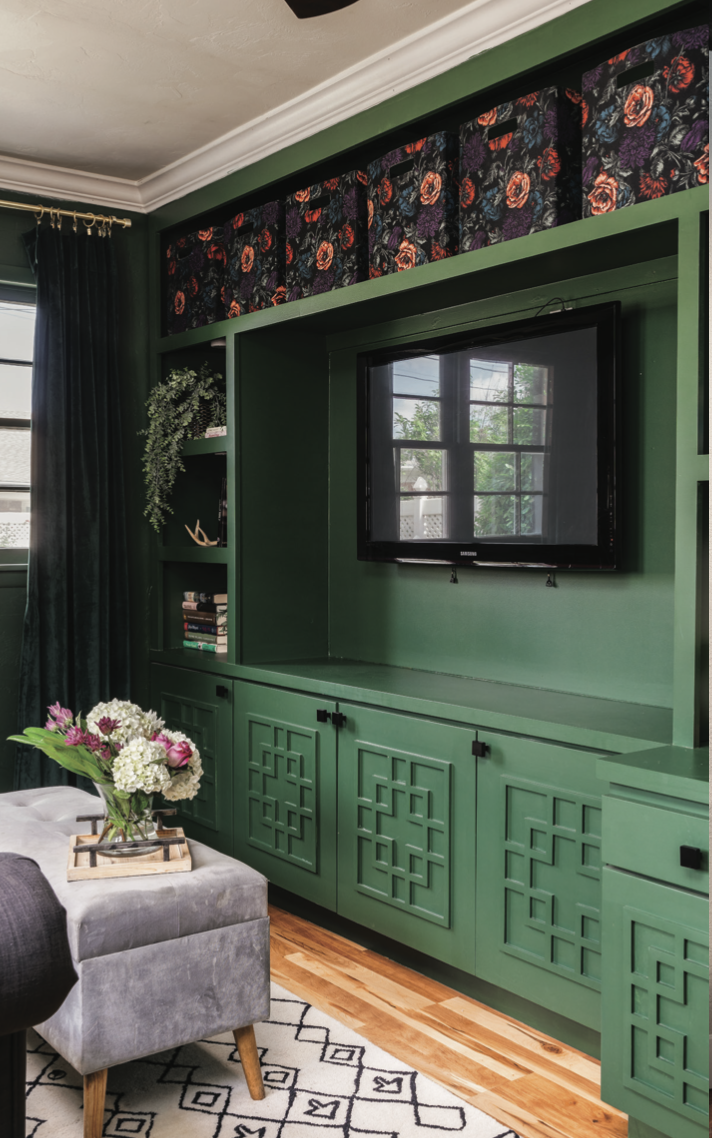
Below: For the most part this was a DIY project. Gracie removed the wallpaper, textured the walls and ceiling, installed the f looring, and painted the entire room. Her brother in law ,who owns Affinity Woodworks built the dramatic custom built in, where the unique deigned doors are the real show-stoppers!

Above: Before and after of Gracie’s Home Office

I’ve always been a fan of dark offices and thought that going monochromatic on the look would make it sleek. I wanted to maximize storage and have space to display all of my “office’ items. This is probably the most used space in my house. Although the deep green paint color is very masculine, I tried to girl it up with feminine touches.
— Gracie Storey

GRACIE'S HOME OFFICE

MATERIALS

FLOORING, PAINT, WALL TEXTURE - $1500

CUSTOM BUILT INS BY AFFINITY WOODWORK - $4500

TOTAL PROJECT: $6,000


Maire Chew’s Office Makeover

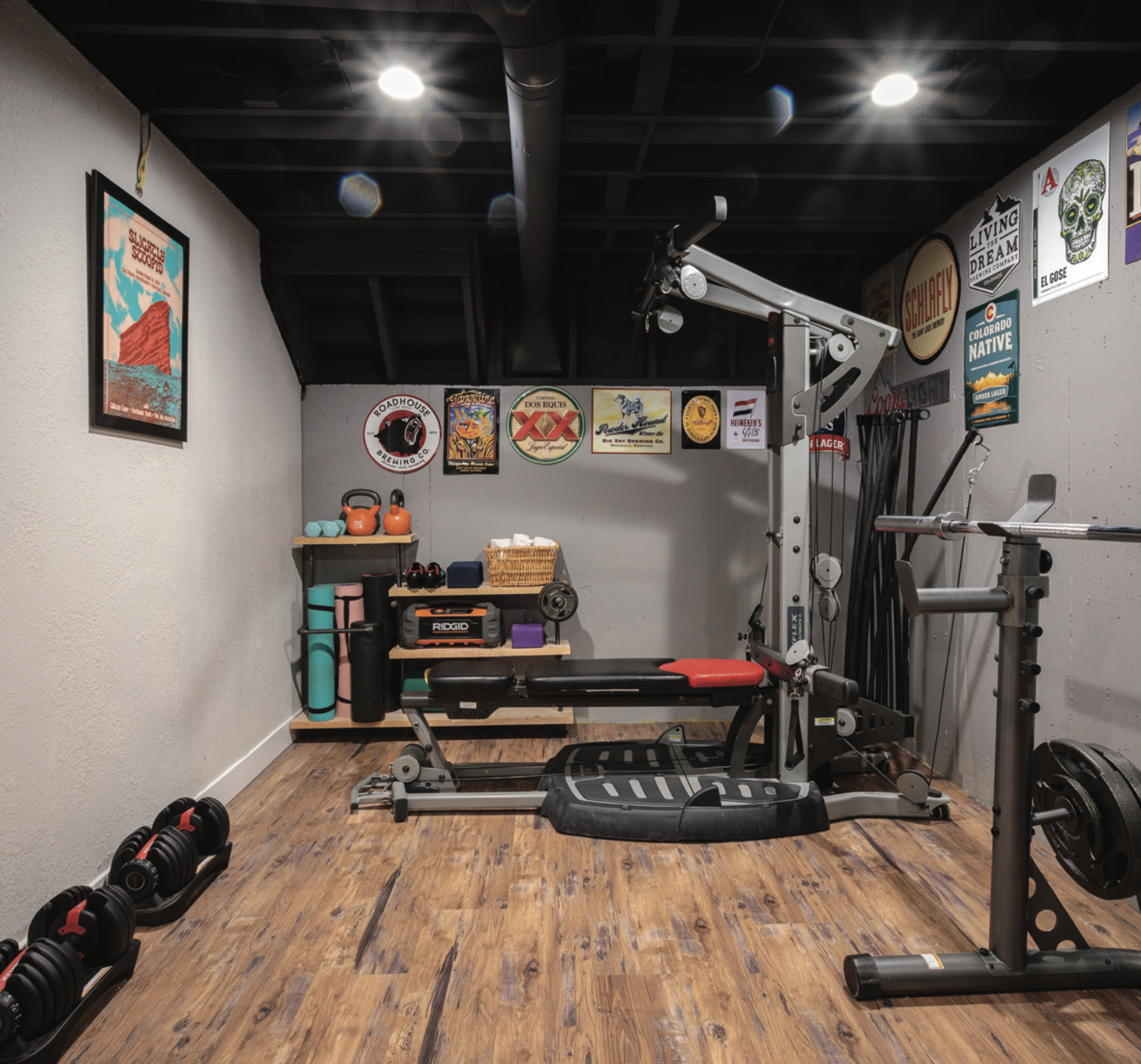
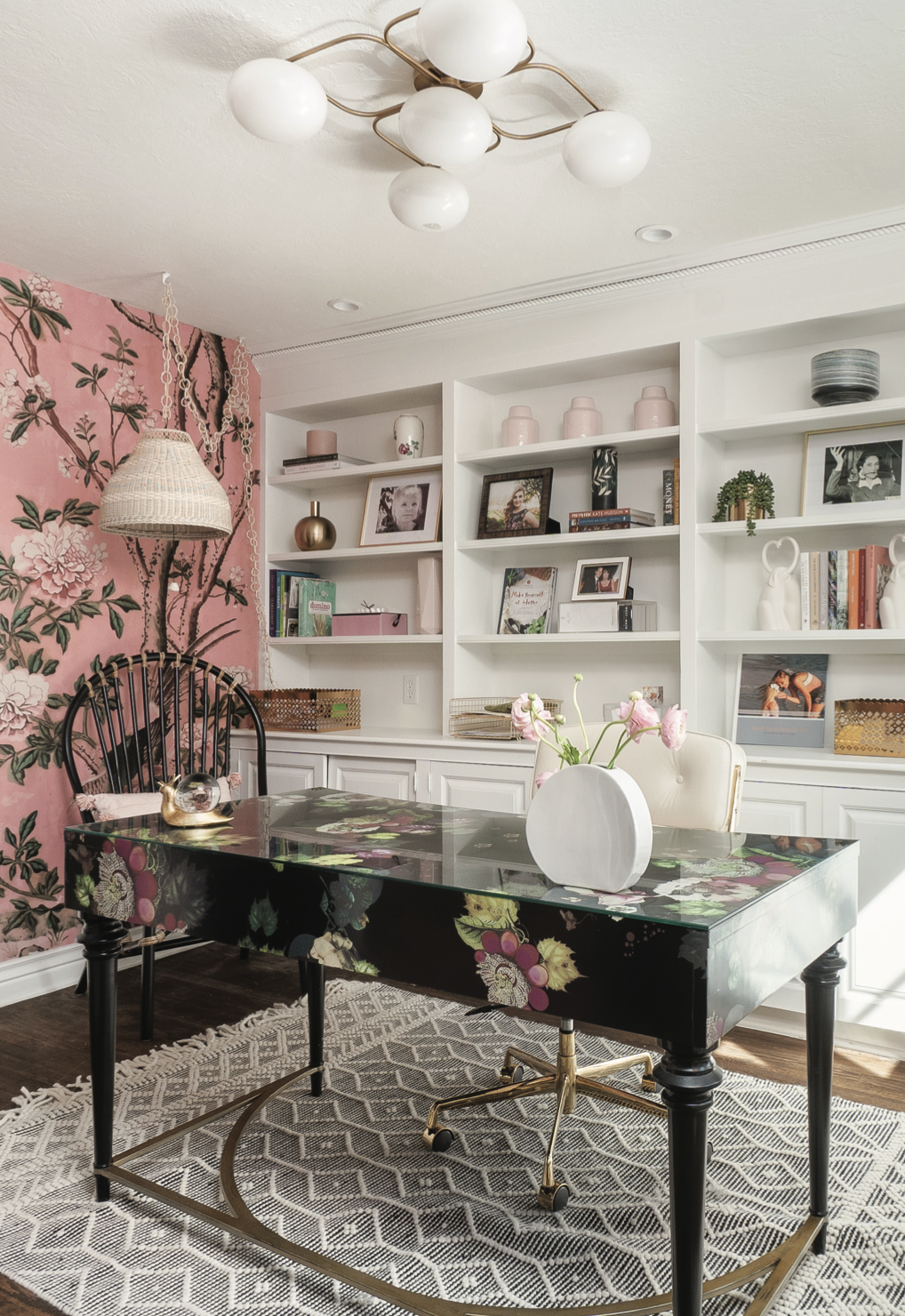
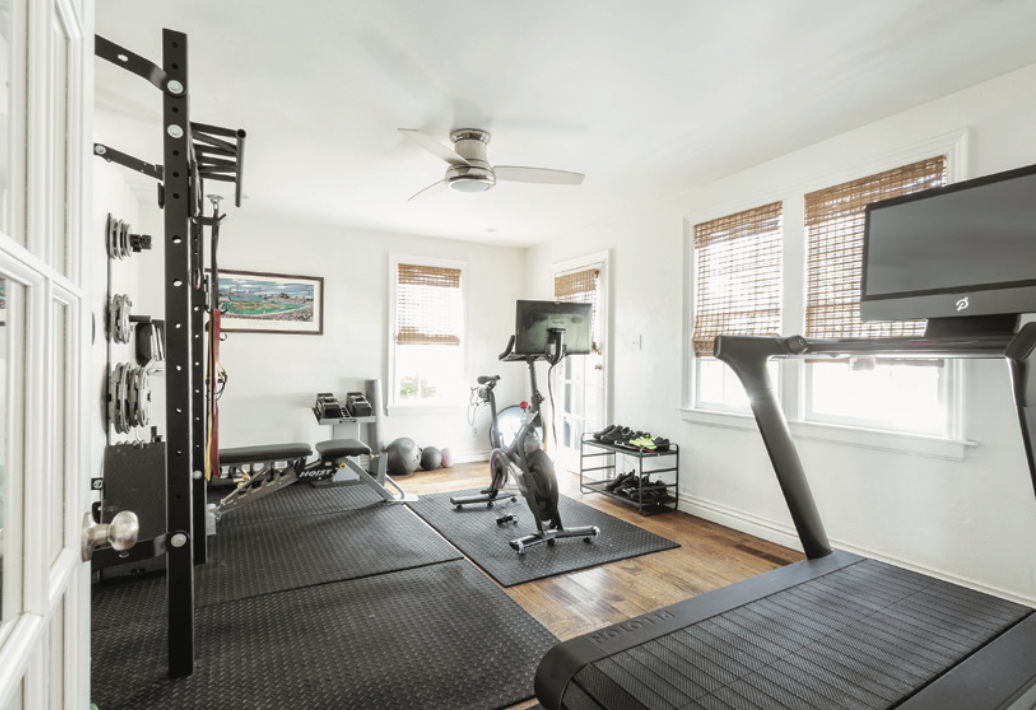
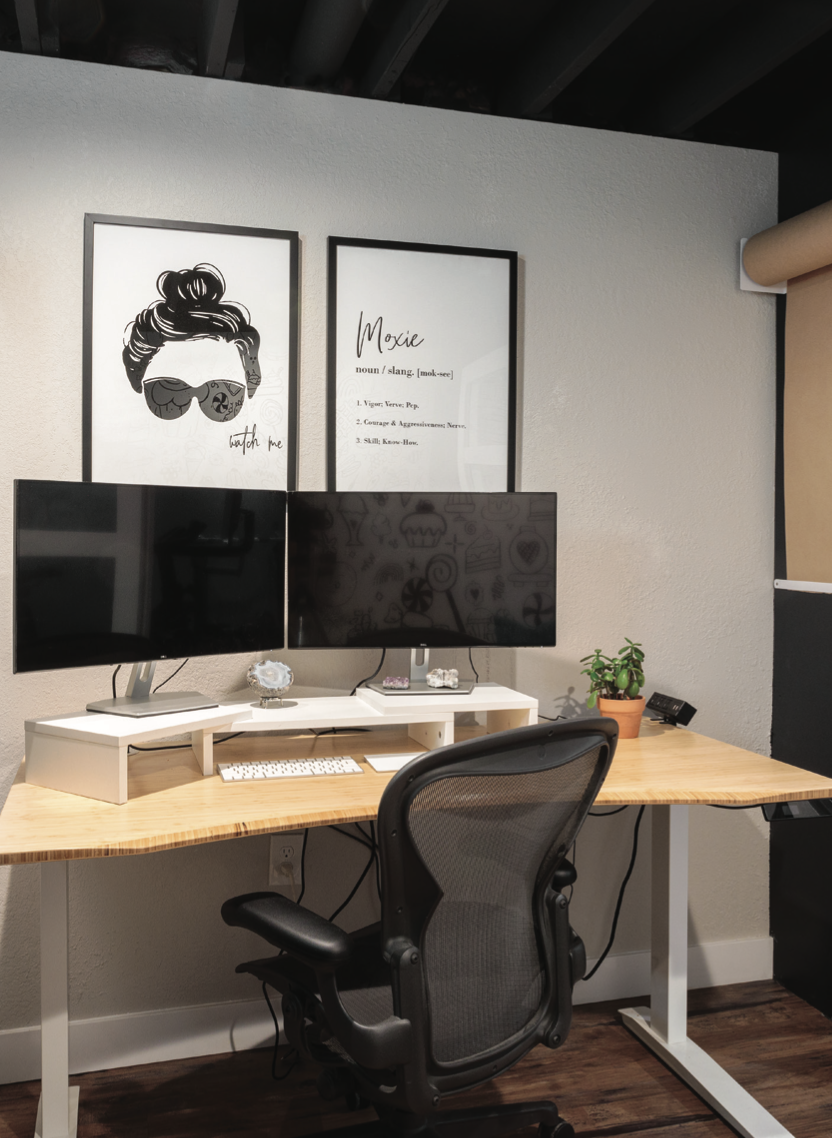
West + Main agent Maire Chew wanted her own space to work and feel like she was in an office even while working remote...and she and her husband also wanted a gym downstairs to be able to workout at home.

"The goal for the office design was maximize space and make it feel like an office inside of a co-working space feels which is modern, light hearted and creative," said Maire. "And the goal for the gym was for it to feel organized, functional and to be able to do as many types of workouts as possible. This currently includes cycling, yoga and weights! It's wonderful."

Major perk is Maire's husband has his own general contracting business (Urban Oak Builders) so we were able to maximize the budget in that way too!

MAIRE'S BASEMENT OFFICE + GYM

FLOORS, DRYWALL, PAINT - $8000 STANDING DESK + CHAIR - $1500 DECOR - $500
LABOR-$0/DIY

TOTAL PROJECT: $10,000 MARY'S OFFICE + GYM

BOOKSHELF - $1100

WALL, CONSTRUCTION, ELECTRICAL, FRAMING, PAINTING - $4500

REFRESH WOOD FLOORS - $600 ANTHROPOLOGY MURAL - $400 CB2 CHANDELIER - $350
TOTAL PROJECT: $6950


Mary Hatch’s Make or Break Office Space

"This house was a make me move house," admitted West + Main OK founder Mary Hatch. "I went on a listing appointment to list the home and made a verbal offer before I left the appointment."

"We lived one block away in a Historic Cape Cod Bungalow, but I had also loved the architecture of a Tall English Tudor!"

The home was a built in 1931 and the floorplan had a large addition in the back of the home the was a large bonus room that Mary's family did not need. Their goal was to take the space and divide it into some great f lexible fun spaces that they could enjoy.

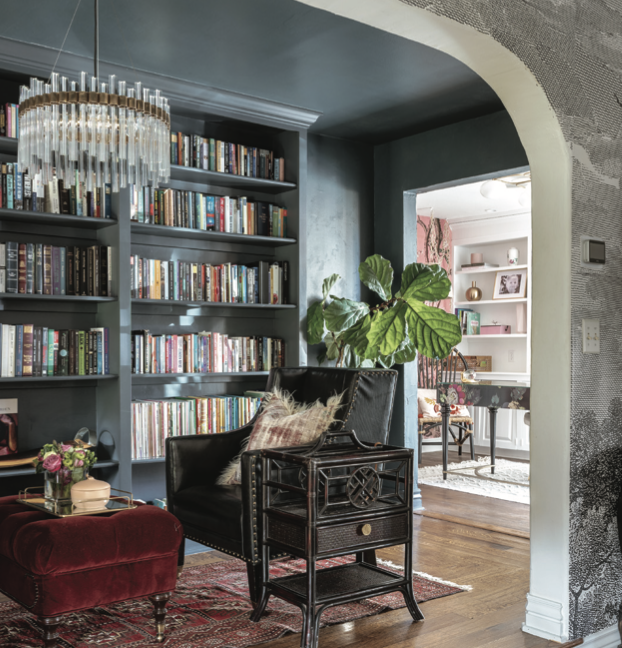
"The home had a great open arch that was already there so we decided to put a wall up with floor to ceiling shelves to create an open library," said Mary.

"We painted the walls and shelves in the same color for a moody look (Blue Note by Benjamin Moore) and the entry wall wallpaper was actually an Anthropology mural."

Behind the wall is a home gym, home office and a full bathroom. Mary and her family couldn't be more happy with the new footprint and all the fun spaces they created!

If there is a home that you would like more information about, if you are considering selling a property, or if you have questions about the housing market in your neighborhood, please reach out. We’re here to help.
Search Homes in Colorado

Search Homes in Oklahoma

Search Homes in Oregon

2021 Price Surges Yield Record-Level Profits for Home Sellers, Report Says


It’s no secret that 2021 was a banner year for real estate sales, but a new report from ATTOM Data Solutions indicates that homeowners that were willing to sell last year reeled in a profit that hasn’t been seen in more than a decade.

ATTOM released its Year-End 2021 U.S. Home Sales Report on Jan. 27, which shows that home sellers realized a profit of $94,092 on the typical sale in 2021—up 45% from 2020 and up 71% from two years ago.

Based on median purchase and resale prices, experts said the profit increase marked the highest level in the United States since at least 2008.

Major takeaways

  • National median home prices rose 16.9% in 2021 to $301,000, causing profits to surge.

  • Profits margins rose in nearly 90% of the nation—150 of the 173 metro areas with sufficient data to analyze.

  • Homeownership tenure dipped to a nearly 10-year low of 6.14 years.

  • One of every three single-family house and condo sales in 2021 was an all-cash purchase—a six-year high.

  • Institutional investing accounted for one of every 14 single-family home and condo sales in 2021 in the U.S.—an eight-year high.

  • Federal Housing Administration sales hit their lowest levels in 14 years.

What this means

Frenzied market behavior filled headlines last year as pandemic-induced stimulus and historically low mortgage rates helped fuel demand for a finite number of homes for sale.

According to the report, a surge of buyers financially unscathed by the pandemic flooded the market throughout 2021. The intense competition for a tight supply of homes contributed to a price surge that proved to be a boon for sellers who were able to reel in nearly $95,000 in profit for their homes.

“What a year 2021 was for home sellers and the housing market all around the U.S.,” said Todd Teta, chief product officer at ATTOM, in a statement. “Prices went through the roof, kicking profits and profit margins up at a pace not seen for at least a decade. All that happened as the virus pandemic raged on, which actually helped drive the increases instead of stifling them. Households that escaped job losses from the pandemic dove into the market, in large part as a response to the crisis. And the rising demand led the market boom onward.”

While 2021 was a record-setting year for price gains and profit margins, ATTOM noted that there are signs that prices could flatten out in this year as declining affordability, lower investor profits, and rising foreclosure activity contributes to a market cooldown that began in the fall.

The report stated that that was layered over with rising inflation and likely increases in mortgage rates this year.

A silver lining is that the current imbalance in demand and supply suggests there is room for at least some additional price gains.

“No doubt, there are warning signs that the surge could slow down this year,” Teta said. “But 2021 will go down as one of the greatest years for sellers and one of the toughest for buyers.”

Keep reading.

Related Links

If there is a home that you would like more information about, if you are considering selling a property, or if you have questions about the housing market in your neighborhood, please reach out. We’re here to help.
Search Homes in Colorado

Search Homes in Oklahoma

Search Homes in Oregon

The Housing Market Needs More Condos. Why Are So Few Being Built?


Despite robust multifamily construction activity overall, the share of these units built for sale last year was less than 5.4 percent—almost the lowest level in half a century.

The rest were rental units. This trend has persisted even though demographic patterns are boosting the need for condos, and the shortage is adding to concerns about the lack of affordability in the homebuying market.

Condos can present a key path to first-time homeownership, but a combination of federal financing issues and local defect laws have contributed to a lack of multifamily units for sale. Although the issues are complex, it is critical to break down these barriers to developing more affordable housing supply and expand homeownership opportunities to more families. 

Multifamily for-sale construction is near historic lows

Multifamily construction for sale is historically low, whether measured as a share of all new multifamily units (constructed for sale and for rent) or as a share of all new housing units for sale (single-family plus multifamily units). Multifamily construction built for sale accounted for only 5.4 percent of all multifamily starts and only 2.7 percent of all single-family and multifamily home construction for the first three quarters of 2021.

This is not a pandemic-related phenomenon; multifamily construction for sale has been declining since the Great Recession, and the approval time for new construction means it is unlikely the pandemic significantly affected volume.

Condos are more affordable than single-family homes

In every major city except New York and Philadelphia, condo and co-op prices are significantly lower than single-family home prices. During the pandemic, the gap between single-family and multifamily home prices has increased as families have traded location for space, leaving condos as the far more affordable choice.

Because condos and co-ops are generally more affordable, they tend to help first-time homebuyers step onto the first rung of the homeownership ladder. These buyers often use the equity on their condo to then purchase a larger single-family home. When we look at government-sponsored enterprise purchases with a mortgage, about 60 percent of condos and co-ops are purchased by first-time homebuyers; for single-family homes, the share is around 40 percent (link corrected February 1, 2022).

Demographic trends favor more robust condo development

Condos and co-ops also tend to better match long-term demographic changes. The share of one-person households has increased from 12 percent of all households in 1960 to 28 percent today. The share of two-person households has increased from 28 percent to 35 percent.

Owner-occupied multifamily units tend to have a disproportionate share of one-person households. Approximately 20 percent of all owner-occupied single-family housing is occupied by a one-person household; that share is 45 percent in owner-occupied multifamily housing. Approximately 35 percent of both owner-occupied single-family and multifamily housing consists of two-person households, while larger households disproportionately live in single-family housing.

The growth in one-person households over the past several decades should have provided the basis for more robust growth in multifamily housing than in single-family housing, but that has not been the case.

Why the disconnect?

Condo production has been low for two main reasons. First, financing constraints are an issue for both the sponsor and the builder.

Successful condo development requires that the sponsor be able to sell the units quickly, which requires that potential unit buyers either have cash on hand or can obtain financing. Few owner-occupants, especially in more affordable buildings, will be able to purchase with cash, and with credit tight for first-time homebuyers, this uncertainty is a concern for sponsors. 

But sponsors cannot solve that problem by selling to investors, who are more likely to be able to buy with cash. For example, a potential condo buyer cannot get a Federal Housing Administration (FHA) loan or a Fannie Mae or Freddie Mac loan unless (1) at least 50 percent of the condo units are owner-occupied and (2) no more than 15 percent of the units in the complex have association dues that are more than 30 days behind.

In addition, the FHA requires no more than 10 percent of the units in the complex secure existing FHA loans, further limiting access by the low-income borrowers the FHA typically serves. And Fannie Mae and Freddie Mac require that no single entity can own more than 2 units in projects consisting of 5 to 20 units and 20 percent of units in projects consisting of 21 or more units, and that the homeowners’ association is not named in any lawsuits.

In addition, defect litigation can substantially increase the cost of insurance and the riskiness of a condo project.

There is a statute of limitations on construction defect claims, which varies by state and by type of defect. For example, in New York State, construction defects are covered for one year after the warranty date. Plumbing, electrical, heating, cooling, and ventilation systems are covered for two years, and material defects are covered for six years. As a result, the condominium association has an interest in raising defect claims promptly. These claims are common on new buildings, and they have a chilling effect on a sponsor’s willingness to build for owner-occupants. And while this litigation is under way, it is virtually impossible to sell or finance new units in the building.

Because of the higher risk associated with condo development, the builder pays a higher rate to finance the condo construction than would be the case on a rental unit, and the lender demands a higher return for the higher risk.

These federal financing constraints and local defect laws make it far riskier for multifamily developers to build rental housing than for-sale construction and have limited the construction of condos and co-ops. But amid growth in single-person households and affordability concerns in the market, the need to address these challenges and build more of this type of housing has never been greater.

Overcoming these obstacles would require government and government-sponsored agencies at the federal level to ease financing restrictions and would require states and localities to reevaluate defect laws. Although these defect laws provide valuable protection to condo owners, it may be possible to provide this protection in a form that does not discourage new condo production. This challenge reflects another instance where a concerted partnership among all levels of government is needed to overcome barriers to affordable homeownership.

Learn more on Urban.org.

Related Links

If there is a home that you would like more information about, if you are considering selling a property, or if you have questions about the housing market in your neighborhood, please reach out. We’re here to help.
Search Homes in Colorado

Search Homes in Oklahoma

Search Homes in Oregon