6 Homebuying and Mortgage Tips for Retirees


Sure, your grandma and grandpa may have stayed put once they left the workforce, but you likely have other plans. Now more than ever, it seems retirees are on the move—and buying new homes.

About 18% of homebuyers were younger baby boomers (aged 56 to 65) in 2021. And older boomers (aged 66 to 74) scooped up an additional 14% of the market during the same period, according to a recent report from the National Association of Realtors®.

Buying a new home is a logistical and financial challenge no matter your age (or how many times you’ve done it). But our mortgage and lending system can be especially challenging for retirees to navigate, simply because lenders prioritize income.

To help, we reached out to real estate professionals for tips on how retirees can find their golden years dream home, land a great mortgage, and still have plenty left in the bank for whatever surprises life delivers.

1. Think local

For the most part, retirees who are relocating aren’t looking to move across town but to an entirely different area (usually one with better weather). With that in mind, always work with a real estate professional in your new home state.

“There are a lot of different rules and costs state by state,” says Rachel Lester, an agent with Keller Williams Main Line Realty in Villanova, PA. “And the lending and real estate laws can really differ. You need to make sure the person you’re working with is aware of local transfer taxes and closing costs.”

Also, prioritize working with a local lender, especially in states with rigid contract dates. You also want to make sure your lender is available by phone seven days a week. So beware of lenders you find on the internet, who may offer only 1-800 numbers and limited office hours.

2. Watch your debt-to-income ratio

When you retire, your lack of income may scare some lenders. But if you’re on top of your debt-to-income ratio, you’ll look a lot more financially stable.

“To qualify, your debt-to-income ratio should be lower than 36%,” says Warner Quiroga, president and owner of Prestige Home Buyers in Brentwood, NY. “Debt-to-income is calculated by looking at current expenses, such as car payments, credit cards, student loans, and housing expenses, versus what money you have coming in.”

3. Get creative with your mortgage

Landing a fantastic 30-year mortgage with a low interest rate isn’t so easy when you’ve left the job market and no longer have a steady income.

“But don’t let anyone tell you it is too late in life to buy a home,” says John W. Mallett, founder and president of MainStreet Mortgage, in Thousand Oaks, CA.

Instead, find a professional fluent in many types of mortgages.

“You should consider asset depletion, which entails using savings as income,” says Mallett. “You could also use qualified savings as income, such as an IRA or 401(k).”

Another option is a reverse mortgage, which got a bad rap for many years but can actually be a useful tool for retirees.

“Reverse mortgages require a larger down payment than conventional loans,” says Mallett. “However, you have the option to make no payments, interest-only payments, fully amortized payments, or anything in between. So while reverse mortgages can be complex, you will know if it’s right for you once you understand how they are structured.”

4. Reconsider risk calculations

If you’ve made it to retirement, your likely used to taking risks and thinking long term, especially when it comes to investments. But Todd Huettner, president of Huettner Capital, a mortgage lender in Denver, urges you to adjust just how much risk you’re willing to take when it comes to buying a new home.

“A person’s financial risk jumps to the highest point after retirement and remains very high for another decade,” notes Huettner. “Without the ability to replenish losses with income, any low returns on investments or unplanned withdrawals from a retirement account will severely reduce the amount of money you can safely withdraw in the future.”

With that in mind, Huettner advises pursuing a fixed-rate mortgage rather than an adjustable-rate mortgage, so you don’t risk everything you saved for retirement on variables outside your control, such as interest rates.

5. Crunch the numbers

People live well into their 90s today, so it’s easy to see why many retirees gravitate toward the tried-and-true 30-year mortgage. But before settling on a standard loan term, carefully weigh the costs and benefits of each mortgage term.

A 15-year loan usually has a lower interest rate but requires a bigger monthly payment. On the other hand, a 30-year mortgage comes with a higher interest rate but your monthly payments will be lower.

So look at the total amount in your retirement accounts and calculate the interest you’ll make in savings over 15 versus 30 years. And compare the results to the corresponding mortgage rates and payments for the same time period.

“If you’re taking money from an investment that returns 7% when the rate on the 30-year mortgage is 3.5%, then I would strongly consider the 30-year,” says Huettner. “The difference can be tens of thousands of dollars in additional savings.”

6. Reduce housing costs

Just because a lender is willing to give you a large loan, it doesn’t mean you should take it.

So while it may be tempting to buy a bigger, more lavish house, retirees should really look at their potential health care costs, advises Anthony Martin, CEO and founder of Choice Mutual in Reno, NV.

“If you’re relying on a pension, Social Security benefits, and other retirement accounts for your income, then you want to ensure your mortgage isn’t going to be too expensive,” says Martin. “Narrow your monthly housing costs—which should also include property taxes, interest, and insurance—to 20% to 25% of your income.”

You want to avoid digging too deeply into your nest egg or using a large portion of your retirement fund to pay for a mortgage since it may leave you with little money for unexpected expenses.

Learn more on Realtor.com

Related Links

If there is a home that you would like more information about, if you are considering selling a property, or if you have questions about the housing market in your neighborhood, please reach out. We’re here to help.

Search Homes in Colorado

Search Homes in Oklahoma

Search Homes in Oregon

As Featured in West + Main Home Magazine: It's What's On the Outside that Counts


FEATURING STUNNING EXTERIORS FROM SUZAN PRUITT + CAREY SKAINS

Curb appeal is everything...and West + Main agents Carey and Suzan definitely made the most of theirs with these chic exterior makeovers! Whether you DIY or go with a pro, you'll almost certainly receive a huge return on your investment with improvements you make outside...and your neighbors will love you a little more, too.

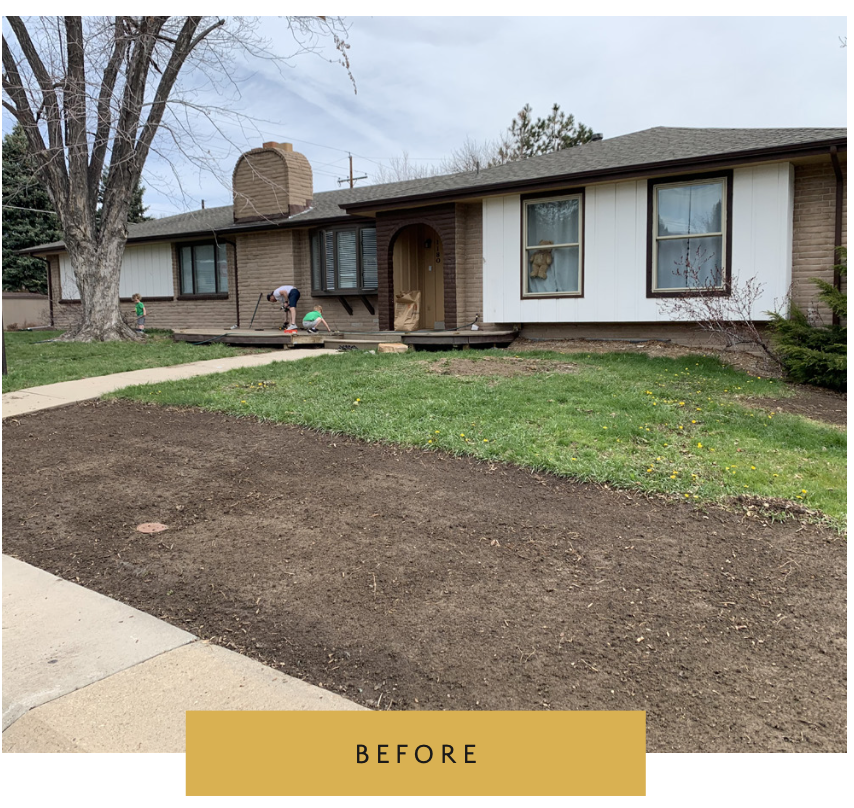
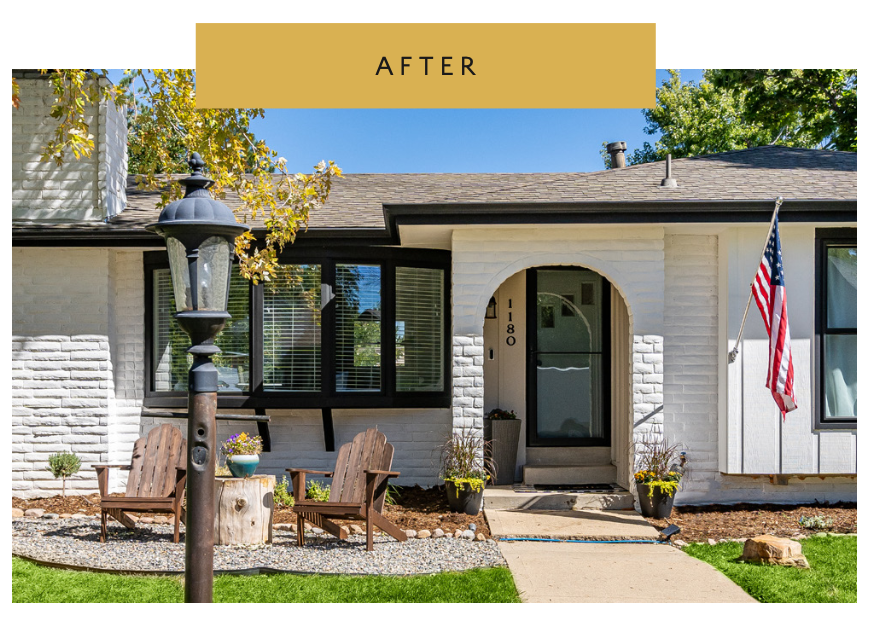
Carey’s DIY Success

"With the time I had on my hands and a little DIY experience, I decided I would tackle the exterior myself. I quickly researched paints to use for the brick and decided I wanted to go with a clean black and white look."

Carey worked tirelessly for several months to master her exterior to the point she wanted to get it to.

"A month and a half later of using three different types of paint, working a sprayer for the first time along with a brick painting brush amongst other tools, many fearful roof and ladder moments all while completing the job during my 2 year old’s nap time and in the evenings, it was finally done. Every inch of paneling, brick, trim, soffit, facial boards, and gutters were painted."

MATERIALS

TOOLS AND TOTAL PAINT - $400-500 BEHR MARQUEE PAINT
COLOR: JUST BLACK
BRICK COLOR: ROMABIO LIMEWASH PAINT COLOR: BIANCO

Suzan’s Exterior Facelift

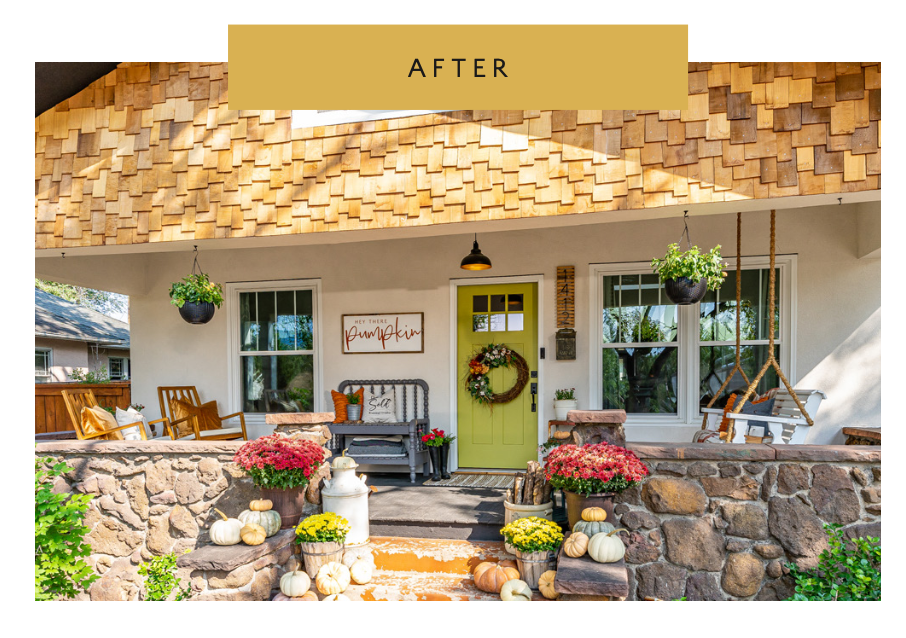
"When we moved into this house in October 2019, I knew that one of the things that I had to replace was the vinyl siding on the exterior. This cute little 100 year old bungalow deserved better than ugly vinyl siding!"

Over time, Suzan and her husband pulled off the vinyl siding and went with stucco to revamp the outside of the house.

"We hired the contractor, put the deposit down and the work began a few days later! To say I was nervous is an understatement!"

The nerves paid off!

MATERIALS

CONTRACTOR: STUCCO/PAINTING TRIM/ SHAKER SHINGLES/PAIN FRONT PORCH - $16,500
EXTERIOR LIGHTS - $350

CEILING PAINT - $100
NEW ROCKING CHAIRS - $150

If there is a home that you would like more information about, if you are considering selling a property, or if you have questions about the housing market in your neighborhood, please reach out. We’re here to help.
Search Homes in Colorado

Search Homes in Oklahoma

Search Homes in Oregon

6 Ways to Honor Black History Month

February is Black History Month and this year's theme is Black Health and Wellness (Featured in this image from top left: Dr. Charles Drew, Henrietta Lacks, Dr. Rebecca Lee Crumpler, Katherine Johnson, James Baldwin, Madam CJ Walker, Allyson Felix, Nelson Mandela, Laverne Cox, Sidney Poitier)

6 ways to celebrate Black History Month

February is Black History Month, which for many people means revisiting the stories of Black leaders like Martin Luther King, Jr. or Harriet Tubman.

While those stories are important and deserve a place in American schools, there are many more ways kids and adults can engage with Black history and culture, ways that honor both the historic role Black people have played in the country’s past and support Black individuals contributing to society today.

Here are a few meaningful ways to celebrate Black History Month.

Educate yourself

Black History Month is all about education, but few students get beyond the basics in the short 28-day month. Dig deeper by visiting a Black history or civil rights museum, where you can seek out information on lesser known figures or aspects of common history that may not be as well known. Or watch a documentary or pick up a biography on a historical Black figure who doesn’t get as much love in the classroom.

Support modern justice

A number of nonprofit organizations work year-round, not just in February, to combat ongoing forms of racial injustice, from the overt like police brutality to issues with less visibility like redlining or food deserts. Seek out local community groups and agencies tackling these issues in your area, or consider donations to national programs like Black Lives Matter or the NAACP.

Patronize Black businesses

For a literal taste of Black culture, try visiting a Black-owned restaurant, or any other business for that matter, where your dollars can support Black business owners while you receive terrific products and services in return.

Join the community

During Black History Month, many people and organizations put on community events to bring together locals of different backgrounds while celebrating Black arts and culture. Check out social media and look out for events happening in your area. If you’re a Black person who doesn’t see these types of events staged in your area, go ahead and host one yourself. Whether big or small, community events are an opportunity to educate, celebrate, and converse about Black culture in historical and modern society.

Take in works by Black artists

Deep engagement with Black culture doesn’t just happen in the classroom. Read a new book by a Black author. Visit an art museum exhibit highlighting a Black artist. Pick up a classic vinyl album from a Black musician. Even better if you support these arts and artists with money and tangible interest.

Donate to an HBCU

The NAACP lists donating to a Black university among its suggestions for celebrating Black History Month. It makes sense. Nowhere do students engage more with the intellectual and cultural legacies of Black culture in America than at HBCUs. Support this continued education and the next generation of great HBCU graduates.

Visit Audacy for more content like this.


Related Links

If there is a home that you would like more information about, if you are considering selling a property, or if you have questions about the housing market in your neighborhood, please reach out. We’re here to help.
Search Homes in Colorado

Search Homes in Oklahoma

Search Homes in Oregon

Housing market begins ’22 with lower inventory, higher prices


Median home sales price rose 14% year over year.

Since the calendar turned to 2022, the real estate industry has witnessed a 12% drop in the number of new listings and a 14% increase in median home sales price compared to a year ago, according to a housing market report by Redfin released Thursday.

During the four-week period ending January 16, the median home sales price rose to $358,500, with 41% of homes selling for above list price, up from 33% during the same time period a year ago. The percentage of homes for sale that underwent price drops also increased slightly year over year, rising 0.3 percentage points to 2.4%. Overall, the average sale-to-list price ratio was 100.3%. Meanwhile, the median asking price of a newly listed home rose 12% year over year to $349,950.

Due to the drop in new listings, the total number of homes for sale dropped 29% to 445,000. Pending sales were also constrained by low inventory, rising just 1% year over year. However, there should be more new construction homes hitting the market in the coming months, with the number of housing starts and building permits issued increasing to a nine-month high in December.

“There is very little for sale right now, so nearly every new listing that’s priced fairly and is in good condition gets multiple offers,” Niko Voutsinas, a Chicago-based Redfin real estate agent, said in a statement. “Labor and material shortages are limiting the supply of new construction, but also increasing buyers’ appetite for homes that are move-in ready. They don’t want to deal with any hassles of trying to find contractors to make improvements, so they’re willing to pay a premium for homes that don’t need any work.”

Of the homes that went under contract during this time period, the report found that 41% had an accepted offer within its first two weeks on the market, up from 36% a year earlier, and 32% of homes that went under contract had an accepted offer within one week, up from 27% a year ago.

In addition, the median number of days a home sat on the market was at 28, down from 35 days a year prior.

But for weary homebuyers there is some good news in such a challenging housing market: as expected, mortgage rates are on the rise, which experts believe may become more of a deterrent than a motivator for buyers.

“2022 started off more competitive than 2021, but mortgage rates have now risen enough that they may become more of a deterrent than a motivator for homebuyers,” Redfin chief economist Daryl Fairweather said in a statement. “In the next few weeks we may start to see signs that some buyers are backing off. This is the silver lining for the most committed homebuyers who may benefit from less intense competition in this supply-constrained market.”

Visit Real Trends to keep reading.

Related Links

If there is a home that you would like more information about, if you are considering selling a property, or if you have questions about the housing market in your neighborhood, please reach out. We’re here to help.

Search Homes in Colorado

Search Homes in Oklahoma

Search Homes in Oregon

Built-to-Rent Homes Expected to Hit All-Time High in 2022


As renters look for a lifestyle change that offers more space and privacy, communities of single-family houses built for the purpose of renting have become the hottest trend in housing. 2021 was a record year for single-family rental home construction, with 6,740 new built-to-rent homes completed.

And the trend is growing rapidly: twice as many homes are now under construction, for a total of nearly 14,000 set to open their doors to renters beginning this year.

Cleverly described by some as “horizontal apartments,” communities of houses built for the sole purpose of renting are becoming the hottest topic in residential living. But single-family rentals are not a new concept. Although they proliferated in the aftermath of the 2008 housing crisis, this time it’s different. The pandemic created an unprecedented demand among renters for space and privacy, which houses can address much better than apartments.

According to a recent survey of 3,300 renters on rentcafe.com, as many as 78% said they were interested in living in a community of single-family homes. The survey confirmed the rising interest in single-family rentals that began to take shape last year, including on rentcafe.com, where searches for “homes for rent” tripled in 2021 compared to the previous year.

What’s more, the race to build more of this in-demand type of rental is accelerating: In 2021, 6,740 new rental homes in built-to-rent communities were completed—the highest yearly total to date, according to Yardi Matrix data. But this is just the beginning of a trend we’re bound to see much more of as the pace of construction is set to double beginning this year. Specifically, there are an estimated 14,000 built-to-rent homes under construction in the United States.

Currently, there are about 90,000 existing single-family homes in the United States in nearly 720 such communities designed specifically for renting. They include single-family detached houses, townhomes, duplexes, and even quadruplexes that come with a backyard or a garage—or sometimes both.

It’s easy to see the appeal of built-to-rent homes: the trend combines the financial and leasing flexibility of a rental with the amenities and convenience of a professionally managed property, all while living a single-family home lifestyle.

As a result, everyone is interested, according to Shannon Hersker with Walker & Dunlop: “There is a misconception that the majority of renters are Millennials when, in reality, you have everyone—including college students, empty nesters, families with kids, pet owners, and those wanting to downsize.”

Built-to-Rent Communities Present in Both Suburban & Urban Areas

Because they need large lots of land to build on, rental home communities are prevalent in low-density areas, with the majority (61%) located in suburbs.

“Undoubtedly, coronavirus has also impacted upon this increased popularity,” said Christopher Michael, founder of archisoup, an online learning platform for architecture students. “Many are now moving out of the cities and apartment living to seek out more space in rural and suburban locations.”

This aligns with RentCafe’s renter survey, which also revealed that besides the main reasons for choosing a single-family rental over an apartment—more space (29%) and more privacy (25%)—these types of rental homes are also attractive for families. More precisely, 19% of respondents believe a single-family rental is more suitable for their family, especially if the community is ina family-friendly area in the suburbs.

Mapping the top 100 locations with the most built-to-rent houses reveals that 39% of these communities are located in areas, particularly in geographical regions where land availability allows. While they’re more likely to be found in urban settings in the Southwest, they tend to be more present in suburban areas in the Midwest and Northeast

Either way, single-family rentals are filling up fast, with the occupancy rate in 2021 2% higher than apartments (97% compared to 95%)—demonstrating renters’ interest in living in a house. And, Hersker believes the trend of the built-to-rent home was already on the rise: “The pandemic just increased demand at a faster pace,” she said. “People want to live in areas that are less dense, in communities that offer more space.”

To learn more, visit RisMedia.

Related Links

If there is a home that you would like more information about, if you are considering selling a property, or if you have questions about the housing market in your neighborhood, please reach out. We’re here to help.

Search Homes in Colorado

Search Homes in Oklahoma

Search Homes in Oregon