6 Ways You Can Improve Your Bedroom in a Weekend

 
rhema-kallianpur-uocSnWMhnAs-unsplash.jpg
 

Your bedroom is likely the last place you spend your house-keeping energy. Because it’s a private room, only for you, it’s natural to be lax on the idea of making making it look presentable, or turning to the bedroom when you want to upgrade a space at home. But this weekend is a great time to re-think how you treat your bedroom, for a couple reasons.

First of all, at this moment in time, no one is making much of a fuss over curating spaces for entertainment purposes (at least anything besides what you can see in your Zoom background). Second, it’s more important than ever to make sure that your home is a place that restores you. This is particularly true when it comes to where you sleep.

This Weekend: Do something (or a few things) to improve your bedroom.

Walking into a bedroom that’s not only clean and orderly, but that makes you feel wrapped in comfort is key to a good night’s sleep. A room that you enjoy might also become a favorite place for you to unwind, journal, read, or simply sit with a cup of tea and your thoughts.

Here are some ways to make your bedroom into a haven you’ll love to retreat to:

Change out your lightbulbs for warmer-temperature light.

If your lightbulbs are casting bright or “daylight” hues, consider changing them out for warmer light. (I like 2700K.) The difference will make your lights glow and the effect is cozy and inviting. To take it a step further, consider smart bulbs that you can dim from an app on your phone. This way you can enjoy the warmth of low light even when you don’t need or want bright lights on.

Upgrade your bedding.

Getting nice sheets makes sliding between them an act of relaxation in and of itself. Or it might be time to replace your pillow. Small changes can have an outsized effect on your sleep, which impacts your whole sense of wellbeing throughout the day. And investment in quality sleep is always worth it.

Thoroughly wash your bedding.

Even if you’re not in the position to upgrade bedding, washing everything thoroughly can make your bed feel like new. Take it a step further than washing just your sheets and duvet cover. Remove pillow covers and mattress covers and wash them, and then wash your comforters and pillows as well. Be sure to follow washing and drying instructions and allow enough time for them to thoroughly dry before putting them back on your bed. While it’s bare, clean your mattress too.

Plug in a white noise sound machine.

A sound machine can help tame those racing thoughts. The soothing sound of white noise or a thunderstorm can help you not only fall asleep but stay asleep, especially if others in the house tend to get up earlier than you do and start, say, banging around in the kitchen

Add blackout curtains.

If you’re struggling to sleep past the first rays of morning light but you need to get more shuteye, adding some good blackout curtains could make all the difference.

Add something fun.

Plants look good in a bedroom and being around plants can improve your mood. But you could also try a new piece of art or something way out of the box like a hammock. Adding playful, personal touches to your bedroom will keep it from feeling like a forgotten space.

Read more on Apartment Therapy

Related Links

If there is a home that you would like more information about, if you are considering selling a property, or if you have questions about the housing market in your neighborhood, please reach out. We’re here to help.

Search Homes in Colorado

Search Homes in Oklahoma

A guide for homebuyers looking to buy their dream home

 
watermark-designs-YyzG9pAyMik-unsplash.jpg
 

5 things to consider when shopping for your dream home

Are you thinking about buying your first home? Because of today’s low interest rates, some homebuyers may be able to afford the homes of their dream. But low interest rates aren’t the only thing you should consider when house shopping.

Due to high demand, the housing supply is slim. But that doesn’t mean you should settle for a house you don’t love. From square footage to location, here’s what you should consider when looking to move into your dream home: 

1. Number Of Rooms

Bedrooms: Some people might want more than one bedroom for different reasons. For example, that number changes depending on if and how many kids you have. That factor will also depend on if you want any of them to share a room. And what about a guest room? Some homebuyers want to have a separate room for guests to use when they come into town.  

Bathrooms: When it comes to bathrooms there are several factors to consider as well. The first one is how many you want. Some older houses come with one bathroom, and others come with one and a half, while others have two or more. Then, there is deciding if you want tubs or showers, or even both. 

Kitchen layout – Guests usually hang out in the kitchen, so the size is important depending on how much and how many people you entertain. You will need to know exactly what you are looking for. Do you need a large gourmet kitchen with lots of counter space, sinks and storage? Or, will an atypical kitchen will suffice? If you entertain guests frequently, a spacious kitchen is the best option. 

The appliances – The age and condition of appliances is a big deal. If you want more of a modern look, old appliances probably won’t work for you and you’ll have to replace old appliances with new ones. However, there’s more to consider than age and condition. For instance, what surface do you prefer to cook on? Do you want gas or electricity?

2. Location

Before buying a home, consider the location. Some homebuyers make the mistake of putting the location on the backburner, especially if the home price is too high. And while price matters, it’s easier to renovate a home than pick up and move it to another city. Make sure you’re considering the home’s location prior to making an offer. For example, how close is the home to your children’s school? How far will you have to drive to visit your parents? 

3. The Age Of The House 

A home’s age can play a huge difference in if you want to buy it or not. After all, the older the home the more you might have to pay in renovations or general upkeep. Not to mention, older homes can cost more to insure if they need certain repairs. A study from Trulia reports that 41% of Americans prefer new houses over old ones. Nevertheless, some homebuyers may want an older house they can fix up. It depends on personal preferences and financial circumstances. 

4. The Purchase Price

Certainly, budget plays a huge part in buying a house just as much as it does when you want to do renovations or remodeling to your house to make it more your style. Whichever idea you have, how much it is going to cost you, can be a deal-breaker.

5. Bottom line: Prioritization is key

Right now, we’re in a seller’s market. Because of this, you might have to adapt your home buying strategy. It’s okay to put your 10-page list of demands away, but make sure you’re prioritizing certain criteria. It’s a good idea to make a list of non-negotiable requirements to ensure you end up with your dream house. 

Keep reading.

Related Links

If there is a home that you would like more information about, if you are considering selling a property, or if you have questions about the housing market in your neighborhood, please reach out. We’re here to help.

Search Homes in Colorado

Search Homes in Oklahoma

As Featured in West + Main Home Magazine: Summer 2021 Trend Report

 
trends-report-blog.jpg
 

Home trends are always changing, and there is nothing we love more than following the latest trends.

Here are a few of our favorite trends of the season…

Board + Batten Headboard

 
Screen Shot 2021-05-20 at 6.31.12 PM.png
 

I have a smaller bedroom, and the path between the foot of my bed and dresser is tight. I wanted a headboard, but all my options were pushing my bed out too far, making that path even tighter. So I decided an accent wall behind my bed was the perfect solution!  

Lauren Vollono


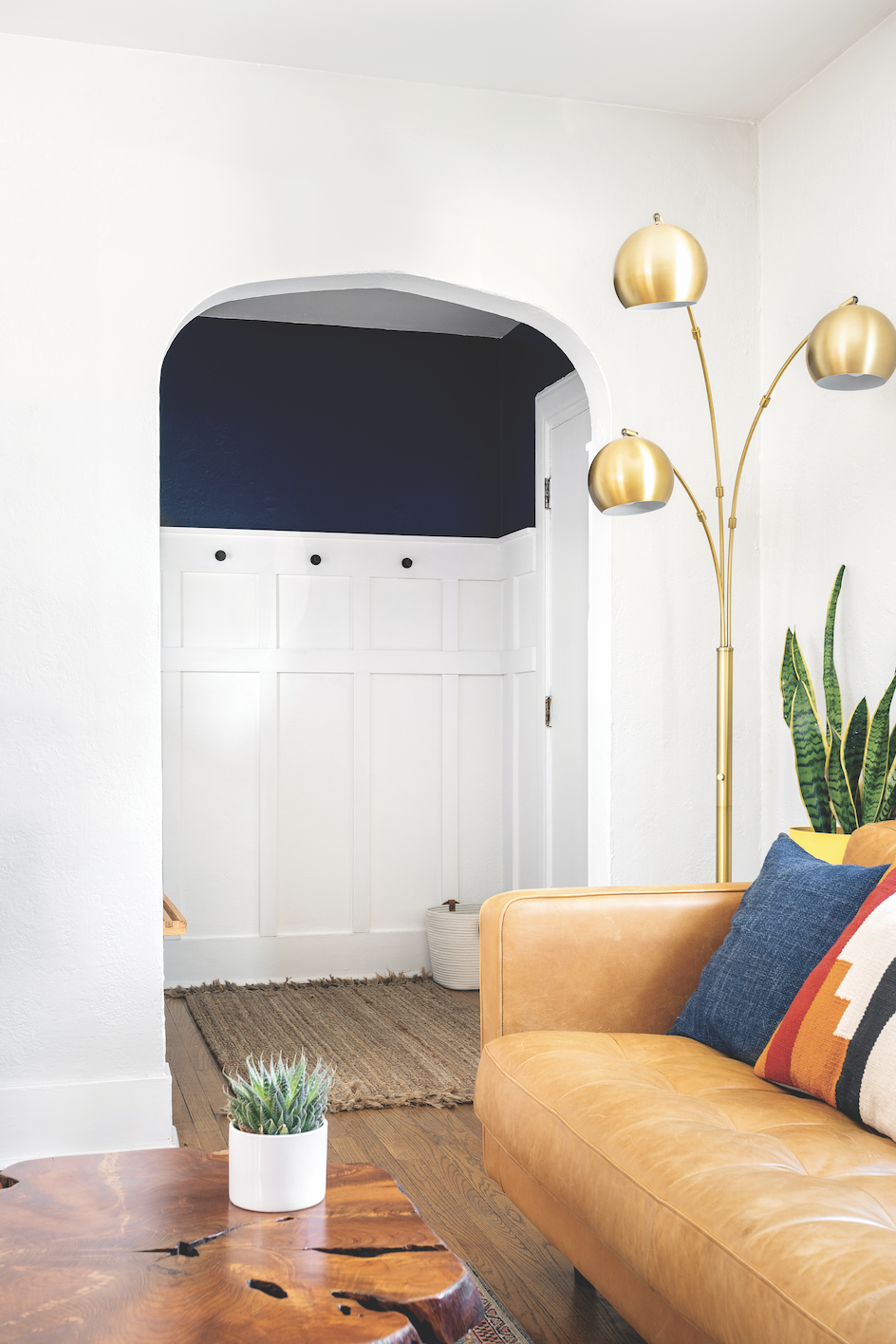
Entryway + Texture

by Sam Messmer

Before, during, and after entryway remodel

This project isn't something that I felt necessary to do upon moving in. It was absolutely quarantine-inspired. The more I sat and looked at the entryway, the more bored I became with it. Our garage is around back so we always go in and out of the back door so it wasn't in our face everyday. But, realizing that this is the very first space that our friends and family will see, we decided to dress it up to make a good first impression! 

This project will give this home the best first impression possible. Whether it's friends and family members coming over and feeling immediately welcome; future tenants feeling like they live in a warm home and not a bland rental property; or eventually future buyers being hooked from the first seconds inside the home. It's all about setting the tone for the rest of the home!
Materials
3 - 1"x2"x8' pine boards = $9.00
3 - 1"x6"x8' pine boards = $28.50
4 - 1"x4"x8' pine boards = $24.56
14 - 1"x3"x8' pine boards = $70.56
Wood Glue = $3.00
White Paintable Caulk - 3 tubes = $7.00
Wood Filler = $8.00

Total Cost for materials ~ $150.00 + primer and paint of your choosing


Bedroom

by Shelbey Geisen

 
Screen Shot 2021-05-20 at 6.32.42 PM.png
 

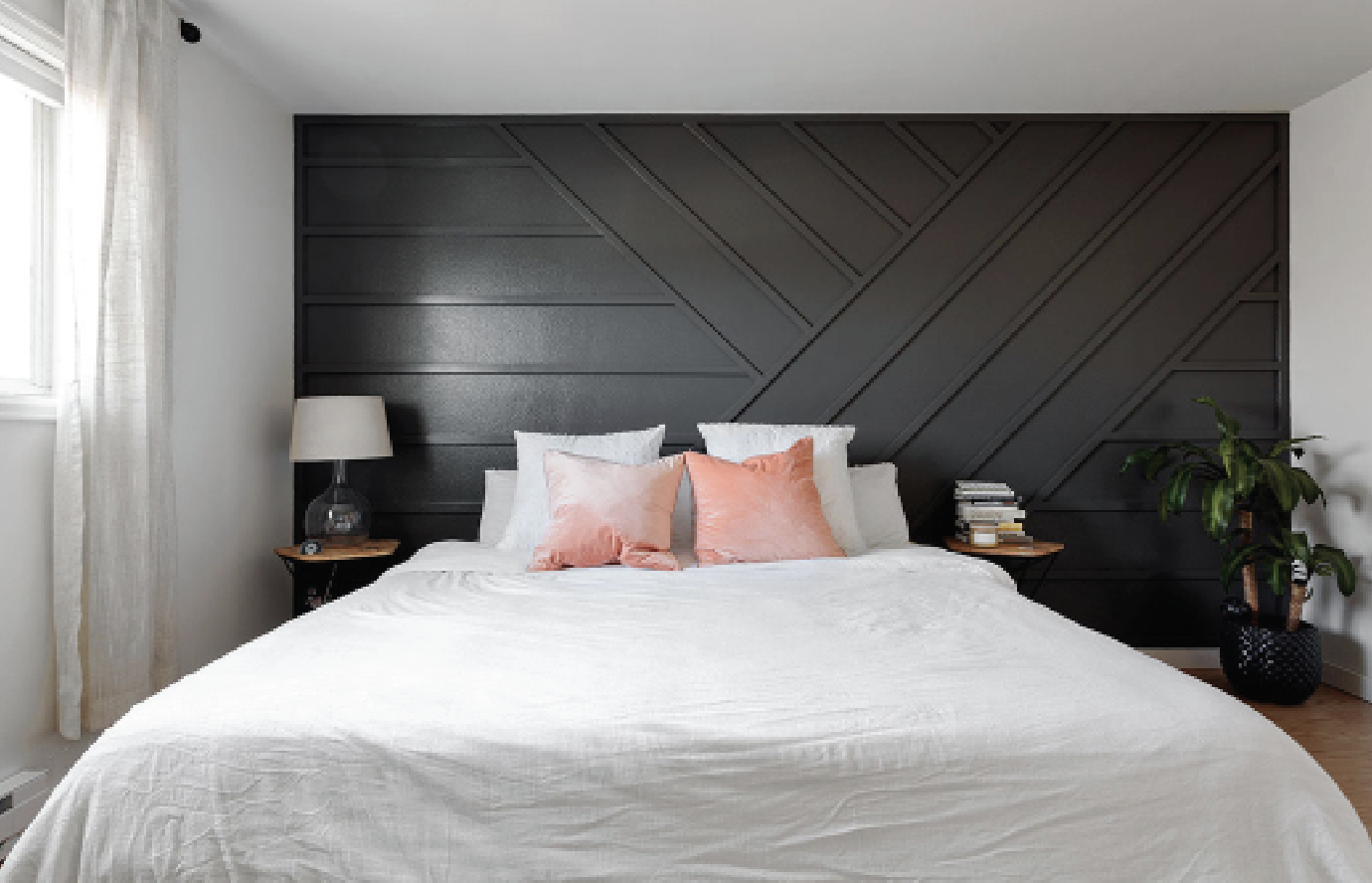
For our bedroom, we really wanted to create a relaxing space that we could unwind and reset in after a stressful day of so many unknowns. The geometric accent wall that we designed is really the wow factor of our space. These types of accent walls are quite trendy right now, partially because they are fairly easy to do on your own, but also because they help elevate your space for a relatively low cost. For our room, we went with a playful design to help spruce things up a bit. Once we had our style locked down, the project was fairly easy to execute and we were able to crank it all out in one weekend.

The white box was not cutting it for us anymore so we started drafting up ideas.

Our home was built in the 1970s and hadn't been updated since the 90s. When we moved in the larger projects obviously took priority, so our poor little bedroom was neglected. For the longest time, it was just a bland box with a bed in it. Functional, but not too exciting to look at. However, once lockdown hit and we were forced to spend more time at home, every single room in our house became that much more important. 

Materials - $150
Labor - Time
One weekend of time! 
PAINT COLOR is Peppercorn by Sherwin Williams

 
Screen Shot 2021-05-20 at 6.32.57 PM.png
 

For more remodel inspiration, checkout the first two editions of our magazine here.

How appraisers value homes in a hot housing market

 
Screen Shot 2021-05-20 at 7.44.32 PM.png
 

Robin Sheridan, a real-estate broker with Compass Washington, recently listed a three-bedroom home in Seattle for $795,000. The 76-year-old brick home had what Sheridan considered a “funky layout,” with two rooms added to the back that didn’t quite integrate into the flow of the home. Still, they functioned well as office spaces.

Sheridan received 29 offers on the property, which went pending within five days – and sold for $1.013 million, or 27.4% over the list price.

As anyone involved in the residential real-estate market knows, bidding wars – and contract prices exceeding the list price – are the norm today in many markets around the nation.

Sheridan’s listing appraised at the contract price, and the deal went through without a hitch. But how do appraisers value a home in a market where prices are escalating rapidly – and where nearly two-thirds (64%) of listed homes faced bidding wars in March, according to Redfin, due to low mortgage rates and a severe shortage of homes for sale?

“The challenge is that the sales data you’re looking at is dated,” said Shawn Telford, chief appraiser at CoreLogic. “While the comparable sale might have closed three months prior to the appraisal, it went under contract before that, and market conditions five months ago were different than they are today. That’s where appraisers put on their thinking caps and dig in and do their research on how they might adjust the comparable sale they’ve selected to account for current market conditions.”

Indeed, time adjustments are a valuable tool that appraisers use to reflect changing prices in the local housing market. “They might look at the last three to six months of sales activity – or longer – in a defined market and try to extrapolate what the trend is,” Telford said. “If home prices increased month over month by 1%, they can use that pattern to support an upward adjustment to the comparable to accurately reflect what the subject property might be doing.”

Even in the best of times, there is an inherent lag in the system because often, counties are backlogged and slow to record deeds. So, appraisers often use MLS data, rather than deed records, as the data tends to be fresher.

According to GSE guidelines, Fannie Mae and Freddie Mac require a minimum of three comparable sales as part of the sales comparison approach. Appraisers may submit more than three comparable sales, including pending sales or current listings, to determine the housing market trends in the neighborhood and to justify their opinion of market value – and they must include an explanation of their conclusions in the appraisal report.

“It’s more important than ever in this market to utilize your writing skills,” said Warren B. Boizot III, president of BLG Appraisal Group in Denver. “Remember that the end reader of your appraisal report – the underwriter – is not in your market, so you have to explain what’s going on. It’s crucial because if I just throw three comps in there and don’t tell them what’s going on in a crazy housing market, the appraisal is not going to fly.”

Boizot routinely interviews listing agents to get more information surrounding the sale, such as how many showings there were and how many offers came in. “If there were five other people willing to pay the contract price, then that goes to show it’s not just a pie-in-the-sky number,” he said. “That’s all good information that I’ll include in the report.”

One recent example: Boizot appraised a 2,400-square-foot home on the outskirts of downtown Denver. About 65 years old, the home was listed for $370,000. It spent four days on the market, had 202 showings and received 56 offers, 55 of which were at or above list price. The home ultimately sold for $477,000, or $107,000 over the asking price. Although the appraisal came in at just $431,000 – well-supported by the data, Boizot said – the deal closed.

“Realtors believe it is the job of the appraiser to get to that crazy number, but it’s not,” he said. “I’m there to give a non-biased, third-party opinion on what I think the home is worth based on my expertise and knowledge. Sometimes that crazy number is reachable, but sometimes it’s not there and it’s not my job as an appraiser to get there.”

Other tools used by appraisers in housing markets where closed sales may not be the most accurate indicator of value due to rapidly-rising prices include pending sales and listings. Pending sales are not public knowledge, and brokers often will not release a sales price until the deal closes. But they might indicate if the property sold for above the listing price.

This is where being a local appraiser matters. “If you’re immersed in a local market – you’re not driving all over the state – then you pick up data through your own experience,” said Jonathan Miller, president and CEO of Miller Samuel, an appraisal firm in New York City. “It’s not just getting the price. In this current frenzy, you need to know the story behind the sale.”

For example, if a property came on the housing market and sold within 48 hours with five backup offers, it’s a good assumption that it sold for at least the list price, he said.

Miller echoed Boizot’s sentiments about the role of the appraiser, particularly in a frothy housing market.

“The appraisal gap as a catchphrase is a bit dangerous,” he said. “The default assumption is that the appraiser is wrong, as opposed to being a neutral market benchmark on what’s going on. When we get into these frenzied periods, appraisers are the only party who don’t have skin in the game, but they become the focus of attack. It shouldn’t be on them as much as it is.”


For more valuable information like this, subscribe to Housing Wire.

If there is a home that you would like more information about, if you are considering selling a property, or if you have questions about the housing market in your neighborhood, please reach out. We’re here to help.

Search Homes in Colorado

Search Homes in Oklahoma

82,338 Great Reasons to Buy a Home Today

 
vu-anh-TiVPTYCG_3E-unsplash.jpg
 

The financial benefits of buying a home as compared to renting one are always up for debate. However, one element of the equation is often ignored – the ability to build wealth as a homeowner.

Most experts are calling for home prices to continue appreciating over the next several years. The most recent Home Price Expectation Survey, a survey of over one hundred economists, real estate experts, and investment and market strategists, expects home appreciation to increase as follows:

  • 2021: 6%

  • 2022: 4.5%

  • 2023: 4%

  • 2024: 3.6%

  • 2025: 3.5%

Using their annual projections, the graph below shows the equity build-up a purchaser could earn, using a $350,000 home as an example:

A homeowner could increase their net worth by over $80,000 in five years. That’s an average of $16,000 annually. That number should be in any equation determining the financial benefits of owning a home compared to renting.

Bottom Line

Homeowners are going to make a substantial amount of money in home equity over the next five years. If you’re ready to buy a home, talk with a real estate professional today so you can enjoy this great benefit as well.

Learn more.

Related Links

If there is a home that you would like more information about, if you are considering selling a property, or if you have questions about the housing market in your neighborhood, please reach out. We’re here to help.

Search Homes in Colorado

Search Homes in Oklahoma