Tips for Hosting Your First Virtual Holiday Party in Your New Home

 
element5-digital-fuZWqL1C2rM-unsplash.jpg
 

The halls are decked, the punch is poured, the festive scent of wintry pine hangs in the air.

You may have just moved into a new house, but you’re a pro—and you’re already ready to host your first holiday party. Your first virtual holiday party, that is.

If you’re disappointed that you can’t physically welcome friends and family into your new home to show off the space and spread some cheer, don’t be. You can host a pretty fantastic fête online. And when you stop to think about it, you’re actually lucky, because, really, who can move all of their physical belongings to a new place, set them up, and be party-ready within a few weeks? No mere mortal, we say.

Plus, if there’s anything 2020 has shown us, it’s that your internet connection is highly important. If you don’t have speed and reliability, your ability to do everything from joining a work meeting to birthday toasting a friend to visiting grandma is compromised. When you move to a new house, you have a chance to make your internet work better for you from Day 1 and stay connected more easily. Switching to the Verizon Fios 100% fiber-optic network or transferring your current Fios service before you move will mean your life is smooth sailing from here on out—at least when it comes to anything digital. (We’ll leave quandaries like space-saving interior design and actually keeping your succulents alive to the pros.)

But for now, let’s get back to your soiree: Gather ‘round (the screen) and listen up. We’re about to share a formula for the coziest virtual party you can imagine, one that comes together easily and will let you show off your new home—and your hosting skills—in style.

4 Weeks Before: Write out your shopping list

Welcoming people into your home requires all sorts of supplies; welcoming people onto your screen requires fewer—but they’re arguably more important. First things first, you’ll need a super-fast, super-stable internet connection. Typically, that’s a fiber-optic network. (If your new house is already wired for Fios, you can even set up your network without a technician.) Planning to take everyone on a full tour of your new abode and yard? Consider ordering a network extender. Next on the list is a smartphone, tablet, or laptop with a video camera, which we’re sure you already have, so let’s think bigger. If you buy a streaming devicecompatible with your equipment, you can stream your guests right to your TV, which is much better than staring at a tiny screen all night. Once the party’s over, it won’t go to waste; cast Fios TV or any other service from your phone to your flat screen—which looks quite nice on that wall above the fireplace, if we do say so ourselves.

3 Weeks Before: Get your guests on the same (musical) page

You’ve set the date and found just the right snowy GIF for your email invite. Before you hit send, consider the biggest mood-setter for any gathering: the tunes. Are you going with a classical vibe? A holly-jolly, jingle-jangle mood? Something more dinner-party chic? Start putting together a playlist and streaming it on your Bluetooth speakers as you’re arranging and rearranging your new furniture to make sure it’s The One. Send out a link with your digital invite. If you’re too busy settling into your house to play DJ, ask your guests to share a few songs when they RSVP, then simply put the songs together and send a link before go-time.

2 Weeks Before: Plan your happy ending

No seasonal celebration is complete without sweets. Before your bash, we suggest binge watching plenty of baking shows for inspiration. (You can start watching TV with the Fios TV app as soon as you sign up for service, even if you haven’t moved yet.) Mail a recipe for a simple dessert like sugar cookies along with sprinkles or icing so you can all share the same treat the night of the party.

1 Week Before: Announce your 1st Annual Cheeseboard Contest

If they were coming to your house, they’d be bringing hors d'oeuvres anyway! Challenge your revelers in advance to create their version of the best cheese or charcuterie board ever. (There are plenty of social media accounts you can scroll for inspo.) During appetizer hour, each household’s fromage enthusiast can reveal their creation—before eating it, of course. Who will be crowned the Big Cheese? Send an online poll through your video platform for anonymous voting. Trust us: This one’s likely to get spirited, even if there’s no, well, cheddar on the line.

5 Days Before: Create a custom scent

As you may remember from your recent adventures in real estate, there’s a reason open houses smell like freshly baked cookies and clean laundry. Real estate agents understand there’s truly no smell like home. Put the same principle to work for your affair. To make everyone feel like they could be in the same space, send a suggested fragrance combination to simmer on the stove: A few sprigs of rosemary along with lemon slices, orange zest, and a splash of vanilla extract smells about as close to an enchanted forest as you can get this side of Narnia. Another place you can find that scent? Online. Consider ordering premade scent packets to fill the simmering needs of a less-than-crafty crew.

3 Days Before: Arrange your table

Your cooking prowess won’t be on display, but your hosting skills will be. If you’re planning to parody a sit-down feast, share a digital template for place cards that your guests can print out so your tablescapes all look similarly tantalizing. A seasonal decoration or ornament also would be lovely. If kids are involved, send one they can print out and color in.

1 Day Before: Download your games

Just like an in-person event, no virtual function is complete without an amusement or two. Luckily, online games abound. All you need to decide is which ones you’d like to play: Is your group the printable scavenger-hunt sort? Or would they rather race to figure out what carol is represented by a group of emojis? Maybe you’d like to go head-to-head in a battle of holiday movie trivia, team up for Christmas charades, or play Hanukkah-themed bingo. Whatever your group’s energy level, there’s a game for that.

Day-of: Put your equipment in place … and relax

Sure, you may want to arrange your speakers or webcam before logging on, but that’s pretty much your only day-of task. The best part of a virtual party? By the time it rolls around, there’s no need for last-minute errands or panicked shenanigans (those fancy guest towels for the powder room never seem to find themselves, do they?). So sit back, relax, and stay away from the cheeseboard; you’ve got a chance to bring this thing home.

To read more, go to Realtor.com

Related Links

Search homes in Colorado
Search homes in Oklahoma

How Oklahoma Became the Nation’s Hottest Weed Market

image.jpg

Oklahoma entered the world of legal cannabis late, but its hands-off approach launched a boom and a new nickname: ‘Toke-lahoma.’

One day in the early fall of 2018, while scrutinizing the finances of his thriving Colorado garden supply business, Chip Baker noticed a curious development: transportation costs had spiked fivefold. The surge, he quickly determined, was due to huge shipments of cultivation supplies—potting soil, grow lights, dehumidifiers, fertilizer, water filters—to Oklahoma.

Baker, who has been growing weed since he was 13 in Georgia, has cultivated crops in some of the world’s most notorious marijuana hotspots, from the forests of Northern California’s Emerald Triangle to the lake region of Switzerland to the mountains of Colorado. Oklahoma was not exactly on his radar. So one weekend in October, Baker and his wife Jessica decided to take a drive to see where all their products were ending up.

Voters in the staunchly conservative state had just four months earlier authorized a medical marijuana program and sales were just beginning. The Bakers immediately saw the potential for the fledgling market. With no limits on marijuana business licenses, scant restrictions on who can obtain a medical card, and cheap land, energy and building materials, they believed Oklahoma could become a free-market weed utopia and they wanted in.

Within two weeks, they found a house to rent in Broken Bow and by February had secured a lease on an empty Oklahoma City strip mall. Eventually they purchased a 110-acre plot of land down a red dirt road about 40 miles northeast of Oklahoma City that had previously been a breeding ground for fighting cocks and started growing high-grade strains of cannabis with names like Purple Punch, Cookies and Cream and Miracle Alien.

“This is exactly like Humboldt County was in the late 90s,” Baker says, as a trio of workers chop down marijuana plants that survived a recent ice storm. “The effect this is going to have on the cannabis nation is going to be incredible.”

Oklahoma is now the biggest medical marijuana market in the country on a per capita basis. More than 360,000 Oklahomans—nearly 10 percent of the state’s population—have acquired medical marijuana cards over the last two years. By comparison, New Mexico has the country’s second most popular program, with about 5 percent of state residents obtaining medical cards. Last month, sales since 2018 surpassed $1 billion.

To meet that demand, Oklahoma has more than 9,000 licensed marijuana businesses, including nearly 2,000 dispensaries and almost 6,000 grow operations. In comparison, Colorado—the country’s oldest recreational marijuana market, with a population almost 50 percent larger than Oklahoma—has barely half as many licensed dispensaries and less than 20 percent as many grow operations. In Ardmore, a town of 25,000 in the oil patch near the Texas border, there are 36 licensed dispensaries—roughly one for every 700 residents. In neighboring Wilson (pop. 1,695), state officials have issued 32 cultivation licenses, meaning about one out of 50 residents can legally grow weed.

Keep reading on Politico.


If there is a home that you would like more information about, if you are considering selling a property, or if you have questions about the housing market in your neighborhood, please reach out. We’re here to help.

Search for Homes in Colorado

Search for Homes in Oklahoma

The average down payment on a house is smaller than you think

image.jpg

Down payments are 5.3% of purchase price on average

When buying a house, many Americans consider a 20% down payment to be the norm, the ideal amount of money to put down to get a conventional mortgage with no private mortgage insurance and to keep monthly payments reasonably affordable. However, a majority of homes are actually bought with far less than 20% down. What is the average down payment on a house?

Lodestar Software Solutions’ loan estimate calculator has collected over 600,000 loan cost estimates from across the U.S. containing detailed information about home prices, loan amounts and locations.

Analyzing this data set, the median down payment amount in the U.S. in 2018 was $15,490, which is 5.37% of the median price of $270,000. In the previous year, 2017, the median down payment was $15,150, which is 6.06% of the median price of $250,000.

Since the median indicates the middle value if all the prices were lined up in order, this means that half of the searches run in LodeStar’s calculator were for loans with a down payment of less than 5.37%.

Down payment trends over time

Over the past two years, a median down payment of 5% to 6% is not out of the ordinary. Comparatively, historical data from ATTOM Data Solutions shows that over the past 18 years, the median down payment has consistently remained less 10%, fluctuating between 9% and just under 3%.

“For many Americans, accumulating a 20% down payment is simply too burdensome,” Res/Title National Sales Manager Brooke Solomon said. “In some of the more expensive markets, it can take a decade or more for a home buyer with an average income to save for a 20% down payment. For others who already have the money, they often choose to use it in other ways such as savings for retirement or paying off other loans.”

Average down payment on a house varies by state

While the median down payment is consistently in the single digits, down payments vary considerably depending on geographical location, both as a dollar amount and as a percentage of home price.

The differences in home prices across and states and different percentages put down in each state mean that the down payment amounts also have a wide range. California, an expensive state with a median purchase price of $570,000, has a median down payment amount of $115,000, 20% down, while at the low end, the median home buyer in South Dakota buys a $190,000 home with a down payment of $5,250, or 2.57% down.

Factors affecting average down payments

This data raises the question of why the average down payments on a house vary so much by state. To get a loan with a small down payment, buyers have several different options. The Federal Housing Administration insures loans with as little as 3.5% down, although there are loan amount maximums which may not be enough in high-cost real estate markets such as Manhattan.

The Department of Veterans Affairs offers loans with as little as 0% down to veterans, but these are not available to general consumers. The Department of Agriculture offers loans in rural or suburban areas with 0% down but has income restrictions as the program is meant to help borrows of modest means.

Finally, Fannie Mae and Freddie Mac offer conventional 97 loans with a 3% down payment, but there is a strict loan limit amount of $424,100 and only single-family homes are eligible, meaning that these programs are less useful in urban and high-cost areas.

“It is incredibly important for mortgage and real estate professionals to educate consumers on the amount to save for down-payments, especially first-time homebuyers,” said Peter Benjamin, Lafayette Federal Credit Union senior vice president of mortgage lending. “Having to pay even a few thousand dollars less than they thought can translate into them buying a new home months ahead of time.”

Taking into account the different options home buyers have for obtaining a loan with a small down payment, some possible variables at the state level that could affect median down payment percent are average home price, percentage of single family homes, homeownership rate, and average household income.

What this means

The median down payment in the United States is closer to 5%, rather than 20%, so there are plenty of opportunities for homebuyers to buy with little money down, although some prospective homebuyers might not be aware of these options. While a higher down payment removes the need for mortgage insurance and lowers monthly payments, a lower down payment can allow homebuyers to spend less time saving for the down payment or can free up the money for other investments or debt reduction.


If there is a home that you would like more information about, if you are considering selling a property, or if you have questions about the housing market in your neighborhood, please reach out. We’re here to help.

Search for Homes in Colorado

Search for Homes in Oklahoma

Castropignano: The latest Italian village to sell $1 houses

Home deal: The town of Castropignano, in Italy's southern Molise region, is the latest to start selling off homes for about $1.

Yes, Italy's €1 homes are back -- and this time, what's up for grabs is a collection of houses in the southern region of Molise.

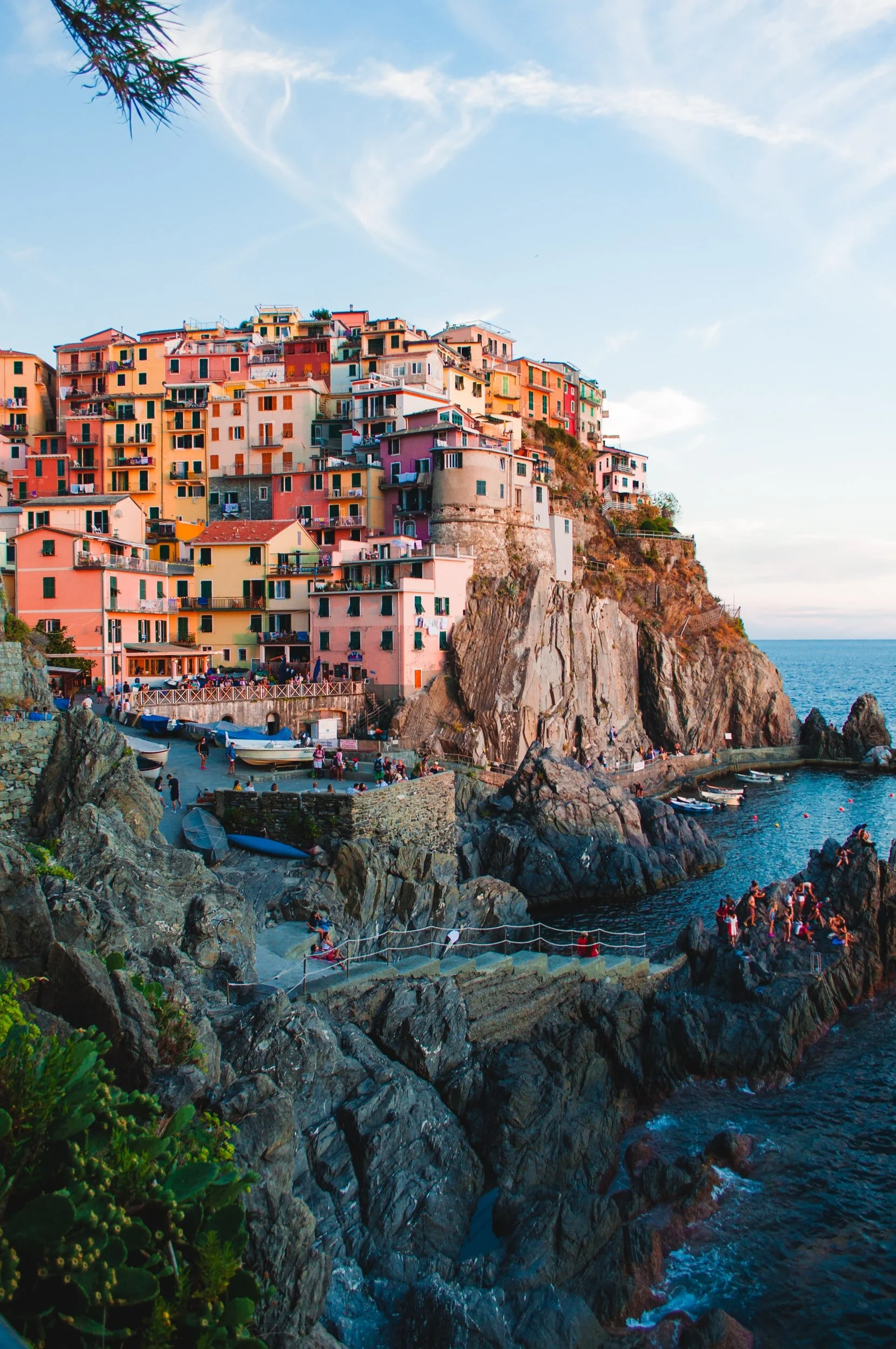
Castropignano -- a village topped by a ruined medieval castle, 140 miles southeast of Rome -- is the latest community to offer up its abandoned buildings to newcomers.

Winter’s all about getting all cozy inside while Mother Nature turns everything into Popsicles outside, and it doesn’t get any cozier than Bearaby.

It follows in the steps of Salemi in Sicily and Santo Stefano di Sessanio in Abruzzo, both of which have launched initiatives to encourage newcomers in the last month.

However, unlike most of the schemes, which auction off dilapidated buildings from €1, or $1.20, Castropignano is doing things differently.

There are roughly 100 abandoned buildings here, but rather than sell to the highest bidder, mayor Nicola Scapillati wants to match interested parties with the right house for them.

"The scheme here works a bit differently," he says.

"I'm moving along two parallel paths, reaching out both to potential buyers and old owners at the same time, step by step, to make demand meet supply.

"I don't want my town invaded by a property stampede or to turn into the latest housing speculation deal."

A tailored operation

The village sits in the Apennine Mountains

In fact, instead of going through the authorities, Scapillati wants interested parties to email him direct.

"I welcome anyone who would like to purchase a new home here to email me directly (nicola.scapillati@me.com) with a detailed plan of how they intend to restyle and what they would like to do with the property -- make it a home, B&B, store, or artisan shop.

"They should also list any requirements they may have, like access for people in wheelchairs. The village is tiny and cars can't navigate the narrow alleys and steps."

The more specific the request, the easier it will be to find the appropriate dwelling and liaise with the current owner.

"This a targeted, tailored operation," he adds. "People need to know what exactly they're signing up for."

To make it all the more official, Scapillati has sent notices to Italian embassies abroad, alerting them to the project.

So what's the catch? There are, of course, conditions. Buyers must renovate the property within three years from the purchase and cough up a down payment guarantee of €2,000 ($2,378), which will be returned once the works are finished.

Making the village safer

Owners have been told to renovate their abandoned houses, or the council will take them

The project launched in October, when the authorities told the owners of abandoned properties that if they didn't renovate them themselves, the town would take ownership of them for safety reasons.

So far, many owners have already agreed to hand their properties over, keen to let go of houses it would cost money to demolish.

Scapillati is confident that at least 50 will join. If they don't, the town council will expropriate the houses of those who don't respond, and place them on the market.

In the meantime, dozens of interested people from Europe have already contacted him, asking to buy the houses. And he hopes that, with their help, the village will not only regain its joie de vivre, but also become safer.

"It hurts me to see the beauty of our ancient historical center scarred by crumbling houses, slowly decaying," says the mayor.

"It's sad and dangerous. Without renovation these buildings are a threat. They could collapse any minute -- it's also a matter of making the village safe".

Scapillati -- whose family emigrated to work in Italy's richer north -- felt the pull of his origins as an adult. He returned on a mission to preserve the architecture of the village, in the hope that it can keep their traditions going.

"I want to stop the decline in its tracks, keep the village flame alive. I'm driven by passion and love for my hometown," he says.

And although Castropignano isn't exactly a lively place -- it has just one restaurant, a bar, a pharmacy and a few B&Bs -- he thinks it has a sleepy allure.

"Here we've got nothing grand to offer except peacefulness, silence, pristine nature, oxygen-rich air, great views and fantastic food, ideal to detox from the daily stress. It's not buzzing with life, that I must say, but it's peaceful and simple", he adds.

Today, there are barely 900 residents, down from 2,500 in the 1930s. After World War II, families emigrated in search of a better future; then, from the 1960s, the young people started moving to larger towns to study and find work.

Today, 60% of residents are over 70 years old.

A starry past

But Scapillati would like to recover the glory of past days when Castropignano was a flourishing feudal center buzzing with artisans, merchants and travelers crossing Italy, protected by a powerful duke. In fact, the village was once renowned for its artisan shoemakers and cobblers.

Located on a rocky hilltop in Italy's central Apennine mountains, Castropignano is built over an ancient settlement of the Samnites, an ancient Italic people, who used it as a defensive lookout against the Romans -- who eventually defeated them.

The Samnites built fortresses and settlements in the surrounding countryside. In the valley below the village, alongside ruined ancient Roman villas is an enormous stone monument built by the Samnites. Half an hour south are the magnificent ruins of Saepinum, a town founded by the Samnites and then taken over by the Romans, whose city walls, theater and temples still exist.

This is the deepest part of Molise, a region of Italy largely unknown to tourists, sitting east of Lazio and between Abruzzo and Puglia on the southern Adriatic coast.

Related content

We bought a $1 house in Italy. Here's what happened next

The lack of visitors has helped to preserve its rural authenticity, making Molise one of Italy's best kept secrets.

Castropignano's abandoned houses are located in the historical center, above a medieval castle with no roof -- it was bombed during the war and many of its stones were used to build the houses which are now on sale.

A maze of winding, cobblestoned alleys, gargoyle-covered arches and passageways, connects the castle to the village's upper residential layers.

Another group of houses for sale is in the clifftop hamlet of Roccaspromonte, perched on a high bluff two miles away. Near it is the Santuario della Madonna del Peschio, a ruined forest church now open to the elements with the sky as its rooftop and oak trees as walls.

The nuts and bolts

One resident says the stones are 'alive' here

So what's up for grabs? Scapillati says that most of the buildings for sale are in decent shape, although they have unhinged doors, peeling paint and are partly covered in vegetation.

He reckons that a thorough renovation will start from around €30,000-40,000 ($35,000-48,000). Italian taxpayers get tax credits for eco-friendly and anti-seismic work.

But there's a lot of potential. The architecture is a juxtaposition of styles -- richly ornate portals at the entrance of simple cottages. And many houses have panoramic views of the translucent Biferno river that runs through the valley.

Cecilia Vampa, a pensioner from Rome who fell in love with Castropignano during her university years, has restyled a few dwellings here. She says the stones are alive.

"There's a poetry woven in the way they've been chiseled, through artistry and hard work. These stones tell a story, I fell in love with them. They stir emotions."

Vampa says she likes the tight-knit simple community and welcoming locals. In Castropignano, she says, she has found "the lost rural peace of her adolescence."

Ghosts and parades

Even today, the village seems to hark back to an earlier era. Back in the day, families would sleep on the upper floors while the kitchen and living areas were on the second level. Domestic animals such as hens, and donkeys -- the sole means of transport -- were kept in the stables on the ground floor.

An ancient shepherd trail to move livestock between their summer and winter pastures cuts through the village -- it's still used today to move grazing sheep and cows, as well as bike tours, walks and horse rides.

Buying a $1 Italy dream house just got even easier

And each summer, the villagers celebrate the "Dodda" -- a re-enactment of the custom whereby young girls about to marry offered their dowry to the husband. Women ready to tie the knot parade through the streets in traditional white robes carrying baskets of linen, blankets and other bridal items made by their grandmothers. It's a symbolic gesture believed to bring good luck.

There are even spooky tales of enchanted forests packed with dwarfs and fairies that sing sad chants at midnight.

Gastro treats and beach retreats

Today, it's the food that will persuade those on the fence to move to Castropignano. Local specialities include succulent lard-stuffed soppressata sausages, cold cuts and cotenna (pork rind) -- said to be given an edge thanks to the fresh air.

Cavatelli are screw-shaped pasta served with pork ragu sauce, while 'mbaniccia is a special soup cooked with corn "pizza" (chunks of stale bread). The typical cheese in the area is the oozy caciocavallo, which is tied with a knot and hung from a cord, giving it a distinctive teardrop shape.

Premium black and white truffles are found in the surrounding countryside, while the local vineyards produce Molise's best known red wine, Tintilia.

Got a sweet tooth? Get ready to feast on savory jams, Christmas cakes stuffed with candied fruits called Pigna, and almond and honey biscuits to dip in wine.

Day trips to both Rome and Naples are possible, since Castropignano is situated between the two. It's also within reach of the Adriatic coast's famous beaches, as well as the snow-capped mountains of ski resort Campitello Maltese. Ferry boats to the unspoiled Tremiti islands -- a hotspot for Italian tourists -- depart from Termoli, an hour's drive away.

Keep reading and see photos + maps on CNN.com


If there is a home that you would like more information about, if you are considering selling a property, or if you have questions about the housing market in your neighborhood, please reach out. We’re here to help.

Search for Homes in Colorado

Search for Homes in Oklahoma

The ‘Indestructible’ Plant To Give People Who Killed All Their Other Plants

If you love to be surrounded by greenery, but don’t love doing the necessary work to keep plants alive, listen up.

Between watering, pruning, and removing the occasional pest, caring for plants requires… a lot of care. If you have someone on your gift list who recreationally kills plants, now is the time to give them something that’s very hard to snuff out. Jesse Waldman, director of marketing and e-commerce at Pistils Nursery in Portland, Oregon, says ZZ plants are super hardy, making them the best plant to give as a gift.

“Zamioculcas zamiifolia, aka ZZ Plant, is our go-to beginner’s houseplant,” says Waldman. “Like Sansevieria, they can handle very low light and their tuberous roots hold plenty of water, making them great choices for folks who often forget to water or go out of town for long stretches of time.”

Joan Mazat, head of new product development for Ball Horticultural Company in West Chicago, Illinois, says that not only do ZZ plants retain water, but they actually prefer to dry out between waterings, making them almost indestructible. “If their owner is pressed for time and tends to forget to water this is a good plant for them—it’s very forgiving.”

In addition to being super hardy, ZZ plants are also gorgeous. “We love their glossy, dark green leaves,” says Waldman. ZZ plants are sure to shine in any space.

To ensure the plant your gifting is healthy, Walman explains that it’s best to buy from a nursery instead of a big box store.

With a plant that’s actually alive, your recipient can reap all of the many benefits that plants have to offer. They’re soothing, can help us build compassion, and even help you to better focus. Carla Manly, PhD, clinical psychologist and author, caring for plants can even be a form of meditation.

“One of the things that I believe that gardening does for us, whether it’s indoors or outdoors, is giving us the opportunity to focus on caring for the self while you’re caring for something else,” says Dr. Manly. “You have this relationship with the plants—you’re watching it grow and plants give lovely reinforcement. Because if we’re doing it in a way that’s healthy for the plant, giving it enough water and fertilizer, it rewards us by growing.”

Learn more at Well + Good


If there is a home that you would like more information about, if you are considering selling a property, or if you have questions about the housing market in your neighborhood, please reach out. We’re here to help.

Search for Homes in Colorado

Search for Homes in Oklahoma