Despite hardships from pandemic, 40% of Latinos still plan to become homeowners: survey

Despite the economic volatility, 35% of Latino households reported “expecting to be better off economically a year from now”

The American dream of owning a home remains resilient in Latino communities despite high unemployment, high COVID-19 infection rates, and greater loss or reduction of income compared to non-Hispanic Whites, according to a new survey.

The August survey from the National Association of Hispanic Real Estate Professionals found that 40% of Latinos who do not currently own a home have plans to buy within the next five years, the highest among any demographic.

According to the survey, Latino households were twice as likely (18%) as non-Hispanic White households (9%) to report having had at least one household member laid off due to the pandemic. That number reached its peak in April when Latino unemployment sat at 18.9% – the highest recorded since the great depression, according to the Bureau of Labor Statistics.

Undeterred by the economic uncertainty, 47% of Latino renters who were able to continue saving during the pandemic reported the possibility of home ownership as their main motivation, higher than any other demographic of renters. The survey also noted evidence that predominantly Hispanic neighborhoods, or neighborhoods with a Hispanic population of 50% or more, saw more than double the amount of first-time home buyer activity than that of the rest of the country between the second quarter of 2019 and the second quarter of 2020.

report by the Latino Donor Collaborative found that Latino GDP grew 72 percent faster than non-Latino GDP over the entire period from 2010 to 2018. However, the report found that the state of Latino debt was slightly higher than its non-Hispanic White counterparts in both primary residence mortgages as with regard to investment properties.

The HWP survey also noted data that Latinos are simultaneously more likely to have been considered essential workers (21%) during mandatory stay at home orders while 46 percent of respondents (compared to 42% of non-Hispanic Whites) are reacting to COVID-19 related reduction in incomes by drawing on savings.

Despite the economic volatility, 35% of Latino households reported “expecting to be better off economically a year from now,” compared to 23% of the non-Hispanic White population.

In terms of optimism, Latinos aged between 35 and 44 were considered to be the group with the most favorable economic outlook within the next year, at 39%.

But the greatest number of incoming homebuyers will likely be slightly younger, according to the survey – the median age of Latinos being 29.8 or 8.6 years younger than the general population and nearly 14 years younger than their non-Hispanic White counterparts.

While Latino homeownership boasts great potential, NAHREP’s survey cited a 16-percentage point homeownership gap between Latinos and non-Hispanic Whites.

“Today, the wealth gap between Latinos and non-Hispanic White households threatens the long-term viability of the U.S. economy, particularly as it creates downward pressure on demand growth,” the survey said. “According to the Survey of Consumer Finances (SCF), in 2016, non-Hispanic White households held $8.30 in wealth to every $1 for Latino households, a 20% gap reduction than three years prior.”

The NAHREP demonstrated three methods for tripling Hispanic median household wealth by 2024 and helping the Latino community gain in terms of homeownership:

  • An increase in housing inventory especially in the stock of affordable homes

  • Strong Community Reinvestment Act (CRA) and affordable housing goals that are met through programs that truly serve communities and homebuyers

  • Practical consumer protection that reduces risk for predatory activity while simultaneously promoting fair housing and improving credit access.

While barriers, these goals are not unachievable. The National Association of Realtors saw the median home price jump 8.5% in August year-over-year, however Fannie Mae economists expect single-family housing starts to rise to 933,000 this year to combat inventory pressures.

According to the report the Office of the Comptroller of Currency and the Consumer Financial Protection bureau are making efforts to assist low-to-moderate income borrowers. Most recently the CFPB is moving away from the DTI ratio as a sole determinant of QM. Together with a pricing model and strong fair lending protections, the NAHREP said expanded access to credit opportunities can arise for Latinos.

If you are wondering how current national and global situations might be impacting your property’s value, your neighborhood, or the Real Estate market in general, we are happy to provide more specific information.

If there is a home that you would like more information about, if you are considering selling a property, or if you have questions about the housing market in your neighborhood, please reach out. We’re here to help.

Search for Homes in Colorado

Search for Homes in Oklahoma

Norman, OK + Other US Suburbs That Feel Like Big Cities


Those continuing to work from home and stay (mostly) indoors know one thing: the amount of space you have—and where on the map you live—has been top of mind these past few months.

That’s especially the case for folks living in cities from California to Florida, who once settled down in urban areas to be closer to restaurants, nightlife, museums, and more. Now, according to Zillow, buyers are prioritizing features like indoor and outdoor space, as well as affordability. 

Searching for city amenities and striving for a suburban budget is a tall order. That’s partly why Zillow and Yelp partnered to identify the top 10 U.S. suburbs that feel like big cities. The idea is that urban dwellers might consider leaving their cities for one of these spots in search of slightly less density and more open space—without having to give up the proximity of restaurants or culture.

In big cities, the number of quotes requested from movers has increased, signaling that people are moving or thinking about it more, according to Yelp. In San Francisco, moving quote requests were up by 34 percent, while they’re up 22 percent in New York City and 6 percent in Los Angeles. 

“At Yelp, we’re seeing consumer interest and requests for quotes for categories like movers, packing services, and mortgage lenders increase in major metro areas, compared to the same time period last year,” said Tara Lewis, a trend expert, in a statement.

In addition to those categories, Zillow reported in a recent poll that nearly two-thirds of respondents said they would consider moving if they had the flexibility to work from home as often as they want.

“For city dwellers who don’t want to sacrifice great amenities like restaurants, art galleries and nightlife, but are dreaming of a little more space and a more affordable lifestyle, these suburbs offer a similar variety of great local businesses,” Lewis said. 

To create this list of vibrant suburbs, Zillow and Yelp looked at hundreds of suburbs across the country to highlight 10 with amenities that result in a city-like environment. To narrow down the list, they examined a town’s mix and diversity of businesses, consumer reviews and check-ins, housing affordability compared to the nearest big cities and to the country at large, as well as housing availability.

What’s the number one suburb that feels like a city, you ask? Hialeah, Florida, which is the sixth largest city in Florida with 233,339 residents. Hialeah possesses a classic South Florida vibe but for a lot less money, as homes there are nearly 20 percent less expensive than in Miami. 

“They call Hialeah the city that progresses, and it’s a city that has progressed a lot,” said Sergio Betancourt, a Zillow agent with Laurie Reader Real Estate in South Florida, in a statement. “Hialeah feels authentically Cuban with local shops, bakeries and restaurants that all serve the large Cuban population that lives here.” 

In second place is Richardson, Texas, a suburb of downtown Dallas. It has proximity to a slew of activities, including shopping malls and museums, as well as a vibrant food scene. On the West Coast, two suburbs were ranked among the top 10. At number four, Santa Monica is one of Southern California’s most desired places to live. With home values up nearly 7 percent from last year, its close proximity to the beach and amenities and entertainment, make it a hot place to be. Then coming in at number 10, San Leandro’s central location makes it easy to head into downtown San Francisco, Berkeley, and parts of Silicon Valley. Plus, housing prices there are more reasonable, at less than half the median value of homes in San Francisco proper. 

For those on the East Coast, coming in at six, Cary, North Carolina, brings a family-friendly atmosphere while still providing access to nearby cities. For home buyers, new listings in Cary are up 9.1 percent from last year and home values continue to grow steadily, up 2.2 percent from 2019. North of Atlanta, Marietta, Georgia’s typical home values are slightly higher than the city of Atlanta—but less expensive than other nearby suburbs—and has grown 4.3 percent since last year. 

Here’s the complete list of the top 10 suburbs that feel like big cities: 

  1. Hialeah, Florida 

  2. Richardson, Texas

  3. West Valley City, Utah

  4. Santa Monica, California

  5. Norman, Oklahoma

  6. Cary, North Carolina

  7. Marietta, Georgia

  8. Beaverton, Oregon

  9. Tempe, Arizona

  10. San Leandro, California

For more info, visit Apartment Therapy.

search homes in colorado
search homes in oklahoma

Every Home Needs to Prepare for Fall: Use This Checklist

 
scott-webb-obKbq4Z3cuA-unsplash.jpg
 

Spring cleaning gets all the attention, but you need to do a top-to-bottom overhaul when the weather turns crisp as well.

It’s about to get cooler, you’re about to spend more time inside, and if you live anywhere where there’s snow, that first freeze can strike at any time. Best be prepared. Here's how ...

IN THE GARDEN
Fall in the garden is all about planning ahead.

  • Remove any dead or dying limbs from the trees 

  • Cut back your landscaping 

  • Bring in the potted plants 

  • Plant bulbs for spring flowers 

  • Fertilize and reseed your lawn 

  • Close the pool 

  • Clean and cover, or store, your patio furniture 

  • Winterize in-ground sprinklers and/or drip irrigation systems 

AROUND THE HOUSE
The best time to prep for the coming weather — be it heavy rains or freezing cold — is while it’s still nice enough out to work in your shortsleeves.

  • Clean out the gutters and downspouts

  • Check all weather stripping around your doors and windows, and replace if needed (Gaps in weather stripping account for up to a 10 percent of your heating bills, according to the U.S. Department of Energy

  • Check the weather seal at the bottom of the garage door 

  • Check the roof and repair any holes or loose shingles; check all flashing and replace any failed sealant 

  • Check exterior caulk, especially at corners of siding and around any entry points for wiring and plumbing 

  • Remove branches hanging over the roof 

  • If you live where it’s cold enough to freeze, turn off outdoor plumbing; disconnect hoses and store them indoors 

  • Fix cracks in your patio or driveway 

  • Fix any exterior paint that is peeling, before the weather makes it worse 

  • Get the windows cleaned (If you’re spending more time inside, make the view as nice as possible) 

INSIDE THE HOUSE
Before you start spending more hours inside, be sure that everything that will make you most comfortable when it gets colder out is in order.

  • Check the fireplace for damage, creosote build-up, and the occasional bird’s nest — and have it cleaned

  • Stock up on firewood

  • Have your HVAC serviced

  • Check all smoke and carbon monoxide alarms — if needed, replace batteries

  • Make a dedicated space for coats, muddy shoes, umbrellas, and all-weather gear

  • Reverse your fans — if they turn clockwise, they’ll circulate the warm air

  • Clean your carpets

  • Break out the humidifier

  • Bring out the cozy bedding and store your summer-weight linens

  • Change your air filters

  • Insulate exposed water pipes, to keep them from bursting

  • Drain your hot water heater

IN THE GARAGE
Out with the summer gear, and in with the snow blowers.

  • Winterize and store the lawn mower and other summer garden tools 

  • If you live in a snowy area, make sure your winter tools have been serviced and are easily accessible 

Related Links

search homes in colorado
search homes in oklahoma

Why Is The Housing Market Thriving During The Pandemic

 
keenan-davidson-1bWHUo-vhJ4-unsplash.jpg
 

The deadliest pandemic in more than a century has failed to derail the housing market because of the lowest mortgage rates ever recorded coupled with a shift in how people use their homes.

“The buyers are coming in because of the low interest rates – that’s the No. 1 reason,” said Lawrence Yun, chief economist of the National Association of Realtors said in an interview with HousingWire. “The secondary demand is coming from the work-at-home phenomenon that has people looking for bigger homes and caring less about commuting time.”

People now see their home not only as a place to live, but as a shelter during a national health crisis, Yun said. It’s also an office and, for families with children, often a part-time school.

Mortgage rates began tumbling in mid-March after the Federal Reserve announced it would buy mortgage bonds and Treasuries to keep credit flowing amid the pandemic. It was similar to a fixed-asset program it created during the financial crisis a dozen years ago.

The average U.S. rate for a 30-year fixed mortgage has been under 3% since late July, as measured weekly by Freddie Mac. When Fed Chairman Jerome Powell announced in March the Fed would purchase bonds, it was 3.65%.

Existing-home sales jumped 25% to a seasonally adjusted annual pace of 5.86 million in July, NAR said in an Aug. 21 report. It was the highest sales level since 2006 and the biggest monthly increase on record. The prior record for a monthly gain was the 21% jump seen in June, according to NAR data.

The supply of homes on the market was the lowest for any July since NAR started tracking the data about five decades ago, Yun said.

In the first months of the pandemic, Yun projected home sales in 2020 would see a 15% decline. After the Fed’s actions began driving down mortgage rates, he changed the estimate to a 7% decline.

Last week, Yun issued his latest monthly forecast that said existing home sales in 2020 likely will total 5.4 million, a gain of 1.1% from last year. Sales of new houses probably will rise 17% to 800,000, Yun said.

“We missed the spring buying season because of the pandemic, but the second half of the year looks quite dazzling,” Yun said.

For more info, visit Housing Wire, and if you’re thinking that now might be the perfect time for you to buy or sell, contact us. We’d love to help.

Related Links

Grandmillennial Style: The Return of Flower Wallpaper


The trend you love to hate is making a strong comeback.

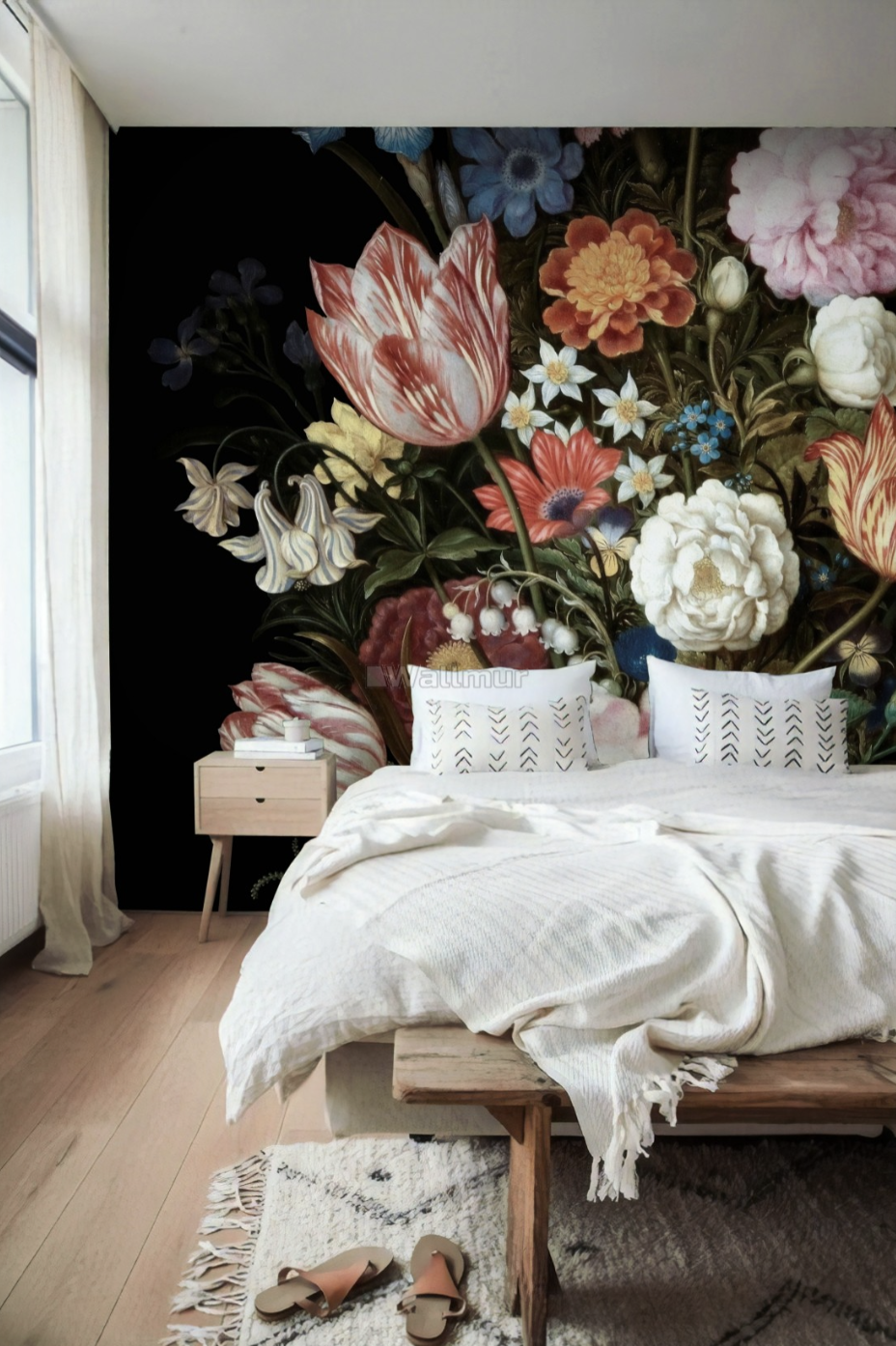
The popular “grandmillennial” style draws design inspiration from trends past, and millennials, who love vintage, are reviving wallpaper. Welcome back to your grandmother’s living room. Floral wallpaper is the central focus of this trend, though a tad updated with larger prints. Just think how pink peonies against a black backdrop can give that floral wallpaper a more modern edge. Floral wallpaper also is being used in smaller doses: You may only spot it in the powder room or as an accent wall in an otherwise neutral room. View the pictures below to see how floral wallpaper is dressing up spaces.

For photo inspiration, go to the National Association of Realtors.

What’s better than the classic floral wallpaper? These dark floral wallpaper patterns from Murals Wallpaper.

The new revolution of dark floral wallpaper allows you to push the boundaries and bury the stereotypes associated with floral designs when it comes to interiors. It’s no longer a tired print, but instead a wallpaper design that’s full of life and excitement. This collection showcases the best of dark floral wallpaper, with elegant flowers in rich dark tones, allowing you to effortlessly style an impactful interior with a luxurious feel.

Dramatic dark florals are a great option for those looking to create a sophisticated interior that’s full of depth and character and these bespoke photographic floral designs will provide exactly that. Photographed in-house using real life flower bouquets, all the tone and beauty of the flowers is captured, creating a breathtaking floral wallpaper that will bring your theme to life, while also remaining dark and daring.

As floral wallpaper makes a comeback with the spotlight on dark floral, it’s now easy to create a striking interior space that combines the sophistication of a floral wallpaper with dramatic dark tones. Both Chloe and Abundance feature delicate pink or purple flowers on a black background, allowing the design to burst out of the wall and in turn transform the space. The contrasting tones make the murals truly versatile, allowing you to style either a mature or more playful space, both offering a modern edge.

The deep layers and tones within this dramatic floral wallpaper collection make for the perfect cosy bedroom theme that’s sophisticated too. Between the deep red tones and refreshing dark green, the designs add layers of texture that will look stunning on your feature wall. The drama of these floral designs allows the mural to speak for itself, meaning you can pair it with quite minimal furniture.

A floral pattern is a great choice when trying to create a dynamic feature wall, and this collection shows how vintage floral can work in almost any room of the house. Style a bespoke kitchen or hallway with these vivacious prints and enjoy the positive energy they circulate through the home.

Related Links

search homes in colorado
search homes in oklahoma