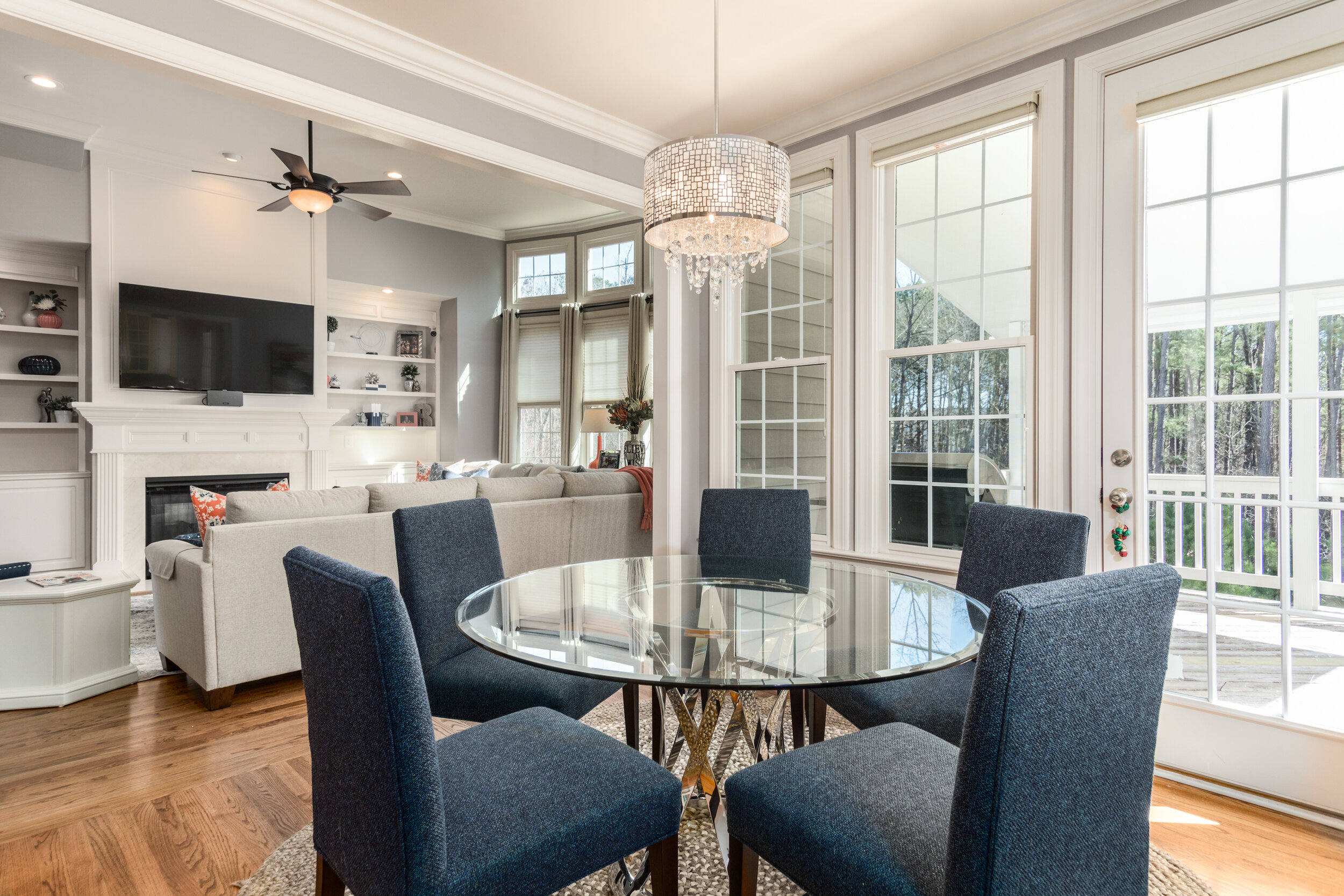
9 Things in Your Bedroom That Are Secretly Stressing You Out, According to Interior Designers

When you think of your bedroom, you (hopefully) think of it as a safe haven where you can relax at the end of a long day - especially if you spent most of that day working in your home office, or at the kitchen table.

But sometimes that space skews more stressful than calming—and that’s often a direct result of your design choices. Some decor options are definitely more stimulating than others, and honestly, others are just plain bad. To troubleshoot, our friends over at Pure Wow asked some of their favorite designers to share the features they would never have in their own bedrooms so you can take notes and figure out what works best for you.

1. CHARGING STATION

“I would never put a charging station or store a lot of wires or wireless gadgets in the bedroom,” says NYC-based designer Robin Henry. “I think you should keep electromagnetic waves to a minimum while you sleep.” Beyond that, it looks super messy to have all those wires clumped together. However, if you absolutely have to have your cell phone next to you while you sleep, Henry recommends storing it in a shungite brick case, which looks sleek and is supposed to help block out electromagnetic fields, or EMFs.

2. LIGHT-UP ALARM CLOCK 

“Light is the biggest distractor when it comes to sleep!” says Henry. She recommends using an old-school alarm clock (like this ultra chic Scandi-inspired option), which will get you up on time without disturbing your sleep cycle.

3. CURIO CABINETS AND “DISPLAY FURNITURE”

“Your bedroom should be quiet and serene, a place to relax and recharge,” says lead designer Maggie Griffin. “Avoid furniture that will clutter your space with display items, like curio cabinets.” Instead, she recommends simple, clean lines with rustic touches, like this soothing lounge chair.

4. GALLERY WALLS

“Tons of pictures on your wall can be a complete eyesore,” says Griffin. “I had a client who hung a photo of their in-laws above the bed—that’s a big no-no. Instead, stick to just a few small framed photos of you and your children, partner, family or friends.”

5. HARSH LIGHTING

Strong lighting definitely has its place, but according to Gen Sohr of Pencil & Paper, the bedroom is not one of them. “Right now, we’re eliminating the harsh lighting from recessed lighting in bedrooms and replacing it with softer, more intimate lighting options,” she says. “Pair pretty bedside lamps with wall sconces and a decorative ceiling fixture for a warmer, more elegant feel.”

6. MATCHING BED LINENS

Get rid of the matchy-matchy old-school bed linens and look to add a pop. “Instead of completely matching bed linens, I prefer to layer in family heirlooms (think your grandmother’s monogrammed pillowcases) or a vintage coverlet—anything that adds a touch of pattern or texture,” says Sohr. “This helps create interest and it just feels much more personal.”

7. BLACKOUT SHADES

“I don’t think there’s a need for bedroom shutters that eliminate all light,” says Sohr. “We love the layered look and versatility of matchstick blinds paired with curtains. This makes for a pretty and functional option, and the curtains can have blackout lining too.” 

8. BARE FLOORS

Almost every designer we spoke with expressed that a bedroom should be cozy and comfy, which means bare floors are an absolute no-no. You may not want wall-to-wall carpeting, but a simple shag rug will do wonders to elevate your space.

9. WORKOUT MACHINES 

“I cannot tell you the number of Pelotons strewn with clothing that I’ve seen in bedrooms!” says Henry. “They are the world’s ugliest coat hangers. Besides, who wants to think about working out when you’re trying to relax?” Instead, she recommends keeping workout machines in another room entirely, if possible. If not, at least keep them as far away from your bed as possible.

So, if you’re finding yourself having a hard time separating work-from-home time from sleep-at-home time, take some time to rearrange - mix up the things in your spaces - use what you already have, but use them better…and treat yourself to a little online shopping splurge if you are able, too. Today’s online order might be next week’s more peaceful rest + happiness in your own cocoon.

Millennials Have More in Common with Their Parents than You Think When it Comes to Home

Are Millennials Becoming Their Parents?

Yes, when it comes to homeownership.

Equally across the generations, almost all boomers (91% ages 56-74 / born approx. 1946-1964), Gen Xers (91% ages 40-55 / born approx. 1965-1980) and millennials (92% ages 24-39 / born approx. 1981-1996) say that owning their own home is important. When it comes to picking a neighborhood, the generations mostly agree:

· Location, Location, Location: Eight in ten (81%) Americans agree that they value the location of their home over the size, with the majority of all generations in agreement: boomers (79%), Gen Xers (79%), millennials (81%)

· Safety First: Boomers (98%), Gen Xers (98%) and millennials (93%) overwhelmingly agree on the importance of living in a safe neighborhood

· Keep Your Friends Close, and Your Family Closer: Nearly three out of four boomers (72%), Gen Xers (73%) and millennials (73%) say it’s important to them to live close to their families

· I Love the Nightlife, Sometimes: A slight majority (54%) of millennials say living close to bars, restaurants, and nightlife is important; those numbers drop slightly for Gen Xers (46%) and boomers (34%)

· Americans want a Trusted Advisor (a real estate agent) to Guide Them Home: Millennials, Gen Xers and boomers who have worked with a real estate agent to buy or sell a home agree, the number one reason they decided to work with a real estate agent was to have a trusted advisor to help navigate the buying / selling process (58% of boomers, 45% of Gen X, 47% of millennials)

· “Home Where My Music’s Playing, Home Where My Love Lies Waiting:” These lyrics are straight from “Homeward Bound,” and when it comes to what music evokes feelings of being at home, rock and country are the top picks, with 37% of Americans saying each of these genres makes them think of home. When it comes to rock, similar proportions of millennials (36%), Gen X (43%), and boomers (39%) say this type of music elicits feelings of home

If They Were in the Market to Purchase a Home, What Would Make Americans More Likely to Purchase?

· The White Picket Fence: Millennials are nearly twice as likely as boomers to say that they would be more likely to purchase a home if it has a white picket fence (13% vs. 7%)

· Hardwood Floors vs. Carpeting: Boomers are more likely than millennials to say hardwood floors would make them more likely to purchase a home (53% vs. 35%). Carpeting is significantly less popular than hardwood floors among all three generations, with 20% of millennials, 21% of Gen X and 21% of boomers saying that carpeting would make them more likely to purchase a home.

· Americans Love Privacy: The top two features that would make Americans more likely to purchase a home are a master bedroom with a private master bathroom (63%) and a fenced-in backyard (51%)

· DIY vs. Move-In Ready: Eighty percent of Americans say if they were purchasing a home, they would prefer to buy a move-in ready home over one that requires any updating, but what would they give up? Roughly 7 in 10 Millennials (70%) and Gen Xers (71%) say they would be willing to sacrifice home size for a move-in ready home within their budget, boomers agree but at a lower rate (63%)

Thanks to our partners at Real Trends for compiling + sharing this information.

What about you? Whether you’re a millennial, a boomer, a gen-Xer or even a Zoomer…what would make a house the perfect home?

Related Links:

Search all homes for Sale in Colorado.

Work at West + Main Homes.

Protect Your Money from Mortgage Closing Scams When Buying a Home

Wire fraud in uncertain times

The Real Estate industry is reeling from the constantly changing protocols and guidelines prompted by the COVED-19 pandemic.

Of course, wire fraud has been a threat for a while, but here are some timely reminders from the National Association of Realtors:

Every day hackers try to steal your money by emailing fake wire instructions. Criminals will use a similar-looking (but fake) email address and steal a logo and other info to make it look like the email came from your real estate agent or title company.

You can protect yourself & your money by following these steps:

Be Vigilant

  • Call, don't click: Verify all wiring instructions before transferring your funds. Call the title company using an independently obtained and known phone number. Don't use phone numbers or links from an email.

  • Be aware: It's extremely rare that wiring instructions will change at the last minute, or that this information will be provided by email.

Protect Your Money

  • Confirm everything: Ask your bank to confirm the name on the receiving account before sending a wire.

  • Verify immediately: Within four to eight hours, call the title company or real estate agent to confirm they received your money.

What To Do If You've Been Targeted

Immediately:

  • Call your bank and ask them to issue a recall notice for your wire.

  • File a complaint with the FBI at www.IC3.gov.

  • Report the crime to your local FBI office.

Making a report within the first 24 hours provides the best chance of recovering your money.

For more information about mortgage closing scams, please visit the Wire Fraud topic page on nar.realtor.

wire_fraud_warnings.png

U.S. Orders Up To A Yearlong Break On Mortgage Payments

NPR: Homeowners who have lost income or their jobs because of the coronavirus outbreak are getting some relief.

Depending on their situation, they should be eligible to have their mortgage payments reduced or suspended for up to 12 months.

Federal regulators, through the mortgage giants Fannie Mae and Freddie Mac, are ordering lenders to offer homeowners flexibility. The move covers about half of all home loans in the U.S. — those guaranteed by Fannie and Freddie. But regulators expect that the entire mortgage industry will quickly adopt a similar policy.

Under the plan, people who have suffered a loss of income can qualify to make reduced payments or be granted a complete pause in payments.

"That forbearance is up to 12 months, depending on their particular situation," says Mark Calabria, director of the Federal Housing Finance Agency, which oversees Fannie and Freddie.

Homeowners can't just stop paying their mortgage. "They need to contact their servicer — that is the lender that they send the check to every month," he says. "That lender will work with them to be able to work out a payment plan. Obviously, we hope to get them back on their feet as soon as possible."

Calabria says people in financial distress because of the coronavirus can just verbally testify to that over the phone with their lender. Documenting the hardship can come later. "You're not going to have to send 20 pieces of paper at the front of this," he says. "We want to do it quickly."

This is not a forgiveness of debt or free money. Homeowners will work out a repayment plan once they recover financially. Calabria says that this might involve just extending the term of the loan.

"I think this is a great first step," says Chris Mayer, a real estate economist at Columbia University's business school. He says the move is "critically important at this point so we just don't have mass panic."

There's enough stress and uncertainty about the virus that people shouldn't need to worry about losing their homes, he says.

Fannie and Freddie are directing lenders not to report people to the credit bureaus for late or missed payments if they are in one of these forbearance plans. Mayer says that's a key element of the plan.

"We don't want people who have been responsible in making their mortgage payments to suddenly be declared delinquent and to lose their access to credit," he says. That's really important for the economy to recover as quickly as possible after the outbreak is over. "Let's fight the virus, and let's hold people harmless for something that they didn't control," Mayer says.

But homeowners can't just stop making payments — that will badly damage their credit.

"Don't just miss payments and ignore the problem," Mayer says. "You need to reach out to your servicer. Tell them that you're having problems associated with coronavirus or your job and ask them to be put into a forbearance program."

Two of the nation's largest home lenders, Wells Fargo and JPMorgan Chase, say they're working to help borrowers who've been hurt financially by the outbreak.

For all this to work right, lenders will have to follow through and do what the government is directing them to do.

Fannie and Freddie are also telling lenders to halt foreclosures, though this is more of a public health move because anyone facing foreclosure already would have run into serious financial trouble before the coronavirus started to spread in the United States.

Please follow NPR for the latest related news + information.

Related Links:
Search all homes for Sale in Colorado.
Work at West + Main Homes.

Home Projects to Tackle While You're Quarantined


This COVID-19 Pandemic sure has a special way of derailing even the best of plans, doesn’t it?

If you were planning on or even just thinking about selling your house in 2020, you might be holding off on listing for now - waiting to see what the housing market might do in response to this unexpected crisis.

Because we’re just over here always trying to find the bright side…we put together a little to-do list for you. And, when the quarantine orders lift, and the curve has flattened, we’ll be here to help you get your place on the market and also help you find a new one!


Paint all the things.

Now that brunch is canceled indefinitely, you might find yourself staring at the walls thinking, wow…those could really use a refresh. From the dining room that you never got around to decorating after you moved in, to the master bath which might be really outdated, there’s no time like the present. And there’s just something about the smell of freshly painted walls that makes our Real Estate loving hearts skip a beat!

Did you know that it’s possible to get paint and painting supplies delivered right to your door?

There are also a bunch of Color + Paint Visualizing Tools that allow you to upload photos of your space and try different colors on for size without the mess of samples and swatching.

Need some color inspiration? Start with this year’s Color of the Year. And, we always think you can’t go wrong with a coat of white!

So, take a look around, choose a room, and get started - fresh paint almost always has a great return on the time + investment when you sell!


Start Sorting + Packing

When we are getting ready to list a home for sale, one of our first pieces of advice is, start packing — you’re moving.

As you watch those quarantine deliveries and Amazon boxes pile up around you, put them to good use and start filling them up with things you don’t necessarily need right now, but that you definitely want to take with you when you move.

Use this time to start sorting through all of your stuff, too. We recommend the KonMari Method:

“Most tidying methods advocate a room-by-room or little-by-little approach, which doom you to pick away at your piles of stuff forever.

The KonMari Method™ encourages tidying by category – not by location – beginning with clothes, then moving on to books, papers, komono (miscellaneous items), and, finally, sentimental items. Keep only those things that speak to the heart, and discard items that no longer spark joy. Thank them for their service – then let them go.”

It’s OK to neatly stack those moving boxes in the garage or storage area when your home is listed for sale, and there is usually no need to rent a storage space if you follow an organized process.

This process often ends up rushed, and people end up moving stuff that they don’t really need or want because when the stager + photographer are on their way over, it’s too tempting to just throw everything in boxes and deal with it later…hello, quarantine time, there’s nothing else to do, so turn on a good movie or podcast and start sorting + packing!


Learn How to Caulk

One of the most common items that we see come up on Inspection Objections (the list of items created by the Buyer after Inspections that they ask the Seller to either complete or credit them for) is “repair and replace all caulk in kitchen and bathrooms”.

Go ahead and get this task out of the way now, before you list your home for sale - as a bonus, it will also help potential Buyers to feel confident in your home’s maintenance and it looks so much better right away (even if we’re all stuck at home for weeks, we still love instant gratification, right?).

Over time the caulk that seals seams and gaps can wear out or collect dirt. So whether it's for aesthetic or practical reasons, re-caulking a shower or bathtub is a great way to freshen up your bathroom while learning an essential home repair skill.

Clumpy + blobby or dried + cracked caulk lines are a big buyer turn-off, and laying a proper bead of caulk is an acquired skill that will come in handy for sure.

If you don't already have a caulk gun, this is the time to order one — spend a few dollars more for one with a smooth action and no-drip stop; you'll be glad you did. As long as you wipe off any excess caulk when you're done working, the caulk gun should last a decade or more.

Go ahead and get this task out of the way now, before you list your home for sale - as a bonus, it will also help potential Buyers to feel confident in your home’s maintenance and it looks so much better right away (even if we’re all stuck at home for weeks, we still love instant gratification, right?).


Install Popular Details

We know that if you’re thinking about moving, you likely look obsessively at homes online. Start taking note or saving photos that catch your eye - we bet they’ll have something in common: whether it’s brightly patterned removable wallpaper in the powder room, patterned tile on the kitchen island or backsplash, fresh + trending light fixtures in the entry or dining room, or a freshly painted front door - these are all relatively easy + inexpensive cosmetic upgrades that will help Buyers notice YOUR home once it’s photographed and online!

Self-adhesive wallpaper is one of our favorite things - it’s easy to install, not a huge commitment, and it comes in soooooo many great patterns and colors!

Not sure if something you’re thinking of doing will be a great upgrade or a big no for Buyers? Reach out, send us a photo of your space, we would love to help you get started, make a decision, or help you choose the perfect pattern or paint color!

Take Care of You

Most importantly, make sure that you are taking care of yourself during this incredibly stressful time. Don’t try to get everything done in one day. Rest. Follow the advice + guidelines of the CDC. And know that the housing market still be here, and it will be ready whenever you are.

Related Links:
Search all homes for Sale in Colorado.
Work at West + Main Homes.