What Does an Appraiser Do?


When you’re considering buying a house, there are two sides to the story: the seller’s asking price and the actual value of the property. This is where an appraiser steps in.

Is the new home you’re looking at priced too high? A real estate appraisal can let you know whether the amount being asked is a fair purchase price.

Here’s more on the home appraisal process, so you can learn the true value of your future home.

What does an appraiser do?

An appraiser’s job is to determine the current value of a property for the potential buyer. Most of the work to determine the value of a real estate appraisal is done during an on-site inspection, where the appraiser will:

  • Conduct a room-by-room walk-through to appraise the condition of the interior

  • Walk the length of the real estate property for an appraisal of the condition of the exterior

  • Appraise the value of any amenities, such as a swimming pool, finished basement, or built-in bar

  • Note any health or safety code violations for the appraisal report

  • Record the layout of the property, inspect the square footage, and determine whether or not it’s a single-family dwelling

  • If you’re buying commercial real estate, a property appraiser may conduct a business valuation to determine market value in much the same way.

Off site, the appraiser may also evaluate the current real estate market, considering comparable properties in the neighborhood, to help evaluate the home’s value or fair market value of the property.

A home appraiser will report on the value of similar properties in your area, so you can determine whether your upcoming real estate transaction is a smart one.

How do you know if an appraiser is qualified?

Typically, your lender will choose an appraiser. The appraiser should be licensed by the state or have other certification—the Appraisal Foundation, for example, has been authorized by Congress to set qualifications for becoming an appraiser. However, not all states require appraisal certification, so do some research into appraisal value before you start.

Who hires the appraiser?

Usually, the lender or financing organization will hire the appraiser. Because it’s in the best interests of the lender to get a good appraisal, the lender will have a list of reputable appraisers it has hired in the past to discern the value of a home.

Who pays for the appraisal?

The loan agreement normally contains a set value for the appraisal of property. Whoever takes out the loan pays for the appraisal, unless the contract specifies otherwise. Then the buyer pays the appraisal fee in the closing costs. If the sellers are motivated, they may pay for the appraisal to back the asking price, which benefits the buyer by reducing closing and transaction costs.

The lender may not adjust the fee after hiring the appraiser. Expect an average range of $300 to $600, depending on the size of your real estate, property value, and location. Different types of appraisal report take various amounts of effort, which may affect the price.

How long does an appraisal take?

One or two hours is the average time spent for most property appraisals. You should receive the report in an average of three to seven business days. The amount of time it takes to complete an appraisal can depend on the type of report, the size of the property, and other factors.

What are the benefits of an appraisal?

Think of the appraisal as an investment of your time, money, and effort. It is important to know what your house or real estate is worth, and an appraisal will help you get your loan approval. Hopefully, this step and the rest of the house-buying process will go smoothly.

Get more info like this on Realtor.com

Related Links

If there is a home that you would like more information about, if you are considering selling a property, or if you have questions about the housing market in your neighborhood, please reach out. We’re here to help.


Search Homes in Colorado

Search Homes in Oklahoma

Search Homes in Oregon

Are Accessory Dwelling Units Worth It? The Pros and Cons of Buying a House With an ADU

image courtesy of Building an ADU

As home prices continue to rise and inflation sends the cost of daily living into the stratosphere, more people are looking for simple ways to make paying the bills easier.

Many homebuyers are hoping that accessory dwelling units, or ADUs, do just that. At its most basic, an ADU is a separate living space on the same property as the primary residence. The ADU belongs to the main property owner, and as such, is generally required to be sold with the main home in one package.

ADUs have been gaining in popularity in recent years. The number of first-time listings with an ADU has increased in the past decade, growing 8.6% on average per year, according to a recent Freddie Mac study. The study found that close to 70,000 properties with an ADU were sold in 2019, compared with only 8,000 properties in 2000. And the ADU trend seems to be hitting the hardest in the South and the West, with double-digit growth in Portland, OR; Dallas; Seattle; Los Angeles; and Miami.

But is the ADU a savvy solution to the housing and money crunch? The short answer: It depends.

Below, we break down the most important details to consider before buying a home with an accessory dwelling unit that you plan on renting out.

Pros of buying a house with an ADU

The most obvious benefit of buying a home with an ADU is the passive income it generates. The amount of income will vary depending on where it is located and the rental market in the city. Keep in mind that some of that income will need to go toward any necessary repairs and cleaning fees if you’re renting it out for short-term use on sites such as Airbnb.

An ADU can also add value to your home. According to Porch, homes with an ADU are priced 35% higher than homes without one. Even if it’s not being used as a rental unit, an ADU can be used for guests or family members.

Cons of buying a house with an ADU

There are a number of costs and responsibilities involved in owning a short-term rental unit, which eat into the passive income the ADU generates.

“Maintenance, repair, and renovations are just the start,” says Ben Wagner, real estate investor and house flipper at Leave the Key in Amityville, NY. “Landlords must also take into account miscellaneous expenses like insurance coverage and cleaning fees.”

(Insurance for additional structures can be covered by most homeowners insurance policies and, at most, would cost in the low hundreds.)

Supples and cleaning costs will vary. If you are renting out the ADU for short stays and need to pay to have it cleaned and stocked with basic supplies like paper goods and hygiene products, you will want to earmark $2,500 per year.

Aside from costs, operating an ADU can also affect the homeowner’s lifestyle. Your renter will require access to certain parts of your property, so you want to make sure you feel safe with renters coming and going as they please.

“An ADU has the potential of completely disrupting your privacy,” says George Beatty, founder of Problem Property Pals in Philadelphia. “That’s not everyone’s cup of tea.”

ADU rules to keep in mind

So you’ve crunched the numbers and decided the additional income will be a net gain. But before pulling the trigger on operating an ADU, you should know that state and local rules about ADUs and vacation rentals vary considerably, and new rules are issued by municipalities every day. To avoid costly surprises and keep your operation above board, be aware of your region’s zoning requirements, dwelling laws, and taxes.

“You have to make sure the property has been appropriately zoned for an ADU,” says Rinal Patel, a licensed real estate agent and co-founder of We Buy Philly Homes in Philadelphia. “And it’s critical to ensure that the property has the necessary permits in place.”

It’s also important for homebuyers to know that regulations may change.

“In DC, for example, new rules went into effect this year restricting and regulating short-term rentals,” says Amber Harris, a real estate agent with Keller Williams Capital Properties in Washington, DC.

You also don’t want the money generated from your ADU to be your primary income.

“I always advise buyers to make sure they’d be able to carry on if something took that rental income away,” says Harris. “The [COVID-19] pandemic has shown how things outside of our control can change market dynamics, and local regulations can change quickly.”

Learn more on Realtor.com

Related Links

If there is a home that you would like more information about, if you are considering selling a property, or if you have questions about the housing market in your neighborhood, please reach out. We’re here to help.

Search Homes in Colorado

Search Homes in Oklahoma

Search Homes in Oregon

Mortgage rates plunge just as home prices set another record


Mortgage rates are sinking as markets contend with the ramifications of Russia’s attack on Ukraine, and that means home prices are likely to continue surging.

The average rate on the popular 30-year fixed mortgage had risen close to a full percentage point from the start of this year up until last Friday, when it hit 4.18%, according to Mortgage News Daily. It then fell to 4.04% Monday and 3.9% on Tuesday. That is the largest two-day drop since March 2020, the start of the pandemic.

This will give homebuyers more purchasing power as the historically busy spring season kicks off. It will also keep record high home prices continuing on their run higher. Prices in January were 19.1% higher year over year, according to a report released Tuesday by CoreLogic. That level of growth is the highest in 45 years, when CoreLogic began tracking prices.

“In December and January, for-sale inventory continued to be the lowest we have seen in a generation,” said Frank Nothaft, chief economist at CoreLogic. “Buyers have continued to bid prices up for the limited supply on the market.”

Nothaft added that the rise in mortgage rates since January eroded buyer affordability, and that price growth should slow in the coming months, but that all depends on how long this drop in rates continues. It could be brief, given the other factors weighing on the mortgage market unrelated to the Ukraine crisis.

Mortgage rates loosely follow the yield of the U.S. 10-year Treasury, which on Tuesday fell to the lowest level since late January. Markets are experiencing volatility because of Russia’s invasion of Ukraine.

For now, the move in Treasurys is causing the pullback in mortgage rates. But mortgage rates are governed more directly by demand for mortgage-backed bonds. Those bonds often mimic the 10-year, but not always, and now is one of those not-always times.

Unlike Treasurys, MBS duration can vary depending on demand for refinancing. A 30-year fixed loan rarely lasts 30 years. If people are refinancing or selling their homes faster, then the bond term doesn’t last as long. Given higher rates now, and more opportunity for refinancing, the current crop of MBS isn’t expected to last much more than five years, according to Matthew Graham, chief operating officer of Mortgage News Daily. 

Over the past three months, 5-year Treasurys have risen 0.10% more than 10-year Treasurys. Because mortgage bonds behave more like the shorter-duration 5-year Treasury note, they’ve had a tougher time keeping pace with the 10-year.

“The outlook for Fed bond buying is also hurting MBS more than Treasuries because the Fed accounts for a larger percentage of total buying demand of new MBS,” Graham said. “So if the Fed leaves (which it is in the process of doing), MBS prices have to fall farther to attract buyers. Lower MBS prices = higher rates, all other things being equal.” 

Given geopolitical tensions now, however, there has been more demand for short-term debt, and so mortgage rates are keeping better pace with the broader bond market. The question is how long will that be the case, and the answer depends on what happens in Ukraine and beyond.

Keep reading.

Related Links

If there is a home that you would like more information about, if you are considering selling a property, or if you have questions about the housing market in your neighborhood, please reach out. We’re here to help.
Search Homes in Colorado

Search Homes in Oklahoma

Search Homes in Oregon

Just Listed: Stunning Luxury Mountain Home in Eagle


Welcome home to this stunning single family home in Eby Creek Mesa with gorgeous finishes and high-end fixtures.

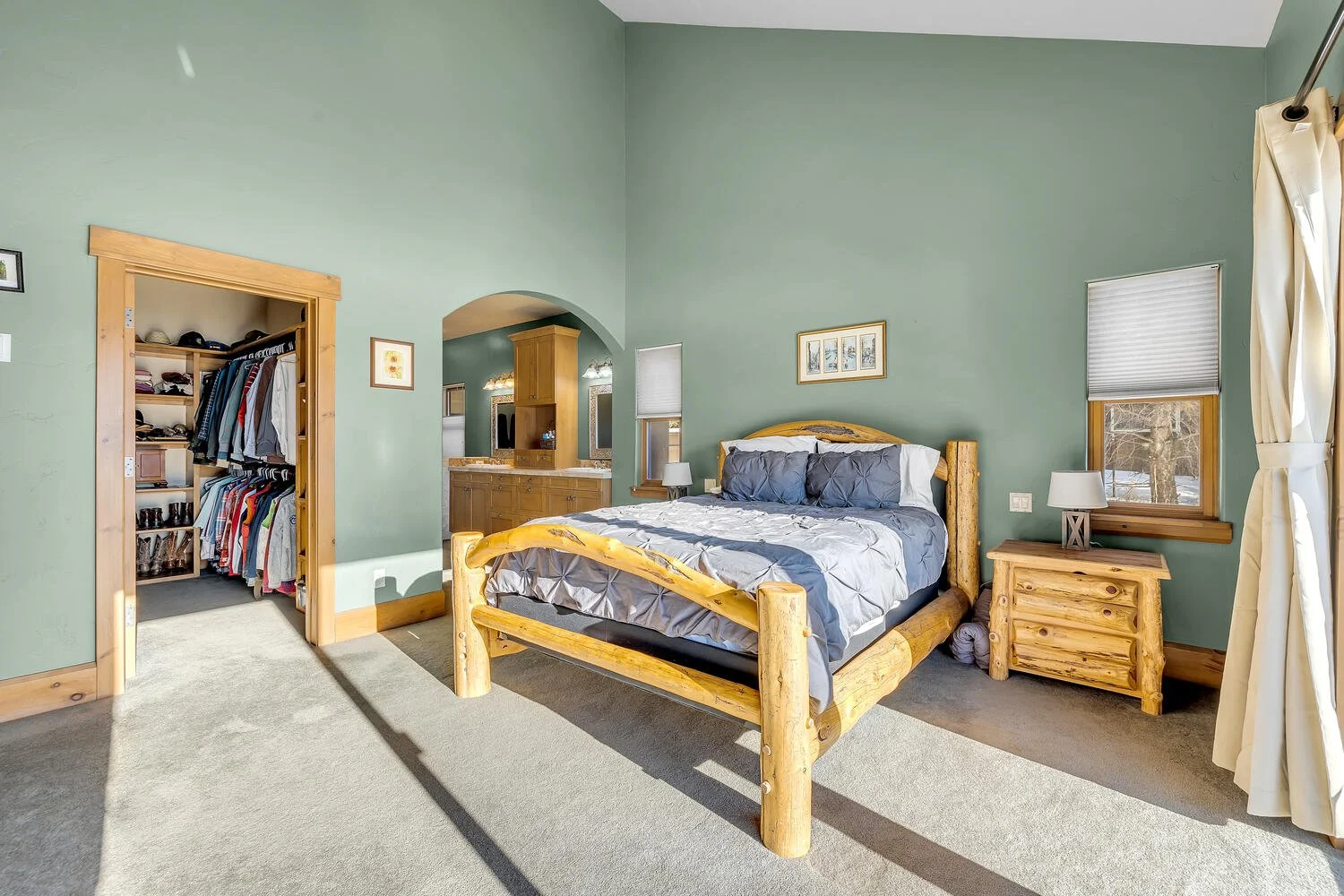
The home sits on one of the two Eby Creek open spaces overlooking the Sawatch Range. The additional open space includes a private neighborhood park with a pavilion, maintained soccer and baseball fields, volleyball and basketball court, a paved walking path, and access to BLM trails. Upon entering the home you are greeted by tall ceilings and the inviting formal dining area. Entering into the great room, the tall stone fireplace stands out as the center of this luxury home. Just off the living room is an open kitchen with granite countertops, including a JennAir range stove, double convection ovens - perfect for entertaining. The large back deck is accessible from two different sliding glass doors in the great room and main bedroom, as well as another door off the kitchen. Just outside the first-level main bedroom is the hot tub; great for relaxing after a day of enjoying all of the nearby outdoor opportunities. Upstairs you will find three bedrooms and two full baths, as well as a a bonus room above the garage. In the finished basement a custom built wall mount that holds an 80'' television awaits you for game days or movie nights. Around the corner is the perfect room for your home gym, or an additional bedroom, as well as another bathroom. Keep your cars warm and dry in the oversized heated garage, which also includes a built in workbench with plenty of workspace. Outside you will find beautiful flower gardens in the spring and summer months that have been meticulously cared for and complement the already stunning landscaping. With Beaver Creek less than 30 minutes away this is the mountain home that you have been looking for. Schedule a showing today for your next home.

Listed by Gabe Martin for West + Main Homes. Please contact Gabe or current pricing + availability.


Have questions?
West + Main Homes
(720) 903-2912
hello@westandmainhomes.com

Presented by:
Gabe Martin
(970) 275-1122
gabe@westandmainhomes.com


Search homes in Colorado
 

A flurry of policy experiments in Colorado serves as “regional laboratory” for regulating, limiting short-term rentals


Crackdown on short-term rental properties across Colorado mirrors national effort as communities grapple with escalating home prices and a shrinking workforce.

Winter Park and Breckenridge are offering big incentives to homeowners who convert their short-term rental properties to housing for locals. 

A program called “Short-Term Fix” offers homeowners up to $20,000 for converting their Winter Park vacation homes to housing for locals. 

The Town of Breckenridge and Summit County last week unveiled a similar program. The “Lease to Locals” program offers short-term rental owners up to $27,000 if they ink a year-long lease with local workers. That’s on top of rent they collect from their tenants.

“Just like any industry, there has to be some checks and balances to manage the benefits and minimize the disruptions,” said Tamara Pogue, a commissioner in Summit County, where one-third of homes are rented by vacationers. 

The incentive programs in Winter Park and Breckenridge are the latest strategies deployed by Western Slope communities grappling with a critical lack of housing that is the prime suspect in an equally painful shortage of workers.   The regulatory tinkering with short-term rental growth spans the country as the American tourism economy rebounds with a tsunami of visitors renting private homes. 

It’s hard to find any community in Colorado’s high country that is not yanking levers on short-term rentals. Councils are suspending permits. Capping numbers. Raising taxes and fees. And now offering big dollars to owners of vacation homes willing to pull their properties off the short-term market.

Voters in Avon will weigh special taxes on short-term rentals to fund workforce housing. Crested Butte’s ballot includes a proposal to raise excise taxes on short-term rentals to 7.5% from 5%. Voters in Crested Butte also will consider an annual $2,500 tax on in-town home owners who don’t live full-time in their properties and don’t rent at least half the year to local workers. Ouray also is asking voters to raise taxes on short-term rentals. Frisco voters could see a citizen initiative asking for an outright ban on short-term rentals in homes not occupied by working locals. 

Telluride has two competing ballot questions: A citizen-initiated ordinance — Question 300 — would cap short-term rentals in the town at 400, which would cut more than 300 from the existing stock of homes rented to visitors. A second ballot question proposed by the town council doubles the fee for short-term rental license and freezes vacation home permits at the current level. 

Gregory Craig, a 30-year Telluride local who has crunched historic licensing data on short-term rentals in his valley, said “the pell-mell rush to policy change over STRs is worrisome and that complete lack of data and analysis across the board is frightening.”

“Bad decisions are going to be made in haste and a lot of people may be damaged by it … and governments are going to regret it in the next downturn, if not sooner,” Craig said. 

Craig’s examination found that the backers of Question 300 — which would cut the number of short-term rentals by more than 40% — overstated the problem. They say the number of short-term rental properties has grown by 75% since 2016. Craig says it’s actually up about 31% since 2016 to 2018.

The number of permits can be high because when a property sells, he said, its existing short-term permit remains on the books while the buyer applies for a new permit. And a large hotel that was managed under a single license sold its 45 units in 2019, adding 45 new permits without adding to the number of condos available for vacation rentals. Craig’s analysis of lodging revenue from short-term rental taxes and visitors shows a 40% cut in vacation home rentals would deliver a $48 million loss to Telluride’s town coffers and businesses.

“It will likely blow a self-induced hole in Telluride’s economy, including Telluride and San Miguel County government budgets,” Craig wrote in a report detailing his research.  

A state lawmaker is joining the mountain community movement toward increasing regulation of short-term rentals. Sen. Chris Hansen hopes his plan to shift short-term rental properties from residential taxation to commercial taxation — which would more than triple property tax bills for vacation home owners — will deliver more revenue to schools, libraries, hospitals and other districts that rely on property taxes.    

“If this is something we don’t get ahead of, it’s going to spiral out of control for the state,” Hansen said. 

The website for Airbnb’s Colorado listings as seen on Sept. 27, 2018. Lawmakers have suggested a major tax change for short-term rental properties that could drastically change the industry as it stands in Colorado. (Eric Lubbers, The Colorado Sun)

Ask locals in towns like Breckenridge, Crested Butte, Salida, Steamboat Springs or Telluride and you will likely hear that short-term rentals are already a tornado, wreaking havoc on housing and hiring. 

This is a national issue. Tourist-dependent communities are facing housing and labor crunches. Home prices are spiking, especially in rural resort areas. Second-home owners are moving in full-time. And short-term rental bookings are climbing as the appeal of outdoor recreation grows during the pandemic. So tourist towns are more crowded and working locals are finding fewer places to live. 

Leaders and employers in those towns are increasing spending on affordable housing, but in the near term, they are looking to slow the growth of short-term rentals. There are dozens of approaches to short-term rental regulation underway in Colorado’s mountain communities. Some will work. Some may not.

Keep reading

Related Links

If there is a home that you would like more information about, if you are considering selling a property, or if you have questions about the housing market in your neighborhood, please reach out. We’re here to help.

Search Homes in Colorado