As Featured in West + Main Home Magazine: Get in the groove - Kid's Bath


According to West + Main agent Bethany, her kids' bathroom was all beige, with a mediocre vanity, square frameless mirror, and dated 1990’s fake travertine floor tiles. 

"I decided to brighten it up and honor the home’s 1970’s roots magic mushroom wallpaper and bright turquoise floors," said Bethany. 

"The wallpaper was the most expensive part of the project, but it was SO worth it! My mom and grandma used to wallpaper together, so we continued the tradition," said Bethany. "Since it was paste-on paper, it was messy, time consuming, and a labor of love. But we had a fantastic time problem-solving, matching up the pattern, and laughing the whole time." 

With no budget for flooring, Bethany pre-treated the existing tile with TSP and one coat of resin-based Fusion Mineral Ultra Grip, and the vanity got the same treatment in a charcoal gray. The unique mirror and pale pink walls brought everything together and gave the space a nostalgic, playful, yet earthy vibe. "When the kids stepped into the bathroom for the first time their eyes lit up. And, I confess...I love it so much I sometimes go sit on the edge of the bathtub with a glass of wine and just hang out in there.

Project total - $1000


I wanted to do bold statement wallpaper so it would be the focal point of the small
bathroom. The larger print makes the bathroom appear larger than it really is and I love
how it turned out...especially the vanity, which I made myself!
— Gracey Storey

If there is a home that you would like more information about, if you are considering selling a property, or if you have questions about the housing market in your neighborhood, please reach out. We’re here to help.

Search Homes in Colorado

Search Homes in Oklahoma

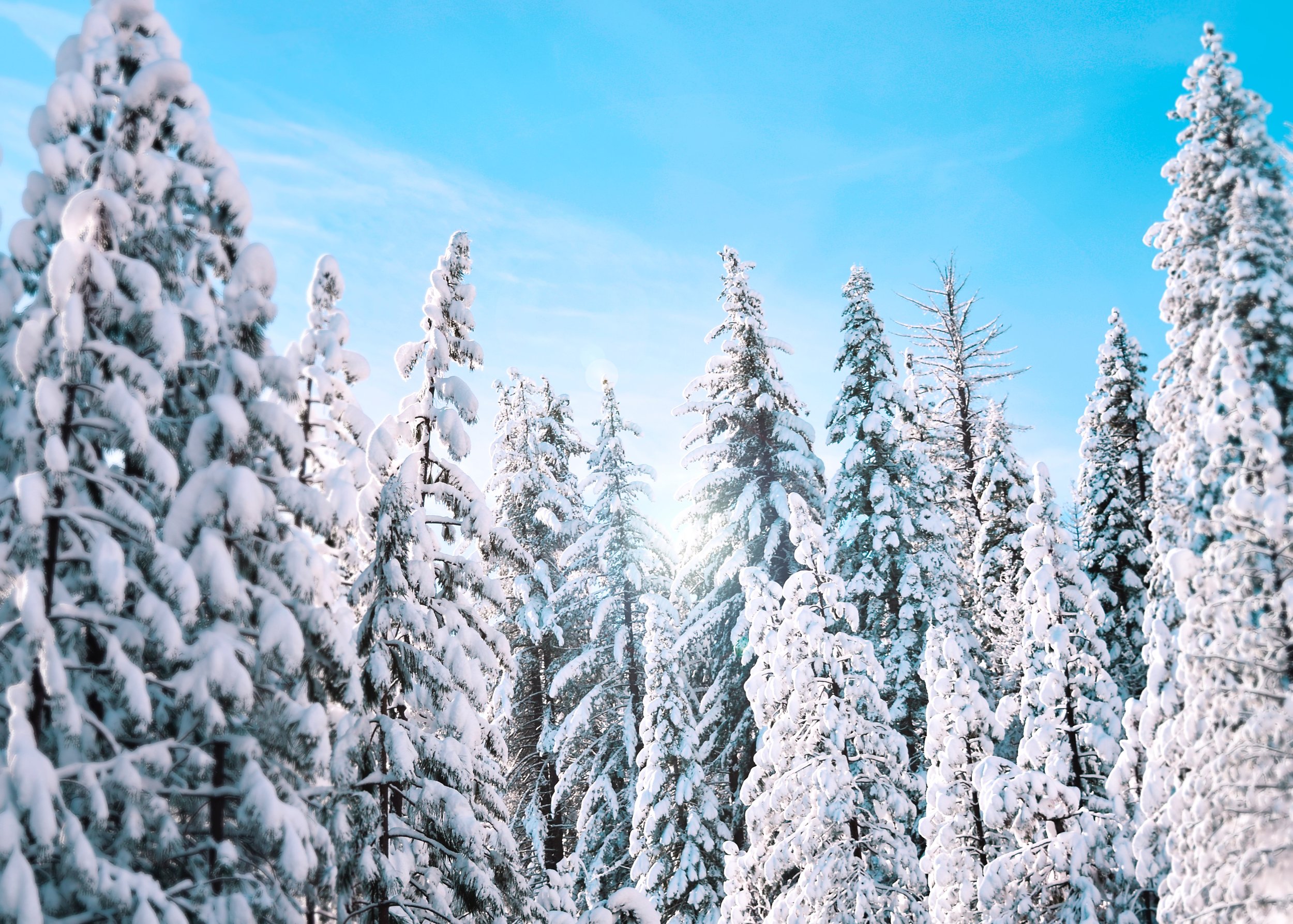
Chances of a white Christmas have melted a bit since the 1980s


Denver’s airport went from a 40% chance of Christmas snow in 1981-2010 to a 34% chance in 1991-2020.

A white Christmas seems to be slowly morphing from a reliable reality to a dream of snowy holidays past for large swaths of the United States in recent decades.

Analysis of 40 years of December 25 U.S. snow measurements shows that less of the country now has snow for Christmas than in the 1980s.

That’s especially true in a belt across the nation’s midsection — from Baltimore to Denver and a few hundred miles farther north. And snow that falls doesn’t measure up to past depths.

Scientists say the decline in the number of white Christmases is relatively small and caution about drawing conclusions. But it’s noticeable and matters mightily to some people like George Holland.

The retired Dubuque, Iowa, educator known for his front yard nativity scenes said snow on Christmas is supposed to be part of the holiday: “The one that makes my heart warm is after going to midnight Mass and coming outside and it’s snowing.”

But the weather in Dubuque hasn’t cooperated in recent years. “We don’t have white Christmas,” said boutique owner Bill Kaesbauer. “We haven’t had any in years.”

The last one was in 2010 in Dubuque, which weather records show used to have white Christmases nearly two out of three years.

The average December temperature in the continental U.S. was a tad below freezing from 1981 to 1990, federal weather records show. And from 2011 to 2020, it was up to an average slightly above 35 degrees (just under 2 degrees Celsius), considerably above the freezing mark.

But what did that warming trend, natural weather variability and a western megadrought mean to white Christmases?

From 1981 to 1990, on average, almost 47% of the country had snow on the ground Christmas Day, with an average depth of 3.5 inches, according to an analysis of ground observation data by the University of Arizona for The Associated Press. From 2011 to 2020, Christmas snow cover was down to 38%, with an average depth of 2.7 inches.

The change was particularly pronounced in a swath from about the Mason-Dixon line to just north of Detroit, Chicago, and Nebraska. The Christmas snow cover average there went from nearly 55% in the 1980s to slightly above 41% now, the Arizona data shows. Average snow depth fell from 3.5 inches to 2.4 inches.

The numbers are small enough that it’s difficult to tell whether this is a meaningful trend and, if so, whether climate change or natural weather variability is the cause, said University of Arizona atmospheric scientist Xubin Zeng, who ran the data.

Still, Zeng, who has published studies on decreasing snowpack in the western U.S. being connected to climate change, said the downward slide of white Christmases is consistent with global warming.

In 20 to 30 years “with climate warming, the prospects of a white Christmas in many parts of the U.S.A. will be slim indeed,” said Mark Serreze, director of the National Snow and Ice Data Center in Boulder.

separate analysis by the National Oceanic and Atmospheric Administration looks at “climate normals” — 30-year periods for about 5,000 weather stations across the lower 48 states. Comparing normals for 1981-2010 to normals for 1991-2020 shows more stations are seeing statistical odds for a white Christmas shrink, but the agency cautions against drawing a conclusion about any trend.

In much of Iowa and eastern Washington, the changes are bigger than elsewhere, according to NOAA. From 1981 to 2010, Dubuque’s chance for a white Christmas was 63% but it’s now down to 42%. Walla Walla, Washington’s chance of getting a white Christmas dropped in half from 19% in 1981 to 2010 to 9.5% now.

Denver’s airport station went from 40% chance of Christmas snow from 1981 to 2010 to 34%. Chicago, St. Louis, Kansas City, Salt Lake City, Milwaukee, Fort Wayne, Topeka, Des Moines, Akron, Albany, Olympia, Rapid City, and Oklahoma City airports saw drops of three or four percentage points.

The line where there’s at least a 10% chance for a white Christmas moved noticeably north with the new normals, said NOAA climate scientist Imke Durre. And the nation’s capital went from 10% to 7%.

“The movement of that line is consistent with a warmer December,” Durre said.

New York, Philadelphia and Concord, New Hampshire, recorded small increases in chances of Christmas snow on the ground.

A data set from Rutgers University’s global snow lab finds continental U.S. snow in the last week of December slightly increasing, not decreasing, said climate scientist David Robinson, whose data based on satellite imagery goes back to 1966.

“There’s no trend. You just don’t see it,” Robinson said.

Often people in their 60s and 70s think there are fewer white Christmases, he added, because the 1960s had more than usual white Christmases.

Temperature alters snowfall in two different ways. In warmer borderline areas, warmer air turns snow into rain. But in cooler more northern areas where even higher temperatures are still below freezing, warmer temperatures mean more snow because warmer air holds more moisture, which comes down as snow, meteorologists said.

Several meteorologists cautioned about finding trends in complex data where both precipitation and temperature are factors. But despite those issues, fewer white Christmases seems associated with warmer temperatures from climate change, said Northern Illinois University meteorology professor Victor Gensini.

“It matters for many as an emotional weight of how the season ought to feel or how we think it ought to feel,” National Snow and Ice Data scientist Twila Moon said. “But the climate scientist in me is also very interested in having a white Christmas because it’s an indicator of how much and what type of precipitation we’ve gotten. And that is also really important because so much of our country is dealing with extreme drought right now.”

In Helena, Montana, “it definitely feels like we don’t have as much snow or the winters are different,” said Shawn Whyte on Tuesday as the high hit 52 (11 Celsius). “I’m looking out my window right now and I have a lovely view of the entire hill in a valley and it is brown. It’s ugly and brown.

“For us here, we expect winter and cold and it makes you feel snuggly and cozy,” said Whyte, an information technology manager who said she’s having trouble getting her Christmas spirit with no snow.

Maybe, she said, if she just goes caroling it will be like a Hallmark movie and the Christmas snow will come at the last minute.

Related Links

If there is a home that you would like more information about, if you are considering selling a property, or if you have questions about the housing market in your neighborhood, please reach out. We’re here to help.

Search Homes in Colorado

Search Homes in Oklahoma

Search Homes in Oregon

Why You Should Take a First-Time Homebuyer Workshop (and Graduate to Homebuyer)


Buying your first home is an exciting milestone, and a complicated one. Never made an offer, shopped for a mortgage, read a contract, or negotiated contingencies? You may find yourself overwhelmed.

Luckily, first-time homebuyer workshops taught by seasoned real estate professionals abound. Think of these classes as primers to help you understand the homebuying process, step by step. These in-person or online workshops are easy to find—try a simple Google search such as “local first-time homebuyer workshop.”

And best of all? Many of these workshops are free. Here’s what you should know about finding and taking a course as well as what you can expect to learn.

Why take a first-time homebuying seminar?

Buying a first home can be an intimidating undertaking if you don’t understand the entire homebuying process.

Many buyers jump straight into attending open houses. And while oohing and aahing over a home’s spa shower is exciting, looking at properties should be Step 3 or 4 in your homebuying journey. First, you’ll want to find a real estate agent and a mortgage lender.

“I learned that there is a lot to think about when purchasing a home,” says Kamyar Shah, the fractional chief operating officer at Kamyar Shah. “I had no idea how much time it took and all of the information you have to gather to make sure you are making the right decisions. I was also surprised by the amount of money that goes into purchasing a home and having a down payment.”

Don’t take a workshop in Iowa if you live in Idaho

“You want to take a local course so that you can learn about not only the general homebuying process but what the market is like in your town or area,” says Katie Wethman, founder of the Wethman Group, a real estate team in Maryland, Virginia, and Washington, DC.

Wethman, who has taught homebuying classes for 11 years, begins her seminars by explaining the difference between a buyer’s market and a seller’s market.

“Buyers need to know what’s going on in their unique market,” says Wethman. “What’s the average price point? How much inventory is out there? How quickly are homes selling?”

Once you understand market conditions in your area, you’ll know who has negotiating power: the buyer or the seller. If it’s the seller, you may need to be prepared to waive contingencies since you’re competing with other buyers. If it’s a buyer’s market, perhaps you can be aggressive with making a low offer. (These days, most areas are distinctly seller’s markets.)

Other basic workshops

Basics covered in the class include why lining up financing before viewing homes is imperative. Once you know what type of monthly payments you need to cover, you’ll know your price range. And you won’t waste your time looking at homes you can’t afford. (Get a jump on crunching these numbers with a mortgage calculator.)

By taking a homebuyer education workshop, you’ll know how to ensure that you are mortgage-ready, advises Kathy Bennett, CEO and founder of Bennett Packaging, who took a homebuying workshop with her husband. “You’ll know what documents you need to give to the underwriter so you can get approved quickly.”

“It was very interesting to learn about the different types of loans that are available for people who are purchasing their first home,” adds Shah.

You’ll also learn how to make an offer.

“I talk about the contingencies that form an offer so that buyers know what safety nets will protect them in case something goes wrong, such as a problem discovered during the home inspection,” says Wethman. “Then we talk about what closing costs are in the area and what happens at settlement.”

Seasoned buyers can also brush up on their skills

People generally buy a home every five to 10 years. Yet, just because you successfully purchased a home before doesn’t mean you’re going to remember everything.

“The homebuying process and contracts change over time,” says Wethman. “And odds are the market is completely different from the last time an existing homeowner bought a property.”

The bottom line on first-time homebuyer workshops

Some classes are simply sales pitches for an agent looking to represent you. But remember to do your research before signing with an agent. The golden rule when it comes to agents? Interview at least three before settling on one. You want an advocate who will not only negotiate for you but also protect you from unforeseen issues that will inevitably crop up. In other words, it’s OK to take a workshop without hiring the agent who taught it.

Also, the workshop should be one hour at most. You don’t want to leave feeling overwhelmed and struggling to digest a ton of new information. But you do want to feel like you can go out there and start house hunting with confidence.

“The homebuyer workshop helped us immensely when we were finally planning to own a house as opposed to renting one,” says Bennett. “The homebuying process is stressful enough. But by knowing what comes next, you aren’t left to guess about the homebuying process. You can make informed, sound decisions that help you reach your goal. It played a critical role in our buying process, and I recommend it.”

Learn more on Realtor.com

EMAIL US TO FIND OUT ABOUT UPCOMING WORKSHOPS!

Related Links

If there is a home that you would like more information about, if you are considering selling a property, or if you have questions about the housing market in your neighborhood, please reach out. We’re here to help.

Search Homes in Colorado

Search Homes in Oklahoma

Search Homes in Oregon

These Will Be the Top Design Trends of 2022, Experts Say


The forecasts are in—from indoor trees to earthy, curving designs, here’s what to expect for the year ahead

A new year, by its very nature, usually brims with optimism and the promise of fresh starts. But as a weary world continues to ponder what the future might look like, after having collectively endured almost two years of tumult, it seems we’re clinging to familiarity more than ever.

Many of the top interior trends of 2022 are iterations of those we saw in the previous two years, but, thankfully, it’s not because we’re resigned to the fact that every day feels much like the one before. Instead, we’re being more true to ourselves and what feels good. 

Much like the evolution of fashion in recent years, interiors are increasingly becoming less about what’s trendy and more about personal expression. “Rather than specific trends declining, we are seeing the lines between different styles blurring,” says Gemma Riberti, head of interiors at WGSN. “A key example of this is minimalism and maximalism. As the line blurs between these two approaches, this has empowered consumers to find their own take on either. This is leading to a highly personal and more nuanced approach to interiors.”

Still, several recurrent threads are on the horizon for interiors in 2022. Read on for predictions from Riberti, along with fellow trend forecasters Michelle Lamb, Roberto Ramos, and Lisa White.

Landscape palettes

Consumers’ love affair with soothing greens and blues and earthy tones continues, but it’s not necessarily simply a case of aesthetic preferences.

“Research shows that natural color schemes and organic forms like those found in nature reduce stress, lower blood pressure and heart rate, increase productivity and creativity, and make us happier,” says Michelle Lamb, who is the editorial director at The Trend Curve. “Perhaps because humanity has never needed the healing powers of nature more than we do at this moment, there is a quest to take this approach even deeper.” Lamb predicts more jungle-inspired hues—as well as olive and moss—used in tandem with natural wood tones, stone with prominent graining, bamboo, rattan, dried grasses, and flower blossom and leaf motifs.

It seems we’re also looking to the sky for inspiration. “We believe in the growing importance of a luminous mid-tone that calls to mind the luminosity of clear skies and is therefore cool and optimistic, not cold,” Riberti says. “It’s a great color to instill positivity without being overwhelming, and it works well both with the naturals and with the other mid-tones, bringing to spaces and products a lightness and a reassuring, yet optimistic simplicity that will certainly resonate with consumers and their shifted lifestyles in 2022 and beyond.”

According to Riberti’s colleague Lisa White, creative director and director of interiors at WGSN, terra-cotta will continue its starring role in a year when “color is about being both grounded and hopeful.” White continues, “The appeal of terra-cotta tones translates to interiors products across the board, from hard materials like natural stone, oxidized metals, wood, and clay, as well as soft materials like linen, leather, suede, and brushed pile fabrics.” Finally, she adds, “We are even seeing products being beautifully upcycled by being dipped in terra-cotta paint.”

Contemporary conservatories

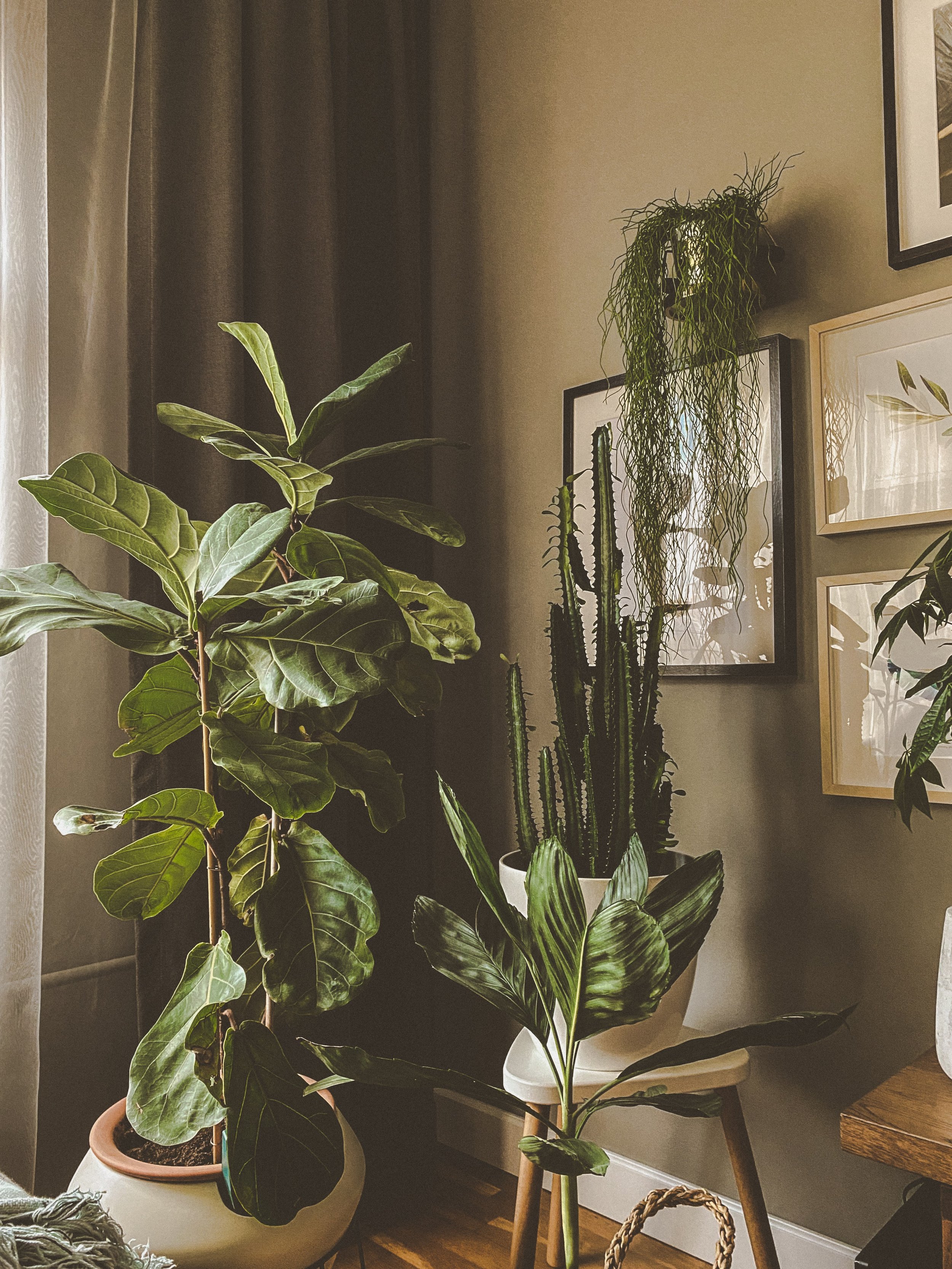
Our collective yen for biophilia is here to stay, but in 2022 it’s likely to become more sophisticated, White says.

“People have wanted to bring their living rooms and spaces outdoors, and they will increasingly want to bring the outdoors in, taking plant parenting and biophilic design to new heights,” she says. “We will see the rise of the indoor tree—especially lemon trees and olive trees—taking center stage in large pots.”

As cottagecore and grandmillennial trends ebb, a slightly more mondaine interpretation is taking its place: the contemporary conservatory. “Homegrown plant propagation is becoming more popular, and manufacturers are capitalizing on this by introducing new devices that enable different plant species to flourish inside, like miniature greenhouses modeled on classical designs,” White says. “The contemporary conservatory is a look that will be trending, whether creating an all-over garden-inspired room with patterned wallpaper and wicker furniture, or simply styling a conservatory corner in a sunny location in the home.”

Sensorial strategy

One thing’s clear about the future of interiors: They need to feel as good as they look. All of our experts agree that consumers are paying much more attention to the sensory experiences of their homes.

“Scent has taken center stage during the pandemic, and people are scenting specific areas of their home with different scents as a way of inhabiting space with all of their senses,” White says. “Perhaps the home office will be scented with sage to promote mental acuity, while the bedroom will be scented with orange blossom to promote calm and sleep, and the living room with something cozy and festive like the fragrance of a crackling fire.”

Ramos, CEO of the cultural forecasting agency The Ideatelier, says that tactility, composition, and sensory stimulation are influencing people’s choices for interior products. “The sensorial experience is dynamic and individually unique, yet desirous on many levels,” he says. “[This includes] visually stimulating vibrant color combinations, high-tech performance designs such as voice-activated kitchen faucets, and bamboo as the most important fiber to emerge in furniture and lighting design, which is natural, sustainable, and organic.”

Comforting curves

Maybe we’re all just feeling a little fragile, but many of us are still not ready for sharp edges in our interiors. “Femininity will have an impact on form in 2022, conveyed through rounded details ranging from circular structural elements to gentle curves,” Lamb says. “Think: radiused corners or curved backs on sofas and flared arms on chairs or bumpers on sectionals. Waterfall corners on desks and consoles will reinforce the trend, as will drum tables and scalloped shapes on accent items from area rugs to ottomans.”

Riberti adds that curves needn’t always be dramatic. “Comfy, curvilinear, welcoming forms will be paramount,” she says. “Not necessarily plump and over-the-top exaggerated, but soft to the eye and the hand to create an overall relaxed and comfortable feel within the space.”

Read more on Architectural Digest.

Related Links

If there is a home that you would like more information about, if you are considering selling a property, or if you have questions about the housing market in your neighborhood, please reach out. We’re here to help.

Search Homes in Colorado

Search Homes in Oklahoma

Search Homes in Oregon

The Most Popular Places in the U.S. to Buy a Second Home


House hunters are looking for affordability and great year-round weather.

From Florida to South Carolina, and especially in small towns across the country, the real estate market for vacation homes is on fire. The surge in sales caused by the ongoing pandemic shows no signs of slowing down for certain markets. So, what are the most attractive destinations for prospective buyers? Pacaso, the real estate platform that helps people buy and co-own luxury homes, found the answer to that question. And as it turns out, it's not the well-known spots that are the most sought after.

Franklin County in Florida topped the list with the most significant increase in second home mortgages year-over-year at 11.5 percent. The area — one of the least populous in the state — is located along the Gulf of Mexico and is home to miles of beautiful, unspoiled beaches. The average price of a second home there is also the highest of any other spot on the list: $877,000.

Second place goes to Sevier County in Tennessee, with a 9.2 percent increase in second home mortgages and an average price of $574,000. The region is home to the most visited national park in the country, Great Smoky Mountains National Park. The third and fourth spots are occupied by Trigg County, Kentucky, and Oktibbeha County, Mississippi, respectively, while Hardy County in West Virginia snatches fifth place.

"In 2021, instead of hopping on a flight to a new international city or a remote, sunny beach somewhere, many people looked for places to get away from it all that were within driving distance of their homes, and what we're seeing is that many families found places not too far from home that they'd like to continue to return to again and again," Austin Allison, co-founder and CEO of Pacaso, told Travel + Leisure via email.

He explained that the southeast corner of the U.S. (where the top five vacation home markets are all located) has seen the biggest gains in second home market activity in 2021. Interestingly enough, more established markets such as Martha's Vineyard in Massachusetts and Jackson Hole, Wyoming, saw a dip this year.

This is due, according to Allison, to the fact that people are looking for places that are a short car ride away from their homes.

"Even though airline travel is ticking back up again, there's still some amount of uncertainty around it. […] Given the shift toward more remote work flexibility, many people actually desire a second home getaway that's easily accessible for shorter impromptu trips. Having a regional destination that's nearby also makes it easier to bring along friends and family," he explained.

Keep reading.

Related Links

If there is a home that you would like more information about, if you are considering selling a property, or if you have questions about the housing market in your neighborhood, please reach out. We’re here to help.

Search Homes in Colorado

Search Homes in Oklahoma

Search Homes in Oregon