Just Listed: Pristine condition condo in Aspen Meadows


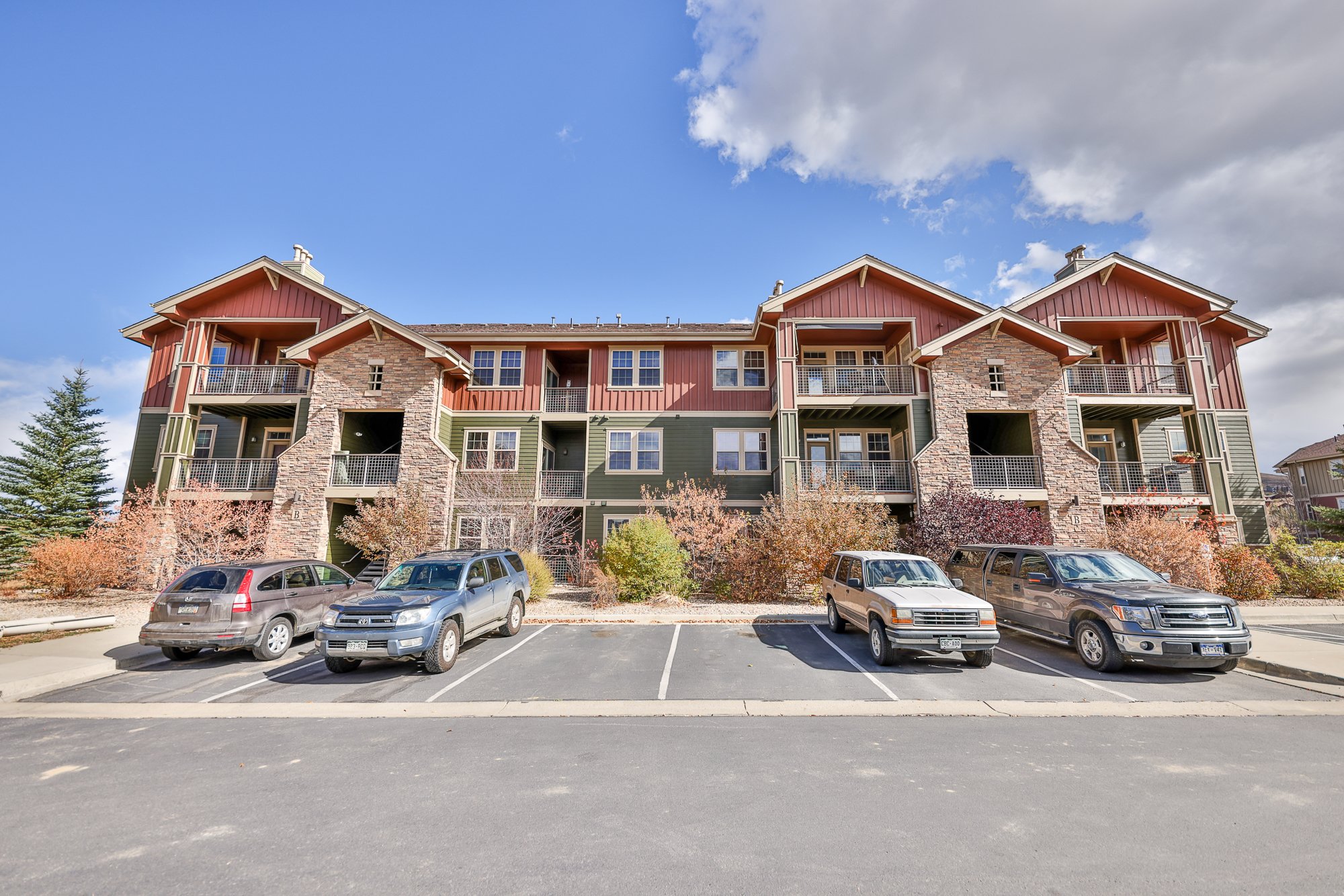
Rare, sunny and bright, top-floor 2 bed/2 bath condo with vaulted ceilings at Aspen Meadows.

With new hardwood floors, this condo is not on a rental program and in great condition. The well-equipped kitchen overlooks the living and dining area and there are two balconies where you can take in the views. The detached one-car garage can easily accommodate mountain stays and there is an exterior storage unit for overflow belongings (plus extra storage on the deck). Condo comes with Granby Ranch membership that includes an owner's club, gym, pool, skiing, fishing and biking for that true mountain life of leisure. Strong HOA, private community hot tub. Aspen Meadows is conveniently located close to world class skiing, golf, Rocky Mountain National Park, lakes, biking, hiking and more!

Listed by Leah Bishop for West + Main Homes. Please contact Leah for current pricing + availability.


Have questions?
West + Main Homes
(303) 935-8787
hello@westandmainhomes.com

Presented by:
Leah Bishop
(970) 531-4723
leahbishop@westandmainhomes.com


Search homes in Colorado
 

1 in 4 Homeowners Give Up This Bathroom Feature When Square Footage Gets Tight - And Creative Ways to Keep It


Renovating a small bathroom is not all that different from playing a game of Tetris: There is a lot of strategic stacking and remapping involved.

 If I move the shower to this corner, will the toilet still fit? Can I make the vanity larger without causing a door jam? The reality is, most spaces that are more than two decades old often pose serious layout challenges. As a work-around, it turns out nearly one in every four homeowners renovating their bathrooms removes the tub altogether, according to Houzz’s 2021 Trends report. 

So what do people do once they get rid of their former soaking space? They relocate the shower and then (at least 84 percent of them) make said shower bigger. This update not only offers more opportunities to achieve that spalike feel with, say, a built-in bench and double rain-shower heads, but it appeals to potential home buyers who are older and don’t want to lift their leg over a ledge every time they bathe. That said, if you have more than one bathroom with a tub that you’re hoping to update, it might be worth keeping one around (it will appeal to families with young children if you ever decide to sell). Here are three clever ways to reno your dated, teeny bathroom without giving up the feature entirely. 

Put the Tub in the Shower


Photo courtesy to Domino


No, we’re not talking about the cheesy porcelain shower-tub combos you’ve seen in just about every builder-grade home—we mean situating a small freestanding soaking tub inside your dream walk-in shower (à la Garance Doré) to get the best of both worlds without blowing out a wall.

Make Them One


Photo courtesy to Domino


When you can’t find the space to go outward, think downward. At her Todos Santos, Mexico, home, designer Alex Boudreau carved a joint tub-shower into the lower level’s ceiling.

Take a Soak Outside


Photo courtesy to Domino


If you really don’t have the space to squeeze a tub in any of your bathrooms, consider setting a cast-iron one outside for an open-air-spa experience. At photographer Thayer Gowdy’s former home, a window cut into the fence allows a sliver of a view of the Pacific Ocean. You can’t get that indoors.

Read more like this on Domino.

Related Links

If there is a home that you would like more information about, if you are considering selling a property, or if you have questions about the housing market in your neighborhood, please reach out. We’re here to help.

Search Homes in Colorado

Search Homes in Oklahoma

3 Reasons Why We Don’t Know Our Neighbors, According to an Urban Planner


We wave at our neighbors, but we rarely know them. According to a survey, only 26% of Americans feel like they actually know their neighbors. Here’s why, according to an urban planner:

Most destinations (and people) are not within walking distance.

I tend to feel more connected to a city when I can be independent of a car. I always thought my sense of community from walking was more of a personal preference, but it turns out that living in places that encourage us to walk helps us build trust with one another.

As sociology professor Rebecca Adams has noted, there are a few key conditions necessary for developing friendships: “proximity; repeated, unplanned interactions, and a setting that encourages people to let their guard down.” This can come from seeing the same people at your favorite bar or learning the name of the crossing guard as you drop your kids off at school. When we can regularly walk to things, we allow for organic relationships to occur.

Jordan points to two developments from the previous century that play a big role. “In the 1920s, you had both the automobile and the first single-use zoning codes.” Separating “land uses” such as residential, commercial, and industrial had understandable beginnings but ultimately “served to remove much of the texture from our neighborhoods,” he says. “Combine that with decisions to mandate more space for cars, and you end up with people and destinations spread ever further apart.”

Our homes and neighborhoods aren’t designed to encourage neighborly interactions.

I remember my first apartment after college. I was living in a complex that likely housed some 300 young professionals. I had fantasies of making friends with people “just down the hall.” I never made friends with a single person in my building.

But I experienced a positive shift once we began renting in a neighborhood of more pre-war “missing middle” housing with lots of small-scale businesses mixed in. Jordan says that some simple design decisions can have a big influence on how we experience our neighborhood. These days, we see fewer houses with front porches and fewer streets with sidewalks

“It may sound quaint, but the front porch or stoop serves the important purpose of putting us in touch with our neighbors — especially in a way that lets us put our guard down. Of course, context also matters: we’ll want to spend more time along streets that are comfortably narrow and low-speed, and we’ll encounter more people walking if there are plenty of accessible destinations for us to walk to. If you’re required to leave your neighborhood to get to everything from work or school to shopping and entertainment, and everything requires a car to get to, that leaves very little time or opportunity for developing relationships with your neighbors.”

We prioritize the car over the person.

It’s also difficult to ignore the impact of cars on the places we call home. Cars did not have to become the central focus of how our cities were planned, but decades of design standards have made car use the default. Jordan notes, “[This evolution] has not been good for human relationships. It has been good for the automobile industry and related industries. […] We can’t design places for maximum car comfort and expect them to function well as places for human interaction.”

He shares that cities can start by removing driving incentives such as parking minimums and allowing denser development and mixing of uses. We can also start changing design standards to create slower streets that prioritize people rather than vehicles. “If readers are interested in going deeper on the human impact of our development decisions, as well as what we can start doing as individuals and local governments in response, a great place to start would be Strong Towns.”

Get the full story on Apartment Therapy.

Related Links

If there is a home that you would like more information about, if you are considering selling a property, or if you have questions about the housing market in your neighborhood, please reach out. We’re here to help.

Search Homes in Colorado

Search Homes in Oklahoma

There’s no sign of the typical fall slowdown in home buying


One-third of homes that went under contract had an accepted offer within one week of hitting the market, a new report from Redfin found. This is up from 30% during the same period a year prior and 2.2 points from a month earlier.

The report is based on data from the four-week period ending Oct. 10.

In addition, the number of homes that went under contract within two weeks of listing rose to 46% from 42% during the same period in 2020. While the median number of days a home is on the market rose to 22 days, which is a full week longer than the all-time low of 15 days in June and July, it is still 10 days less than a year earlier.

This increase in the share of homes selling this quickly is unexpected for this time of year when we typically see a seasonal slowdown.

“Most sellers who are on the market now are very motivated to move: landlords with vacant homes, families who already upgraded and need to sell their previous homes, couples splitting up,” David Palmer, a Redfin listing agent, said in a statement. “As home-buying demand declines into the fall, I’m only encouraging people who have urgency to sell now. Otherwise, I’m advising them to wait until the new year.”

Another sign of continued strong demand is the 4% year-over-year increase in pending home sales. This also represents a 46% increase compared to the same time period in 2019, according to Redfin.

While demand has remained high, inventory continues to drop with new listings of homes down 8% from a year prior and the total number of active listings down 21% from 2020.

As a result of this high demand and low inventory, the median home-sale price rose 13% from a year prior to $355,600. Asking prices of newly listed homes also rose, reaching a median of $362,047, marking a 12% increase from a year ago. However, this is 0.7% lower than the all-time high set during the previous four-week period ending Oct. 3. Decreases like this are typical for this time of year, according to the report.

Even with high asking prices, due to the highly competitive nature of the market, 46% of home still sold for above list price, which is up from 34% during the same time period in 2020, but also the smallest share since April 2021. Additionally, the average sale-to-list price ratio fell to 100.7%, also the lowest level since April.

Although there are numerous indicators of a still red-hot market, one indicator of a possible seasonal cooling off is the percentage of homes for sale each week undergoing a price drop rising to 5.1%, the highest level it has been since the four-week period ending October 13, 2019.

Read more on Housing Wire.

Related Links

If there is a home that you would like more information about, if you are considering selling a property, or if you have questions about the housing market in your neighborhood, please reach out. We’re here to help.

Search Homes in Colorado

Search Homes in Oklahoma
How to Buy a House in Your 20s—and Why You Really Should


Curious about how to buy a house in your 20s? If you’re dubious it can be done, we get it. Between entry-level salaries, college loans, and the desire to just be young and have fun, 20-somethings often think buying real estate is beyond their reach.

No so! It is entirely possible to buy a home in your 20s and become a  first-time home buyer, and it will benefit you big-time down the road. Here’s how you can make your home-buying dreams come true much sooner than you think.

How to buy a house in your 20s: Save for a down payment

Being a homeowner with a mortgage is not like renting. To afford to buy a house at your age, you’d better have some cash saved up for a down payment on your mortgage—a lot of cash, actually.

Most financial planners recommend that first-time buyers make a down payment amounting to 20% of the price of the home. So on your typical $250,000 house, that would amount to $50,000. Ouch!

Granted, you don’t have to put down 20%, but doing so enables you to avoid paying private mortgage insurance, a premium that can increase your monthly payment by up to 1.15%.

If you don’t have a ton of money in savings, one way to afford the down payment is to ask Mom and Dad for financial help. Another option to afford the down payment bill is to apply for down payment assistance.

Depending on your income and other factors, you could qualify for one of over 2,200 down payment assistance programs nationwide, which help out first-time home buyers with low-interest loans, grants, and tax credits.

So, how much money are we talking about? Well, one study found that buyers who use down payment assistance programs save an average of $17,766. Sadly, most consumers aren’t aware of these programs, or assume they’re too difficult to qualify for. Don’t be one of them!

Along with a down payment, homeownership will require you to pay the monthly mortgage, property tax, and homeowners insurance. But sellers usually take care of the closing costs for real estate transactions.

 Shore up student loan debt

Student loan debt has surged to an average of $28,950 per borrower, reports the Institute for College Access & Success. But college debt doesn’t automatically prevent you from becoming a homeowner.

Most mortgage lenders require a borrower’s debt-to-income ratio—how much money you owe divided by your income—to be no more than 36%. So, someone making $6,000 a month and paying $500 a month in student loan debt would be able to afford a maximum monthly mortgage payment of $1,680—in many markets, that’s plenty to buy real estate. But, if you’re shouldering too much student loan debt to qualify for a mortgage, you may still have a few options.

One way to make room for a mortgage is to refinance and extend the life of your college loan. This results in smaller monthly payments over a longer period of time, so you’ll have more you can put toward a mortgage. The caveat is you’ll end up paying more in interest over the life of your college loan, but it means you can buy a home now and, in turn, take advantage of today’s low mortgage interest rates, says Heather McRae, a senior loan officer at Chicago Financial Services.

Moreover, nearly half of states today offer housing assistance to college grads carrying student loan debt. For instance, New York’s new Graduate to Homeownership program provides assistance to first-time buyers/college grads in the form of low-interest-rate mortgages or up to $15,000 in down payment assistance. You can meet with a mortgage lender to find out if you qualify for one of these programs.

Check your credit score

Unlike older generations, home buyers in their 20s tend to have shorter credit histories. That can be a problem, since if you have limited credit history, the odds are greater that you have a mediocre credit score—the numerical representation of how well you’ve paid off past loans (like credit cards).

Mortgage lenders usually require borrowers to have a minimum credit score of 660; they also look at your credit utilization ratio—your current debts, divided by the credit limit on the sum of your accounts.

For example, if you’re carrying a $400 debt on your credit card and have a $1,000 credit limit, your credit utilization ratio is 40%. Unfortunately, relatively new credit users tend to have a higher credit utilization ratio.

You’ll want to get a free copy of your credit report at AnnualCreditReport.com. Check for errors—1 in 4 Americans spots mistakes on their credit report, according to a Federal Trade Commission survey. And, if your credit isn’t up to par, you may have to take a few months to raise your score. Or you can get someone with good credit (like your parents) to co-sign the loan for you to help you become a homeowner.

How to buy a house young? Purchase a starter home

As a first-time home buyer, you don’t have to find your “forever home” right now.

In fact, there are a couple of big financial benefits to buying a starter home while you’re in your 20s. First, your mortgage payments will probably be more affordable, since you’ll likely be buying a cheaper house. Second, you may be able to get a 5- or 7-year adjustable-rate mortgage and qualify for a lower interest rate than you would with a 30-year fixed-rate loan—a good decision as long as you plan on moving to your dream home before the loan’s interest rate lock expires. Talk to your real estate agent about buying a starter home.

Plan for unexpected home expenses

All home buyers should have a rainy day fund to pay for emergency home repairs such as roof damage or a gas leak, as well as monthly mortgage payments, closing costs, insurance, and property tax. And this is especially important for young or first-time buyers. Why? Research shows many millennials are less financially responsible than older generations.

A study by TD Ameritrade found that more than 9 in 10 millennials overspend, fall short on savings, or take on additional debt at least once a month per year. Furthermore, a recent GoBankingRates.com survey found 52% of millennials said they feel pressure to keep up with their friends due to always going out.

Consequently, “Don’t buy at the top of your budget,” says Sanderfoot. “Unless you’re buying new construction, you need an emergency fund for big repairs.”

She adds that home buyers may also want to get a home warranty, which is a policy that would cover the cost of maintenance and repairs for certain home appliances if they break down. (Plans start at about $300.)

Learn more.

Related Links

If there is a home that you would like more information about, if you are considering selling a property, or if you have questions about the housing market in your neighborhood, please reach out. We’re here to help.

Search Homes in Colorado

Search Homes in Oklahoma