5 Home Staging Secrets That Actually Translate into Stylish, Real-Life Decorating Ideas, According to an Expert

 
christian-mackie-cc0Gg3BegjE-unsplash (1).jpg
 

House hunting is a truly wild ordeal. Let’s start at the top: You’re (in many cases) talking about spending your life savings on a piece of property, so there’s just no way it’s not going to be stressful. You’re invasively walking through people’s homes, rifling through their things, and judging their various choices.

Add in a global pandemic, where you basically have to act like a shark at feeding time if you even want a chance at scoring a property, and that’s the situation my husband and I found ourselves in less than a year ago.

Having spent ten years in New York City, nearly every home was four times larger than anything we were used to, so we were immediately wooed by the square footage. That’s where the fantasy stopped though; so many of the places we toured needed serious help aesthetically. While it’s true that you’re buying someone’s shell of a home and not their decor style, it’s so easy for the two to impact one another. One home we walked into was so filled to the brim with cat collectibles that we could barely move, and another had a carpet and wall of built-ins so destroyed by the residing pups that you couldn’t walk into the space. Needless to say, both of those homes did not make the cut.

After a series of unfortunate first impressions, we walked into an immaculately styled home where every detail was thoughtfully considered. The furniture was proportional to the space; the coffee bar was stocked; there were fresh flowers on the table — it felt lived-in but in a way that made you want to picture your life there. While we didn’t end up making an offer on that house, the impact of the staging made a lasting impression on me. Not only does staging make a huge difference when looking to sell your home, but with its practice also comes with sneaky takeaway tips to utilize when decorating — though, make no mistake about, they’re definitely not the same thing.

“The number one difference between design and staging is the intention,” says Leia Ward, founder of luxury staging design firm LTW Design. “Design is intended to reflect the style of the homeowner and is completely subjective. On the other hand, staging is objective and intended to highlight architectural focal points of the home (among other selling points) and create a lifestyle experience in order for buyers to emotionally attach and make an offer. The priorities are very different.”

That being said, many of Ward’s best staging tips also make pretty good decorating ideas. I went through the main rooms in a hypothetical home with her, getting her strategies along with the underlying takeaway decor principle behind them, which can help you make the most of any space you come to call “home sweet home.”

The Kitchen

Kitchens are the heart of the home and often can be a huge deciding factor for prospective buyers. While the finishes (see also: appliances, countertops, and layout) are paramount, Ward emphasizes the importance of adding life to the space, turning to large displays of greenery (often tall branches with leaves) to add freshness without taking away from the necessary features house hunters are truly there to see. 

When it comes to decorating your own kitchen, Ward suggests treating the countertops just like you would any other surface in your home. “Even if it’s not functional, decorating the kitchen is important, and we like to style surfaces there just as we would a coffee or console table,” she says. “Create a little vignette by adding a framed piece of art against the backsplash with two coffee table books and a vase.” Don’t forget fresh flowers or greenery either; a little bit of life can warm up an otherwise sterile looking kitchen, whether you’re looking to sell or in your forever home. You don’t have to go over-the-top here, but if you do have high ceilings, for example, why not choose a few dramatic, tall branches?

The Living Room

Perhaps the biggest difference between staging for buying and decorating for living can be seen in the living room layout, according to Ward. “In real life, it’s functional to have the sofa facing the TV, so if you’re designing for yourself, make the most of the space for day-to-day livability,” she says. “However, when staging, the layout must allow for an unobstructed flow, which usually means the sofa is perpendicular to the fireplace or TV so buyers don’t have to walk around it to see the focal point. We want to use less furniture to create negative spaces, which make rooms feel bigger and show off more square footage.” 

Ward also removes any extra clutter and personal photos, encouraging clients to think of it like turning your home into a 5-star hotel. “Nobody wants to go into a hotel room and see a personal item left from the previous guest, right?” she says. “Same concept! Buyers want to walk through your home and envision it as theirs.”

The upshot here? Choose a layout that works for the way you regularly interact in your space, and don’t worry if your coffee table has remotes, coasters, and magazines on it. Just maybe add a tray or basket to corral said items, so they look a little bit more organized and in their proper places. Could you benefit from losing a chair or an extra side table though, putting to use Ward’s staging prerogative on flow? Negative space is never a bad thing, even in a lived-in home.

Powder Room

The powder room or half-bath is one of the few places where Ward’s design and staging ethos meet. “My biggest suggestion for your powder room is actually the same whether you’re staging it for sale or trying to warm it up for yourself: Add live greenery!” she says. “It’s the nicest surprise and is so refreshing when you see live flowers or tall branches with leaves in a bathroom.”

Primary Bedroom

The bedroom is another personal space buyers are going to want to “see” themselves in, so Ward cautions against a palette that is too bright or attention-grabbing when staging your home for sale. “For staging, it’s all about creating a sanctuary for potential buyers — especially in a primary bedroom,” she explains. “Soft neutrals and layered textures (think: cashmere throws, bouclé pillows, linen sheets) will do the job.”

When it comes to decorating a bedroom for yourself though, Ward encourages all the cozies mentioned above but with a personality-packed twist unique to your style and a playful outlook on color, pattern, and texture. “When decorating your primary bedroom, go bold and use wallpaper — we especially love a solid textured wallpaper,” she says.

Office

If there’s one thing most homeowners have on their wishlist when house hunting these days, it’s a home office. In fact, the folks behind Rocket Homes reported almost a 17 percent increase in listings mentioning a home office between March and July of 2020, and that trend is only set to explode with the increase in telecommuting. The solution? A design that melds functionality and decor into one serene space — plus, an added dose of organization if you’re actually living there. 

“When staging an office, it’s all about showing the buyer how they want to live — a neat, clean office without desk drawers or clutter tells buyers, ‘If you buy this house, you’ll live like this,’” says Ward, who shares that she stages offices with small-scale dining tables instead of true desks to cut down on visual clutter, which is a great tip if you like a more streamlined look yourself and can invest in other methods of storage. In fact, for a functional office space you can actually live and work in, Ward absolutely emphasizes the need for appealing organizational solutions. “Style the office with bold accessories that are functional for organization,” she suggests. “Don’t just buy any old pencil cup holder or paper tray. Use that item to make a statement, whether it’s with a concrete, marble, or leather texture.”

Read more on Apartment Therapy.

Related Links

If there is a home that you would like more information about, if you are considering selling a property, or if you have questions about the housing market in your neighborhood, please reach out. We’re here to help.

Search Homes in Colorado

Search Homes in Oklahoma

Find a Dog a Home: Meet Max

 
Max-01.png
 

Ruff, ruff! Ahem, I mean HELLO to you, potential adopter who may not speak “dog”.

No big deal if you don’t of course, all that really matters is you love dogs, which means ME! Some kind hikers found me wandering alone in the Rocky Mountains, and as you Colorado people know, it’s not a great idea to be alone in the mountains without even a water bottle! Though uncertain at the time, these people convinced me to follow them down the mountain and, long story short, took me to Ho-Bo Care. Overall, I’m a really fun guy, but I have been known to get excited and jump up to say hello when I meet new people. Trust me, if you walked a mountain-mile in my paws, you’d be excited to meet others, too!

Recently, I spent an afternoon with a pup specialist who wanted to learn all about me. She observed me meeting strangers as well as unfamiliar dogs. I really love people, but other dogs can make me nervous. Mind you, I’m not rude to these dogs, I’m just hoping to be the pride and joy of my forever-family rather than make new furry friends. By the way, did you know it’s the start of football season? Did you also know that I looooove football, especially the Broncos? I’d love to hang out by your feet while the game is going, and would eagerly chase a ball any other time of day. Of course, if you want to go to a game one day, I’ll patiently wait for you until you get home -- just leave the game on for me. I’m crate trained, and quickly settle down for a nap so PLEASE GIVE ME A CHANCE. I’m a great dog and would love to be part of your family.

For more information, visit Ho-Bo Care or contact W+M Agent Leslie Gentile.

Marlboro Man's $8 million home on the market in Colorado Springs

 
Photo courtesy of The Gazette.

Photo courtesy of The Gazette.


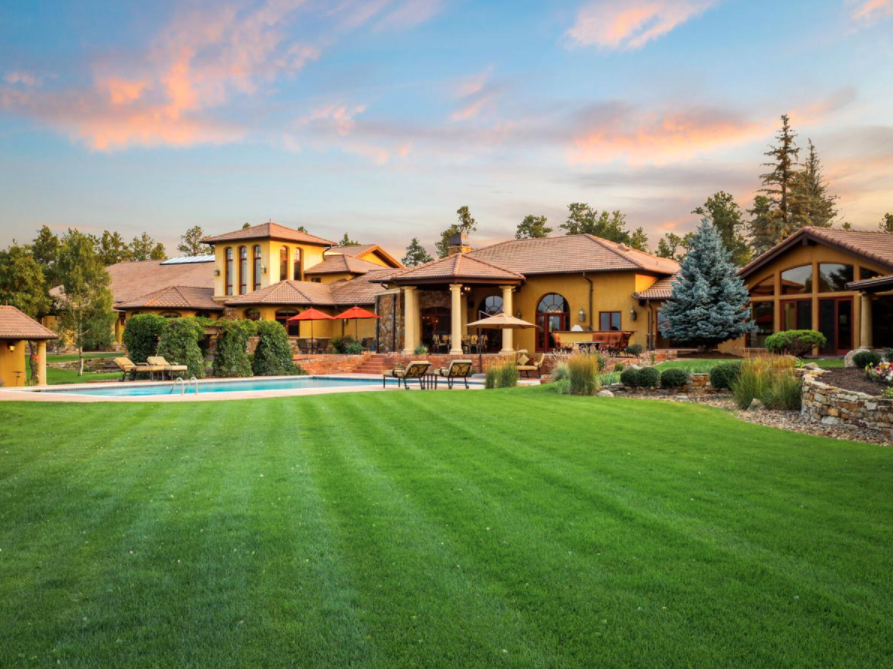
The Marlboro Man’s $8 million home on the edge of Black Forest is up for grabs.

Bob Norris, the nonsmoker who portrayed the archetypal cowboy in Marlboro cigarette ads in the 1950s and ’60s, found his ideal location north of Colorado Springs in 1961. It had a perfect view of Pikes Peak and felt like just the spot to build a home and raise a family, according to listing broker Amie Streater of Engel & Völkers.

Sprawling over 15 acres, the 14,430-square-foot home at 12795 Oak Cliff Way now features eight bedrooms, 10 bathrooms, a 5,300-square foot indoor ice rink complete with locker room, movie theater, two heated three-car garages, tennis and pickleball courts, a saltwater pool and a small shrine to Norris in the kitchen, which includes photos and an inscription of his favorite sayings.

Norris, his wife and four kids lived in the home for 10 to 12 years, after the tobacco company recruited him in 1955. In 1964, the surgeon general declared smoking a health hazard, and a few years later Norris’ conscience got the best of him — he left his job with Marlboro, saying he believed he was setting a bad example for his children, according to a New York Times obituary. Norris was 90 when he died almost two years ago in the Springs. His wife, Jane Norris, died in 2016. She was 88.

Following the Norrises, three other families have owned the property, including its current owners, land developer Rob Oldach and his wife, Denise Oldach, who purchased the property in 2006 for $2.6 million. They spent almost $6 million remodeling the property, including the addition of the rink, which was used for hockey, skating, parties and charitable functions. The arena, minus the ice, also has been used for soccer, inline hockey, pickleball and other sports and games.

The Oldachs first listed the home in 2014 for $7.2 million. The price has fluctuated since then and was recently picked up by Engel & Völkers and relisted.

“The thing that impresses me is the long winding drive through the forest,” Streater said. “When you come off Highway 83 and Shoup Road, and you go down the drive, it’s transformational. The car stops at automatic gates and they open and there’s this beautiful home.”

Read more on The Gazette.

Related Links

If there is a home that you would like more information about, if you are considering selling a property, or if you have questions about the housing market in your neighborhood, please reach out. We’re here to help.

Search Homes in Colorado

Search Homes in Oklahoma

Colorado Ski Country USA's Program Now Includes 4th, 5th, and 6th Graders

 
j-g-d-vHZte5Wl3Fg-unsplash.jpg
 

Colorado Ski Country USA’s passport program has expanded to include all fourth-graders, as well as fifth- and sixth-graders, allowing students four days of skiing at 21 Colorado resorts.

Passports are on sale now through Colorado Ski Country USA at http://www.ColoradoSki.com/Passport for $59 for up to 84 days of skiing and riding.

Participating resorts include Winter Park Resort, Granby Ranch, Arapahoe Basin, Aspen Highlands, Aspen Mountain, Buttermilk, Cooper, Copper Mountain, Echo Mountain, Eldora, Howelsen Hill, Hesperus, Kendall Mountain, Loveland, Monarch, Powderhorn, Purgatory, Snowmass, Steamboat, Sunlight and Telluride.

The passport can’t be used on holidays, including Thanksgiving, the week between Christmas and New Year’s Day, Martin Luther King Jr Day weekend and Presidents Day weekend.

Colorado Ski Country’s other pass, the Gems Card, is also on sale at http://www.ColoradoSki.com/Gems for $39. The Gems Card features 11 resorts, including Granby Ranch, Arapahoe Basin, Eldora and more.

The card provides up to 22 days of discounted skiing by offering two-for-one adult lift tickets or two adult lift tickets at 30% off at each participating resort.

Gems card holders can’t use the discounts between Dec. 18 and Jan. 1.

Stay up-to-date on all things Colorado ski on skyhinews.com

Related Links

If there is a home that you would like more information about, if you are considering selling a property, or if you have questions about the housing market in your neighborhood, please reach out. We’re here to help.

Search Homes in Colorado

Search Homes in Oklahoma

How Much Does It Cost To Build a House—and Is It Cheaper To Buy or Build?

 
yoann-siloine-LiDVw7tZPfY-unsplash.jpg
 

How much does it cost to build a house? The median price of constructing a single-family home is $296,652. That’s for an average-sized house of 2,594 square feet, which boils down to $115 per square foot. 

Because of COVID-19, however, Americans keen to purchase new construction will need to tack on a pandemic premium of an extra $35,872, cranking up today’s total cost of building a house to $332,524. 

The coronavirus pandemic’s impact on new construction

Why does it cost so much to build a house today? According to the National Association of Home Builders, the pandemic’s disruption of supply chains has caused lumber costs to triple over the past year. Framing lumber that once set builders back about $350 per 1,000 board feet is now running $1,200—a 250% jump in price. 

“The pandemic has been a big source of unexpected shifts in supply and demand for all kinds of goods,” says Danielle Hale, chief economist of Realtor.com®. “As a consumer, you’ve likely experienced this in the form of empty shelves that didn’t have toilet paper or yeast or chicken.” 

Given that a house is much bigger (and more expensive) than rolls of toilet paper, it’s understandable that new-construction homes, and the materials to make them, are suffering from an unprecedented price increase that has many homebuyers and builders reeling from sticker shock. 

“This unprecedented price surge is hurting American homebuyers and home builders, and impeding housing and economic growth,” said NAHB Chairman Chuck Fowke. “These lumber price hikes are clearly unsustainable. Policymakers need to examine the lumber supply chain, identify the causes for high prices and supply constraints, and seek immediate remedies that will increase production.”

Still, the pandemic alone isn’t to blame for the high cost of building a house. Here’s more on why new construction costs so much, and how it compares with buying a preexisting home. 

The main costs to build a house

There are a few main costs involved in the construction of a home, says Andy Stauffer, owner and president of Stauffer and Sons Construction. Sure, each time you build a home, costs are a little different, but here are the biggies:

  • The shell of the house, which includes walls, windows, doors, and roofing, can account for a third of the home’s total cost, or $93,279.

  • Interior finishes such as cabinets, flooring, and countertops can eat up another third of the budget, averaging $75,259.

  • Within the interior, kitchens and bathrooms are the most expensive rooms to build, with the average cost for cabinets and countertops alone is $13,540.

  • Mechanical—think plumbing and heating—runs around 14.7%, or $43,668.

  • Architect and engineer drawings will run about $4,335.

Also keep in mind that the cost to build a home can vary widely based on where you live.

Additional costs to build a house

Now you know the basic cost to build a home, but the expenses don’t end there. Here are a few extra costs you’ll need to be aware of that aren’t factored into the above price:

  • The cost of a plot of land to build on averages $3,160 per acre. That said, the average home is built on only 0.5 acre, so unless you want a lot of space in a highly desired neighborhood, that alone won’t break the bank.

  • Excavation and foundation work can be the most variable cost when building a home. In other words, you never know what you’re going to find until you start digging—be it bad soil or massive boulders. If excavation and foundation work go relatively smoothly, the average cost for both is $33,511.

  • You’ll need a building permit, of course—it averages $5,086 nationally.

  • Other costs you’ll incur before you hammer even one nail include inspections ($4,319) and an impact fee, levied by the government to cover the costs a new home will incur on public services like electricity and waste removal ($3,865).

The current state of the new-construction industry

“When the pandemic began to unfold, builders faced the prospect of buyers disappearing,” says Hale. “And while buyers did pull back early on, the housing market quickly did a 180 with buyers coming out en masse to find a better fit at home.” 

Now, as the economy has begun opening back up, builders are struggling to balance strong demand with supply chain crunches beyond lumber that are leading to higher prices, causing some homebuyers to hold off on moving forward with new construction. But it’s not all doom and gloom. 

“I expect that we’ll see new home sales eventually pick up in a more gradual manner as builders work through supply chain challenges and the development pipeline normalizes,” Hale adds.

Is it cheaper to buy or build a house?

Currently, you can buy an existing single-family house for a median price of $380,000

In short, it’ll cost you a little bit more today to buy an old house than building a new one. Still, you save yourself the headaches that inevitably come with construction, along with the long wait before you move in. On average, the time it takes to build a house is about three to six months, but the pandemic could cause this process to drag even longer. 

Still, building a house does have its advantages. Everything from pipes to the heating and cooling systems will be new. That means no costly repairs in the near future—and so a newly built home could end up costing less in the long run.

Should you buy or build a house? 

All in all, it’s smart to weigh the pros and cons of new versus old construction—and the price you pay for construction costs versus an existing home is only the beginning. Here we lay out everything a homebuyer needs to know about buying an existing home compared with building one from scratch or having it built by a general contractor.

There are actually two things to consider: the upfront costs of buying versus building, and the ongoing maintenance costs.

The upfront costs

If you buy an existing home: According to the latest figures, the median cost of buying an existing single-family house is $334,500. For the average 1,500-square-foot home built before the 1960s, that comes to about $223 per square foot. That said, the exact price can vary widely based on where you live. (Go to realtor.com/local to see the price per square foot in your area.)

If you build a new home: Building a house will set you back an average of $296,652, plus about $35,872 due to the pandemic-related uptick in material costs. 

But you may get a lot more for your money. For one, new construction is usually more spacious, with a median size of 2,594 square feet—so the cost to build per square foot is actually lower than the cost per square foot of existing homes.

Another advantage of having a builder construct a custom home is you pay for only what you want, whereas an existing home may have interior and exterior features (e.g., a finished basement or a basketball court) you’ll pay a premium for, even if you don’t want them. But if an older house happens to be your dream home the way it is, that may be the more bargain-friendly route.

Last but not least, by building your own house, you get to design it to your exact specifications. If you have very clear ideas about how you want your home to look, this blank slate could be worth every penny. 

Maintenance

If you buy an existing home: Older homes have more wear and tear, which means certain things may need more maintenance—or, if they’re on their last legs, replacement, points out Michael Schaffer, a broker associate at Keller Williams Integrity Real Estate LLC.

Naturally, the cost of this upkeep isn’t cheap, so make sure you know the age of the main items. For example, the average furnace is expected to last 20 years and will cost $4,551 to replace. The typical HVAC system lasts 15 years and costs $7,000 and more to replace.

Another biggie is the roof: The average shingled roof holds up for about 25 years. If you need to replace roofing, you’re looking at a bill starting at $8,379. Plumbing and septic systems can go for some time without a problem, but when something goes wrong, it’s an emergency.

With an existing home, unless you step into a high-end home with everything you want, you may want to start changing things, even if they are still functional. Home improvement shows make it seem simple to change countertops and flooring, or even overhaul floor plans. When you’re paying for material that’s shot up in price recently and labor costs for plumbing and drywall work, you may start to think your total cost might have been less paying a builder for a custom home in the first place.

If you build a new home: Considerably less upkeep is one of the primary reasons to build your own single-family home, because everything from major appliances to the HVAC system is new and under warranty. In fact, sometimes the entire home is protected for up to 10 years because a builder generally offers a construction warranty “for any problems that arise,” says Schaffer. Your interior and exterior maintenance outlay for a decade is potentially zero dollars. That can make up for some home construction costs per square foot that you paid by opting for a custom home.

Landscaping

If you buy an existing home: A major perk of older homes is mature landscaping with large trees and established plantings. That may not seem like a big deal until you consider that the U.S. Forest Service estimates that strategically placed mature trees can add tens of thousands of dollars to a property’s value and save up to 56% on annual air-conditioning costs.

If you build a new home: Builders often do little or no landscaping to new construction. It may take thousands of dollars—and many years—to get the yard you want. For instance, one 6- to 7-foot-tall red maple will cost about $99.95 (if you plant it yourself), which will then grow 2 to 3 feet a year. According to HomeAdvisor, the cost of adding completely new landscaping ranges from $1,400 to $5,700-plus.

Energy efficiency

If you buy an existing home: The latest U.S. Census found the median age of American houses to be 46 years old as of 2020. Older construction means dated windows and appliances—dollars flying out the window on wasted energy expense.

If you build your own home: Recent construction almost always beats older homes in energy efficiency, says Kyle Alfriend of the Alfriend Real Estate Group Re/Max in Ohio. Homes built after 2000 consume on average 21% less energy for heating than older homes, mainly because of their increased efficiency of heating equipment and building materials. This translates into reduced energy expense every month, even with the higher square footage in many newer homes.

“However, often the regulatory requirements on new construction are stricter than existing buildings,” says Hale. “This can mean you enjoy better energy efficiency, but these requirements can also drive up the price of new homes and mean that they take longer to build.”

Appreciation

If you buy an existing home: The nice thing about old homes is that there’s context to your purchase: You can research the home’s previous sale prices, as well as prices of similar homes in the area (known as comparables, or comps) to get a feel for whether prices are rising or falling in your area. If the prices for your home and others in the area have been steadily rising, odds are decent that the trend will continue, which bodes well for you if you decide to sell later on.

If you build a new home: New house construction, particularly in up-and-coming neighborhoods, can be more of a gamble. Without a proven track record of lots of comps, there just aren’t enough data points to really know what could happen down the line. However, some buyers in hot markets are seeing incredibly quick jumps in their new-construction property value.

Still not sure what option is best for you? Contact us, we’d be happy to help!

Read more like this on Realtor.com.

Related Links

If there is a home that you would like more information about, if you are considering selling a property, or if you have questions about the housing market in your neighborhood, please reach out. We’re here to help.

Search Homes in Colorado

Search Homes in Oklahoma