The Secrets to Pulling Off a Live-in Renovation


One of the only things more challenging than taking on home renovation is attempting to also live in the house that you’re working on, but Tara Mangini and Percy Bright have built their careers on doing just that.

The co-founders of the Jersey Ice Cream Co. spent years temporarily moving into the houses that they’re renovating, but they recently decided to put their skills to ultimate test by working on a home of their own in Upstate New York. 

The pair have been chronicling their live-in renovation experience in the Magnolia Network series, “The Story of Home,” and shared some of the secrets to pulling it off in a recent interview with Apartment Therapy.

At this point, it feels weird to be in a house that is not under construction, Mangini shared. “I feel like I’m tiptoeing around and not supposed to get anything dirty,” she said. “Versus the feeling of when it’s under construction, which is this very loose, who cares, spill it, draw on the wall, nothing matters… It’s this really free situation.”

“There’s also the practical benefit of getting to know the house better and getting to change your mind all the time, for better or worse,” Bright said. “[You can alter] your plans as you go, instead of having this detailed design plan that just gets executed by someone else and then you walk back in. Being able to change things up as things progress is huge.”

One of the keys to success is coming up with designated living quarters. “Create these makeshift areas,” Mangini said, recommending a temporary kitchen and living area. “For me, once I can get that up and running, it’s actually pretty easy to get used to that.” 

She noted that it’s also important to recognize the exact nature of your renovation: whether it’s a simple paint job or something involving gutting and insulation. “I think there’s some degrees where you should probably get a hotel or Airbnb for a month or something,” she added.

Maintaining mental wellness is another important part of the process. It can be easier to pull off a live-in renovation in the summer, because you have the option to spend time outside of the house, Mangini said. Getting exercise and talking to friends are also simple ways to get out of the headspace of the project. Mangini shared that there’s no straight line and that she and Bright usually have a check-in every six-to-ten weeks where they come up with a new plan and that “it’s just always kind of a new approach.”

Get more like this on Apartment Therapy.

Related Links

If there is a home that you would like more information about, if you are considering selling a property, or if you have questions about the housing market in your neighborhood, please reach out. We’re here to help.

Search Homes in Colorado

Search Homes in Oklahoma

Search Homes in Oregon

Seniors aren’t the only homebuyers who want to downsize right now


Retirees' plans to downsize their homes could be challenging as more buyers seek smaller homes in the midst of inflation.

Downsizing from a larger to a smaller home is a common practice for older adults as they enter retirement, but those types of plans could now be challenged by issues stemming from inflation. In addition, seniors are no longer the only ones who are willing to consider downsizing, which could cause more issues in a competitive market.

The Plan Collection, a vendor of home architectural plans, recently released data that shows the demand for new home plans with smaller square footage increased in 2022. There are likely multiple factors driving this trend, including inflation, building costs and mortgage rates, all of which have increased year over year.

“Year over year, searches for house plans for homes ranging between 500–1,000 square feet are up 34%, and those 1,000–1,500 square feet gained 32%,” the Plan Collection said in a press release.

This aligns with recent data published by Bank of America that showed about 71% of prospective buyers are now willing to purchase a smaller home than they might have been before. This could cause the market to be more competitive for seniors who have downsizing goals in mind.

A “60 Minutes” news report, which aired in March 2022, offered insight into why younger homebuyers might be looking at smaller homes. Redfin Chief Economist Daryl Fairweather told “60 Minutes” that one major issue that is keeping millennials from buying homes is a lack of housing supply.

“We are not building enough housing for everybody who needs a place to live,” Fairweather said. “We built fewer homes in the 2010s than in any decade going back to the 1960s, and at the same time millennials are the biggest generation and they’re entering into home-buying age.”

Downsizing is often included in seniors’ retirement plans to account for family members leaving the home, the difficulties maintaining a larger home or mobility issues.

While reverse mortgage loans are typically reserved for seniors who remain within their residences, a smaller share of business is done through the Home Equity Conversion Mortgage (HECM) for Purchase (H4P) program, which allows an older borrower to purchase a new home with a reverse mortgage.

H4P has its defenders in the reverse mortgage industry, but recent data from the Federal Housing Administration (FHA)’s Annual Report to Congress detailed that H4P utilization was reduced, making up only 3.2% of all HECMs in FY 2022 from its 4.17% total in FY 2021.

Learn more.

Related Links

If there is a home that you would like more information about, if you are considering selling a property, or if you have questions about the housing market in your neighborhood, please reach out. We’re here to help.

Search Homes in Colorado

Search Homes in Oklahoma

Search Homes in Oregon

How Clutter Affects Your Mind


Clutter in our homes, offices and cars is something many of us are drowning in — but clearing it out can seem like a gargantuan task.

This article originally appeared in Axios Finish Line, a nightly newsletter on life, leadership and wellness. Sign up here.

  • Why it matters: A messy environment infects the mind. It can make us anxious and hurt our ability to relax, focus or sleep.

"It just makes life harder," says Susan Whitbourne, a psychologist at UMass Amherst. "Things take longer to do, you lose things, you break things, you're slowed down."

  • Then there's the emotional distress. "You're constantly faced with reminders of your messiness, which doesn't conform to your identity as someone who has their act together."

  • Case in point: A recent study — reported in the journal Environment and Behavior tested — the effect of mess on behavior by placing subjects in normal versus chaotic kitchens. Those in the messy kitchens tended to overindulge in less healthy snacks like cookies more than their counterparts.

The solution is seemingly simple. Clear out the clutter and clean up the mess.

  • But the very anxiety the mess is causing can make it difficult to face it and clean up, Whitbourne says.

Here are a few tips, culled from experts, on how to get started if you're staring down a stress-inducing mess:

  1. Don't set an unreasonable goal. If an entire room has gotten cluttered, you might tell yourself you want to clean it in one go. But you likely won't be able to — and that'll stress you out even more, Whitbourne says.

  2. Instead, make small changes in small doses. Start with one side of a closet or one cabinet in the kitchen. You'll accomplish your goal, and that'll be fuel to keep going.

  3. Ask for help. When our spaces get messy, we often want to keep people out. But if you've got a friend or family member willing to help without judgment, let 'em.

  4. Reward yourself! Whitbourne suggests putting on your favorite album or podcast while you clean and organize.

Get more like this on Axios.

Related Links

If there is a home that you would like more information about, if you are considering selling a property, or if you have questions about the housing market in your neighborhood, please reach out. We’re here to help.
Search Homes in Colorado

Search Homes in Oklahoma

Search Homes in Oregon

Twin Cities Real Estate Statistics from December 2022


2022 was a turbulent year for the US housing market, as inflation, soaring interest rates, and elevated sales prices combined to cause a slowdown nationwide.

Affordability challenges continue to limit market activity, with pending home sales and existing-home sales down month-over-month and falling 37.8% and 35.4% year-over-year, respectively, according to the National Association of REALTORS® (NAR). Higher mortgage rates are also impacting prospective sellers, many of whom have locked in historically low rates and have chosen to wait until market conditions improve before selling their home.

New Listings in the Twin Cities region decreased 11.5 percent to 2,281.

Pending Sales were down 27.8 percent to 2,374. Inventory levels rose 16.2 percent to 5,914 units. Prices continued to gain traction.

The Median Sales Price increased 5.2 percent to $348,660.

Days on Market was up 47.1 percent to 50 days. Buyers felt empowered as Months Supply of Homes for Sale was up 55.6 percent to 1.4 months.

Economists predict sales will continue to slow and housing prices will soften in many markets over the next 12 months, with larger price declines projected in more expensive areas. However, national inventory shortages will likely keep prices from dropping too much, as buyer demand continues to outpace supply, which remains limited at 3.3 months, according to NAR. Even if prices fall, many prospective buyers will find it difficult to afford a home in 2023, as higher rates have diminished purchasing power, adding hundreds of dollars to monthly mortgage payments.


Download the Report

If you are wondering how current national and global situations might be impacting your property’s value, your neighborhood, or the Real Estate market in general, we are happy to provide more specific information.

If there is a home that you would like more information about, if you are considering selling a property, or if you have questions about the housing market in your neighborhood, please reach out. We’re here to help.

Search Homes in Minnesota

Historic Fort Snelling Buildings Get Revamped for Affordable Veteran Housing

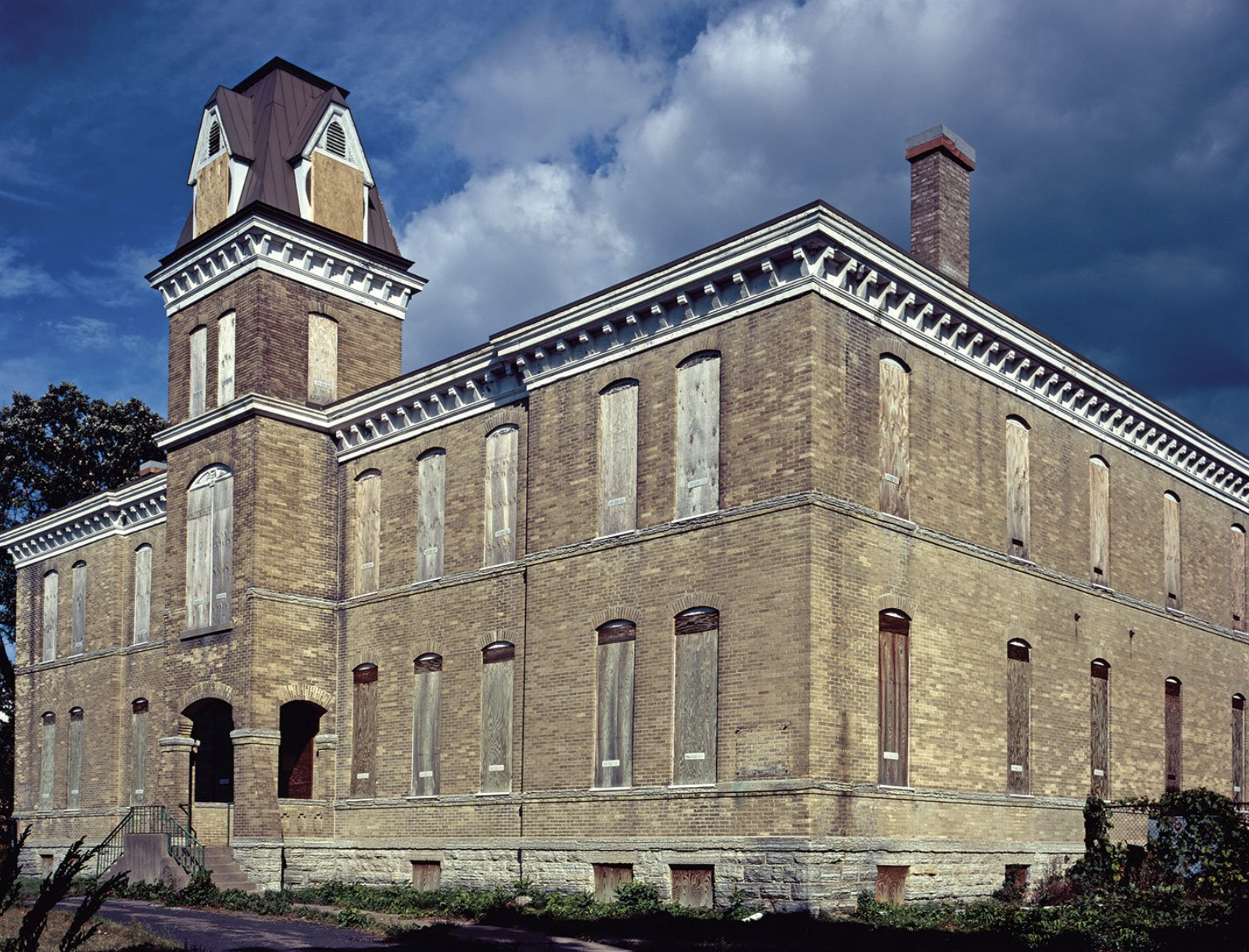
After sitting mostly vacant since the last World War, Fort Snelling’s Upper Post campus has been preserved and reimagined—as apartments for veterans, military members, and their families.

The Upper Post’s oldest buildings date to 1879—some 50-odd years after the first historic buildings were built at the lower fort. Over its history, thousands of soldiers have quartered there. And in style, no less, as its polo fields, golf course, and trick pony shows, all of which drew civilian crowds from Minneapolis and St. Paul, earned Fort Snelling a reputation as “the country club of the Army.”

Fort Snelling also served as a “separation point” in 1945 and 1946. There, many soldiers who helped win World War II bade their last farewell to army life. Shortly after, the fort was decommissioned and the Upper Post passed on to the Veterans Administration and later the DNR, only for the buildings to sit largely unused.

As we stroll the grounds, Gustafson recounts memories like he’s flipping over seashells on the beach. There were the rickety steps of the tower, the Army Band barracks, which later housed Japanese American code breakers.The officer’s house—there’s a whole row of them at the Upper Post, running perpendicular to the airport tarmac next door—fitted with an ornate 19th-century staircase.

Then there are the massive barracks themselves. When Gustafson was last here, he photographed the buildings, which had windowpanes that were shattered like jagged teeth. He’d even ventured inside, but barely.

“For a million dollars, I don’t think I would have gone to the lower level,” notes photographer Mark Gustafson.

Fast-forward 18 years and nearly $200 million, and the barracks are being converted into simple, stylish apartments with whitewashed walls and stone countertops.

The revamp was born of a public-private partnership, headed by the Minnesota DNR, the Minnesota Historical Society, Hennepin County, and other entities. Over the years, myriad fates had been proposed for the property—an aviation center, an athletic complex, a charter school—before the group settled on a proposal by real estate developer Dominion.

The $160 million–plus project received significant funding in government bonds and low-income housing tax credits. The apartments, billed as affordable, start at $1,235 a month for a one-bedroom and $1,874 for a four-bedroom. And, of course, there’s that historical continuity—Dominion says it’s working to get military families connected with the apartments.

Gustafson, for his part, never had a personal agenda for the Upper Post’s fate. He simply wanted to save it. After his photos were published on the front page of a 2007 Sunday Life issue of the Pioneer Press, he got a call from a man whose father, Vern, had been stationed at the Upper Post during World War II. The two men met Gustafson and his fellow preservationist Todd Adler there. Vern, age 92, outfitted in sneakers and spectacles, gave them a tour. It was the first time he’d been back since 1942.

“The number of military people that were here from the 1800s up to the present—it’s a huge number,” says Gustafson. “To me, it was just about preserving it for their sake.” 

Read the full article.

Related Links

If there is a home that you would like more information about, if you are considering selling a property, or if you have questions about the housing market in your neighborhood, please reach out. We’re here to help.