Just Listed: $90K in Upgrades in The Meadows


RARE 4 BEDROOMS + DEN UNDER $600K IN CASTLE ROCK!

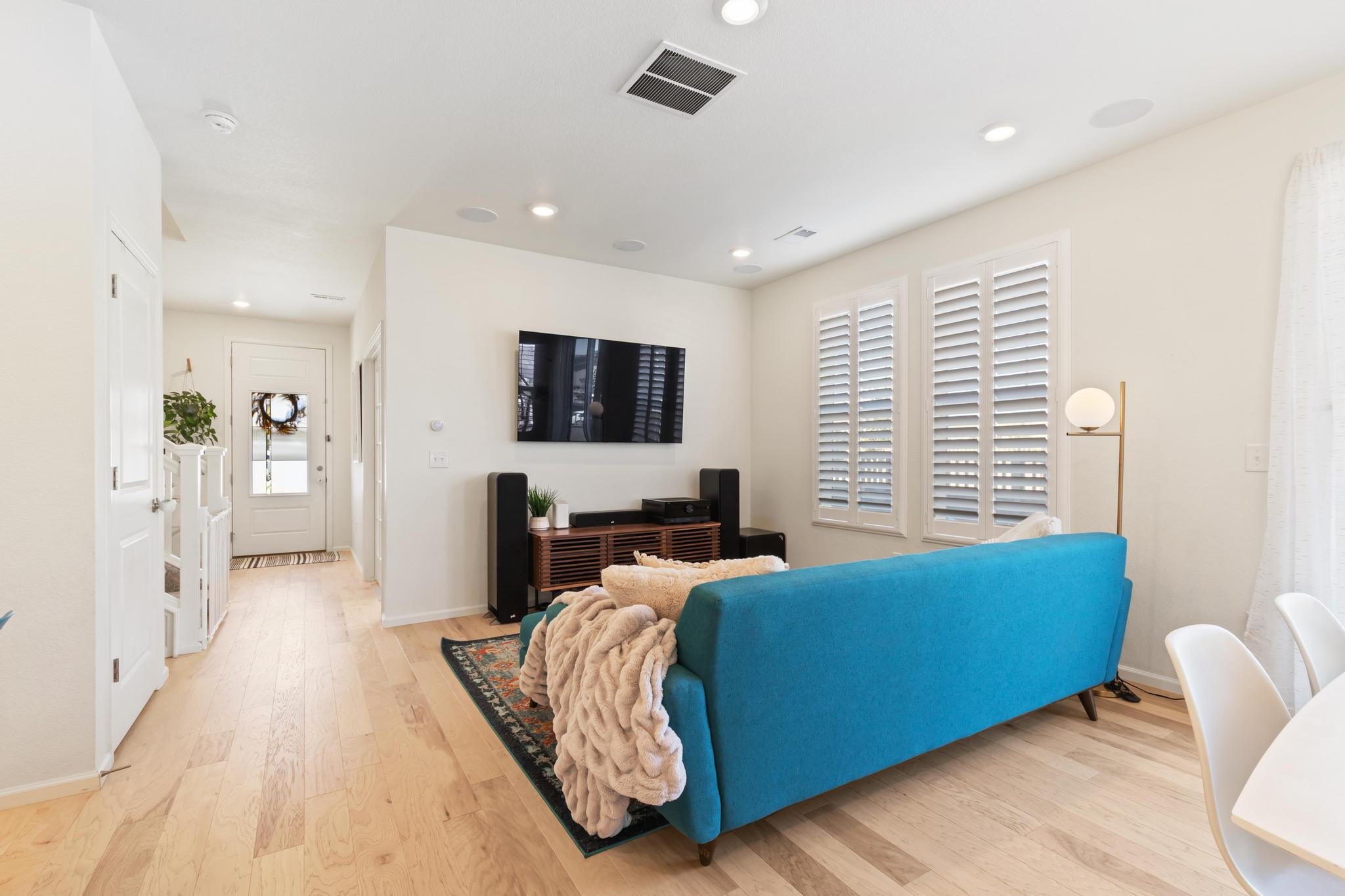
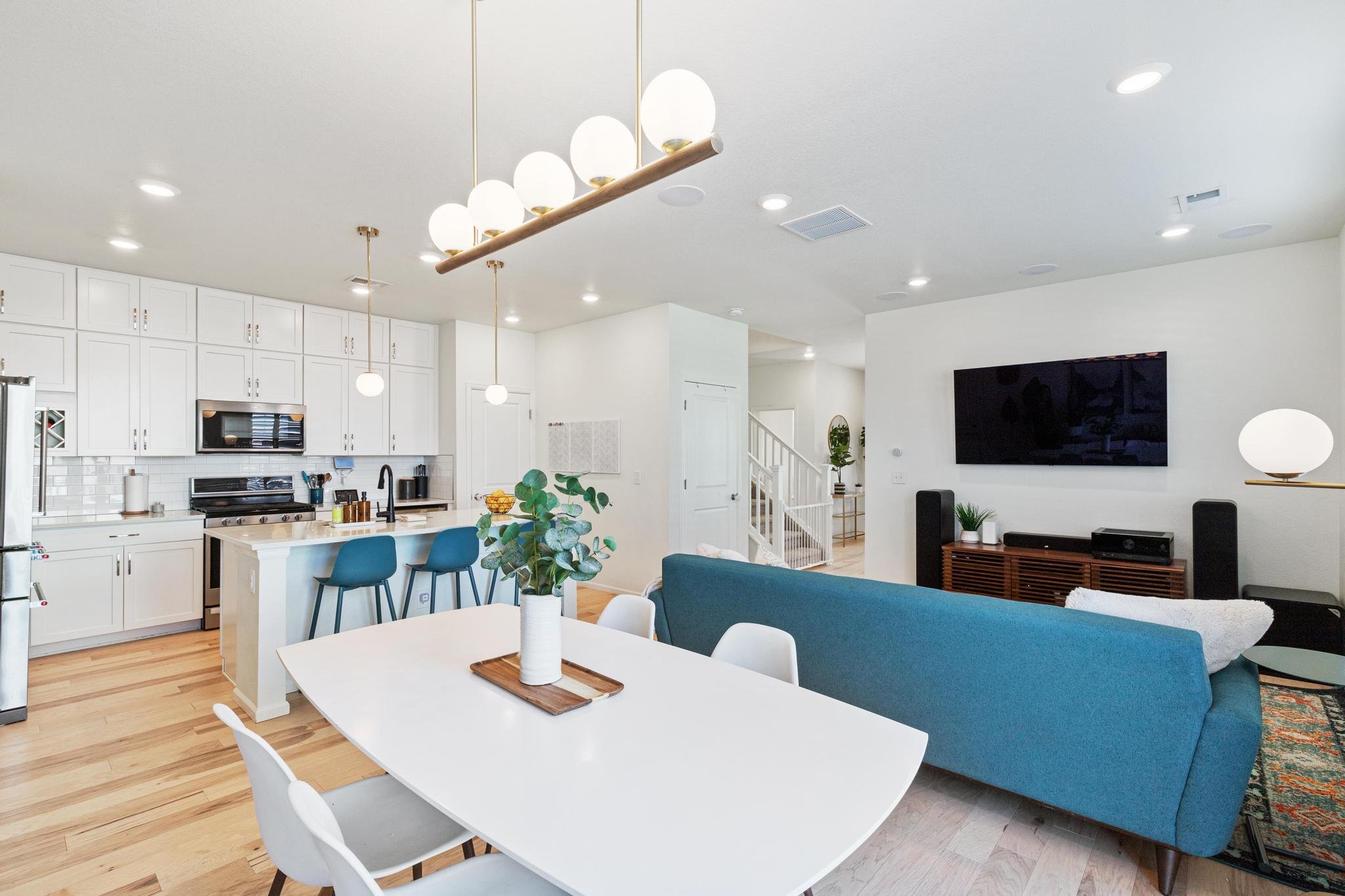
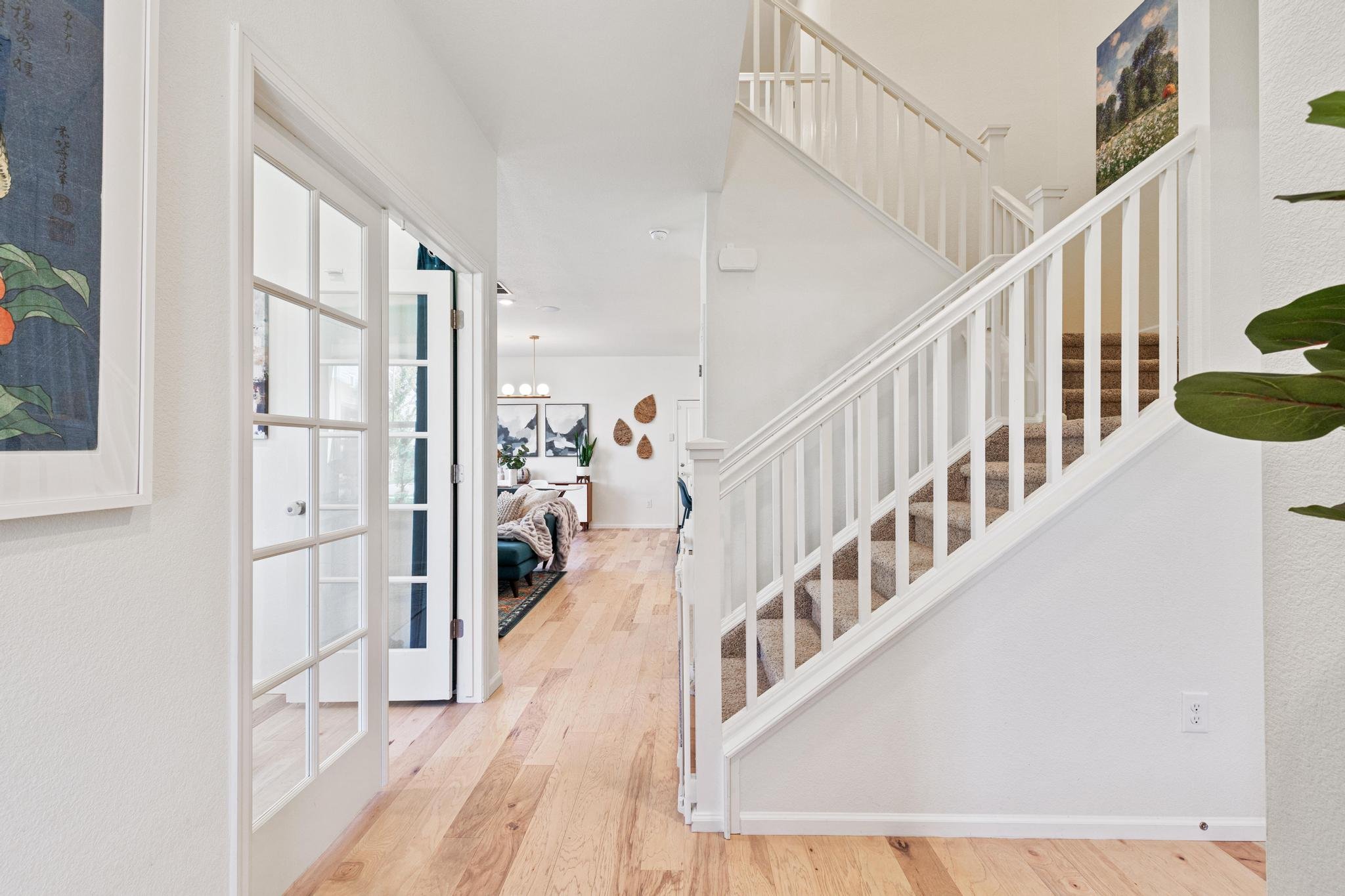
Welcome to The Villas in The Meadows, a pleasant + vibrant paired-home community where the HOA maintains the front landscaping + snow removal! Get your weekends back with zero maintenance living + enjoy being so close to community pools, amazing parks, miles of trails, open space, hiking, the incline + historical Downtown Castle Rock known for its breweries, lively restaurants + quaint shops! This nearly-new 2020 home has $90K in upgrades + it shows! The kitchen is a dream with its stacked cabinets, quartz countertops + upgraded appliances. Working from home is a breeze in the private, main floor den with full-wall built-ins + natural light that brightens up this inviting space! Upgraded hickory wide-plank EVP flooring, surround sound, two large pantries, storage, upgraded lighting + wood shutters complete the main floor. Upstairs you’ll spread out in four HUGE bedrooms, two upgraded bathrooms + laundry – plenty of room to grow here! Enjoy the outdoors in your highly coveted, xeriscaped, end-unit yard with views of the open space + trails right outside your door! Only five minutes to the Outlets, 15 minutes to DTC, 30 minutes to Denver. Castle Rock has the charm of a small town but the amenities of a big city!

Listed by Janell Arant for West + Main Homes. Please contact Janell for current pricing + availability.


Have questions?
West + Main Homes
(720) 903-2912
hello@westandmainhomes.com

Presented by:
Janell Arant
(720) 469-5332
janell@westandmainhomes.com


Search homes in Colorado
 

These Are the 10 Cheapest States to Buy a House in 2022, According to a New Report


The housing market varies from state to state, and between prioritizing location, calculating taxes, and paying utilities, it can be difficult to discern which cities truly have the most affordable homes.

Still, people try.

Mortgage lender site Homebuyer.com recently published a new report on the 10 cheapest states to buy a home by tallying median home prices, household income, and estimated monthly mortgage payments. By assessing the median home price and average income, the homebuying site was able to calculate the percentage of income paid to the mortgage.

Here are the cheapest states to buy a home, according to their research:

1. Iowa 

Median home price: $147,800
Median household income: $79,500
Estimated monthly mortgage payment: $702.22
Percentage of income to mortgage payment: 10.60%.

2. Indiana

Median home price: $141,700
Median household income: $73,300
Estimated monthly mortgage payment: $673.23
Percentage of income to mortgage payment: 11.02%

3. Ohio

Median home price: $145,700
Median household income: $75,300
Estimated monthly mortgage payment: $692.24
Percentage of income to mortgage payment: 11.03%

4. Nebraska

Median home price: $155,800
Median household income: $79,400
Estimated monthly mortgage payment: $740.22
Percentage of income to mortgage payment: 11.19%

5. Kansas

Median home price: $151,900
Median household income: $77,400
Estimated monthly mortgage payment: $721.70
Percentage of income to mortgage payment: 11.19%

6. Mississippi

Median home price: $119,000
Median household income: $60,000
Estimated monthly mortgage payment: $565.38
Percentage of income to mortgage payment: 11.31%

7. West Virginia

Median home price: $119,600
Median household income: $60,300
Estimated monthly mortgage payment: $568.23
Percentage of income to mortgage payment: 11.31%

8. Oklahoma

Median home price: $136,800
Median household income: $67,000
Estimated monthly mortgage payment: $649.95
Percentage of income to mortgage payment: 11.64%

9. Michigan

Median home price: $154,900
Median household income: $75,300
Estimated monthly mortgage payment: $735.95
Percentage of income to mortgage payment: 11.73%

10. Arkansas

Median home price: $127,800=
Median household income: $60,700
Estimated monthly mortgage payment: $607.19
Percentage of income to mortgage payment: 12%

Keep reading.

Related Links

If there is a home that you would like more information about, if you are considering selling a property, or if you have questions about the housing market in your neighborhood, please reach out. We’re here to help.

Search Homes in Colorado

Search Homes in Oklahoma

Search Homes in Oregon

Why Idaho’s Home Values Are Increasing More Than Any State in the Country


The value of a typical home in Idaho more than doubled in the past five years—a feat no other state can claim

With low interest rates and a life-altering pandemic that found many trading in their commute for remote work, it’s no secret that the real estate market in 2022 looks a whole lot different than it did five years ago. Those circumstances led many would-be homeowners to broaden their search, looking outside of the cities and suburbs they’d normally consider. And while it’s been apparent for at least a year that these shifts stood to benefit sellers in more rural states, the state to actually see the biggest growth in real estate prices since 2017 may not be the first one that comes to mind.

According to data from Zillow’s Home Value Index, Idaho saw the most significant change in typical home value over the past five years. Based on the real estate platform’s algorithmic “Zestimate” of home values, which uses a wide array of data points beyond sales prices to more comprehensively assess a given market, the value of a typical home in the Gem State jumped from $222,122 in July 2017 to $472,272 in July 2022.

That’s an astonishing increase of just over $250k, which translates to a growth of 112.6%. Idaho’s growth far exceeded not just the rest of the country, at a time when every state saw gains of at least 34%, but even its closest competitors: Second-place Arizona and third-place Utah saw five-year changes of 95.9 and 91.4%, respectively. While Utah’s pure dollar increase of $273,608 outpaced Idaho, it still found a place in the top five alongside Hawaii, California, and Washington, the three most expensive states (excluding Washington, D.C.) in terms of typical home value.

If these Zestimate increases can be considered a proxy for the value of living in a given place, metro-level data suggests that new (and existing) Idahoans enjoy the balance of a relatively urban area within an otherwise largely rural state. Showcasing a 117.8% growth in typical home value from 2017 to 2022, Boise was the only area to exceed Idaho’s state-level increase of 112.6%, with home values rising $276,676 over five years to a price of $511,618 by this July.

Those who relocated to Boise from out of state got good bang for their buck as well: Zillow further notes that these movers typically gained 68 square feet at a price that was about $145,000 less than the value of their prior home. That’s enough extra space for a cozy but viable home office, and a tidy profit with which to redesign or renovate one’s entire space as needed.

Other Idaho areas that gained ground showcased connections to the outdoors. Idaho Falls, Twin Falls, and Pocatello all saw prices increase by more than 100% over five years, with each situated a short distance from the Snake River. Coeur D’Alene, where the Spokane River flows into the town’s eponymous lake, saw property values rise by 109.3%. Hailey, which offers access to Sun Valley at a slightly more affordable rate than the ski town itself, saw comparatively modest but still significant growth of 87.5%. By way of out-of-state comparison, Summit Park, tucked between Salt Lake City and Sundance host Park City, saw prices increase by 108.6% to a typical value of just under $1.47 million.

Between attractive locations, extra space, and the fact that ninth-place Idaho’s typical 2022 home value is closer to that of 15th-place New Hampshire ($436,623) than eighth-place Oregon ($524,718), you have the recipe for real estate demand. “States where home values grew the most over the past five years tend to offer relative affordability, as well as a lifestyle that many are attracted to,” says Zillow senior economist Nicole Bachaud. “Markets that offer year-round outdoor living and easy access to outdoor amenities have been the most in-demand.”

Between a retreat from historically low interest rates (a move that also speaks to the realities of inflationary concerns) and a gradual return to the office, the moment to drop everything and save money by moving to a place like Idaho may be on its way out. Even still, the data goes to show that homeowners might still be able to get more for less, if they’re willing to look for hidden gems.

Read more on Architectural Digest.

Related Links

If there is a home that you would like more information about, if you are considering selling a property, or if you have questions about the housing market in your neighborhood, please reach out. We’re here to help.

Search Homes in Colorado

Search Homes in Oklahoma

Search Homes in Oregon

Next Week is The Best Week to Buy a Home


More than 6% of homes may have reduced prices during the week of September 25

It is general knowledge that spring time is home selling season, but the best time to buy a house can change from year to year. According to a report from Realtor.com published Wednesday, in 2022, the best week to buy a house is from September 25 to October 1.

Many in the industry view fall as “off season” for the housing market, which offers opportunistic buyers many favorable factors including more listing, less competition, and lower prices.

According to Realtor.com, those who buy during this week can expect more than 6% of homes with reduced prices, savings of more than $20,000 on average, approximately 46% more homes to choose from as compared to the average week to date, extra time to make buying decision with homes expected to stay on the market 15 days longer than summer’s peak, and less competition as as demand during the best week to buy is historically 26.9% lower than the yearly peak week and 8.5% lower than the average week.

As many prospective homebuyers have faced a multitude of challenges over the past year, from intense competition to limited inventory, as well as rising mortgage rates and record high home prices, they may be looking for any advantage they can get.

“If you’re flexible on your timing and can budget for higher rates, early fall can be a great time to secure a home, with a number of factors aligning to make it the best time of the year both in terms of price and competition,” Danielle Hale, the chief economist at Realtor.com, said in a statement. “This is especially true for first-time buyers and others who are not trying to sell a home at the same time as their purchase.” 

On the other end of the homeownership lifecycle, a Thursday in late April is the best time to list a home, as home seller can expect to sell their property for 2.8% more than other times of the year.

Learn more on Real Trends.

Related Links

If there is a home that you would like more information about, if you are considering selling a property, or if you have questions about the housing market in your neighborhood, please reach out. We’re here to help.

Search Homes in Colorado
Search Homes in Oklahoma

Search Homes in Oregon

Rising Colorado Springs home prices, rents make it tougher to attract and retain workers


Housing costs aren’t just an issue for entry-level workers and renters, according to a poll of likely voters in Colorado Springs and El Paso County commissioned in December by the Colorado Springs Chamber of Commerce & EDC.

The poll found 89% of those surveyed making an annual income of $50,000 or less said surging housing costs created a “big problem” in finding affordable housing, and 71% of residents earning between $50,000 and $100,000 agreed housing costs were a problem.

“This is a fast-growing community, and these are growing pains,” said Johnna Reeder Kleymeyer, the chamber’s CEO. “It is unconscionable that people making between $50,000 and $100,000 a year would struggle to afford housing. That is supposed to be a livable income.”

The telephone poll, which included both landlines and cellphones, of 409 randomly selected likely voters was conducted by WPA Intelligence, a Washington, D.C.-based market research and polling firm the chamber has used regularly for polling. The poll’s margin of error was 4.9%.

Rising housing costs have made recruiting entry-level employees more difficult for UCHealth in Colorado Springs and has even resulted in some candidates for management-level jobs — such as a director of oncology candidate from Michigan — to turn down offers when they found buying a home locally much more costly and difficult than expected, said Jeff Johnson, vice president of human resources for UCHealth.

“We just increased our minimum pay to $18 an hour but a single-room apartment costs $1,500 to $1,600 a month, and that is a big chunk of coin unless you have a roommate,” Johnson said. “For nurses, we aren’t seeing as many applicants from other states as we did before COVID. So we are hiring more new graduates from nursing school than we typically would take. We are seeing the problem of high housing costs creep into the middle class.”

Hiring challenges have come as UCHealth is working to rapidly grow its staff, adding 1,500 employees in the past year; one-third of the new hires were made in the Colorado Springs area, where the nonprofit employs about 6,500 people. To help fill openings, UCHealth launched its Ascend Career Program, which offers entry-level staff a path to get promoted, often with free training, including bachelor’s and master’s degrees in many health care fields.

“We still find that candidates see Colorado Springs as attractive place, especially with all of the changes in the downtown area and the outdoor recreation opportunities,” Johnson said. “There is still momentum because of our location.”

Colorado state demographer Elizabeth Garner said surging housing prices along the Front Range result from a housing shortage that developed during and after the Great Recession. Housing construction in Colorado averaged about 50,000 units a year before the downturn and dropped to about 10,000 units a year during and afterwards, she said.

“The problem is we stopped building after the Great Recession and supply has been greatly diminished. and if you want job growth, you cannot have it without housing growth,” Garner said.

The UCCS Economic Forum has estimated that the Colorado Springs area needs an additional 12,125 housing units to meet current demand, while the state needs another 225,000 units, and that doesn’t even include housing for newly arriving residents.

The Affordable Housing Collaborative — which includes the Housing and Building Association of Colorado Springs, the Colorado Springs Chamber and EDC, the Pikes Peak Association of Realtors, the Apartment Association of Southern Colorado and the Downtown Partnership — formed in 2018 to come up with ideas and plans to encourage and fund construction of more housing targeted at entry-level and middle-income workers.

The group has asked the Colorado Springs City Council and the El Paso County Board of Commissioners to help reduce regulatory and financial burdens to building affordable housing. Among the proposals are imposing impact fees to help pay various development fees for such projects and allocating taxes paid on short-term rentals such as AirBnB or VRBO from the city’s tax on hotel rooms and rental cars for affordable housing.

The collaborative also is seeking a sales tax exemption on building materials used in affordable housing projects, quicker regulatory reviews of such projects and encouraging higher housing density in the current rewrite of the city’s zoning code.

“The people most likely to relocate to a new area are 18 to 32 years old and those are people are moving to start a career and family,” said Kleymeyer, the chamber’s CEO. “If there isn’t enough (housing) availability and they can’t afford to live here, then employers will not have the labor to fill jobs. This is not just an issue for low-income residents but is an issue for all of Colorado Springs and El Paso County. We all need to be concerned if we want to find employees in the future.”

Read the full article on The Gazette.

Related Links

If there is a home that you would like more information about, if you are considering selling a property, or if you have questions about the housing market in your neighborhood, please reach out. We’re here to help.

Search Homes in Colorado