New-Home Costs Rising at Unparalleled Rate


They’ve jumped 42% over the last three years, data shows. What are builders doing to bring some relief to the market?

Inflation is pushing up homebuilding costs at an unprecedented rate, according to Bank of America’s Who Builds the House? report. Supply-chain disruptions and labor shortages are adding pressure to rising prices.

The average cost for materials to build a single-family home jumped 42% from 2018 to 2021, adding thousands of dollars to the price of a new home, according to the report. The median sales price of a new home in April reached a record $450,600, a 20% hike from a year earlier, Commerce Department data shows.

The higher material costs have been passed along to home buyers, who are facing the double whammy of rapidly rising mortgage rates. First-time buyers, in particular, are increasingly becoming priced out of the new-home market, with only about 10% of new homes in April on the market priced at less than $300,000, according to the National Association of Home Builders. A year prior, that share was 25%.

As buyers back away from the new-home market, builders are slowing production. Housing starts have fallen to a 13-month low, and single-family construction dropped 9.2% in May, according to the Commerce Department.

“Residential construction material costs are up 19% year over year, with cost increases for a variety of building inputs, except for lumber, which has experienced recent declines due to a housing slowdown,” says NAHB Chief Economist Robert Dietz. What’s more, “The increase for mortgage rates for the first half of 2022 has priced out a significant number of prospective home buyers.”

Some builders are reducing their prices. For example, the share of new-construction homes with price cuts has quadrupled compared to a year earlier in metro areas like Austin, Texas, and Nashville, Tenn., according to Redfin data. Price cuts in new construction have tripled in Phoenix and doubled in Tampa, Fla.

Stuart Miller, executive chairman of homebuilder Lennar, told CNBC that he expects prices will readjust moving forward due to higher mortgage rates, which have nearly doubled over the past year. Rising material costs combined with accelerating mortgage rates have left buyers facing “a little sticker shock, and that will likely lead to a pause … and then some reconciliation,” he said. “But there is still a housing shortage across the country. We’ll adjust prices as need be. … Pricing may come down a bit to accommodate affordability. But America still needs homes, and we’ll continue to fill that void.”

Building Material Woes Continue

Framing lumber and engineered wood have experienced the largest price increases among materials, according to the Bank of America report. Lumber prices have been volatile over the past year; prices hit an all-time high in 2021, adding $18,600 to the average cost of a new home, according to the NAHB. However, lumber prices have fallen in recent weeks and are trading at yearly lows, though they are still higher than in 2020. Still, housing analysts say it likely will take time before consumers see any savings due to the price dip.

Other material costs in home construction also have contributed to rising prices, such as upticks in concrete, flooring and paint. The price of exterior paint jumped 14.5% in the first five months of this year, the NAHB notes. Window and door shortages, which have been blamed for many construction delays, also have added to costs. The plumbing sector has been hit hard by a labor shortage that is also leading to delayed timelines, builders note.

Further, inflation is adding to consumer costs in household furnishings, which saw prices climb 9.3% annually in January, according to the Labor Department. Appliances were up 8.5%, and floor coverings up 7.2% in the same time period.

Read more.

Related Links

If there is a home that you would like more information about, if you are considering selling a property, or if you have questions about the housing market in your neighborhood, please reach out. We’re here to help.

Search Homes in Colorado

Search Homes in Oklahoma

Search Homes in Oregon

Colorado steps up wildfire mitigation work


One lightning strike, one unattended campfire, or one drought season.

That's how far away Colorado is from the next megafire, warned Dan Gibbs, executive director of the Department of Natural Resources.

Gibbs, a certified wildland firefighter, was on the front lines of the Cameron Peak fire two years ago.

"The 2020 fire season taught us that the status quo of our forest health and wildfire mitigation programs are no longer cutting it," he said.

Gibbs, along with other state and local officials, joined Gov. Jared Polis on Monday, visiting one of the 49 state-funded projects intended to address wildfire mitigation, touring a private property in Jefferson County, which faces the highest wildfire risk in the state.

"We need to up our game on fire preparedness," Polis said, surrounded by state and county officials and with a crew of seven from the Mile High Youth Corps, the boots-on-the-ground young people who are gaining job skills, as well as protecting homes and people from wildfire danger.

The work crew is funded by the Colorado Strategic Wildfire Action Program (COSWAP), which is in its second year, the result of 2021 legislation. Jefferson County received $1 million from the program for its "Wildfire Safe" initiative, intended to reduce the fuel that feeds wildfires.

Fire mitigation efforts are more important than ever, Polis said, pointing to the 2020 trio of record-setting fires and the Marshall fire that tore through a thousand homes last year. Over the past two years, Colorado has committed around $145 million in state funds and leveraged millions in federal funds for forest health and wildfire mitigation work to protect communities, critical infrastructure and watersheds from future wildfires.

That includes $13.3 million for on-the-ground forest mitigation work and landscape scale projects this year and $44 million to protect and restore watersheds threatened by catastrophic wildfire.

The Colorado State Forest Service also saw significant boosts to its grant programs to communities for fuels mitigation work, new funds for a state nursery to support post-fire reforestation, and investments to enhance state wildfire risk awareness campaigns.

"We've seen these (mitigation) efforts work," Polis added. "We've seen where the flames stopped, short of homes and businesses, because of effective treatments."

The natural resources department identified priority areas for COSWAP funding, including in Jefferson County near Denver, and pledged $2.8 million for eight county projects. 

"We are moving out with a purpose" and a sense of urgency, State Forester Matt McCombs said.

He applauded the efforts of state officials to understand the urgency of forest health and wildfire crisis in Colorado and respond with just-in-time funding and support. Recent fires have demonstrated the need for bold action, he said.

Thanks to the investments from the legislature and the Polis administration, the state forest service is removing more wildfire fuels from communities and watersheds, he said. 

The home picked for Monday's visit is in-between two of Denver's mountain parks near Evergreen, which McCombs called "the epicenter of fire risk" in Colorado. About 60 acres were initially cleared of overgrowth trees about 10 years ago, so the youth crew is now doing maintenance – clearing the trees that have sprung up since then. Polis called the Evergreen property a model for mitigation efforts. 

The homeowner, who did not want to be identified, explained that wildfires are a way of life in her part of Jefferson County. That included a fire 2 miles away on nearby Elephant Butte that resulted in evacuations.

"The fire was far enough way that we weren't worried at first, but then the wind changed direction," she said.

Another fire in 1998, about 5 miles away, also was affected by wind; it changed direction at one point, racing up her canyon until the wind shifted direction. 

The thick forests and steep valley walls of Evergreen are what wildfire experts call fuel and topography. The final piece of the Wildland Fire Behavior “triangle” is weather, and with hotter summers, long-term drought and sometimes fierce winds, Evergreen is one of the highest-risk areas of the state for wildfires.

And while the wildfire risk alone is harrowing, what keeps some residents up at night is the fact that Evergreen faces arguably the most challenging evacuation conditions in Colorado.

A Gazette analysis of U.S. Census Bureau population data and geospatial roadway data, along with multiple simulated evacuations modeled using emergency management software, shows Evergreen faces a high risk of congestion or gridlock during an evacuation, in addition to the high wildfire risks.

Mitigation is important not only because it protects her home — but because she also has neighbors who won't do that same kind of mitigation, the Evergreen homeowner said.

Keep reading.

Related Links

If there is a home that you would like more information about, if you are considering selling a property, or if you have questions about the housing market in your neighborhood, please reach out. We’re here to help.

Search Homes in Colorado

Search Homes in Oklahoma

Search Homes in Oregon

2022 Forecast: Midyear Update from DMAR's Market Trends Committee


At midyear, our local Denver Metro housing market is experiencing some new challenges. For the last several years, a tremendous tailwind has been pushing this market forward at a record pace.

This tailwind came from a severe imbalance between supply and demand. Now come the strong headwinds of rapidly rising interest rates, inflation and overall economic conditions trending lower.

After the financial system’s collapse in 2008, inventory dropped to low levels and remained low right up to the Covid-19 lockdowns in 2020. Post-Covid saw inventory drop even further. Will the change in overall economic conditions move inventory higher? Yes. Available homes for sale from May to June increased by 65.85 percent. We expect this trend to continue in the second half of 2022 - good news for buyers remaining in the market. 

Both 2020 and 2021 were record-breaking years for the number of closed transactions. We anticipated that 2022 would fall short of last year’s 63,684 by four to five percent. Demand has weakened as economic uncertainty weighs heavily on buyers, reducing the number of closed transactions beyond our original forecast. Expect closings to be off by seven to nine percent from last year. Given the current volatility, do not be surprised by a number that exceeds nine percent.      

As interest rates rise, so too does the cost of homeownership. This is one more reason that some buyers will exit the market further reducing demand. We anticipated small increases in 2022. Unfortunately, inflation was not transitory, thus causing the Federal Reserve to raise the Fed Funds Rate. The market reacted with mortgage rates jumping from three to six percent in a month. Our consensus sees rates finishing 2022 between six and seven percent.  

Our original forecast had average price growth of 11 to 13 percent. Given the new challenges, we are revising our forecast downward. Expect price growth of around nine to 11 percent. Even at those gains, nine to 11 percent would be considered a great year if you own a home. 

2022 will turn out to be the story of two halves. The first half was absolutely scorching, and the second half will transition to a healthier, more balanced market with steadier appreciation. We foresee supply increasing through the rest of the year due to reduced buyer demand, resulting in fewer multiple offers and offers over asking. Days in MLS will grow and price growth will drift lower. Some neighborhoods will do better than others as buyers seek a home at an affordable price. Ultimately, the housing market is incredibly resilient and will seek balance. 

Five Things to Know About the Housing Market Right Now

by Nadia Evangelou, Senior Economist & Director of Forecasting at the National Association of Realtors® and Lawrence Yun, Chief Economist & Senior Vice President of Research at the National Association of Realtors®

Mortgage rates are rising, as are home prices. Since the beginning of the year, homebuying costs about $1,000 extra every month in the Denver Metro area. Consequently, many buyers are priced out of the market as they no longer earn the qualifying income for the median-priced home.

Here’s what buyers and sellers should know now.

1. Expect mortgage rates to rise even further. After historic lows, mortgage rates rose the first half of the year. According to Freddie Mac, the rate on a 30-year fixed mortgage was near six percent in June, up from a little over three percent at the beginning of the year. With the potential of four additional rate hikes coming from the Federal Reserve, the upward climb will continue. However, we don’t expect to see the same sharp increases that the market experienced in the spring. Mortgage rates seem to have already priced in some of the effects of the upcoming Fed’s rate hikes.

For buyers, rising mortgage rates mean that they can’t afford as much home. Put simply, a higher mortgage rate means a lower price tag. Specifically, buyers can afford to buy a 25 percent less expensive home than at the beginning of the year. In the Denver Metro area, the typical buyer could afford to buy a home for $540,000 with a $2,100 monthly payment at the beginning of 2022. However, current buyers can afford to buy homes of $420,000 with a $2,100 monthly payment.

For sellers, higher mortgage rates typically make the market less competitive, meaning that sellers may not see as many above-asking price multiple offers and bidding wars. Less competition may take longer to sell. Nevertheless, homes continue to sell quickly in the Denver Metro area. The average days on the market was 10 days in June. 

2. Home prices will continue to rise but at a slower pace. Due to the housing shortage, home prices continue to increase despite rising mortgage rates. While higher rates typically cause home prices to cool, that’s not currently the case. The typical home in the Denver Metro area is worth $70,000 more than a year earlier. The median home price rose by 13 percentage points in June, although mortgage rates were more than 2.5 percentage points higher than last year. Nevertheless, price gains will ease in the second half of the year as home buying becomes less affordable.

For buyers, record-high home prices make it even more difficult to afford to buy a home. At the beginning of the year, buyers earning about $100,000 could afford to purchase properties with a maximum value of $464,000. However, they can currently afford to buy homes with a value up to $413,000.

For sellers, they shouldn’t expect the easy price gains of the past year. However, sellers will continue accumulating a substantial amount in equity as prices continue to rise.

3. There are signs that the market is cooling. Both rising mortgage rates and home prices hurt affordability for many buyers. Nearly 18 percent of the households in the Denver Metro area no longer earn the qualifying income compared to a year earlier. As a result, home sales dropped by 24 percent in June, indicating that the market is cooling. As seasonality trends end, a larger reduction of home buying activity may occur. For the remainder of 2022, consistent reductions in home sale activity should be expected.

For buyers, a reduction in home sales typically translates to fewer potential buyers competing for the same listing. Thus, buyers may not need more to offer over the asking price.

For sellers, this translates to lower demand. It’s a seller’s market, but that doesn’t mean anymore that every house will sell at any price. Thus, sellers may need to reduce the listing price if their home is on the market for weeks. Data shows that sellers typically drop the listing price by six percent if the property is on the market for 20 to 30 days.  

4. Institutional buyers may increase competition for first-time buyers. Thirteen percent of home purchases were made by institutional buyers across the country in 2021. In Denver, Douglas and Arapahoe counties, the market share of institutional buyers exceeded 15 percent. Denver County (17 percent) had the most institutional buyers than any other county within the Denver metro area. With higher mortgage rates hurting affordability, more people are renting and due to low inventory, rents are rising sharply. For institutional buyers, this translates to larger profits. However, research has shown that institutional investors may be taking a significant portion of homes that would otherwise be sold to first-time and lower-income buyers.

For buyers, the presence of institutional buyers increases market competition. While most institutional buyers purchase properties below the median price, they offer all cash. Thus, first-time homebuyers in these areas seem to face an even larger competition.

For sellers, this translates to more potential buyers for their properties. While these buyers offer cash, leaseback and purchase the property ‘as is,’ homeowners choose to sell their home to institutional instead of traditional buyers.

5. Inventory is rising. It’s very promising that housing inventory is improving. There are nearly 30 percent more homes available for sale compared to January. However, in the Denver Metro area, inventory has increased even faster. This area doubled the homes that are available for sale in June 2022 compared to last year. Nevertheless, not all buyers can afford to buy these additional homes. Buyers need to earn at least $100,000 to afford to buy most of these additional homes in the Denver Metro area. For example, for buyers earning $150,000, even though affordability dropped significantly, there are about 450 homes additional homes that these buyers can afford to buy compared to the beginning of the year.

For buyers, rising inventory translates to more buying options. With more homes entering the market, buyers may be able to find a home a lot easier—and less expensive—than current conditions allow. 

For sellers, they should expect to receive fewer offers. Nevertheless, even though more homes enter the market, housing supply remains tight. In a balanced market, two million homes are typically available for sale. However, there is still a little bit over a million.

Download the report

Get more info from DMAR.

Related Links

If there is a home that you would like more information about, if you are considering selling a property, or if you have questions about the housing market in your neighborhood, please reach out. We’re here to help.

Search Homes in Colorado

Search Homes in Oklahoma

Search Homes in Oregon

West + Main Managing Broker Voted DMAR Director


Huge congratulations to West + Main Agent and Managing Broker Malisa Miller Eakins who has been voted the DMAR Director for the West District!

I'm thrilled to serve the Denver REALTOR community on DMAR's Board of Directors. This is an interesting time in our industry as we move out of an extreme sellers market, and it is important that we continue our work with purpose, ensuring that we are promoting housing equality and accessibility within our communities.

It’s so important to me that we as Realtors get involved. We can make a difference, and it doesn’t take that much to effect change.

-West + Main Agent Malisa Miller Eakins

About Malisa:

Malisa Miller Eakins has been selling residential Real Estate across the greater Front Range for many years…but that’s not why you want to get to know her. She’s filled to the brim with experience, local market knowledge, and sass. Her business is built from repeat clients and referrals…and that’s no surprise, once you work with Malisa, there’s no looking back.

Whether you’re buying your first home or looking to build upon your extensive investment portfolio, Malisa will make you feel like you’re her only client and top priority…and she’ll fight like the Mama Bear she is to ensure you get the best deal, make the most informed decisions, and capitalize on every opportunity available in your situation.

When she’s not advocating for her clients, building her skillset, or mentoring new agents to follow in her deep footsteps, you’ll find Malisa in the middle of the action…cheering her girls on from the bleachers or the audience, giving her time to local schools, non-profits and causes, or going above and beyond to make her community and industry better places to be. Need a local recommendation? Ask Malisa to share her faves…she can’t wait to fill you in!

About DMAR’s Board of Directors

The Denver Metro Association of Realtors® (DMAR), The Voice of Real Estate® in the Denver metro area, is a membership-based organization dedicated to the advancement and protection of the real estate industry. With more than 8,000 Realtor® and Industry Partner members across the Denver metro area, we are currently the largest local Realtor® association in Colorado. We strive to enable members to reach their maximum earning and career potential while offering the highest level of service to their clients and to the real estate community at large.

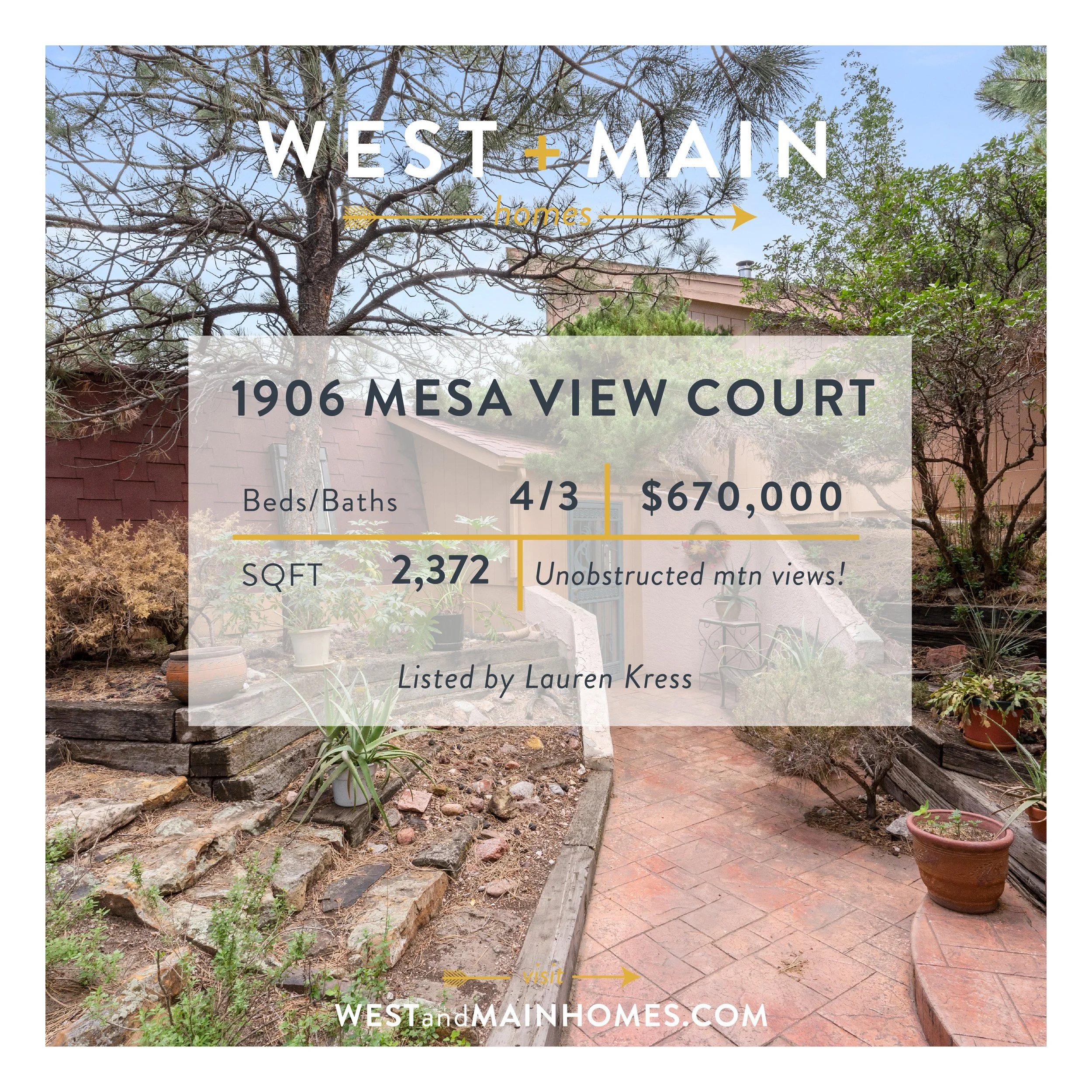
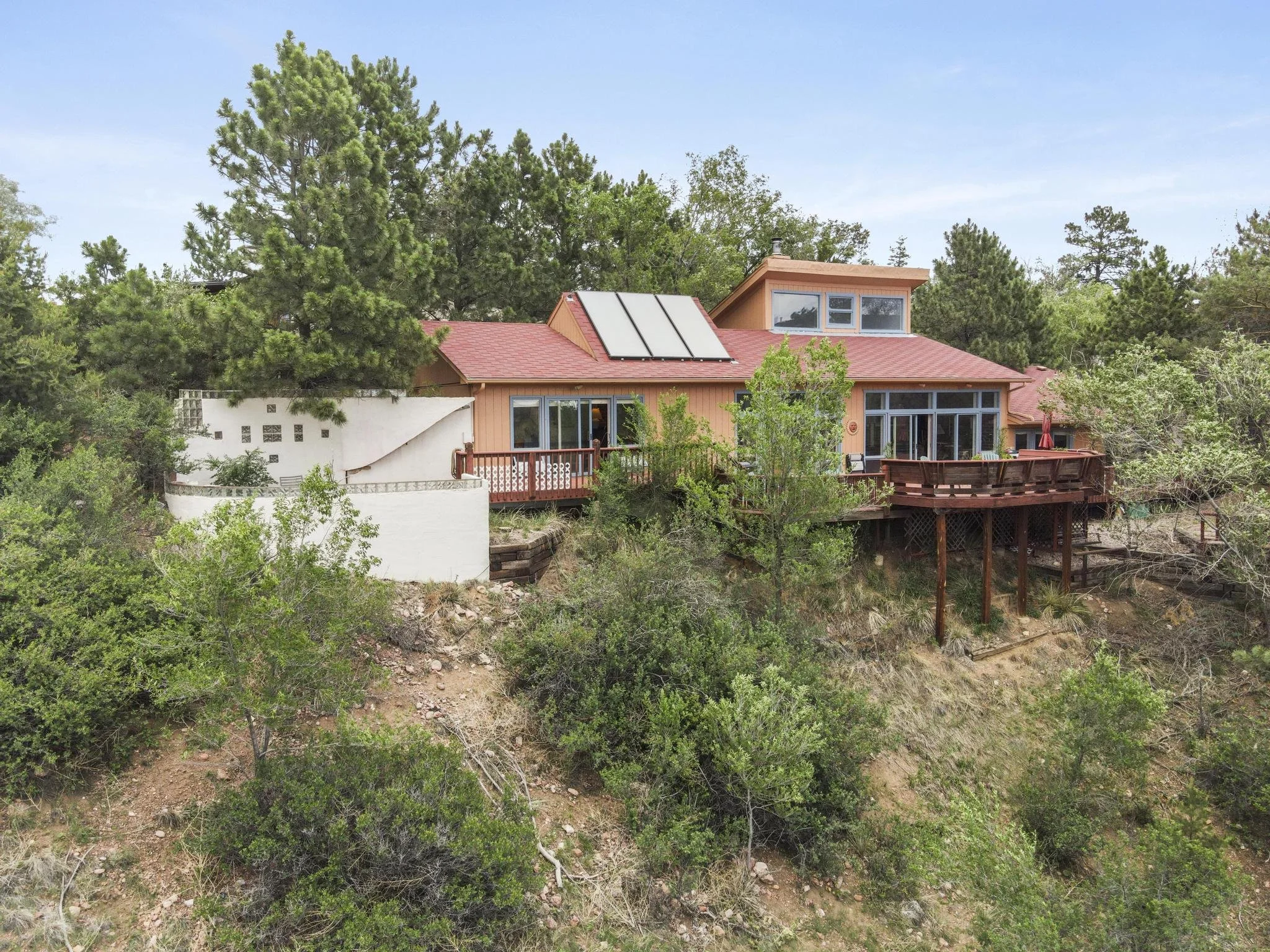
Just Listed: Colorado Springs Home with Amazing Mountain Views


Welcome home to this unique Westside gem!

This quiet street is the perfect place to relax, entertain + enjoy everything you love about living in Colorado Springs! Your home is located near Garden of the Gods, hiking trails such as Palmer Mesa Trial, and only a few short miles to Old Colorado City and downtown, along with quick access to I-25. Sit on the deck and enjoy a cup of coffee with your unobstructed views of Pikes Peak all the way down to Cheyenne Mountain. This environmentally sensitive, open concept ranch home allows for flow and easy living. The kitchen has a huge walk-in pantry and skylights to give the home an airy feeling. There's plenty of space in this 4-bedroom home to set up your perfect WFH office, and on those sunny Colorado days head outside with your laptop to the peaceful outdoor space. Homes with original features, passive solar + great bones, aren't coming to market very often these days, especially not with these kinds of views! You are going to LOVE living here!

Listed by Lauren Kress for West + Main Homes. Please contact Lauren for current pricing + availability.


Have questions?
West + Main Homes
(720) 903-2912
hello@westandmainhomes.com

Presented by:
Lauren Kress
(720) 432-3044
lauren.kress@westandmainhomes.com


Search homes in Colorado