How Much Does It Cost To Renovate a House? Average Home Renovation Costs for Bathrooms, Kitchens, and Beyond


Home renovations and remodeling costs may be a hard pill to swallow after shelling out the purchase price of a new home, but if you’re the proud homeowner of a fixer-upper (or even if you’re the proud owner of an older home that needs some work), you may be itching to make some updates.

And that will get you wondering: How much does it cost to renovate a house? Knowing your numbers ahead of time is crucial, lest you end up with plans that are bigger than your budget.

So, before you so much as take a peek at a tile sample, check out this detailed breakdown on how much your dream home renovation will set you back, plus average home renovation costs and your potential return on investment (ROI).

Average home renovation costs

Your exact cost to renovate a house will depend on its square feet, the region you live in, and just how much of a face-lift your home needs. But to get a rough idea, Than Merrill, founder of FortuneBuilders.com, gave us an estimate of what the average costs associated with different remodels look like:

  • Low ($25,000 to $45,000): A small remodel would likely include interior and exterior painting, small repairs (like refinishing cabinets) and new landscaping.

  • Medium ($46,000 to $75,000): A more involved remodel would include the low-cost upgrades above, plus a total kitchen remodel (depending on appliances) and minor bathroom remodel.

  • High ($76,000 and up): Low- and medium-cost upgrades, plus fixing any foundation issues, and roof and sewer line problems.

The largest home renovation costs

Sure, paint can play a big part in a remodel, but gallons of semi-gloss will be a drop in the bucket compared with big-ticket items for certain rooms (we’re looking at you, kitchen and bathroom).

Remember, it’s the appliances and cabinets in those rooms that eat up the biggest chunk of money. Here’s what homeowners can expect to pay in terms of the national average of home renovation costs, according to Remodeling.com and HomeAdvisor.com.

  • Kitchen: The national average cost of a kitchen remodel is $27,492. If a kitchen only needs minor upgrades, renovations should start at around $10,000. A full gut can reach more than $79,982, depending on the quality of materials and appliances installed.

  • Bathroom: A mid-range bathroom remodel typically costs about $25,251 and tops out at $78,840 for an upscale reno. (Of course, you could spend more by adding such spalike touches as a steam shower.)

  • New roof: The cost of protecting all your upgrades from the elements will run you around $30,680.

  • New floors: You might want to top off your renovation by taking up that old carpet. Installing new wood floors will cost between $2,474 and $7,031, while laminate, which is less expensive, will set you back about between $1,472 and $4,638. Of course, exact cost will depend on how many square feet you have in the kitchen.

  • Electrical updates: If you’re replacing an old panel (and a home’s worth of outdated wiring) as a part of your remodel, expect to spend $3,000 to $5,000.

  • Replacement siding: Any great remodel includes an exterior upgrade. Putting new exterior siding on your home runs to an average of $20,619.

  • Replacement windows: If you plan to replace windows and frames to save on your energy bill (you might need the savings after this renovation), the cost will range between $21,264 (vinyl) and $25,799 (wood).

  • The contractor: Unless you plan to oversee the renovation yourself, a budget should include the cost of a general contractor. They usually charge 10% to 15% of the project’s total budget. So for a $50,000 renovation, expect to pay a contractor $5,000 to $7,500.

One easy way for homeowners to save money on home renovations is to negotiate to pay actual builder costs on finish materials, says Jesse Fowler, president of Tellus Build, a green custom-build firm in Los Angeles and Santa Barbara counties.

The contractor you choose should be getting a discount on retail prices, and Fowler says that this can benefit you, too, in that you can “capture some or all of those savings.”

Home renovation costs and return on investment (ROI)

Ah, the magic words that make homeowner’s pain of parting with thousands of dollars more palatable, as those big checks you write for home renovation costs today may pay dividends if you ever sell your home.

A typical mid-range kitchen remodel typically yields an 96% return on investment. If you plan to go big with a major, upscale remodel however, you can only expect a 49% ROI.

Meanwhile, a mid-range bathroom renovation boasts an ROI of 74.%, with that figure dropping to 45% for an upscale remodel. Check here for the home additions that offer the best return on investment.

With the help of the Renovation Calculator at My Home, you can determine and prioritize the improvements that would yield the maximum return on investment (ROI), improve the marketability of your house, draw in potential buyers, and potentially command a higher selling price. Follow a few steps to get your remodel, addition, or expansion cost in minutes.

Read more at Realtor.com

Related Links

If there is a home that you would like more information about, if you are considering selling a property, or if you have questions about the housing market in your neighborhood, please reach out. We’re here to help.

Search Homes in Colorado

Search Homes in North Carolina

Search Homes in Oklahoma

Search Homes in Oregon

Search Homes in Minnesota

Tired of Waiting for Lower Mortgage Rates? 4 Steps That Could Slash Your Rate Right Away


Homebuyers who are tired of waiting for lower mortgage rates can take concrete steps now to get a better deal on their own, according to a new report from the Realtor.com® economic research team.

Altogether, the four steps examined in the report can lower a borrower’s mortgage rate by nearly 150 basis points, or 1.5 percentage points. On a $500,000 home purchase with 20% down, that equates to a savings of $400 per month, or $4,800 annually.

Shopping around for the best rates yields the biggest average rate savings, of 86 basis points. Improving your credit score to at least Very Good (750-plus) can shave off an average of 39 basis points. And increasing your down payment to at least 20% of the purchase price, while keeping a debt-to-income ratio of less than 30%, reduces rates by a combined 22.5 basis points.

These findings come as average rates on 30-year fixed mortgages hover just below 6.5%, according to Freddie Mac. That’s down from the recent peak of 7.79% reached last year, but still more than double the average rates three years ago.

Following a tightening cycle to fight inflation, the Federal Reserve is expected to begin cutting its benchmark rate next month, after Fed Chair Jerome Powell recently announced that “the time has come for policy to adjust.” That will bring down borrowing costs, including mortgage rates, though how far and how quickly they fall remains to be seen.

“Certainly, the 10-year Treasury and Fed’s target policy matter a lot to mortgage rates,” says Realtor.com senior economist Ralph McLaughlin, the author of the new report. “But I think the real big takeaway here is, those aren’t the only things that matter. In fact, there are things that borrowers can do themselves to lower their mortgage rate.”

To calculate the impact on mortgage rates, Realtor.com analyzed more than 2 million mortgage originations between 2022 and 2023 using Freddie Mac’s Single-Family Loan-Level Dataset and statistical methods that allow us to determine what factors most influence a borrower’s mortgage rate at origination, all else being equal.

Here’s more information on four easy ways to secure a lower rate:

1. Shop different mortgage lenders

One of the most impactful ways to lower your mortgage rate may also be the easiest: getting quotes from multiple lenders to find the best deal.

The average difference between the highest rate and lowest rate offered to buyers who sought multiple offers was 86 basis points, the study found.

“It was surprising to see how much shopping around matters,” says McLaughlin. “We’re pushing a full percentage point there just by shopping around.”

It may also be surprising that most homebuyers don’t search for the lowest rate, but rather accept the first offer they receive.

A May study from LendingTree found that 54% of homebuyers who took out a loan for their most recent home purchase received only one offer.

By generation, baby boomers were the least likely to comparison shop, with just 28% doing so compared with 62% of millennials, the study found. According to LendingTree, nearly half of homebuyers who received multiple offers said they were able to secure a lower rate than the first offer they received.

Realtor.com offers a mortgage comparison tool to compare rates and fees from different lenders.

2. Raise your credit score

The average credit score in the U.S. was 705 as of March 2024, according to Equifax. That’s considered Good, but it is lower than the scores needed to secure the best mortgage rates.

Our study found that on average, borrowers with a Very Good or Excellent credit score (above 750) receive mortgages that are 39 basis points lower than borrowers with Bad credit scores (less than 650).

Raising your credit score can be easier said than done, but there are practical ways to boost your score in a relatively short period.

Continuing to make on-time payments is key. Another crucial factor is limiting the share of available credit being used at any given time. Maxing out your credit card can seriously weigh on your credit score, even if you pay off the full statement balance each month.

Keeping your credit utilization ratio below 30%, by either using your credit card less or expanding your line of credit, can lead to rapid improvements in your credit score.

3. Lower your loan-to-value ratio to 80%

In the first quarter of 2024, the average down payment was 13.6% of the total home purchase price, according to the Realtor.com economic research team. The median down payment amount was $26,000.

A down payment of 20% lowers your loan-to-value ratio to 80%, meaning that the loan amount is for 80% of the home’s value. According to the new report, mortgage applicants with a loan-to-value ratio of less than 80% receive mortgage rates that are 18 basis points lower than applicants with a loan-to-value ratio of over 95%.

As well, achieving a loan-to-value ratio of 80% often eliminates the need for private mortgage insurance, further reducing the cost of monthly payments.

4. Keep your debt-to-income ratio below 30%

Finally, the study finds that maintaining a debt-to-income ratio of less than 30% offers marginal improvements in mortgage rates. The figure refers to the share of monthly income devoted to debt payments, including student loans, auto loans, and credit card debt.

On average, mortgage applicants with debt-to-income ratios of less than 30% receive mortgage rates that are 4.5 basis points lower than applicants with a debt-to-income ratio of over 43%, the study found.

Although it offers only marginal direct benefits to obtaining a lower mortgage rate, lowering your debt-to-income ratio can also significantly boost your credit score, providing additional benefits to the mortgage borrower.

Read more at Realtor.com

Related Links

If there is a home that you would like more information about, if you are considering selling a property, or if you have questions about the housing market in your neighborhood, please reach out. We’re here to help.
Search Homes in Colorado

Search Homes in North Carolina

Search Homes in Oklahoma

Search Homes in Oregon

Search Homes in Minnesota

Are We Heading into a Balanced Market?


If you’ve been keeping an eye on the housing market over the past couple of years, you know sellers have had the upper hand.

But is that going to shift now that inventory is growing? Here’s a breakdown of what you need to know.

What Is a Balanced Market?

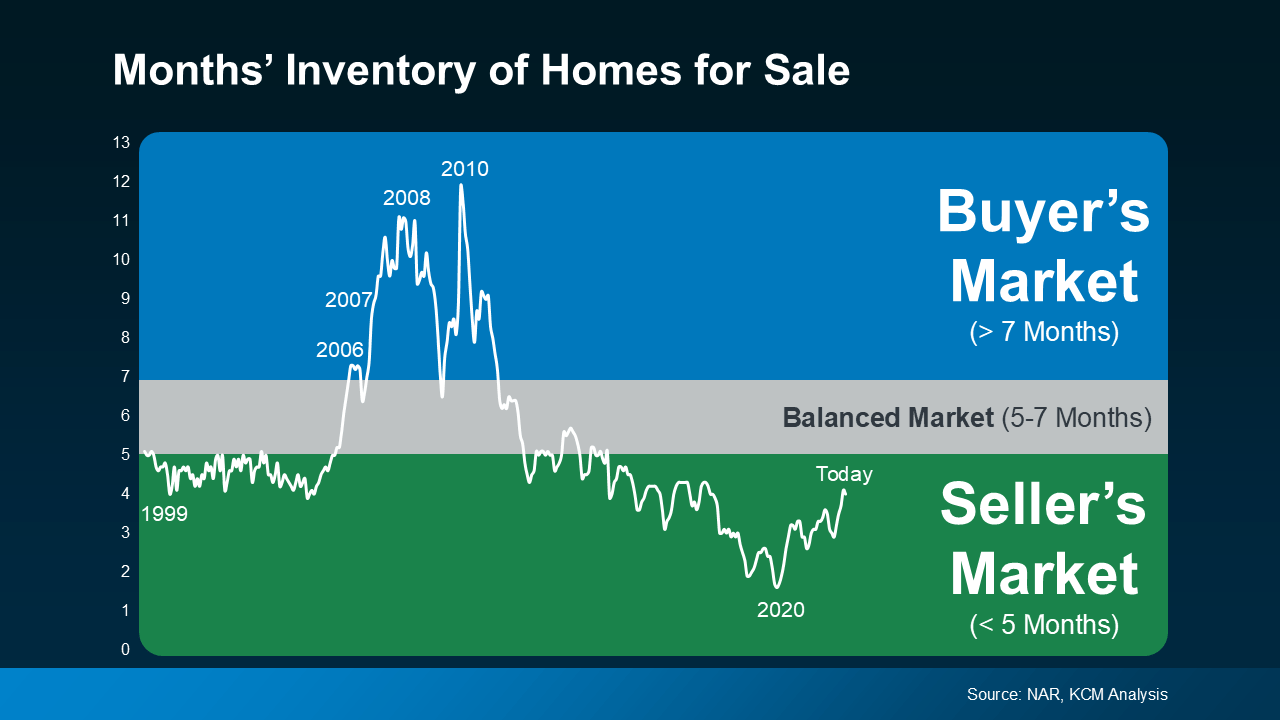
A balanced market is generally defined as a market with about a five-to-seven-month supply of homes available for sale. In this type of market, neither buyers nor sellers have a clear advantage. Prices tend to stabilize, and there’s a healthier number of homes to choose from. And after many years when sellers had all the leverage, a more balanced market would be a welcome sight for people looking to move. The question is – is that really where the market is headed?

After starting the year with a three-month supply of homes nationally, inventory has increased to four months. That may not sound like a lot, but it means the market is getting closer to balanced – even though it’s not quite there yet. It’s important to note this increase in inventory is not leading to an oversupply that would cause a crash. Even with the growth lately, there’s still nowhere near enough supply for that to happen.

The graph below uses data from the National Association of Realtors (NAR) to give you an idea of where inventory has been in the past, and where it’s at today:


For now, this is still seller’s market territory – it’s just not as frenzied of a seller’s market as it’s been over the past few years. As Mark Fleming, Chief Economist at First American, says:

“The faster housing supply increases, the more affordability improves and the strength of a seller’s market wanes.”

What This Means for You and Your Move

Here’s how this shift impacts you and the market conditions you’ll face when you move. Lawrence Yun, Chief Economist at NAR, explains:

“Homes are sitting on the market a bit longer, and sellers are receiving fewer offers. More buyers are insisting on home inspections and appraisals, and inventory is definitively rising on a national basis.”

The graphs below use the latest data from NAR and Realtor.com to help show examples of these changes:


Homes Are Sitting on the Market Longer: Since more homes are on the market, they’re not selling quite as fast. For buyers, this means you may have more time to find the right home. For sellers, it’s important to price your house right if you want it to sell. If you don’t, buyers might choose better-priced options.

Sellers Are Receiving Fewer Offers: As a seller, you might need to be more flexible and willing to compromise on price or terms to close the deal. For buyers, you could start to face less intense competition since you have more options to choose from.

Fewer Buyers Are Waiving Inspections: As a buyer, you have more negotiation power now. And that’s why fewer buyers are waiving inspections. For sellers, this means you need to be ready to negotiate and address repair requests to keep the sale moving forward.

How a Real Estate Agent Can Help

But this is just the national picture. The type of market you’re in is going to vary a lot based on how much inventory is available. So, lean on a local real estate agent for insight into how your area stacks up.

Whether you’re buying or selling, understanding how the market is changing gives you a big advantage. Your agent has the latest data and local insights, so you know exactly what’s happening and how to navigate it.

Bottom Line

The real estate market is always changing, and it’s important to stay informed. Whether you’re buying or selling, understanding this shift toward a balanced market can help. If you have any questions or need expert advice, don’t hesitate to reach out to a local real estate agent.

Read more at KeepingCurrentMatters.com

Related Links

If there is a home that you would like more information about, if you are considering selling a property, or if you have questions about the housing market in your neighborhood, please reach out. We’re here to help.

Search Homes in Colorado

Search Homes in North Carolina

Search Homes in Oklahoma

Search Homes in Oregon

Search Homes in Minnesota

Featured at West + Main Highlands Square: Bart Hartman


Join us for First Friday in Highlands Square, featuring Bart Hartman

UNEARTHED

3442 W 32nd Avenue
9.6.2024, 6-9pm

RSVP Here

Meet Bridget (Bart) Hartman

My sculptures evolve from a curiosity about how the languages of music and woodworking can intersect. By exploring common concepts from each practice, such as - shape, texture, timbre, and movement - the process of creating provides an ability to engage and heighten the space it occupies. When true intention lies behind the product's curation, a hidden language comes through and speaks to the viewer- designing a memory that will live with them. 

As I start my practice, I focus on material, movement, and shape. Each piece is crafted from upcycled wood, which determines the shape based on the amount of material available, its color, and how it can be cut. The shapes remain simple yet symbolic within these limitations, revealing repetitions and patterns in my subconscious language. From here, each piece provides me with curves and offcuts to start the next, connecting each sculpture like a string of words. It is my belief that over time, these words will grow into their own language, pulling the viewer into a greater conversation they, too, design when engaging with the work.


Learn more about Bart in our Q+A!

How did your business come to exist?

From 2017-2020, I started to grow my first business ~ Orpheus Music and Arts Festival. As a musician in school, I was exposed to a unique underground music scene just starting out, and by hosting house shows and line-ups at different DIY venues, I saw the community grow. In return, my shows started to grow, and it turned into a festival my friends and I hosted in Glenwood Springs at Sunlight Mountain. COVID ended this endeavor, and upon reflection, I realized my favorite role in hosting the festival was building the stage design and being a participating artist. I then got a job at a start-up fabrication shop,  where I learned more about business and the craft of woodworking and design. After spending the last few years there, I pulled back my hours and became a contract worker. This has given me time to work on pieces that are true to my voice. These pieces are the beginning of “Bart Designs” - a gallery of original art pieces. This business will be a lifelong project for me, and I hope to see my craft grow in a way that creates community the way Orpheus did.

What are you known for?

Currently, I think I am better known for being a member of Denver's local band, Barbara. This project started a couple of years ago and has been an amazing musical outlet for me. Writing and performing with my best friends provides constant inspiration and keeps me grounded.


What are you currently working on?

The series I created for this show is called "UNEARTHED." It is my first attempt at bringing a fictional world I've slowly created with my sister to life. These pieces are mainly inspired by symbolic forms similar to hieroglyphs, creating a baseline of language and imagery for our world. It's been fun to excavate the aesthetics and primal language for a place we've named "Zarritva," its meaning - repetition and passion. 

If you had a choice between two superpowers, being invisible or flying, which would you choose??

I would choose invisibility. I’m your classic people watcher - I love observing my surroundings, especially in chaotic settings such as restaurants or concerts. Active observation has taught me that boring doesn’t exist. It teaches your mind to slow down, revealing beauty in the banal. Being invisible would allow me to explore more moments like this without people wondering why this girl by them has completely zoned out and has a blank look to her face. Also, the thought of completely blending in with your surroundings gives me a sense of peace.


What are your thoughts about your city’s creative scene for artists, designers, crafters, makers and/or small businesses?

I’ve been in Denver for the past 8 years, and I have thoroughly enjoyed growing as an artist here. I’ve had this thought that Denver is entering its golden age as a city. It’s a very young city and somewhat small when compared to the cultures and populations of LA/NY. But it’s growing fast. This is amazing for young artists and creatives because it has an infrastructure that is accessible to creatives just starting out, giving them the ability to learn and grow their foundation. But its constant growth also allows for them to keep growing and meeting people that will challenge them. It's a tight-knit community without there being a glass ceiling when someone starts to itch for more.


Get in touch with Bart Hartman

Email: barthartmandesigns@gmail.com
Instagram: @bart_hartman_

If you are a local artist/crafter/maker/indie business owner and would like to be featured on our blog, please fill out this form or contact Ashley at ashley@westandmainhomes.com with questions...we can't wait to learn all about you!

As Featured in West + Main Home Magazine: Home Sweet Home


West + Main Agent Heidi Bricker’s clients Becca and Shea

We fell in love with the lot, and the potential that we saw. Designing and creating this space has been one of the highlights of my life.
— Becca + Shea

West + Main agent Heidi Bricker’s clients Becca and Shea always talked about wanting to buy “a piece of land” in the city.

I was skeptical of this vision or that it even existed, so it took us 9 months to find this house,” explained Becca. "We looked all over town, although we really wanted to be on the West side, closer to the mountains. The first house we ever looked at was three blocks from our current house, in Edgewater, Colorado."

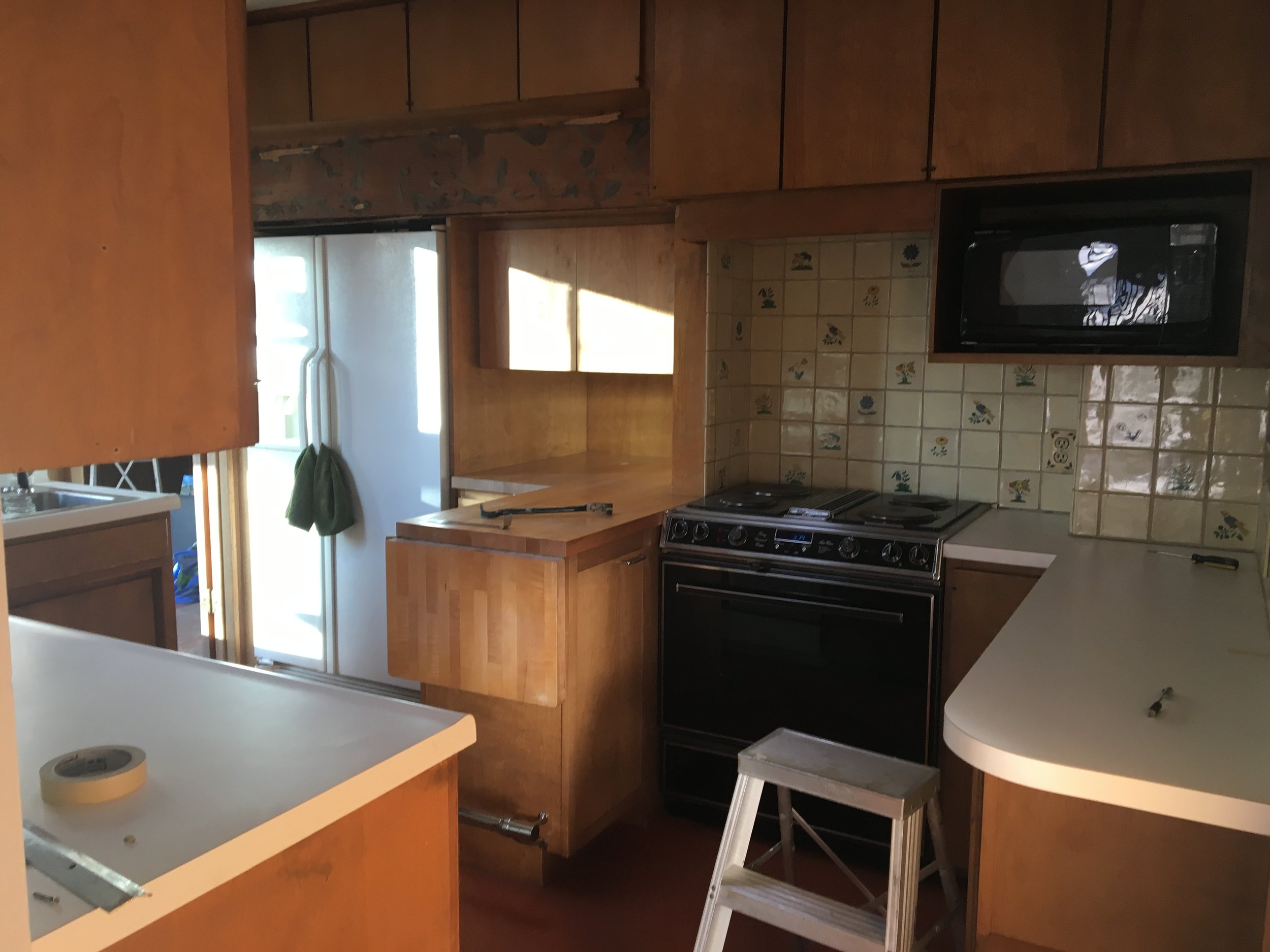
BEFORE:

After they visited that house, and intrigued by the neighborhood, they decided to drive around a bit. We randomly drove down their current street, and were blown away by the large trees and rural feel of the block.

"I remember saying, ‘THIS is the street I want to live on,' remembers Becca. “Nine months later we went under contract on our house. We were open to a home that needed some work, and when this one popped up, on almost half an acre of land, on the west side of town, with amazing two-story high windows, we knew it was for us. We fell in love with the lot, and the potential that we saw. Designing and creating this space has been one of the highlights of my life."

"Our style is honestly a perfect blend of the two of our tastes. We each had drastically different styles prior to our relationship, and over the past 12 years we have slowly figured out how to marry them together. I have always had an eclectic style, but it was much more feminine when I lived alone," said Becca.

"Shea has always had a darker more masculine style, and is a big fan of antiquing (his parents are the ultimate antiquers, so he has learned from the best). He is really good at picking through an antique store and finding the coolest thing they are selling. Almost all of the amazing antique knick-knacks that are in our home, that give it so much character, he is responsible for finding. Generally speaking though, I think this home has unleashed a whole new creative side in me, in my quest for making each and every inch feel cozy, warm and inviting, and like it tells our story."

They use a pretty neutral paint palette and add color and intrigue through art and accessories, although they do love a color drenched room.

"I used Benjamin Moore’s White Dove, Simply White, Hale Navy and Accessible Beige, as well as Sherman William's Tricorn Black. The exterior is Benjamin Moore’s Blacktop + Creamy White, and I’m also obsessed with Step Stool Green by Magnolia as well as Pigeon and Dead Salmon by Farrow and Ball."

"I think part of executing an eclectic maximalist home is purchasing from a wide variety of places," said Becca. "I have always loved mixing old pieces with new. The furniture in our home is a mix of things that Shea built (he is very handy), many thrifted/antiqued items, some pieces from West Elm, Arhaus, Ikea, Urban Outfitters, Anthropologie, and even Target. Lighting has come from all over- Pottery Barn, Restoration Hardware, Schoolhouse, Ikea, and Wayfair among others. We’ve sourced tile from all over too- Home Depot, Zia Tile, Floor and Decor and Tile Bar. Wallpaper in the garage is from Etsy. We have taken the time to collect a wide variety of art, and over the last year even worked with Delia, from sb.vrt to hone our collection even more. I think our art really contributes to the overall vibe of our home."

"There are definitely a few more projects in this house I want to accomplish. We have one more bathroom I would like to eventually remodel, and a few other smaller projects- including adding a tree-net in the sunroom:). My design brain is always on the move though... so I’m not sure what will be next. I’ve always said that after all the work we have done to this house, we will never sell it, but the mountains may eventually pull us away. If we find the perfect piece of land on a river or a lake, we may just have to start over from the beginning again!"


Related Links

If there is a home that you would like more information about, if you are considering selling a property, or if you have questions about the housing market in your neighborhood, please reach out. We’re here to help.

Search Homes in Colorado

Search Homes in Oklahoma

Search Homes in Oregon