Just Listed: Spacious Single-Story Home with Finished Basement and Mountain Views!


Welcome home to this well maintained and updated single story home with a fully finished basement in Denver.

From the moment you step in the front door you will see space for living and entertaining. The original hardwood floors have been cared for by the same owners for over 4 decades. You will find thoughtful updates in the kitchen, new windows on the main level, as well as a new laminate countertop, tile backsplash, and appliances (oven, stove, dishwasher)in the kitchen. The home provides 2 bedrooms and 2 living spaces on the main level, as well as a 3rd living space and non-conforming 3rd bedroom in the basement and full bathrooms on both levels. Enjoy entertaining as you step down into the family room with an open wall access to the kitchen to pass food and drinks! City views take you away on the porch in the very large, private back yard with an added peek of the Rocky Mountains mountains from the front of the house. At the end of a long week, cozy up to the fireplace in the family room for a game night or movie. When it is time to step outside, you will find restaurants and shops all around you, along with near immediate access to c-470, h-36, and I-25.

Listed by Makayla King for West + Main Homes. Please contact Makayla for current pricing + availability.


Have questions?
West + Main Homes
(405) 652-6635
hello@westandmain.com

Presented by:
Makayla King
303-579-0458
makayla@westandmainhomes.com


Search homes in Colorado
 

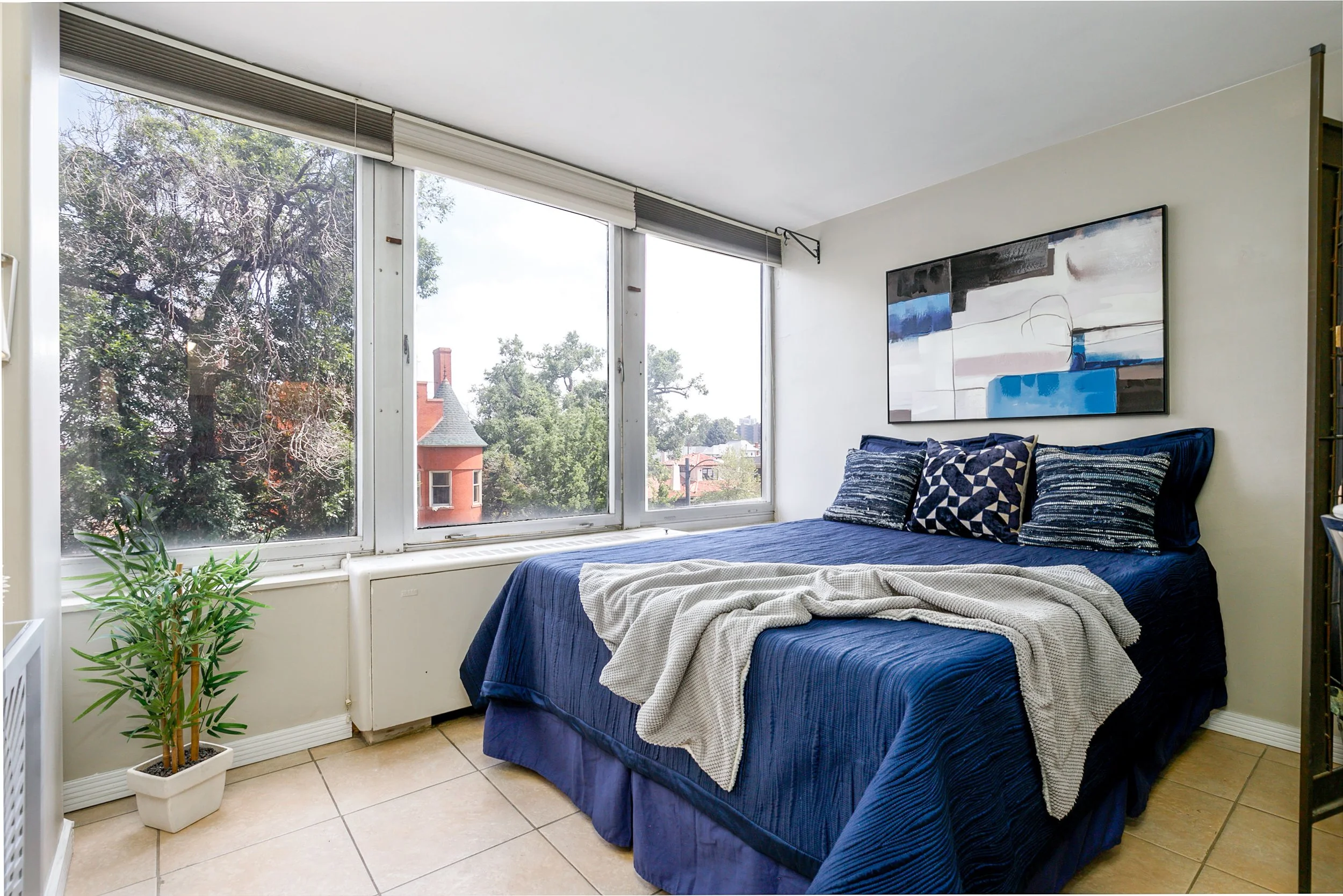
Just Listed: Studio Condo, Perfect for City Living in Governor's Park!


This is a fabulous location in the city!

Enjoy this studio condo as a pied-a-terre, a first-time home, or as a great investment property. This secured building is conveniently located close to 6th Avenue, Cheeseman Park, and Governor’s Park. Your new home in the Versailles would be walkable to Trader Joe’s, Syrup, Logan Street Restaurant and Bar, Odyssey, Angelo’s, Vesper Lounge, 9th Door, Uno Mas, Don’s Club Tavern, Mizuna and Reckless Noodle House! This studio condo boasts a walk score of 92 and a bike score of 87. Easy access to Downtown Denver’s arts, museums and much more. Light and bright North facing windows with a view of Downtown and the Capitol Dome. The unit lives large with enough space for entertaining! The building amenities include an outdoor swimming pool and fitness center. The laundry area is on-site. This unit also includes a deeded parking space and its own storage unit. Enjoy this special Governor’s Park location as your own!

Listed by Annette Knutson for West + Main Homes. Please contact Annette for current pricing + availability.


Have questions?
West + Main Homes
(405) 652-6635
hello@westandmain.com

Presented by:
Annette Knutson

303-829-5735
annette.knutson@westandmain.com


Search homes in Colorado
 

Here’s Why Life Is So Good in “15-Minute Cities”


Picture this: You walk out your front door, hop on your bike, and ride to a doctor’s appointment.

On your ride home, you drop by the grocery store to pick up a few veggies for dinner. Later, you walk to the park for a little sunset stroll.

This fantasy could be your reality if you move to a “15-minute city.”

What is a 15-minute city, anyway? As the name suggests, it’s a neighborhood or urban development in which everything residents need to thrive is within a quick 15-minute walk or bike ride from home. That includes shopping, healthcare, leisure, work, school, services — you name it.

The concept is not new — a business professor and scientist named Carlos Moreno popularized the idea back in 2010 — but it has been in the news a lot lately. And not for the reason you might guess: Conspiracy theorists latched onto the idea and falsely equated 15-minute cities to prison camps, in which governments would monitor and restrict citizens’ movements.

Recent controversies aside, the concept likely has staying power. City leaders around the globe included 15-minute cities on their list of steps communities can take to recover from the COVID-19 pandemic in a way that promotes health, sustainability, inclusivity, and economic resilience. Here’s what you need to know if you’re planning a move and want to consider a 15-minute city.

The Pros and Cons of 15-Minute Cities

Proponents say 15-minute cities have numerous benefits. Because they’re designed for walking and biking, they should help reduce our reliance on fuel-guzzling, greenhouse-gas-emitting vehicles amid human-caused climate change.

“The concept of a 15-minute city is very much on brand with the current interest in reducing our carbon footprint and mitigating the negative human impact on the planet,” says real estate broker Julia Hoagland. “When people are within a short distance of work, shopping, play, and entertainment, they don’t need to drive a car as often and might not even need a car at all.”

A prominent example of a 15-minute city in the U.S. is Portland, Oregon. Living in a 15-minute city can also help residents stay active and spend more time outdoors, which has been linked with mental health benefits. And because people are out and about (instead of alone in their cars) they’re more likely to socialize and foster connections, says real estate broker Louise Phillips Forbes. “When everything is condensed in a mini-community, people flourish through relationships that might not happen otherwise,” she says.

With key destinations so close together, residents can spend less of their time and energy on commuting and focus more on leisure activities, says real estate broker Stephane Guerrier. Buying a house in a 15-minute city can also be a savvy financial move, she adds.

“The convenience and accessibility of essential services make your neighborhood more attractive to potential buyers or renters,” she says. “When people see they can have everything they need close by, they’re willing to pay more for a home in that area.”

The flip side of this, of course, is that you’ll likely pay higher prices when you’re hunting for a house to buy. A home in a 15-minute city may simply be out of your price range.

“The closer you are to the action, the higher the prices are — that’s the typical give-and-take scenario,” says real estate agent Ivan Chorney. “If you want it all, you better be prepared to give more from your wallet.”

Depending on the type of development, you may also have to settle for a smaller home and property, and that just won’t work for everyone. “If having a big home and a big yard are the most important things to a buyer, then they’ll likely need to be farther away from the action,” Chorney says.

But if location — and, more specifically, proximity — is at the top of your real estate wish list, then buying in a 15-minute city could help you really hone in on what’s important to you in a home. This is true in New York City, which is sort of like a 15-minute city on steroids. There, residents treat public spaces, like parks and playgrounds, and shared spaces, like restaurants and gyms, as extensions of their living space, says real estate agent Kate Wollman-Mahan.

“Most New Yorkers do not have the luxury of thinking of their home as a place that can meet all of their desires, but they learn to prioritize what they really need at home,” she says.

Keep reading on Apartment Therapy.

Related Links

If there is a home that you would like more information about, if you are considering selling a property, or if you have questions about the housing market in your neighborhood, please reach out. We’re here to help.

Search Homes in Colorado

Search Homes in Oklahoma

Search Homes in Oregon

Search homes in Minnesota

What Homebuyers Need To Know About Credit Scores


If you’re thinking about buying a home, you should know your credit score’s a critical piece of the puzzle when it comes to qualifying for a home loan.

Lenders review your credit to assess your ability to make payments on time, to pay back debts, and more. It’s also a factor that helps determine your mortgage rate. An article from Bankrate explains:

 “Your credit score is one of the most important factors lenders consider when you apply for a mortgage. Not just to qualify for the loan itself, but for the conditions: Typically, the higher your score, the lower the interest rates and better terms you’ll qualify for.”

This means your credit score may feel even more important to your homebuying plans right now since mortgage rates are a key factor in affordability, especially today. According to the Federal Reserve Bank of New York, the median credit score in the U.S. for those taking out a mortgage is 765. But, that doesn’t mean your credit score has to be perfect. An article from Business Insider explains generally how your FICO score range can make an impact:

“. . . you don’t need a perfect credit score to buy a house. . . . Aiming to get your credit score in the ‘Good’ range (670 to 739) would be a great start towards qualifying for a mortgage. But if you’re wanting to qualify for the lowest rates, try to get your score within the ‘Very Good’ range (740 to 799).” 

Working with a trusted lender’s the best way to get more information on how your credit score could factor into your home loan and the mortgage rate you’re able to get. As FICO says:

“While many lenders use credit scores like FICO Scores to help them make lending decisions, each lender has its own strategy, including the level of risk it finds acceptable. There is no single “cutoff score” used by all lenders and there are many additional factors that lenders may use to determine your actual interest rates.”

If you’re looking for ways to improve your score, Experian highlights some things you may want to focus on:

  • Your Payment History: Late payments can have a negative impact by dropping your score. Focus on making payments on time and paying any existing late charges quickly.

  • Your Debt Amount (relative to your credit limits): When it comes to your available credit amount, the less you’re using, the better. Focus on keeping this number as low as possible.

  • Credit Applications: If you’re looking to buy, don’t apply for other credit. When you apply for new credit, it could result in a hard inquiry on your credit that drops your score.

When you’re ready to start the homebuying process, a lender will be able to assess which range your score falls in and tell you more about the specifics for each loan type.

Bottom Line

With affordability challenges today, prioritizing ways you can have a positive impact on your credit score could help you get a better mortgage rate. If you want to learn more, connect with a trusted lender.

Read on.

Related Links

If there is a home that you would like more information about, if you are considering selling a property, or if you have questions about the housing market in your neighborhood, please reach out. We’re here to help.

Search Homes in Colorado

Search Homes in Oklahoma

Search Homes in Oregon

Search homes in Minnesota

Should You Buy or Sell a Home in 2023? Here’s the Realtor.com Housing Forecast for the Rest of the Year


What a difference a few months can make in the housing market.

Late last year when Realtor.com® issued its housing forecast for 2023, our economics team believed the number of homes for sale would jump substantially, home prices would continue climbing, and rising rents would continue to bedevil tenants across the country.

Clearly, not all of our predictions came true. That’s why Realtor.com has revised its forecast to reflect some new realities in the housing market that are having an outsized impact on buyers struggling with higher costs, sellers reluctant to give up their rock-bottom mortgage rates, and shell-shocked tenants who endured years of landlords jacking up their rents.

“It was a good time to check in and update our forecast,” says Realtor.com Chief Economist Danielle Hale. “We made a bold call that home prices wouldn’t go down in 2023, and with the latest data, we’re revising that projection.”

The big takeaway for the second half of the year is that, while home prices, mortgage interest rates, and rents will come down a little bit, most folks won’t see much—if any—relief. There won’t be any big price drops reminiscent of the Great Recession.

In fact, the average monthly mortgage payment* is about 15% more per month than it was a year ago.

“Home costs are still going to be higher for buyers in 2023 because home price declines are very mild and not universal,” says Hale. “Some areas are still seeing home prices going up and mortgage rates are still very high.”

For-sale home and rental prices are expected to dip

In a long-awaited, 180-degree turn for the housing market, home prices are expected to finally come down a little nationally.

Realtor.com is anticipating median home list prices will dip 0.6% in 2023 compared with 2022. Originally, we had anticipated that prices would rise 5.4%. (This is only for existing homes and doesn’t include new construction.)

Even a small decrease is a departure from years of steadily climbing prices. Last year, home prices shot up 10.2% year over year.

The declines are at least partly due to prices having fallen in the nation’s priciest real estate markets, such as in the West. Buyers simply couldn’t afford those price tags plus high mortgage rates, so something had to give. In the more affordable Midwest and Northeast, prices have steadied or even risen.

“We’re seeing more divergence between how local housing markets are doing,” says Hale. “In areas that are more affordable, we’re seeing more buyer interest, more sales, and more competition keeping prices high.”

Renters are also expected to get a bit of a reprieve. Monthly rental prices are anticipated to dip 0.9%, some welcome news for renters who have been hitting their financial limits after years of large rent hikes and high inflation squeezing their budgets, In addition, more apartments are coming online, easing the shortage of rental housing. Initially, Realtor.com had projected rents would rise 6.3% in 2023.

“Asking rents are expected to fall. [But] whether any particular tenant is going to find rents are lower depends on when they last moved,” says Hale. “Renters who stayed put and didn’t contend with the higher rents of the last few years might find their rent has some catch-up to do.”

Lower mortgage rates will help stimulate the housing market

Prices aren’t the only things headed south. Mortgage interest rates are expected to decrease to 6.1% by year’s end. Realtor.com had expected they would be around 7.1% by the end of 2023.

The U.S. Federal Reserve is expected to moderate the rate hikes that have caused mortgage rates to soar and, in turn, bludgeoned the housing market. Now that inflation is finally slowing, that’s taken some of the pressure off of the Fed to raise its rates.

The Fed has indicated there might be two more rate increases this year. Once the Fed’s rate increases are done, mortgage rates are poised to fall a little.

“It means affordability will start to improve, but not drastically,” says Hale.

Fewer homes are for sale

The Realtor.com economics team had predicted that the number of homes on the market would surge as homes took longer to sell to fewer buyers. However, that didn’t work out as expected.

Homeowners who scored ultralow mortgage rates over the past few years have been loath to list their homes and give up those rates. So they’ve stayed put, keeping inventory low.

“The lock-in effect has been stronger than we anticipated,” says Hale. “That’s going to improve gradually over time. The longer existing homeowners are in their homes, even if they have a low mortgage rate, the more likely it is their current home won’t meet their needs. They’ll also have more equity that will cushion the blow” of buying a new home with a higher mortgage rate.

Builders aren’t expected to put up enough new homes to get the nation out of its housing shortage either. Realtor.com foresees the number of new housing starts plummeting 19.6% this year compared with last as builders contend with fewer buyers and an environment where it’s harder to get credit to start new projects.

Overall, Realtor.com foresees the number of homes for sale dropping 5% this year.

That lack of inventory is also holding sales back. Even buyers who can afford today’s prices and mortgage rates are struggling to find something for sale.

Home sales are anticipated to fall 15.8% this year to about 4.2 million sales. That would be the fewest number of homes sold since 2012. It’s also more dire than early predictions of a 14.1% decline in sales.

“We have seen the bottom in existing-home sales,” says Hale. “It’s going to take a long time to improve off of that low.”

Learn more on Realtor.com

Related Links

If there is a home that you would like more information about, if you are considering selling a property, or if you have questions about the housing market in your neighborhood, please reach out. We’re here to help.

Search Homes in Colorado

Search Homes in Oklahoma

Search Homes in Oregon

Search homes in Minnesota