How to Paint a Front Door and Increase Your Home’s Resale Value in the Process


A small but impactful project like painting your front door a fresh hue won’t just give your exterior an instant facelift.

There’s an even bigger payoff: This simple upgrade could increase your home’s resale value by several thousand dollars. (Psst: You’ll want to embrace the dark side.) What are you waiting for? If you’re all geared up with your new color and brush in hand, we tapped Behr manager Octave Villar to guide us through the process. For his tips on how to paint a front door—and steer clear of the typical pitfalls—read on.

Common Mistakes to Avoid When Painting a Front Door

Not Considering the Environment

Yes, this project is a minor one, but that doesn’t mean diving in without thinking of the impact that temperature, humidity, and airflow will have on the process. Schedule your job for a clear, sunny day (not too breezy) with mild temperatures to help with even application and a quicker drying time.

Painting Without a Plan

Haphazardly applying paint does not a happy homeowner (or door) make. Villar suggests starting with the inside panels and working outward so you can paint smoothly and uninterrupted.

ADVERTISEMENT

Skimping on Tools

Villar points out that investing in proper, quality tools will save you time and the hassle of potentially having to redo a messy job due to low-grade rollers that leave nap fibers on the surface or a worn-out brush that creates a rough finish.

Adding Another Layer Before the Previous One Dries

Villar says water-based paints typically take two to four hours to dry, while oil-based ones can take up to 24 hours. If you skip this step, you run the risk of creating streaks and bubbles that can be a headache to repair. 

Searching for front-door paint? Here are our faves:

How to Paint a Front Door

The Supplies

  • Mild detergent

  • Sponge

  • Bucket

  • Warm water

  • Lint-free cloth

  • Paint scraper

  • 400-grit synthetic sandpaper (or ultrafine sanding sponge)

  • Trash bin

  • Stir stick

  • Paint tray

  • Painter’s tape

  • Short nap roller

  • Nylon/polyester paintbrush or paint sprayer

  • Angled paintbrush

  • Exterior paint

  • Water-based primer

Step 1: Remove All Nonpermanent Hardware and Clean the Door

This includes knobs and hinges (if you’re taking the door off the frame). Be sure to label the pieces and set them aside in a safe place until you’re ready to reattach them. Then fill a bucket with warm water, add a bit of detergent, and use a sponge to clean any dirt or grime off the surface. Rinse with fresh water and wait until the surface is completely dry before moving on to the next step. 

Step 2: Get Rid of Any Peeling Paint

Gently clear the surface of flakes from the last paint job with a paint scraper. Sweep the remnants into a trash bin.

Step 3: Sand the Door

Use fine-grit sandpaper to lightly go over the door surface to help extend the life of the new coat and make sure that it sticks. Wipe off any sanding dust with a lint-free cloth.

Step 4: Cover the Remaining Hardware With Painter’s Tape

Tape around the edges of any fasteners or fixtures on the door (think: hinges, doorknobs, the peephole) to shield them from paint splatters.

Step 5: It’s Time to Prime

With the roller, apply the primer, starting with the large, flat areas on the back of the door. Villar recommends an angled nylon or polyester brush for corners and crevices. Let the surface dry (depending on the type of primer you bought, the outside temperature, and the door material, this could take from one to four hours), then repeat the process on the front of the door.

Step 6: Sand and Wipe Down the Door

Once the primer completely dries, use the sandpaper to lightly scuff the primer, carefully clearing the surface of any uneven spots. Wipe the door with the lint-free cloth to clear away any sanding dust.

Step 7: Now Let’s Paint!

Finally, the moment you’ve been waiting for—grab a brush, roller, or paint sprayer to apply a single coat (don’t forget to give it enough time to dry!). Then go over the door with the 400-grit sandpaper again. Add another coat and repeat the sanding process once more.

Step 8: Remove the Painter’s Tape

You don’t need to watch the drying process happen (everyone knows it’s a total snooze), but you do need to give it time. Once that’s done—you’ll know if you gently dab an unnoticeable spot with your finger and it doesn’t feel wet or sticky—carefully remove the tape and discard it.

Villar says water-based paints generally dry in two to four hours, whereas oil-based may take up to 24. To be on the safe side, wait as long as possible before using the door so your handiwork lasts.

Step 9: Reattach the Hardware

Put the doorknobs, hinges, and any other accessories back on. If you took the door off the hinges, hitch it back onto the frame. This first impression is, in fact, everything.

Get more tips like this.

Related Links

If there is a home that you would like more information about, if you are considering selling a property, or if you have questions about the housing market in your neighborhood, please reach out. We’re here to help.

Search Homes in Colorado

Search Homes in Oklahoma

Search Homes in Oregon

What you need to do with your houseplants now spring is here


Rising mercury, longer days and trees adorned with blossom: it’s difficult not to be drawn outside with the onset of spring.

But for people nurturing indoor jungles, the equinox and clocks moving forward signal a key moment in the houseplant calendar: it's time to grow.

My house plants and I limp through autumn and winter, trying to dodge crispy leaves and fungus gnats and - at worst - a feeble death. Spring marks the moment when those months of dormancy are over and the growing season begins. The worst thing you can do right now is ignore your house plants in favour of all the things shooting up in the garden; a few small jobs in spring can tide them over for the next six months.

Pruning

If you’re finding yourself staring at a load of brown, crispy leaves do everyone a favour and cut them back - they will never turn green again, I’m afraid. Carefully cut around the brown bits and discard any dried-up stems into the compost or food waste bins. You’ll be amazed by how much better it looks.

Dark winter days can make plants reach for the light, leading to long, gangly growth. If your plants have more stem and stalk than leaf, a judicious cut can have the same effect as a good trim at the hairdresser’s: encouraging more volume in the form of bushy growth. More structural plants such as Fiddle Leaf Figs (Ficus lyrata) and Rubber Plants (Ficus elastica) will branch out if you cut between two leaf nodes on their stem. Be brave, and chop about a third off. You’ll see new leaf nodes start to form within weeks.

Vines such as golden pothos and philodendrons react especially well to a haircut, encouraging more growth from the crown of the plant (where it reaches the soil) rather than at its extremities. 

Propagating 

Make sure those off-cuts are done with a clean blade - scissors or a knife - and bung them in a cup, vase or bottle of clean water. Place somewhere bright and you’ll see them rooting within a week or so. When the roots are five centimetres long, you can pot them into soil - either a new pot or the existing one - to form a new plant. 

Re-potting

This is possibly the most gratifying bit of spring houseplant care, the equivalent of new school shoes for growing plants. They’ve muddled through the winter in too-small pots and a slightly larger one, filled with lovely new soil, can emphasise the growth they’d be putting on in spring. Examine your plants to see if any roots are growing out of the top or bottom of the pot - this is a sign it’s ready to pot on - and find another pot, with drainage holes, that’s a hand’s-width larger in the circumference than the existing one. Don’t feel the urge to find a massively larger pot: if the roots can’t grow into it, it will just become a soggy mass of soil, which can encourage rot. 

Before moving anything, give your plants a drink to help with transplant shock. Then, fill the with a few centimetres of fresh, peat-free compost and lift the plant’s root ball out of the old pot and onto this new cushion of compost. Fill in around the gaps with compost and press down firmly. Then water again. They’ll be growing in no time.

Feeding and watering regimes

Depending on your plants, you may have slowed down on watering - and definitely on plant food - over winter as dormancy set in. Now that they’re growing again, you may notice that the soil is drying out more quickly. Keep a close eye and always touch the soil to see if it needs watering - a finger in the soil up to the knuckle will tell you how dry the soil is. If it is dry, water the plant thoroughly for several minutes to soak the rootball; I tend to put mine under the kitchen tap, and allow to drain out. Watered properly means watering less often.

While the soil is wet, it’s primed to absorb liquid plant food - crucial to get the most from your plants over the growing season and fend off pests. I’m partial to Maxicrop Organic Seaweed feed, which I use on everything and contains no nasties. Dilute according to the instructions on the bottle and use every fortnight, or whenever you remember to, if you’re anything like me.

Dust

I know, it sounds boring, but it is frustratingly crucial - especially for larger leaved-plants such as monstera and ficus. Dust can block the surface cells leaves use to photosynthesise and respire, so you’ll have a happier plant if there’s less of it about. I use a microfibre cloth, and, if I’m feeling fancy, some natural soap diluted in water to encourage a glossy shine.  

Learn more on House + Garden.

Related Links

If there is a home that you would like more information about, if you are considering selling a property, or if you have questions about the housing market in your neighborhood, please reach out. We’re here to help.

Search Homes in Colorado

Search Homes in Oklahoma

Search Homes in Oregon

Over 100 Markets Record Double-Digit Showings Per Listing, Up 45% From a Year Ago


In a sign of today’s inventory-challenged times, the number of markets averaging double-digit showings per listing jumped 45% from 75 to 109 from last year—a marked increase from the early spring frenzy of home tours of 2021, according to the latest ShowingTime Showing Index®, released this week.

The latest data from ShowingTime, shows that home buyers got a head start in February on what is proving to be a sustained busy stretch, with Denver and Seattle recording close to 25 showings per listing.

Markets with year-over-year increases:

  • Nashville, TN +43%

  • Orlando, FL +36%

  • Bridgeport, CT +30%

  • Dallas, TX +29%

  • Sarasota, +FL 28%

  • Charlotte, +NC 24%

Year-over-year market activity by region:

  • South +19.5%

  • Northeast +16.6%

  • Midwest +10%

  • West -13.6%

February’s brisk activity throughout most of the country was in keeping with a trend that began in May 2020, immediately after COVID-19 slowed real estate activity, buyers re-emerged to find their next home amid a shortage of available inventory.

“Seeing 109 markets with such impressive buyer traffic is remarkable,” said ShowingTime Vice President and General Manager Michael Lane. “A year ago, we were amazed to see 75 markets hit double digits in showings per listing. The heightened activity is widespread, with 17 states having at least one market averaging in double digits. We’re here to help agents navigate these circumstances with new features integrated into our platform tailored to meet their needs.”

For example, ShowingTime’s waitlist feature notifies buyer’s agents as soon as an appointment time becomes available on a fully booked listing. The waitlist feature successfully scheduled more than 50,000 for agents who joined. Offer Manager is another option available to help agents track offers, easily update every agent on the status of their offer and share a side-by-side comparison with their sellers.

The ShowingTime Showing Index is compiled using data from more than six million property showings scheduled across the country each month on listings using ShowingTime products and services. It tracks the average number of appointments received on active listings during the month.

Keep reading on RIS Media.

Related Links

If there is a home that you would like more information about, if you are considering selling a property, or if you have questions about the housing market in your neighborhood, please reach out. We’re here to help.

Search Homes in Colorado

Search Homes in Oklahoma

Search Homes in Oregon

Just Listed: Home in Antique Town of Florence


Welcome Home!!!

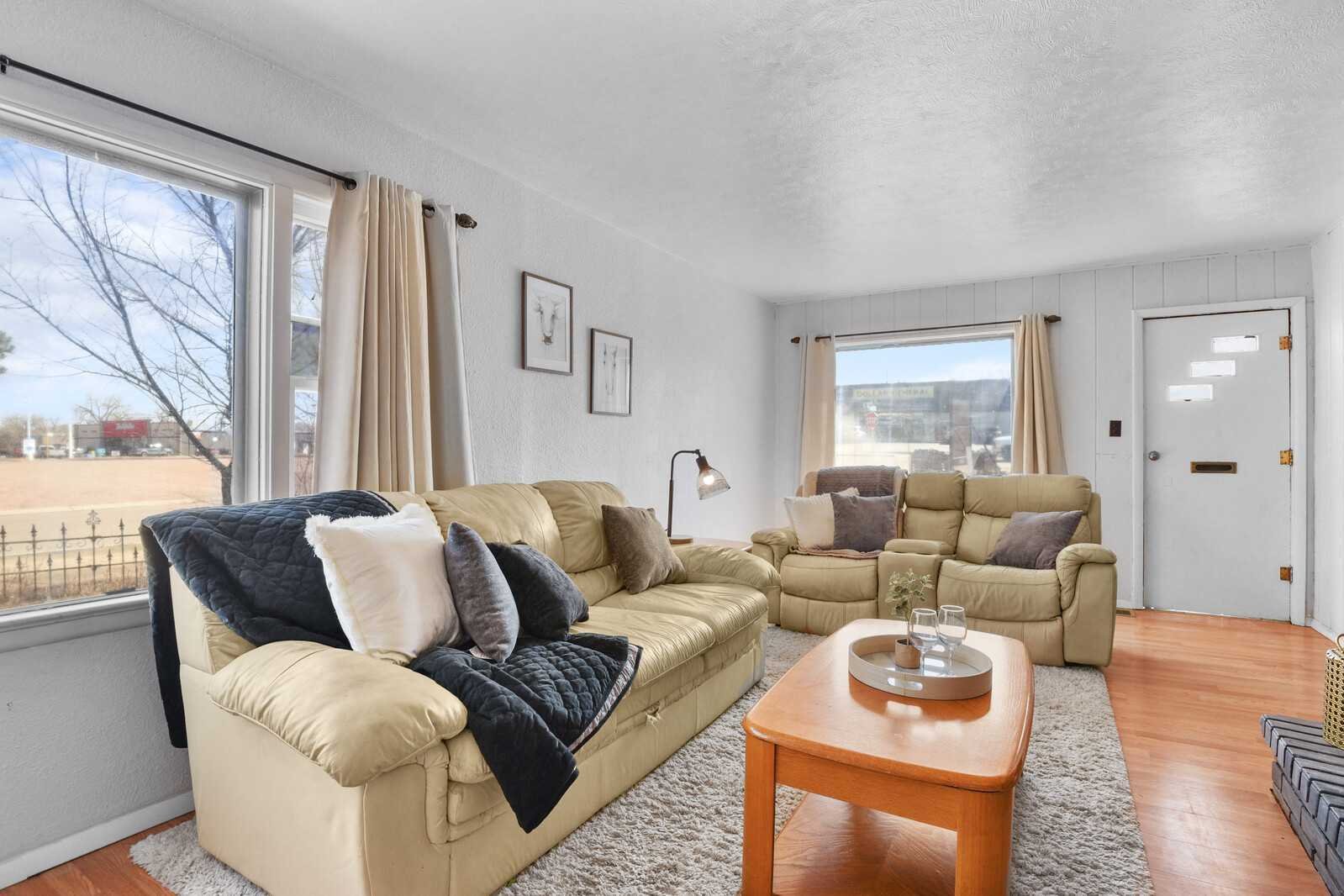
This home has so much to offer, located in the antique town of Florence. It is in close proximity to local restaurants, breweries, shopping, fishing and many other outdoor recreational activities. Positioned on a large pie-shaped lot, the opportunities are endless for landscaping options. Large yard has a well and ditch shares that is connected to the sprinkler system. Front porch and patio area are equipped with cover. This home is main-level living at it's finest. Upon entering the home you will notice the vintage feel with modern flair. The kitchen presents an eat-in area with a built in hutch. There is plenty of cabinet space for all of your storage needs. The large receiving room invites in natural light from the large windows, which could also be used as a larger dining room area. Two separate living room/family room spaces are featured and one has a wood burning fireplace. Primary suite has lots of closet space and adjoins to a large full bathroom. The second bedroom has a large closet with windows promoting in natural light. The partial basement is a great space for additional storage or to convert into an entertainment area. Newer roof and newer electrical panel box. There is a separate space located in the basement that would be great for storage as well. This home is perfect for an investment home or starter home. Want to own a piece of Florence?

Listed by Wanda Wood for West + Main Homes. Please contact Wanda for current pricing + availability.


Have questions?
West + Main Homes
(720) 903-2912
hello@westandmainhomes.com

Presented by:
Wanda Wood
(719) 287-6740
wanda@westandmainhomes.com


Search homes in Colorado
 

A Key To Building Wealth Is Homeownership


The link between financial security and homeownership is especially important today as inflation rises. 

But many people may not realize just how much owning a home contributes to your overall net worth. As Leslie Rouda Smith, President of the National Association of Realtors (NAR), says:

“Homeownership is rewarding in so many ways and can serve as a vital component in achieving financial stability.”

Here are just a few reasons why, if you’re looking to increase your financial stability, homeownership is a worthwhile goal.

Owning a Home Is a Building Block for Financial Success

A recent NAR report details several homeownership trends and statistics, including the difference in net worth between homeowners and renters. It finds “.the net worth of a homeowner was about $300,000 while that of a renter’s was $8,000 in 2021.”

To put that into perspective, the average homeowner’s net worth is roughly 40 times that of a renter 

The results from this report show that owning a home is a key piece to the puzzle when building your overall net worth.

Equity Gains Can Substantially Boost a Homeowner’s Net Worth

The net worth gap between owners and renters exists in large part because homeowners build equity. As a homeowner, your equity grows as your home appreciates in value and you make your mortgage payments each month.

In other words, when you own your home, you have the benefit of your mortgage payment acting as a contribution to a forced savings account. And when you sell, any equity you’ve built up comes back to you. As a renter, you’ll never see a return on the money you pay out in rent every month.

To sum it up, NAR says it simply:

“Homeownership has always been an important way to build wealth.”

Bottom Line

The gap between a homeowner’s net worth and a renter’s shows how truly foundational homeownership is to wealth-building. If you’re ready to start on your journey to homeownership, talk with a trusted real estate advisor today.

Keep reading.

Related Links

If there is a home that you would like more information about, if you are considering selling a property, or if you have questions about the housing market in your neighborhood, please reach out. We’re here to help.

Search Homes in Colorado

Search Homes in Oklahoma

Search Homes in Oregon