Featured at West + Main Littleton: Kevin Cincotta


Join us for First Friday in Littleton, featuring art by Kevin Cincotta!

Gestures of Love

2590 W. Main Street, Littleton, CO
4.1.2022, 6-9pm

RSVP

Meet Kevin!

I have a series of 24 paintings titled “Gestures of Love” which all depict the ways people and the environment interact in caring ways. I conceived of and painted the bulk of these paintings while living nomadically on the coasts of Oregon and California. Each piece is a depiction of some relationship between people and/or the environment, with the hope of reminding people to be grateful for all the love we experience every day if we look for it.


Learn more about Kevin in our Q+A!

What do you like to do outside of work?

In my free time aside from art, I’m incredibly involved in music as a performer, producer and engineer. Playing music has inspired me to focus primarily on shape, color and movement in my art because these concepts are so frequently discussed amongst musicians. I’ve also found that lots of my favorite visual artists are very active in music such as Luke Pelletier and Rumtum.


What is your dream project?

My dream project is to design a mini golf course so I could make immersive sculptures that people could enjoy while spending time with each other.


What is your favorite part of your job?

The best part of my job is getting to watch so much creativity going on in my community and being able to assist different musicians with their visions.


Get in touch with Kevin

Instagram: https://www.instagram.com/1ndr.works/

If you are a local artist/crafter/maker/indie business owner and would like to be featured on our blog, please fill out this form or contact Ashley at ashley@westandmainhomes.com with questions...we can't wait to learn all about you!

Just Listed: Gem of a Townhome in Jewell Ridge


Say “hello” to this gem of a home in Jewell Ridge!

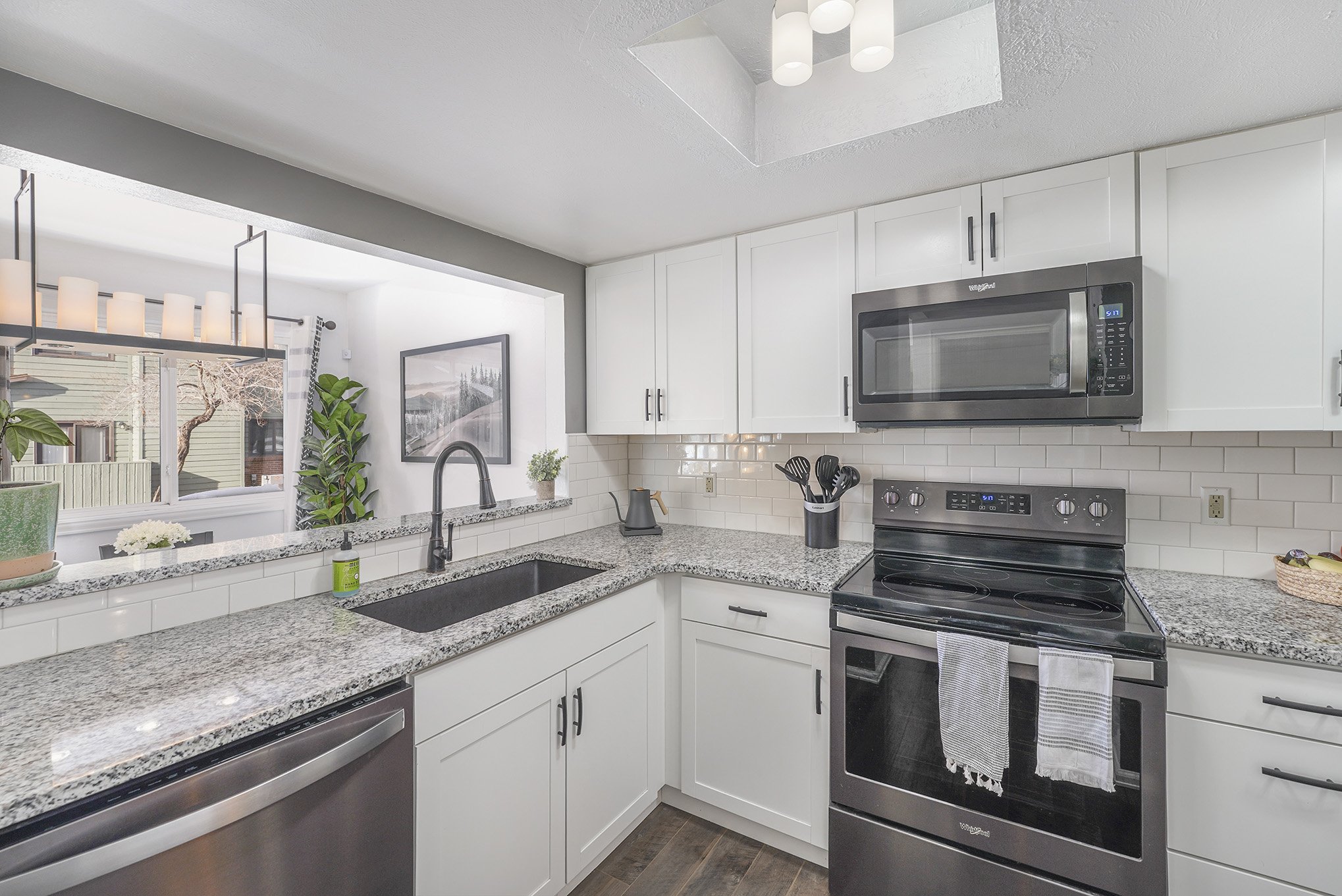
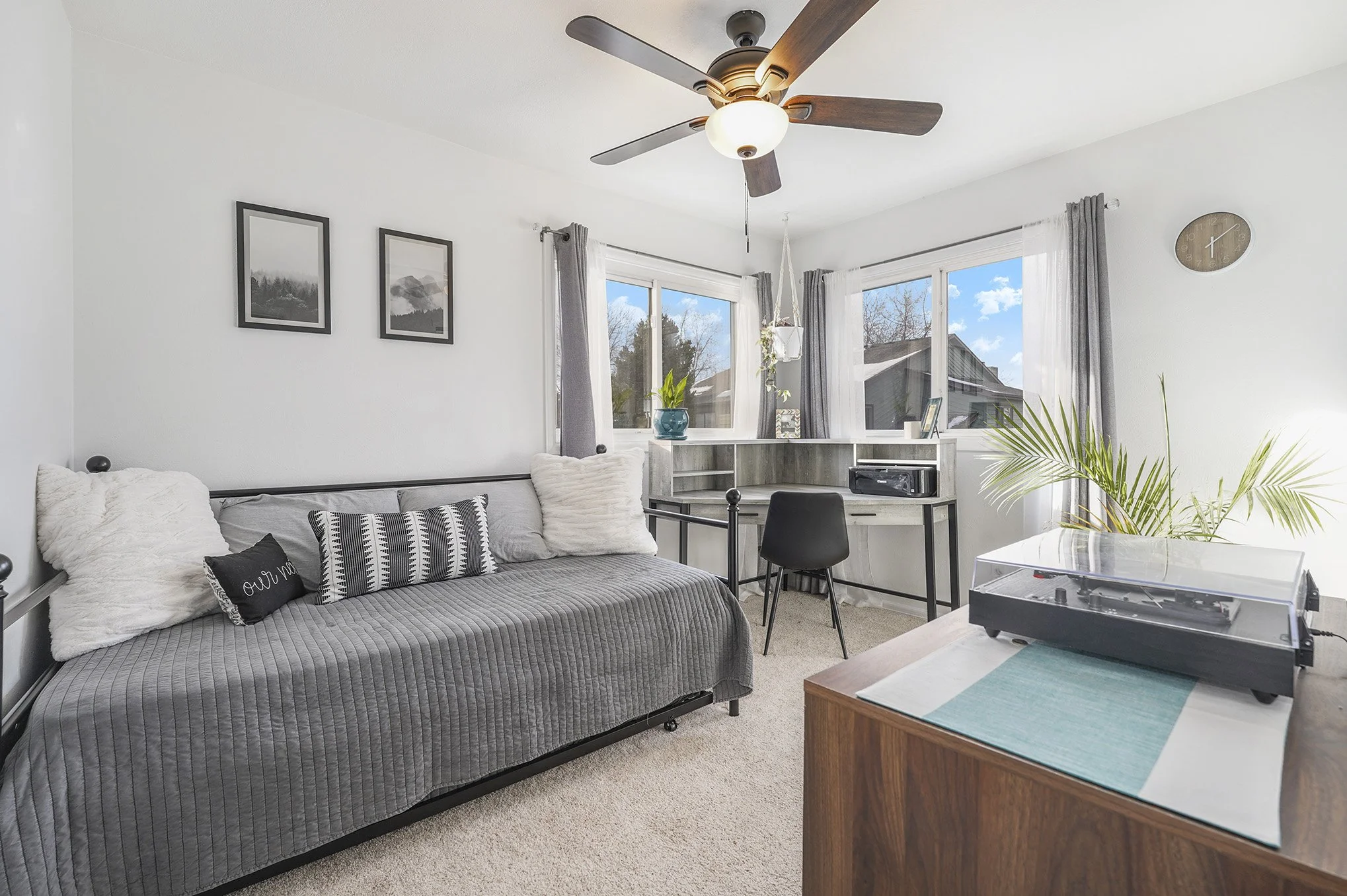
No detail has been overlooked in this exceptional, well cared for, and spacious 3 bed, 3 bath townhome. The main floor features an open and welcoming layout with a cozy fireplace and bright, spacious windows in the living area, a beautifully updated kitchen with granite countertops and stainless appliances, and an inviting dining area with the versatility and space for a full dining set and/or barstools. Upstairs, you’ll find your spacious primary suite with a large closet, double vanity, and private bath. Two additional upstairs bedrooms (one with corner windows letting in an abundance of light!) and a full, stunningly renovated bathroom complete the upper floor. The open, finished basement is ready to become anything you want, from exercising to entertaining and everything in between. Ready to get out of the house for a bit? You don’t even need to get into your car to enjoy Cottonwood Park, Kendrick Lake, Carmody Recreation Center, and more! Also conveniently located near the Belmar shopping area, Bear Creek Lake, and Red Rocks. Need to head elsewhere for work during the week or fun on the weekends? Worry not! 6th Ave, C-470, I-70, and US-285 are all easy to access and ready for any of your commuting needs. Care and convenience shine throughout the home, from the new plumbing (completed in June 2021) to the August SmartLock on the front door and the smart garage door opener. Welcome home, you’re going to love it here!

Listed by Chelsea Mickeal for West + Main Homes. Please contact Chelsea for current pricing + availability.


Have questions?
West + Main Homes
(720) 903-2912
hello@westandmainhomes.com

Presented by:
Chelsea Mickeal
(720) 272-7978
chelsea@westandmainhomes.com


Search homes in Colorado
 

Colorado cities continue to draw more tech workers


Led by Denver, Colorado's technology hubs are getting a boost in the era of flexible workplaces.

What's happening: The rise of remote work has provided an opportunity for new cities to lure tech talent from coastal hubs, chipping away at established hubs' dominance, Axios' Margaret Harding McGill and Erica Pandey report.

Four Colorado metro areas saw growth from 2015 to 2020, according to a new Brookings Institution study.

  • Denver is one of the big winners in this migration, ranking high nationally for new workers and job listings.

  • Colorado Springs' and Boulder saw a greater increase from 2019 to 2020 than in the previous four years.

Why it matters: "The location of tech jobs matters," said Brookings' Mark Muro, a co-author of the report. "Tech jobs drive innovation, pay well, and have substantial multipliers, for local economies and the national one."

Zoom in: The Denver-Aurora-Lakewood metro is listed as a "rising star" for its growth, adding 14,477 tech workers from 2015 to 2020, a 6.6% increase.

  • The growth from 2019 to 2020 was 4.6%.

By the numbers: Boulder added 2,167 tech workers, 3.4% growth over five years. It grew 4.4% from 2019 to 2020.

  • Colorado Springs added 612 tech workers, a 1.2% increase, over those five years and 1.4% from 2019 to 2020.

  • Fort Collins added 855 tech workers in five years, a 3.9% growth rate. The single-year growth from 2019 to 2020 was 3.4%.

Reality check: The nation's big tech hubs — particularly the Bay Area, New York and Seattle — continue to hold the bulk of the jobs. And as tech companies invest in new offices and call workers back, the jobs that moved out of the superstar cities could come back.

  • "The question is: are we looking at a disruption of the tech map or is this a temporary trend due to a crisis," Muro says.

What's next: The leaking of jobs from the tech centers looks likely to continue, at least in the short term, the report notes.

Startups are popping up in new places. The superstar cities share of new tech companies ticked down from 54% in 2020 to 52% in 2021.

Learn more.

Related Links

If there is a home that you would like more information about, if you are considering selling a property, or if you have questions about the housing market in your neighborhood, please reach out. We’re here to help.

Search Homes in Colorado

Search Homes in Oklahoma

Search Homes in Oregon

How rising interest rates will impact Colorado homebuyers


Consumers will have less borrowing power. At the same time, home prices in Colorado keep setting records, and buyers are racing the clock.

For the first time in three years, the Federal Reserve announced an interest rate hike this week.

The quarter-point hike is likely the first of several hikes this year, with the goal of curbing the worst inflation since the 1970s.

Consumers will have less borrowing power. At the same time, home prices in Colorado keep setting records, and buyers are racing the clock.

9NEWS sat down with Kishore Kulkarni, Distinguished Professor of Economics at MSU Denver, and Kelly Moye with the Colorado Association of Realtors to better understand the impact of rising rates.

9NEWS: Why is the Federal Reserve raising interest rates now?

Kulkarni: Mainly because we have the highest interest rate of inflation right now, the highest in the last 40 years. It's 7.9%, almost 8%.

Part of the reason is we’ve had way too much money supply increase the last few years, especially last year. And we have a tremendous increase in government expenditure because of the pandemic. Both of those factors added to total demand for -- we call it "aggregate demand." As the demand increases, the prices go up. Another reason is we have supply shocks, supply chain problems, which doesn’t make us produce a whole lot – another reason prices go up.

Now that they have gone up, how do we stop them? One way to stop it is by raising the interest rate. If we raise the increase rate, people borrow less. If you borrow less, you spend less. If you spend less, the prices will probably go down. I know the Fed has raised it only by 0.25%. That is a small increase. They have also promised – threatened – they are going to increase the interest rate three more times this year. And when that happens, there will be a substantial increase in the interest rate, and therefore reduction in total demand.

Mortgage rates are increasing, too. What is the relationship between mortgage rates and the Federal Reserve hike?

Kulkarni: It’s a chain event. What the Federal Reserve does is increases the rate of interest by which they give loans to commercial banks and financial institutions. So financial institutions, like our First Bank, Wells Fargo, they can always borrow from the Federal Reserve bank. That loan is called discount and advances. Interest rates on those loans are called discount rate. It is the discount rate which the Federal Reserve increases.

That is a signal to the financial institutions that it is not going to be as easy to borrow from the Federal Reserve. Then they don’t lend to each other as much. And the interest rate at which the financial institutions lend to each other is called the federal funds rate. So the federal funds rate goes up. And then the federal funds rate increase has a reflection on the prime rate. And the prime rate is the rate at which you and I borrow from financial institutions.

Mortgage rates have risen above 4% for the first time since 2019. What is the impact on homebuyers?

Moye: The rates have already increased a couple of times. Looks like they’re going to do that a couple more times throughout the year. All that’s doing is reducing purchasing power for our buyers.

They have a purchase price budget, then they know they have to go over that to get a house these days. Then all of a sudden the interest rate goes up and their purchase price drops $50,000. So now they have to go even lower, and a lot of those houses don’t even match the criteria of what they were originally starting to look for. So they either adjust their criteria or adjust their location or decide not to buy. It’s a very stressful, challenging situation for buyers right now.

What do you anticipate for the Colorado housing market moving forward?

Moye: I think what happens is, rates go up. Prices go up. And even though there’s demand, if people can’t afford to live here, they will choose somewhere else. Then demand will go down and inventory will go up, and the market will balance. And it will cool or plateau or whatever it is, but that is the way the natural cycle will go.

Are people starting to give up their home buying dreams?

Moye: We have not seen that very much, surprisingly. I thought more people would say, "That’s it, I give up, try again later." I think people realize later does not mean better. Later could mean worse. Our prices appreciated 25% last year. Those people who didn’t buy a year ago are kicking themselves today.

I think buyers recognize that buying right now, the rates are going to be as good as they’re going to get for a while and that would make a lot of sense. So I don’t see many of them throwing in the towel. Doesn’t mean they don’t want to sometimes.

Read the full interview.

Related Links

If there is a home that you would like more information about, if you are considering selling a property, or if you have questions about the housing market in your neighborhood, please reach out. We’re here to help.

Search Homes in Colorado

Search Homes in Oklahoma

Search Homes in Oregon

4 Gen Z homebuyers reveal tips and hacks for buying a house young


It's getting harder and harder for young people to buy a home. Home prices and interest rates are on the rise while supply continues to dwindle.

Those factors, coupled with the financial strain of student debt, have left many unable to save enough for a down payment or afford a monthly mortgage. 

But some are getting it done. From extreme-savings strategies to scoring a mortgage for 100% of the home price, four Gen Z homebuyers told Insider about the unique ways they financed their first home purchase before age 25. 

While not all of their financial paths to homeownership are available to everyone, their journeys can serve as a guide and spark ideas. 

Here are some tips from their first home purchases. 

Saving for a down payment was 'untenable.' Instead, I looked for 100% financing options and plan to refinance later. 

After Daniel Greene, 22, fled his tumultuous childhood home with his two sisters a few years ago, he wanted to buy a house to move into when he and his fiancée got married, he said. 

But after putting all of his money towards rent — $1,250 per month — the 2020 college graduate didn't have much saved to put toward a down payment on a house, he said.

"It's the American dream. It's something you're supposed to do," he said. "To be honest, though, it's unattainable, it's completely untenable." 

"How am I supposed to save up $20,000?" he added. "I don't come from money." 

It's a challenge facing his entire generation, said Greene, who works in finance making about $85,000 per year. 

Through his bank, North Carolina's State Employees' Credit Union, he found a way to do so. He bought a new-construction two-bedroom home for the amount of his loan last year, he said. 

The bank offered a floating-rate mortgage, with an initial interest rate of 3.14%, that lent on 100% of the $202,800 house. He had a credit score of 700 when he took out the loan, and the rate will be adjusted in two years. 

Since the adjustable nature of the loan means interest rates could hit 14% when it does get reevaluated, Greene plans to refinance the debt with a fixed-rate mortgage before then, hoping for a rate of 3% to 5%.

Credit unions are not-for-profit member-owned banks whose members have some kind of geographic, religious, educational, or occupational affiliation. Many of these banks lend up to 100% of the home's value depending on the price. 

The National Credit Union Administration has a map and locator on its website to find a credit union near you. Insider's personal finance team has also laid out the best credit unions of March 2022.

Since I made under $90,000, I was able to qualify for a state program to help first-time homebuyers. I scored a 2.38% interest rate and $7,500 to put toward my closing costs. 

What Emajja Bowen, 24, loves most about her Atlanta condo are its floor-to-ceiling windows. They were a must-have in her search. 

By the time the condo was listed in August 2020, she had almost given up looking. But then she saw her dream home and decided to put in an offer. 

The 2020 master's graduate wrote a letter to the seller telling him what buying a home in the state's capital would mean to her. The letter worked. Bowen closed on the $274,000 home in the fall. 

Bowen was also able to qualify for a state program, Georgia Dream, that helps Georgians become homebuyers. 

The program provides first-time homebuyers, buyers who have not owned a house in over three years, or homebuyers looking to buy in specific areas of the state with low mortgage rates and financial assistance to make the move, according to the program's website

The state caps the program to those making $90,000 or under. Brown, a consulting analyst, said she just made the cut. Georgia Dream provided her with $7,500 toward closing costs and financed a mortgage with a 2.38% interest rate, compared with 3.07%, the average mortgage in October when Bowen bought the condo. 

Many states offer programs to help first-time homebuyers secure favorable terms, finance a down payment, or otherwise assist them. The mortgage information provider HSH has outlined what each state offers on its website.

Insider's personal finance team has outlined 11 programs that help first-time homebuyers get a mortgage as well as how to find first-time homebuyer programs in your state to help with a down payment, closing costs, and taxes.

To get a better mortgage, I used monthly payments for Netflix and Hulu to boost my credit score. 

Grace Gabriel, 23, closed on a $505,000, three-bedroom townhouse in Laurel, Maryland, in February. But her road to homeownership started with a speed bump.
In August, Gabriel, still in her first year as an analyst at Accenture, felt financially stable enough with a salary of $92,000 to buy a home. But a loan officer said she needed a longer and more robust credit history to apply for a mortgage. 

So Gabriel put herself on a "financial diet." She started with "cutting out carbs", like her Achilles' heel: online shopping. She deleted shopping apps from her phone and started tracking every dollar of her spending in an Excel spreadsheet. 

"This was a goal that I wanted, so I was going to be very serious about it," she told Insider.

She used those savings to pay off debts, including outstanding tuition bills. 

Gabriel also found ways to boost her score using her spending habits. She signed up for a service through the consumer credit bureau Experian that let her count monthly Netflix and Hulu payments toward her overall FICO score. 

Through YouTube videos detailing financial advice, Gabriel discovered the Chime Credit Builder card. She appreciated the features designed specifically to help those building credit: no credit check, no annual fees, and no interest. 

Opening a second card expanded her available credit, which in turn improved her credit utilization rate. Gabriel set a personal goal of keeping that number under 30%, something that same loan officer would compliment her on months later. 

In the end, she was able to boost her credit score to 726, an increase of 50 points, which helped her lock in an interest rate of 3.9% for her mortgage. 

Looking back, Gabriel never doubted her drive to make her goals a reality. 

"I'm not someone who's good at 'no,'" she said. "When someone tells you 'no,' make that into new opportunities." 

To read the full story, check out Business Insider.

Related Links

If there is a home that you would like more information about, if you are considering selling a property, or if you have questions about the housing market in your neighborhood, please reach out. We’re here to help.

Search Homes in Colorado

Search Homes in Oklahoma

Search Homes in Oregon