Just Listed: Immaculately Renovated West Highlands Bungalow


Welcome home to this lovingly restored Highlands Craftsman bungalow!

The owner of this home made custom upgrades and restoration choices throughout the home with an owners eye to detail and craftsmanship. The main floor of this home lives extremely large with two large bedrooms and a huge south facing entry and living room with a working fireplace. The kitchen and dining area are a dream--fully renovated in 2020 with all new cabinets, granite counters and new stainless appliances. The openness offers charm and utility with an eat-in bar area as well as a large, sun-drenched dining area with restored original windows that have been painstakingly restored! The entire main floor has original oak hardwoods that have been recently refinished with ultra durable polyurethane. The downstairs offers tons of living and entertaining space with a fully renovated living room (3rd living area in the home!), a fully finished/updated laundry room with newer washer and dryer and a massive primary bedroom with attached walk-in closet--not to mention a fully updated/renovated bathroom! In many ways this will live like a brand new home with the following: new paint and trim throughout including custom matched window new window trim, all original windows that are now double pane, 2019 tankless water hear, 2018 furnace, new roof in 2017, high end Lutron Smart Shades and lights, and a "smart" irrigation system that is wifi controlled. The home sits high on south-facing, large lot that offers plenty of room for entertaining, gardening and more! The home has an oversized two garage and a storage shed and back patio. The location is simply the best--walking distance with great dining and shopping in Highlands Square, Tennyson Street and LoHi! Note that the seller has restored all of the original windows, making all windows double pane, using the charming, original windows.

Listed by Doug Yetman for West + Main Homes. Please contact Doug for current pricing + availability.


Have questions?
West + Main Homes
(720) 903-2912
hello@westandmainhomes.com

Presented by:
Doug Yetman
(720) 301-4293
doug@westandmainhomes.com


Search homes in Colorado
 

How to Handle a Burst Pipe and Minimize Damage

Frozen or burst pipes during the cold weather months can be one of the most costly maintenance issues you'll face as a property owner.

A burst pipe suddenly flooding your kitchen can quickly become an out-of-hand emergency that could cost you thousands of dollars in damage. A quick and accurate response is key to resolving the issue and mitigating both damage to your property and your out-of-pocket cost.

Steps to Take Ahead of Time

If you own property in an area that experiences cold weather, you need to be aware of seasonal maintenance tasks that will help you protect your property as the weather changes each year. One of the most important steps is to winterize your pipes to ensure they won't freeze or burst when the temperature drops. This includes action items like insulating any exposed pipes, detaching garden hoses and covering outdoor faucets. If the weather gets cold enough, you may even consider leaving a faucet dripping or opening cabinet doors during the coldest parts of the day.

No matter how prepared you might be, accidents and emergencies still happen. You'd be wise to set up a savings account specifically for your property so you have a "rainy day" fund set aside for unexpected expenses. All homes—regardless of age, location or condition—will inevitably need some form of emergency repair.

Steps to Take for Frozen Pipes

A frozen pipe will not necessarily burst, so if you can catch a frozen pipe early on, you could save yourself a major headache. When your area experiences frigid temperatures, be sure to check your plumbing and keep an eye out for warning signs like faucets only releasing small amounts of water or toilets not refilling when flushed. If you do run into one of these issues, you're likely dealing with a frozen pipe.

If this happens, your first step should be to cut off the water supply to that section of the plumbing. Expanding and freezing water can quickly cause damage. Even if the water supply is shut off, you will likely still deal with some leaking from the water that defrosts after the pipe has thawed. Be prepared with a mop, bucket and/or towels to quickly soak up any excess water.

In order to thaw a frozen pipe, you can use a space heater, infrared or incandescent heat lamp, or even a hairdryer to warm up the frozen area. Heat tape is also an option and should be used according to manufacturer instructions. Do not use any sort of open flame to thaw frozen pipes, as it poses a major fire hazard and can damage your pipes further.

Steps to Take for a Burst Pipe

Water damage claims are the second most common insurance claim in the U.S. When you're dealing with a frozen pipe, the water continues to expand as it freezes, which creates pressure that can cause a pipe to burst. When this happens, the crack or leak in the pipe allows water flow from the pipe to enter your home where it shouldn't. If a pipe does burst, you need to act quickly to mitigate property damage and repair cost.

  • Your very first step should be to shut off your main water supply to minimize flooding—typically the most expensive damage to address.

  • Once you've shut off the water supply, make sure you identify the entire area that has been impacted by the leak. Remove as much water as possible—as quickly as possible—using a mop, sponges, towels or a shop vacuum or wet/dry vacuum.

  • To prevent long-term damage due to moisture build-up, run a dehumidifier or fan in the affected area.

  • Contact a licensed plumber to ensure the pipe is correctly repaired before running any water to that section of the home again.

Burst pipes and the associated water damage are something you absolutely want to avoid as a property owner. If you've had to learn your lesson the hard way, don't let yourself get caught in a similar situation during the next spell of cold weather. The best way to deal with frozen or burst pipes is to prevent them in the first place—proactive winter maintenance will save you time, money and a whole lot of stress. - Housecall


Related Links

If there is a home that you would like more information about, if you are considering selling a property, or if you have questions about the housing market in your neighborhood, please reach out. We’re here to help.

Search Homes in Colorado

Search Homes in Oklahoma

Search Homes in Oregon

Permanent Living Transforms Resort Towns, Vacation Homes

They say if you love what you do, you won’t work a day in your life. But what if you live where you vacation, does that make every workday a holiday?

Maybe not quite, but even so, thousands of people across the country have begun looking at their second homes, or at traditionally vacation areas, for more permanent living arrangements—a trend which has long-term implications for the industry at large, as well as revealing a bevy of new, disparate challenges in seasonal cities from coast to coast.

In Palm Springs, California, Jim Franklin is a broker with more than 30 years of experience in the area, including leadership roles for the regional REALTOR® association. In just a couple short years, he says there has been a roughly 10% shift in the proportion of people who live rear-round in the desert community— traditionally a winter getaway for movie stars and Los Angeles elites.

“Palm Springs used to be more absentee…the movie people and all that, but they didn’t come in the summer,” he says.

Now, restaurants are beginning to open year-round, and people who bought seasonal houses that did not have air conditioning or insulation are renovating to prepare for 100-degree summer heat.

“I think you’re going to see more and more people here permanently, because why wouldn’t you want to live here when you have 360 days a year of sunshine?” he asks.

Though so far, traditional infrastructure, like water service and parking, have not been huge issues in Palm Springs as more folks spend more time there, in Big Sky, Montana—another traditional winter getaway—there has been a struggle to provide housing and amenities for the influx of longer-term residents.

Katie Morrison, a sales associate with Berkshire Hathaway HomeServices Montana Properties, says there are not that many people who are staying permanently, but instead many more people are staying three or four months a year instead of three or four weeks.

“It increases the size, I would say, of what people are looking for. I was seeing a trend for a while of people who are downsizing, and now I’m seeing people upsize,” she says. “There has been absolutely no interest in on my end.”

With restaurants and other businesses now staying open through autumn and spring, Big Sky is also in desperate need of affordable housing to serve workers at these places, according to Morrison—a challenge nationwide, but more acute in an area with relatively little housing diversity. The town has tried to spark more diverse housing opportunities through a community housing trust—an initiative that has “ramped up” in recent years despite pushback from some in the town.

This community trust even has incentivized local property owners to rent their vacation homes locally instead of putting them on Airbnb, Morrison says. But that organization has been limited by the fact Big Sky is unincorporated, meaning there is no local government directly supporting it, leaving the job to non-profits utilizing more informal tools.

A couple thousand miles southeast in Pennsylvania, across the sprawling, river-strewn and mountainous Poconos region, Airbnb and local regulation has become real estate’s most urgent obstacle, as that area also contends with an influx of both short- and longer-term residents. Jeff Rickert, a broker for RE/MAX based on Pocono Lake, says that more than a dozen municipalities have spent months battling over short-term rental regulations, pitting those who want to make money renting their valuable properties against others who are looking for quieter, permanent living and fear the noise and carousing of the Airbnb crowd.

“With the pandemic, people were coming and doing very foolish things—they were staying longer and they were creating chaos,” he says.

Rickert says bigger investors buy up dozens of houses at a clip with the primary purpose of renting them on Airbnb, while at the same time many others are retiring or moving permanently into traditional second homes. With each town codifying separate regulations, real estate professionals are having to navigate a constantly changing arena of fire codes, septic needs, bedroom limitations, time limits and seasonal restrictions on short-term rentals that originate both at the state and local level.

“There’s 20 townships and boroughs and all 20 of them had to create ordinances on rentals,” he says. “There’s still three out of the 20 municipalities that still haven’t approved rentals with an ordinance…it’s mission impossible.”

How the local officials eventually settle all these specific squabbles will determine how the region evolves, likely with different townships offering environments that may be more conducive to different lifestyles, Rickert posits. With many different stakeholders and interest groups, though, the situation remains both fluid and complex, and after three years of debate there is nothing like a consensus on any of these issues, according to Rickert.

Life As We Know It

The big picture is more about demographics and how they fit in the inherent structure or environment of a given place. Morrison says she does not anticipate Big Sky—with its heavy snowfalls and relatively isolated location—ever becoming a fully permanent community. Many of the people she sees dedicating more time there are what she calls “early retirees”—people in high-earning industries in their 40s or 50s who work irregularly in semi-informal or freelance roles, but crave the amenities of the beautiful mountain region.

With a recently opened community center and more town sponsored events (including a Halloween “Yappy Hour,” a combination pet parade and costume party), Morrison says that Big Sky is embracing a new normal that looks less like a resort and more like a traditional living environment for all ages.

“We’ve done really well with all of that, and I’d say our community has always done really well to financially support these efforts,” she says.

Palm Springs, on the other hand, has not needed a whole lot of new infrastructure. The city has welcomed a mix of younger folks working remotely for companies in San Francisco and Oregon, along with people in their 60s or 70s who are there for the pristine weather, according to Franklin. The region also boasts an airport (which has seen a huge increase in available commercial flights this year), and may even see a railway built that could connect it to Los Angeles, which gives residents there much more flexibility—whether they want to fly out to see family or party in Westwood on the weekends.

Franklin guesses in the long term, Palm Springs will continue to shrink its number of seasonal residents, though at a slower rate than these past couple years. Airbnb rentals have remained a point of contention, though he says most residents are unbothered by the 2,000 or so units rented short-term.

“The money they collect, they put back into enforcement,” he says. “The police go out if they have to, they fine people.”

“I have a vacation rental next to my house, and I’ve never had a problem,” he adds.

Much will also depend on what builders do in these resort areas over the next few years as the supply chain issues calm down and labor becomes less of a crunch. Rickert says in the Poconos there is a huge lack of builders following the 2006 market collapse, and more municipal red tape has prevented anyone from quickly pivoting to putting up units designed either as short-term rental ready, or as permanent housing, meaning it might take even longer for these communities to evolve to meet new types of demand.

“I’m watching Florida build 100 houses in a hundred days,” he says. “A community of 3,000 houses , they’ve built 100 houses in maybe 10 or 12 years. And quite frankly, local government likes to keep it as a good old boys club, and so that makes it even harder.”

Overall, people are looking less and less for the traditional vacation home, designed for a few weeks or a month of use a year and left empty the rest of the time. If they are looking to own a home in a vacation or resort area, that home needs to offer something personal as well as the kind of size, lifestyle and amenities of a permanent residence, and they have begun to expect the same services in resort towns as they do in more traditional markets.

Franklin says he thinks this attitude is actually driven by the prevalence of Airbnb. People can spend a week or two in a fully furnished, spacious home or condo in any place in the country on short notice, using Airbnb or another short-term rental service, and don’t need to own a home themselves to do it.

“Once people do a vacation rental, they’re like, ‘Wow this is so much better,’” he says. “You can have your own house and buy your own groceries without commitment.”

Anyone looking for a second home or looking to spend time in a resort area is going to be demanding more, Morrison confirms—from their home and from their community. What that looks like depends on the person as well as the community of course. But now more than ever, good skiing or beautiful views are not enough to get people to buy somewhere, as the unique spirit and character of these vacation areas become a primary reason to live there—something Big Sky has quickly picked up on.

“I think Big Sky is interested in becoming Big Sky, not becoming California, not becoming Vail,” she says. “So, the people who come, they are finding their niche and they’re becoming part of this community.” - RIS Media


If there is a home that you would like more information about, if you are considering selling a property, or if you have questions about the housing market in your neighborhood, please reach out. We’re here to help.

Search Homes in Colorado

Search Homes in Oklahoma

Search Homes in Oregon

People who lost their homes in the Marshall fire must now contend with Colorado’s statewide housing crunch

Officials urged residents to contact their insurance companies, while Coloradans filled social media with offers to host evacuees. 

More than 170 people displaced by the destructive Marshall fire stayed in emergency shelters Thursday, as officials and good Samaritans worked to find more permanent lodging for the residents of up to 1,000 homes burned to the ground.

Officials urged residents to contact their insurance companies for help covering out-of-pocket expenses like food and temporary lodging, while a few hotels discounted their prices and Coloradans filled social media with offers to host evacuees. 

Emergency housing efforts were complicated by the pandemic. One shelter was set aside for coronavirus-positive patients, and supply chain problems spurred by the global health crisis could slow rebuilding efforts, as parts of Colorado are already buckling under housing shortages and soaring costs.  

“The rental market was already tight to begin with before this fire,” said Michael Ingoldby, a resident of Superior who lost his home in the fire. “If thousands of homes burned, it’s only going to get tighter.”

A state recovery task force led by the Division of Homeland Security and Emergency Management began meeting Friday and will be prioritizing emergency housing, division spokeswoman Micki Trost said. 

Gov. Jared Polis also said he spoke with President Joe Biden and a Federal Emergency Management Agency administrator about support for medium-term housing for residents who want to keep their kids in local schools or find some normalcy before rebuilding destroyed homes.  

“We are going to work hard with families and small businesses to rebuild our treasured communities, homes and sanctuaries for folks,” Polis said Friday at a news conference.

Biden has verbally approved an expedited major disaster declaration to help with rebuilding. 

FEMA spokeswoman Lynn Kimbrough said they were waiting for the president to formally sign the declaration outlining what assistance has been approved.

More than 500 homes were consumed by the 6,000-acre fire that began Thursday, fanned by wind gusts of up to 110 miles per hour. If those numbers hold, it will be the most destructive wildfire in state history in terms of the number of homes burned. 

Carole Walker, executive director of the Rocky Mountain Insurance Association, said it was too early to estimate insurance damages from the fire but expected it would be the most costly in state history in terms of insurance claims. 

“I don’t even feel like I’m going out on a limb on that,” she said, calling the fire a “catastrophic, unprecedented event.” 

The tight housing market “may affect people’s ability to find lodging, especially if they’re going to need it longer term,” she said. 

She expected insurance losses to be high given the fire struck a densely populated urban area. 

“It isn’t the size of the fire for insurance. It’s where the fire happens, the number of homes in the area, the cost to repair and rebuild those homes,” she said.

Colorado recently opened a transitional housing site for Afghan refugees, but Trost said there isn’t similar long-term housing planned for fire victims because they have different needs. Residents typically stay with family or friends for about a week or two after a fire before finding other housing while long-term repairs are made, she said. 

The state is hoping to help those without homeowners’ or renters’ insurance and local businesses have offered hotel rooms, she said. 

“The first option is to make sure that all of those that are insured are connected and using their insurance benefits because that’s the most effective and fastest way for recovery,” she said.

Temporary living expenses for food and lodging — money to “get you out of the shelter, to get you through the short-term” — are covered under standard homeowner and renter insurance policies, said Walker, with the insurance association. Mandatory evacuations trigger insurance coverage, she said. 

She expected insurance coverage would be high as the neighborhoods affected were not second homes in mountainous areas but largely primary residences where people have mortgages and insurance is required.

Andrea Carlson with the Red Cross of Colorado & Wyoming said the organization was operating a shelter at the YMCA of Northern Colorado and was not offering payments for hotel rooms because shelters were open. 

The organization initially focuses on ensuring people are safe and warm in an emergency response, she said. They then provide clean-up kits and other supplies to help people going back into their homes, and potentially financial assistance to those whose houses were damaged or destroyed. 

“Right now, it’s making sure people are safe, that people are fed and that people aren’t in the snow in the cold as that’s all starting,” she said. 

The Red Cross is still providing long-term response to the 2020 Estes Park fires, she said. 

“There’s actually something I can do to help”

Meanwhile, residents offered assistance to fire victims on social media and the short-term rental platform Airbnb. The company has a program through which hosts can offer free emergency housing to those in need. 

“I happen to have a place that was vacant for the next week and a half and so I thought … there’s actually something I can do to help people,” said Julia Pamcoe, 39, who offered a two-bedroom apartment in downtown Boulder to fire victims at no cost. 

Pamcoe, who manages properties on Airbnb, felt lucky that her home and most of her friends’ homes were unscathed, though a tree she loved was blown over by the wind onto a neighbor’s house. 

Stacy Howard, a Montessori school teacher, offered a room in her family’s four-bedroom house on Facebook after realizing her property and family were fine but their “community (was) broken.” 

The space is nothing fancy, but enough to keep someone warm, she said. 

More from The Colorado Sun

How you can help

If there is a home that you would like more information about, if you are considering selling a property, or if you have questions about the housing market in your neighborhood, please reach out. We’re here to help.

Search Homes in Colorado

Search Homes in Oklahoma

Search Homes in Oregon

Just Listed: Hiland Hills Townhome with Large Patio


A private fenced patio for grilling or container gardening, two ample sized bedrooms, one and a half baths, fireplace for cool winter nights, and an FHA approved complex - what could be better!

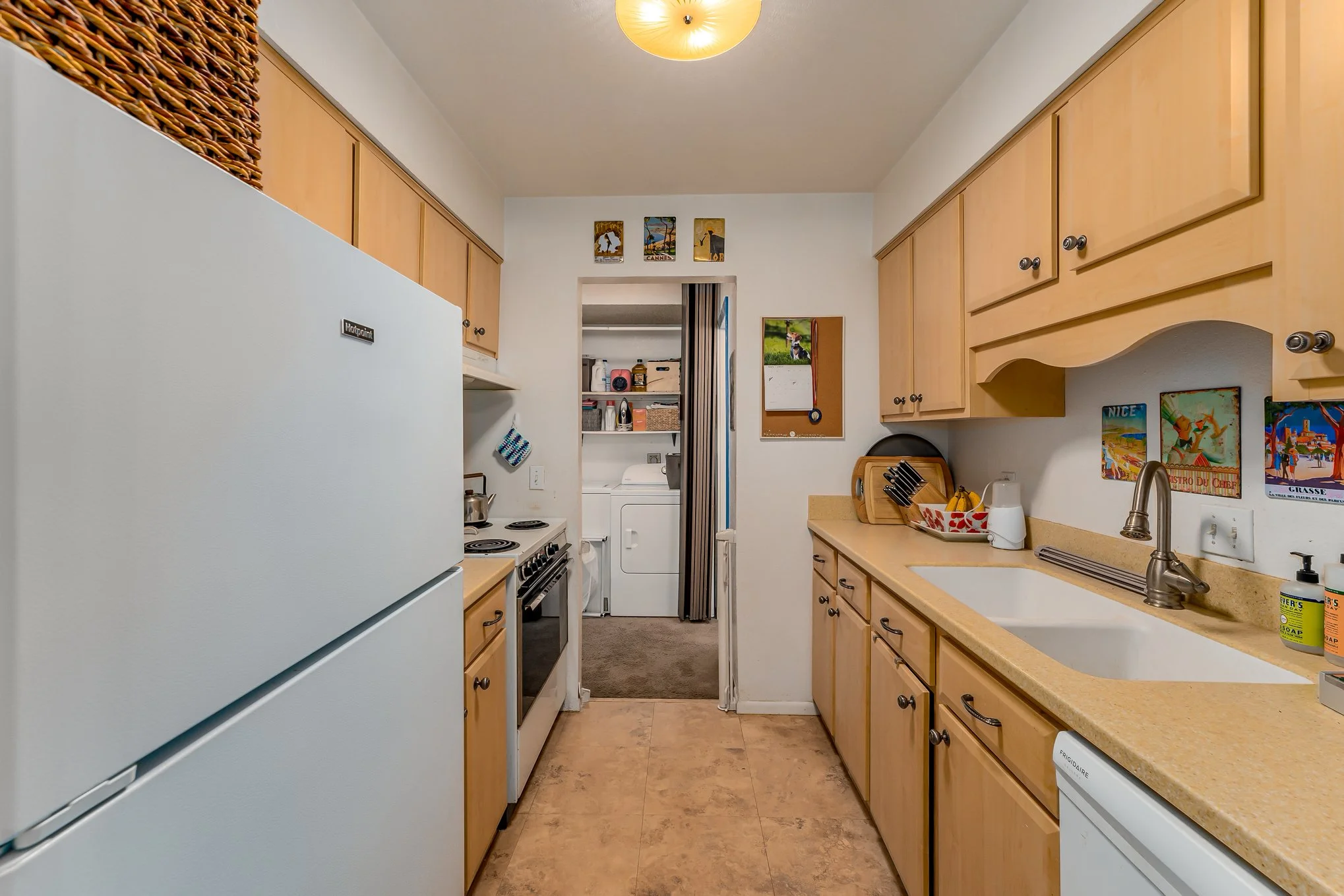
How about a pool, and a workout room?! This Hiland Hills townhome has all of this and is just waiting for your updates. Lovingly cared for and cozy at every turn, the home features a large living room space, dining area, galley kitchen and half bath on the main level. Upstairs both bedrooms are warm and inviting with fantastic closet space. The patio is a treasure for a city property, and gives the perfect amount of outdoor space for entertaining, pets, or new hobbies. A detached carport eliminates the snow on your car in the winter and the space is located right outside your front door. The community is well maintained and close to Cherry Creek, Anschutz, and downtown to name a few places.

Listed by Emily Hayduk for West + Main Homes. Please contact Emily for current pricing + availability.


Have questions?
West + Main Homes
(720) 903-2912
hello@westandmainhomes.com

Presented by:
Emily Hayduk
(720) 629-0522
emily@westandmainhomes.com


Search homes in Colorado