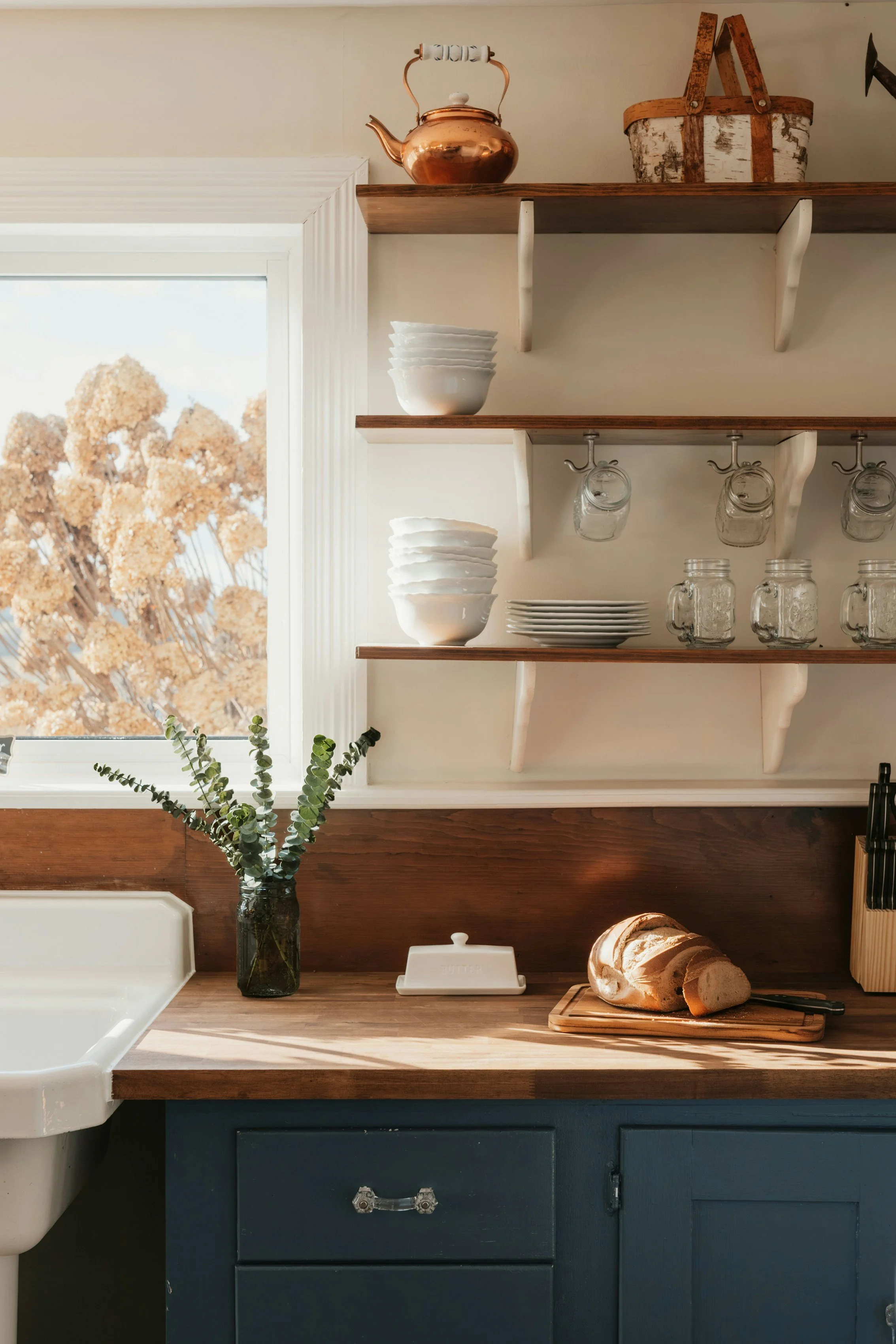
Just Listed: This charming 6-bedroom, 3-bathroom gem is bursting with space and character!


This charming 6-bedroom, 3-bathroom gem is bursting with space and character!

Tucked into the heart of the Columbine West neighborhood, this charming 6-bedroom, 3-bathroom gem is bursting with space, character, and that warm, neighborly vibe we love here in Littleton. With a freshly painted interior and newer carpet upstairs, the home is move in ready. Talk about backyard goals with a spacious, flat yard that’s garden-ready and BBQ-approved. The patio is calling for weekend grill-fests, epic yard games, or just a relaxing glass of wine while the sun sets. Prefer your sunsets with a view of the foothills and friendly waves from neighbors? The west-facing covered front porch has you covered—literally. Outdoor enthusiasts, you're in luck—Dutch Creek Trail is just at the bottom of the hill, offering scenic strolls, bike rides, or a quick jog to reset your day. And just minutes away, Clement Park brings concerts, playgrounds, fishing, and open space to your weekend plans. Inside, there’s room for everyone and then some. Whether you're working from home, hosting out-of-town guests, or just need everyone to have their own space, this home delivers. The main floor features a cozy custom fireplace recently upgraded with stacked stone and a wood mantle, perfect for snuggling in on chilly nights or hosting holiday movie marathons. The finished basement is the ultimate flex space—home gym, playroom, second office, teen hangout, or maybe even your future home theater. This is more than a house—it’s the kind of home where memories are made, gardens are grown, and neighbors become friends. Come see why life in Columbine West just hits different!

Listed by Steph Christianson for West + Main Homes. Please contact Steph for current pricing + availability.


Have questions?
West + Main Homes
(405) 652-6635
hello@westandmain.com

Presented by:
Steph Christianson
303-668-6800
steph@westandmainhomes.com


Search homes in Colorado
 

Morgan Stanley predicts major mortgage rate changes are coming soon


When mortgage rates surged in 2022, doubling from 3.5% to nearly 7%, it marked an end to the Covid-era housing boom. Stubborn mortgage rates have kept the market at a standstill, making purchasing a home more expensive for buyers and discouraging sellers from listing their homes.

Although mortgage rates were initially projected to drop notably in 2025, sticky inflation and economic uncertainty have kept them above 6.5%, despite three consecutive interest rate cuts at the end of 2024.

It may take longer than expected, but mortgage rates are expected to modestly yet steadily decline through 2026.

Morgan Stanley analysts now predict that treasury yields will decline over the next two years, bringing mortgage rates down as well. Lower treasury yields are often caused by economic downturn and volatility in financial markets, but a reignited housing market would help stimulate GDP and economic growth.

Mortgage rates could drop as treasury yields fall

Although mortgage rates are influenced by the federal funds rate, they are more strongly tied to the 10-year treasury yield.

Lenders use the treasury yield as a benchmark for mortgage rates to keep mortgage-backed securities competitive with treasury bonds.

Secretary of the Treasury Scott Bessent has publicly announced the Trump Administration's commitment to bringing down the treasury yield to provide housing relief, and Morgan Stanley analysts believe that will happen in the next two years.

In a new report, the investment bank wrote, "The good news is: Morgan Stanley strategists anticipate that mortgage rates could fall with Treasury yields over the next two years and home prices may decrease slightly amid increased housing supply."

However, the treasury yield drops during economic uncertainty, as bond demand and prices rise when investors flock to 'safe' investments. If mortgage rates fall due to an economic downturn, it may be difficult for housing activity to revert to previous levels.

A housing revival may be the key to GDP growth

If mortgage rates do continue to fall through 2026 without a recession, increased homebuying could help stimulate the U.S. economy through GDP and consumer spending.

The National Association of Home Builders (NAHB) found that consistent mortgage rate declines in early 2025 raised homebuyer confidence enough to increase housing sales.

Increased housing sales will not only create a hotter housing market but will likely increase economic activity. Morgan Stanley predicts consumer spending and residential investment will rise as lower mortgage rates reinvigorate the housing market.

“Housing flows into gross domestic product (GDP) not only through residential investment, but also through the impacts on consumption,” Morgan Stanley economist Heather Berger said. “Households spend more on durable goods following home purchases.”

U.S. Real GDP growth dropped 0.3% during Q1 2025, largely as a result of lower imports from reciprocal tariffs announced by the Trump Administration. Housing-related economic growth may become increasingly important as the full effects of U.S. trade wars are realized.

Read more at The Street

Related Links

If there is a home that you would like more information about, if you are considering selling a property, or if you have questions about the housing market in your neighborhood, please reach out. We’re here to help.

Search Homes in Colorado

Search Homes in North Carolina

Search Homes in Oklahoma

Dopamine décor favors emotions over aesthetics: Happy home, happy life


When you’re happy, your whole body knows it. Your heart races. Your face flushes. Your breath quickens. The butterflies in your stomach flutter.

And then there’s your brain. When you’re happy, its neural nooks and crannies flood with “happiness hormones” like dopamine, serotonin and oxytocin. By eliciting feelings of joy, accomplishment, pleasure, satisfaction and self-esteem, they reinforce healthy habits that help you survive and thrive.

Sunlight, exercise, music, memories and pets are just a few of the many things that can stimulate happiness at the neurochemical level, research suggests. But happiness doesn’t flow only from your activities. It’s also an important byproduct of your surroundings.

“When you’re looking at things in your environment, your retina is actively sending messages to your brain that directly impact how you feel,” explains Anita Yokota, a licensed family and marriage therapist, interior designer and author of Home Therapy: Interior Design for Increasing Happiness, Boosting Confidence and Creating Calm. “So, it’s really important to be intentional about what we bring into our homes.”

Indeed, a 2019 study by the Happiness Research Institute found that 73 percent of people who are happy with their homes also are happier in general.

So powerful is the home-happiness connection that it went viral on social media in 2023: The hashtag #dopaminedecor had more than 173 million views on TikTok as of late January.

“Instead of triggers — things that increase our blood pressure and the stress hormone cortisol — dopamine décor is all about finding what I call glimmers: things that bring us joy,” Yokota says.

Although neither homes nor happiness are one-size-fits-all, a few universal design principles can help anyone create a space that makes them smile.

Show your true colors

Color can instantly change how rooms — and people — feel, says Chelsea Foy, founder and editor of the lifestyle blog Lovely Indeed and author of The Happy Home: The Ultimate Guide to Creating a Home That Brings You Joy. Her personal favorite, yellow, makes her feel energized and uplifted. “There’s a small bank of cabinets in my laundry room that I painted a mustardy yellow, and every time I pass by, it makes me smile,” she says.

Although warm hues tend to be stimulating and cool shades soothing, there’s no “bad” color. It’s a matter of personal preference, notes Foy, who says even small pops of color can make a big impact. Consider creating an accent wall with paint or wallpaper; peppering rooms with bold pillows, lamps and accessories; or making flamboyant focal points out of rugs, artwork or furnishings.

“It could be a fantastic pink couch you found at a thrift store, or a painting that dominates a wall,” Foy says. “Beige can be beautiful, but we need things that make our spaces feel vibrant.”

Color can instantly change how rooms feel and the 'dopamine decor' movement encourages the use of colors in unique and innovative ways.

Don’t be a square

Shapes also can be impactful, says industrial designer Ingrid Fetell Lee, author of Joyful: The Surprising Power of Ordinary Things to Create Extraordinary Happiness. “Research shows that when we look at angular objects, the amygdala — the part of our brain that’s associated with fear and anxiety — lights up. When we look at round shapes, that part of our brain stays silent,” explains Lee, who suggests round instead of square tables, mirrors and picture frames. “If you notice the way you move in a space with sharp angles, you tend to be a little more cautious. You don’t want to bang your shin on the coffee table, whereas in a space with lots of rounded shapes you feel very at ease.”

Sacred symmetry works

In 2016, scientists at the University of Chicago conducted an experiment in which they showed students pictures of either orderly or disorderly environments, then gave them a math test. The students who saw messy rooms were more likely to cheat, according to researchers, who cited asymmetry as a hallmark of disorderly spaces.

“There’s something destabilizing about asymmetrical environments that influences the way we behave,” suggests Lee, who says you can bring more symmetry to spaces by decorating in pairs — two nightstands flanking a bed or two plants flanking a large piece of artwork — or by choosing wallpapers and fabrics with repeating patterns.

Clutter disrupts joy

A common cause of asymmetry is clutter. “Clutter increases the stress hormone cortisol. … When we see clutter, it actually increases our blood pressure,” explains Yokota, who recommends using baskets, bins and trays to organize clutter in closets, drawers and pantries, and on surfaces like counters and desktops. “I’m a huge proponent of using vertical space, so I also love hooks. … I put 3M hooks on the beautiful porcelain waterfall countertop in my kitchen because that’s where my kids’ backpacks land, and if I had to see a backpack on the floor there, it would drive me crazy.”

It’s as important to remove emotional clutter as it is physical clutter, says interior designer Rebecca West, CEO of Seriously Happy Homes and author of Happy Starts at Home: Change Your Space, Transform Your Life. She recalls a recently divorced client, for example, who got rid of a bookcase that reminded her of her marriage. “As soon as she put it on the curb, it was like 100 pounds had been lifted from her shoulders,” West says.

Embrace the element of surprise

Creating small moments of whimsy and surprise gives you little sparks of joy whenever you see them, says interior designer Betsy Wentz, author of Design Happy: Colorful Homes for the Modern Family. Instead of art, for example, Wentz likes to frame and hang colorful scarves or cool bedsheets. And for fun accessories, she applies tinted lacquer to mirrors, light fixtures and knickknacks.

“You can lacquer anything,” says Wentz, who recalls a grandfather clock she once transformed for a client. “It had belonged to her husband’s great-grandfather. We lacquered it and put in fabric panels behind where the pendulum swings. Now it’s a really fun, unexpected piece. It looks like an antique, but it’s a bright citron yellow.”

Wallpaper also can achieve a similar effect. You can put it on ceilings, in drawers, in alcoves or even in closets. For example, Lee cites a client who put butterfly wallpaper in the entryway closet where her kids store their coats and shoes. “Now, whenever they leave the house, her kids say, ‘To the butterflies!’” says Lee, who once painted big yellow cabana stripes in a closet of her own. “I would forget about them, and then I’d open the closet and get a big burst of sunshine.”

Create community

Close relationships and social connections are the biggest determinants of happiness, according to the Harvard Study of Adult Development, one of the world’s longest-running studies of adult life. To nurture them in your home, design spaces in ways that maximize social attachment.

“Instead of making your furniture face one way to the TV in the living room, consider having more of a circular furniture flow,” Yokota suggests. “For me, swivel chairs give a big dopamine hit. Nowadays we have these open concepts where the kitchen and family rooms are connected. I love using swivel chairs in those spaces so you can easily interact with people on either side of you.”

Wax nostalgic

Scientists have found that nostalgic experiences activate not only the areas of the brain associated with memory, but also those associated with pleasure. That’s why Foy likes decorating with personal mementos instead of meaningless bric-a-brac — sentimental souvenirs from treasured travels, for example, or framed artwork from her kids. “I like looking into my space and seeing things that bring back good memories,” she says. “Filling your home with physical representations of a life well lived … brings warmth to a space and allows you to see yourself in it.”

Read more at USA Today

Related Links

If there is a home that you would like more information about, if you are considering selling a property, or if you have questions about the housing market in your neighborhood, please reach out. We’re here to help.

Search Homes in Colorado

Search Homes in North Carolina

Search Homes in Oklahoma

A Tale of Two Housing Markets


For a long time, the housing market was all sunshine for sellers. Homes were flying off the shelves, and buyers had to compete like crazy. But lately, things are starting to shift. Some areas are still super competitive for buyers, while others are seeing more homes sit on the market, giving buyers a bit more breathing room.

In other words, it’s a tale of two markets, and knowing which one you’re in makes a huge difference when you move.

What Is a Buyer’s Market vs. a Seller’s Market?

In a buyer’s market, there are a lot of homes for sale, and not as many people buying. With fewer buyers competing for these homes, that means they generally sit on the market longer, they might not sell for as much as they would in a seller’s market, and buyers have more room to negotiate.

On the flip side, in a seller’s market, there aren’t enough homes for sale for the number of buyers who are trying to purchase them. Homes sell faster, sellers often get multiple offers, and prices shoot higher because buyers are willing to pay more to win the home.

The Market Is Starting To Balance Out

For years, almost every market in the country was a strong seller’s market. That made it tough for buyers – especially first-timers. But now, things are shifting. According to Zillow, the national housing market is balancing out.

The index used in this graph measures whether the national housing market is more of a seller’s market, buyer’s market, or neutral market – basically, whether it favors buyers, sellers, or if it’s not really swinging either way. Each month, the market is measured between 0 and 100. The closer to 100, the bigger the advantage sellers have.

The orange bars in the middle of the graph show the years when sellers had their strongest advantage, from 2020 to early 2022. But, as time has gone on, the market has become more balanced. It shifted from a strong seller’s market to a less intense one. And lately, it’s been neutral more than anything else (that’s the gray bars on the right side of the graph). That means buyers are gaining some negotiating power again.

In a more balanced or neutral market, homes tend to stay on the market a little longer, bidding wars are less common, and sellers may need to make more concessions – like price reductions or helping with closing costs. That shift gives today’s buyers more opportunities and less competition than a couple of years ago.

Why Are Things Changing?

Inventory plays a big role. When there are more homes for sale, buyers have more options – and that cools down home price growth. As data from Realtor.com shows, the supply of available homes for sale isn’t growing at the same rate everywhere (see graph below):

This graph shows how inventory has changed compared to last year (blue bars) and compared to 2017–2019 (red bars) in different regions of the country.

The South and West regions of the U.S. have seen big jumps in housing inventory in the past year (that’s the blue on the right). Both are almost back to pre-pandemic levels. That’s why more buyer’s markets are popping up there.

But in the Northeast and Midwest, inventory is still very low compared to pre-pandemic (that’s why those red bars are so big). That means those areas are more likely to stay seller’s markets for now.

What This Means for You

Every local market is different. Even if the national headlines say one thing, your town (or even your neighborhood) could be telling a totally different story.

Knowing which type of market you’re in helps you make smarter decisions for your move. That’s why working with a local real estate agent is so important right now.

As Zillow says:

“Agents are experts on their local markets and can craft buying or selling strategies tailored to local market conditions.”

Agents understand the unique trends in your area and can help you make the best choices, whether you’re buying or selling. With their expert strategies, you can move no matter which way the market is leaning, because they know how to navigate various levels of buyer competition, how to find hidden gems locally, how to price a house right, how to negotiate based on who has more leverage, and more.

Bottom Line

If you're ready to make a move, or even just thinking about it, connect with a local real estate agent. They’d love to help you understand your local market and create a game plan that works for you.

Read more at Keeping Current Matters

Related Links

If there is a home that you would like more information about, if you are considering selling a property, or if you have questions about the housing market in your neighborhood, please reach out. We’re here to help.

Search Homes in Colorado

Search Homes in North Carolina

Search Homes in Oklahoma

Just Listed:Stunning Renovated Victorian in the Heart of Wash Park


You are going to love this updated quintessential Victorian bungalow right in the heart of Denver’s most popular neighborhood!

The curb appeal is unbeatable, situated on a quiet tree-lined street with a big front porch, and framed by established gardens. Home underwent an extensive professionally designed and fully permitted renovation in 2021 adding a second level to build an expansive private primary suite, and also opening up the main level to create a huge open floor plan great for entertaining that is nearly impossible to find in homes of this era. The 10ft ceilings, south-facing windows, hardwood floors, skim-coated flat walls, and new paint make the home super bright + airy. There is a perfect mix of historic charm and modern living in the original leaded glass windows, exposed brick fireplace, and updates that have thoughtfully matched original features like the 5-panel doors, window casings + trim, and replica turn-of-the-century door knobs. The custom built stair railings, recessed dimmable lighting, and West Elm light fixtures offer the perfect pop of modern finishes. Kitchen was updated in 2024 with new SS Kitchen Aid appliances, quartz countertops, high-end brass fixtures/hardware, backsplash + countertop seating.

Almost everything has been redone in recent years, making this place fully move-in ready! Notable updates include: sewer line, roof, windows, electrical panels + house rewiring, plumbing, furnace, and central AC.

Enjoy the absolute best Denver lifestyle - the unbeatable location is just 1/2 mile from Wash Park, a block from a highly-rated elementary school, walkable to several local coffee shops and South Pearl Street within minutes and has easy access to I-25. On an amazing block of well cared for homes, you can spend peaceful evenings watching the sunset from the front porch, families walk their kids to school in the morning, it’s easy to meet friendly and welcoming neighbors who host an annual block party + living is picturesque.

Listed by Kate Kazell for West + Main Homes. Please contact Kate for current pricing + availability.


Have questions?
West + Main Homes
(303) 935-8787
hello@westandmain.com

Presented by:
Kate Kazell
720-613-8478
katekazell@westandmainhomes.com


Search homes in Colorado